
Why NASA’s Latest Discovery on Europa Could Prove Alien Life Exists
Hey, Have You Heard About Europa? It’s Blowing Minds!
Picture this: a frozen world hurtling around Jupiter, cracked like a cosmic eggshell, hiding a massive ocean beneath its icy crust. That’s Europa, one of Jupiter’s moons, and it’s been teasing scientists for decades with hints of alien life. But now? NASA’s latest discovery from the James Webb Space Telescope (JWST) is turning up the heat—or should I say, the hype. In September 2023, they spotted carbon dioxide ice on Europa’s surface, and get this: it’s likely bubbling up from that hidden ocean below. Could this be the smoking gun for extraterrestrial life? Buckle up, because I’m diving deep into why this find has everyone—from backyard stargazers to top NASA brass—losing sleep over the possibility of microbes swimming in space.
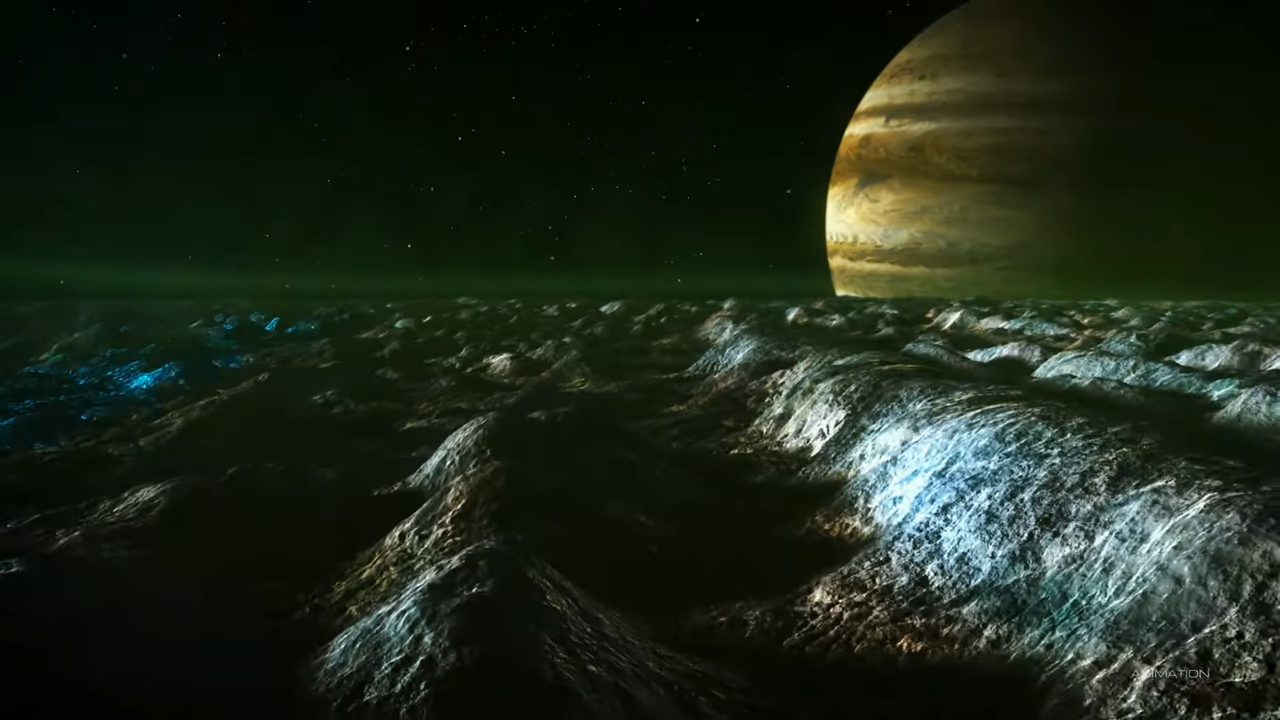
Europa 101: The Icy Enigma
Europa isn’t your average rock floating in space. Discovered by Galileo in 1610, it’s about the size of our Moon but with a twist: a thick layer of ice covers a global ocean that’s possibly twice the volume of all Earth’s oceans combined. How do we know? Thanks to NASA’s Galileo spacecraft in the ’90s, which used magnetic field data to confirm the salty water sloshing underneath. That ocean is kept liquid by intense tidal forces from Jupiter’s massive gravity—imagine the moon getting squeezed like a stress ball every orbit, generating heat through friction. It’s wild, right? No sunlight reaches down there, but that geothermal energy could power life, just like hydrothermal vents do in Earth’s deep seas.
What makes Europa special isn’t just the water; it’s the potential habitability. Scientists have long eyed it as prime real estate for life because it checks boxes for the three big ingredients: liquid water, a stable energy source, and organic chemicals. Enter JWST’s big reveal.
The Game-Changing JWST Discovery
Launched in 2021, JWST is like a super-powered eye in the sky, peering into infrared light we can’t see. When it turned its gaze to Europa in 2023, boom—evidence of carbon dioxide trapped in the ice, concentrated in weird yellowish patches called “chaos terrain.” These are areas where the ice has cracked and reformed, suggesting material from the ocean is venting to the surface. But wait, there’s more: tentative signs of hydrogen peroxide and even possible salts like sodium chloride—stuff that matches what you’d expect from a briny ocean.
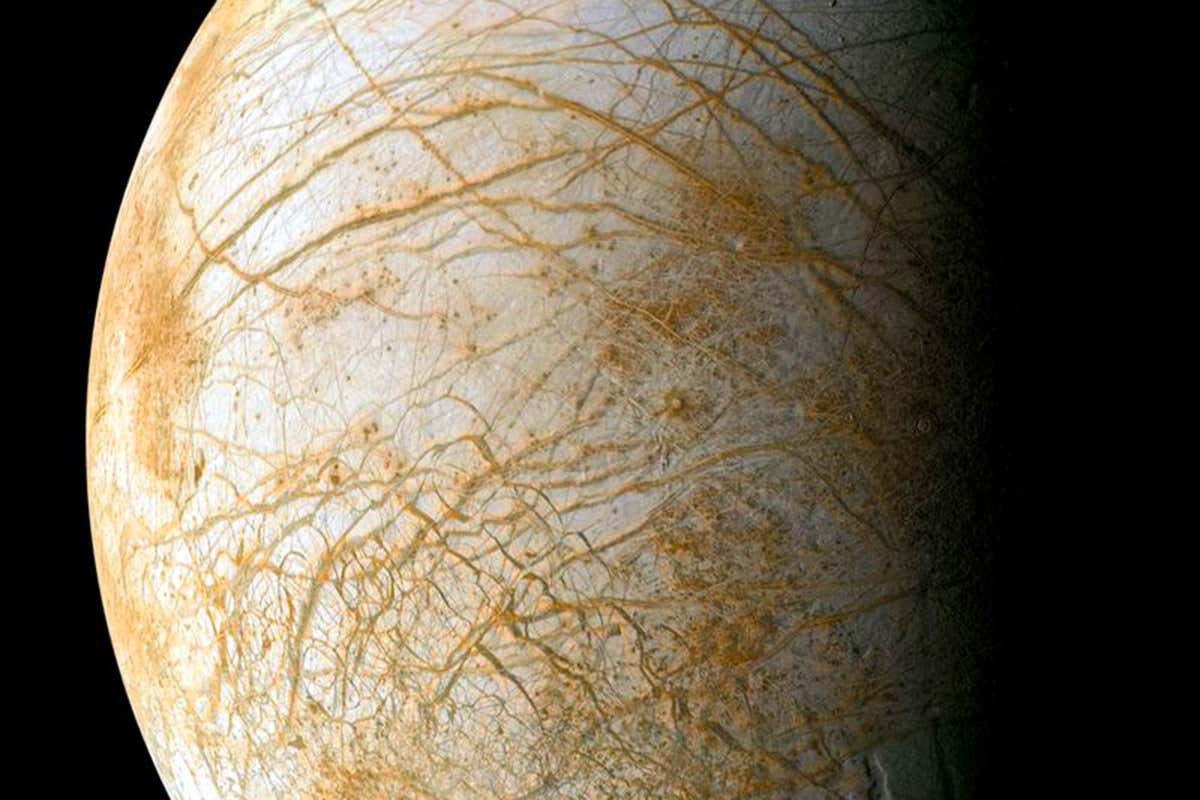
Previous missions like Hubble spotted water vapor plumes shooting out like geysers, up to 100 miles high. JWST confirms these aren’t flukes; they’re real, and they’re spewing ocean goodies into space. Lead researcher Samantha Trumbo from Cornell University called it “the first observation of carbon dioxide on the surface,” hinting it’s not just surface frost but fresh from below. If that ocean is loaded with CO2, dissolved organics, and energy, it’s basically a recipe for life. Microbes? Maybe even something weirder. This isn’t sci-fi; it’s data-driven excitement.
The Building Blocks of Life: Right There on Europa
Let’s break it down like a chemistry class from hell—or heaven, depending on your view. Life as we know it needs H2O (check), energy (tidal heating provides it), and carbon-based molecules (JWST says yes). Carbon dioxide is a cornerstone; on Earth, it’s part of the carbon cycle fueling everything from bacteria to us. On Europa, that CO2 could react with hydrogen from the rocky core (radiolysis splits water ice into H2 and O2), creating a soup ripe for methanogens or other extremophiles.
Think about Earth’s analogs: Yellowstone’s hot springs or Antarctic subglacial lakes, teeming with life in total darkness. Europa’s ocean might be 10-30 km deep under 10-30 km of ice, pressurized and dark, but chemical energy abounds. NASA’s planetary protection officer even jokes about “Europa flu” if we find bugs there. The discovery amps up the odds because carbon wasn’t confirmed before—now we know the ocean’s chemistry is life-friendly.
Plumes: Nature’s Spyholes
Those plumes are the real MVPs. Spotted by Hubble in 2016 and now backed by JWST, they erupt sporadically, flinging ocean water into space. Why does this matter? Future missions can fly through them, sampling without drilling miles of ice. It’s like sipping from a straw poked into the ocean. Galileo might’ve flown through one unknowingly in 1997, detecting extra stuff in its magnetosphere. If Clipper confirms organics in those plumes, it’s game over for “life is rare” arguments.
Europa Clipper: The Mission to Seal the Deal
NASA’s not stopping at telescopes. The Europa Clipper launches October 2024 aboard a Falcon Heavy—45 flybys starting 2030, mapping the surface, zapping plumes with instruments like the Mapping Imaging Spectrometer for Europa (MISE) and the Europa Ultraviolet Spectrograph (EUVS). It’ll measure the ice shell thickness, hunt for biosignatures, and confirm if that ocean is habitable. Costing $5 billion, it’s a bet on Europa being life’s next frontier. If it finds unambiguous signs—like complex organics or disequilibrium chemistry—heads will explode. Alien life? Proven? We’re talking paradigm shift.
Why This Could Prove Alien Life Exists (For Real)
Skeptics say “could prove” is hype—no direct microbes yet. Fair, but stack the evidence: vast ocean, heat, carbon cycle, plumes. JWST’s find rules out a sterile, abiotic surface; it’s dynamic, exchanging with a life-possible ocean. Statistically, if Europa has life, the galaxy’s teeming with it. Drake Equation just got a boost.
Imagine the headlines: “Life Found Beyond Earth!” It’d rewrite biology, philosophy, religion. We’d ponder: Are we alone? Nope. Europa’s story reminds us the universe is weirder and wilder than fiction. As Carl Sagan said, “The cosmos is all there is, was, or ever will be.” NASA’s peeling back the ice, and what we find might redefine “ever will be.”
So, what do you think? Microbes under the ice, or just cool chemistry? Hit the comments—let’s geek out. And keep watching the skies; Clipper’s countdown is on.