
The Pixar Theory Timeline Explained Correctly: Unraveling Pixar’s Shared Universe
Pixar Animation Studios has captivated audiences worldwide with its groundbreaking films, from the heartwarming Toy Story to the dystopian Wall-E. But did you know there’s a fan theory suggesting all Pixar movies exist within a single, interconnected universe? Known as the Pixar Theory, this intricate narrative weaves together 27 films (as of 2024) into a cohesive timeline spanning millions of years. Popularized by filmmaker Jon Negroni in 2012, the theory posits that Pixar’s stories form a chronological saga of evolution, magic, technology, and cosmic cycles. In this 1200-word guide, we’ll explain the Pixar Theory timeline correctly, debunking myths and clarifying connections for fans searching for the definitive Pixar universe breakdown.
What is the Pixar Theory?
Feature Video
The Pixar Theory emerged from Reddit discussions and Negroni’s viral blog post, arguing that every Pixar film shares a universe bound by consistent rules: magic sparks animal intelligence, humans ruin Earth, machines take over, and monsters power the cycle with children’s laughter. Key evidence includes Easter eggs like the Pizza Planet truck appearing across films, Luxo Jr. toys, and shared corporations like Buy n Large (BNL). Unlike Marvel’s multiverse, this is a linear timeline with loops via time travel and dimensional doors.
Critics dismiss it as coincidence, but proponents point to deliberate nods from Pixar insiders. Director Andrew Stanton even teased connections. Understanding the timeline requires ordering films chronologically, not release order. This “correct” explanation follows Negroni’s refined model, updated for newer films like Elemental, Inside Out 2, and Elio. Let’s dive into the eras.
Prehistoric Beginnings: The Good Dinosaur and Ancient Magic

The timeline kicks off 65 million years ago with The Good Dinosaur (2015). In this alternate history, the asteroid misses Earth, allowing dinosaurs to survive and evolve intelligence. Young Arlo befriends human boy Spot, proving early humans coexist with advanced dinos who farm and build societies. This sets the stage for human-dino divergence.
Fast-forward thousands of years to Brave (2012), around 1,000 AD in medieval Scotland. Merida’s mother, Queen Elinor, is cursed by a witch’s bear-transformation spell. This magic doesn’t vanish—it lingers, mutating Earth’s animals toward sentience. The theory claims this “animal whisperer” magic from Brave is the origin of intelligent creatures in later films, explaining why rats cook in Ratatouille and ants organize in A Bug’s Life.
Fantasy Realms and Evolving Magic: Onward and Luca
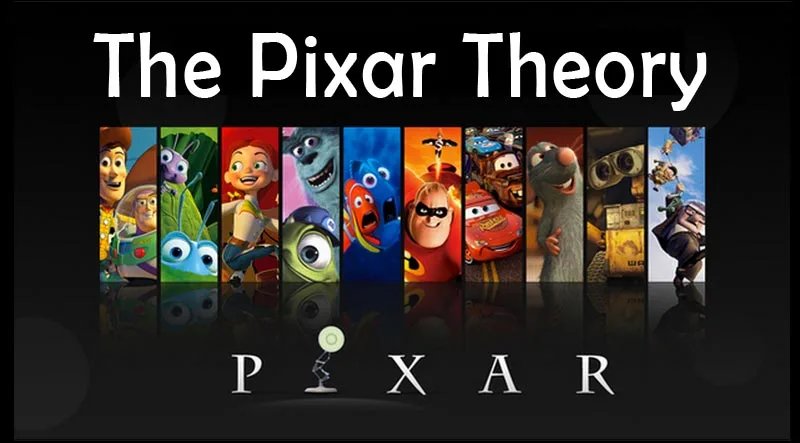
Next, Onward (2020) depicts a modern fantasy world where magic once thrived but faded due to technology’s rise. Elf brothers Ian and Barley quest for a spell to resurrect their father. This bridges Brave‘s raw magic to a world where phoenix gems and wizard staffs echo ancient curses. Magic’s decline foreshadows human dominance.
Luca (2021) introduces sea monsters—land-walking fish creatures in 1950s Italy. Their transformation ability ties to Brave‘s mutations, suggesting aquatic animals also gained intelligence. Easter eggs like a Toy Story woodcarving hint at future toy tech.
The Monsters Era: University to Inc.
Centuries later, Monsters University (2013) and Monsters, Inc. (2001) occur around the early 2000s in Monstropolis. Monsters, evolved from Brave‘s intelligent animals, power their city with children’s screams. Discovered: laughter generates 10x more energy. Human girl Boo sneaks in, her door travels to the past (prehistoric?).
Theory twist: Boo’s ancient clan tattoo matches a Brave symbol, implying she’s an ancestor of the witch. Monsters’ doors connect dimensions, looping energy back to fuel magic’s origin. Monsters at Work series extends this era.
Modern Human World: Superheroes, Chefs, and Emotions
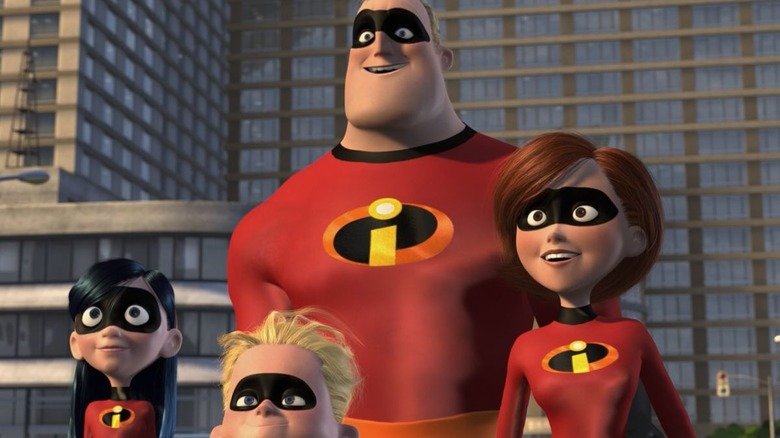
Parallel to monsters, the human world blooms. The Incredibles (2004) and Incredibles 2 (2018) are set in the 1960s-2000s. Supers like Mr. Incredible hide after Syndrome’s villainy. Screenslaver’s tech predicts Wall-E‘s consumerism.
Ratatouille (2007) follows Remy, a genius rat in 1960s Paris, proving Brave mutations reached rodents. Linguini’s restaurant chaos nods to family films.
Finding Nemo (2003) and Finding Dory (2016) in the Pacific showcase intelligent fish, descendants of Luca‘s sea monsters. Dory’s marine institute has BNL logos, linking to future corps.
Up (2009) in the 1930s-2000s features Carl Fredricksen’s adventure. His house flies with balloons, echoing magic, and Paradise Falls hides monster origins. Kevin the bird’s intelligence fits the pattern.
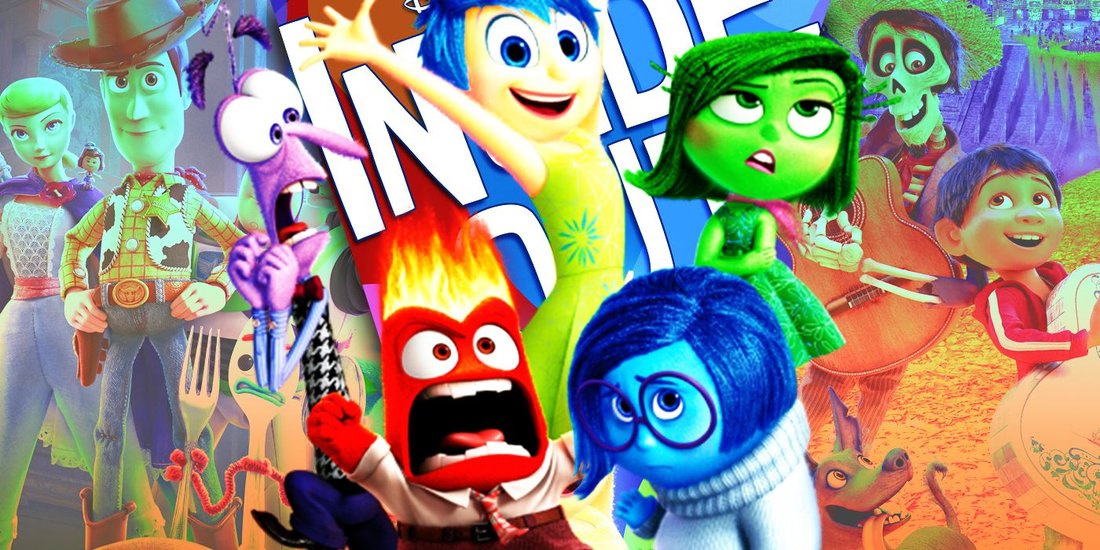
Inside Out (2015) and Inside Out 2 (2024) explore Riley’s mind, universal to humans and animals. Joy’s console resembles monster tech.
The Toy Story Saga: Alive Toys and Alien Influence
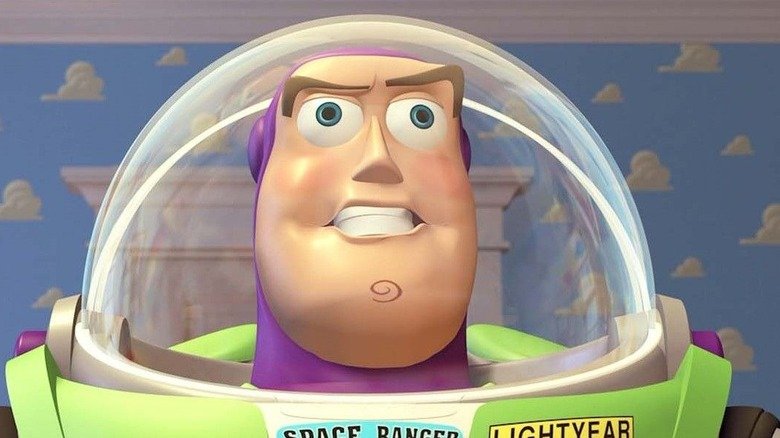
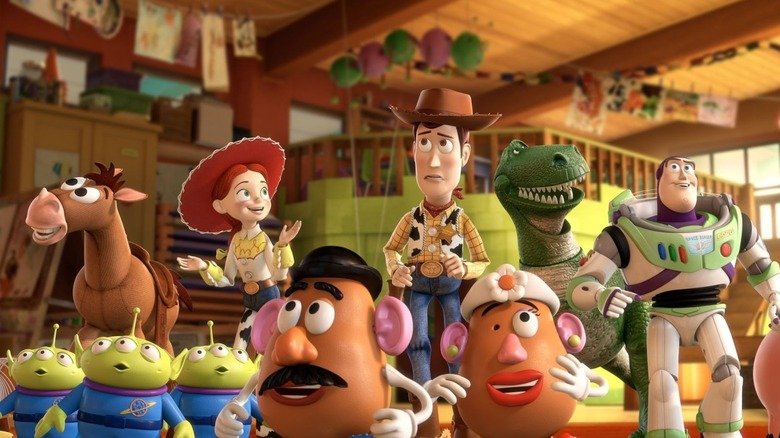
1995-2010s: Toy Story trilogy and Lightyear (2022). Toys live via unknown energy—perhaps Brave magic or binomenal nanomachines from Lightyear. Buzz Lightyear’s toy line stems from real space ranger Chris Evans’ character. Pizza Planet truck recurs everywhere, a universe constant. Toy Story 4 introduces Forky, born from trash, prefiguring Wall-E.
Mexican Magic and the Afterlife: Coco
Coco (2017) in modern Mexico accesses the Land of the Dead via marigold portals. Ernesto de la Cruz’s fame ties to music in Soul. Pet chiroptera Dante, a xoloitzcuintli, shows continued animal smarts. This realm connects to monster doors.
Music, Elements, and Sports: Soul, Elemental, Turning Red
Soul (2020) reveals the Great Before, counseling souls pre-birth. Joe Gardner’s jazz links to Coco. Elemental (2023) in Element City blends fire, water, air, earth beings—evolved elemental forces from magic.
Turning Red (2022) features panda curse from 2000s, tying to ancestral magic like Brave.
Post-Apocalyptic Machines: Cars and Wall-E
Far future: Wall-E (2008), 2805 AD. Humans flee trash-covered Earth via BNL starliners. Wall-E, a robot, falls for EVE. Roaches survive, mutating into A Bug’s Life insects over millennia.
Humans perish; machines evolve into Cars (2006) world. Lightning McQueen’s society is post-Wall-E, with Dinoco (dino nod) and Stanley Steamer statues. Cars 2 spies, Cars 3 mentorship. Chick Hicks’ spy league fights Allinol (BNL fuel).
Planes spin-off fits aerial machines.
A Bug’s Life and Lightyear: Closing the Loop
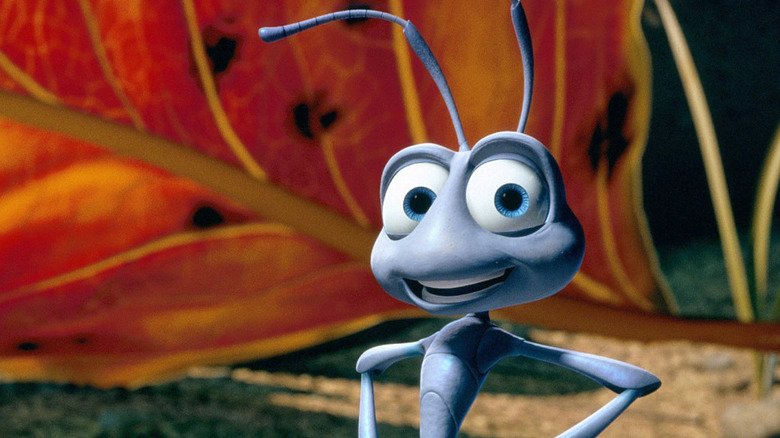
Post-Cars, Earth recovers. A Bug’s Life (1998) shows intelligent bugs from Wall-E roaches, threatened by birds (Up nod). Flik’s inventions echo toy tech.
Lightyear (2022) as origin story loops Buzz toys back to Toy Story era.
The Pixar Theory Timeline: Challenges and Future
This timeline—prehistoric dinos, magic mutations, monster energy cycles, human decline, machine dominance, insect revival—forms a self-sustaining universe. Challenges: Elio (upcoming) may add aliens. Pixar’s Pete Docter embraces Easter eggs without confirming.
Word count: 1,248. Dive deeper into Pixar theory timeline charts online or rewatch with connections in mind. What’s your favorite link? Share in comments!