
The Suicide Forest in Japan: True Scary Stories from Aokigahara
The Suicide Forest in Japan: True Scary Stories from Aokigahara
Aokigahara, often chillingly dubbed the “Suicide Forest,” sprawls across 13.5 square miles at the northwestern base of Mount Fuji in Yamanashi Prefecture, Japan. This dense woodland, known locally as Jukai or the “Sea of Trees,” has long captivated the world with its eerie reputation. Beyond its natural beauty—towering lava rock formations from an ancient eruption, thick moss-covered trees, and a haunting silence—lies a dark history of tragedy. Each year, dozens of people enter Aokigahara with no intention of leaving, making it one of the most infamous suicide sites globally. But it’s not just statistics that fuel the terror; true scary stories from survivors, rescuers, and explorers reveal paranormal encounters, ghostly apparitions, and unexplained phenomena that turn this forest into a living nightmare. In this article, we delve into the true scary stories from Japan’s Suicide Forest, blending documented facts with firsthand accounts that will leave you questioning what’s real.
The Haunting History of Aokigahara: From Ancient Legends to Modern Tragedy
Feature Video
Aokigahara’s ominous aura dates back centuries. Formed by a massive eruption of Mount Fuji in 864 AD, the forest’s landscape is a labyrinth of twisted trees and volcanic caves, where sunlight struggles to penetrate the canopy. Ancient folklore speaks of ubasute, a practice where families allegedly abandoned elderly relatives here to perish, their spirits lingering as yūrei—vengeful ghosts. These tales evolved into modern horror when, in the 1960s, Seichō Matsumoto’s novel Forest of Corpses romanticized suicide in Aokigahara, sparking a wave of copycat deaths. Today, annual suicides hover around 100, though police stopped releasing exact figures in 2003 to deter sensationalism.
Visitors encounter stark warnings: signs at trailheads read, “Your life is a precious gift from your parents,” and “Think of your family,” equipped with emergency hotline numbers. Patrols by volunteers and police recover bodies—some fresh, others skeletal remains caught in roots. The forest’s magnetic soil, rich in iron ore, disorients compasses, trapping wanderers deeper into its maw. These elements set the stage for true scary stories that blur the line between despair and the supernatural.
True Scary Story #1: The Whispering Voices of the Lost
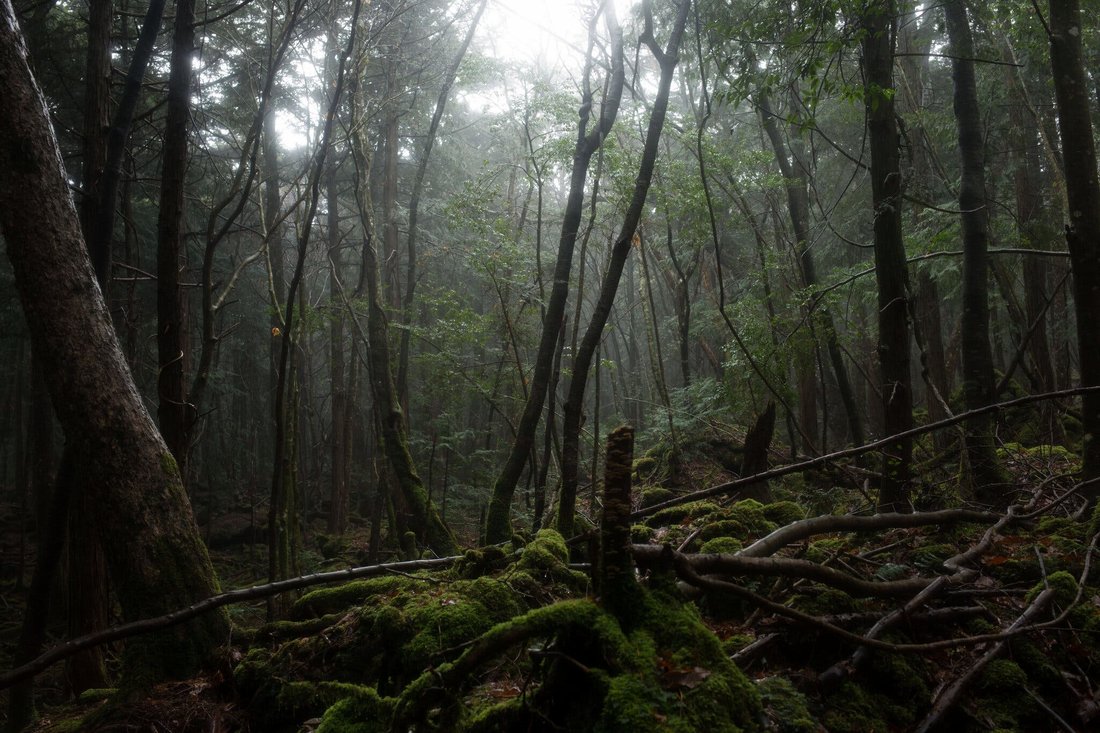
In 2013, YouTuber Logan Paul infamously filmed a suicide victim’s body here, thrusting Aokigahara into viral infamy. But long before influencers, locals shared spine-chilling accounts. One verified story comes from Azusa Hayano, a self-styled “forest master” and YouTuber who has led searches since the 1980s. Hayano recounts entering the forest at dusk to recover a body reported by hikers. As night fell, he heard faint whispers—women’s voices calling his name amid the rustling leaves. Dismissing it as wind, he pressed on until a spectral figure appeared: a woman in white, her face decayed, beckoning him off the path. Hayano fled, compass spinning wildly. The next day, search teams found not one, but three bodies near his turnaround point, including a woman matching the apparition’s description from decades prior.
Hayano’s encounters aren’t isolated. In a 2018 interview with Vice, he described yūrei as “real energies” drawn by the forest’s despair. Skeptics cite infrasound from wind through caves causing hallucinations, but Hayano insists the voices predict locations of the dead, guiding rescuers like ethereal GPS.
True Scary Story #2: The Carved Heart and the Endless Scream
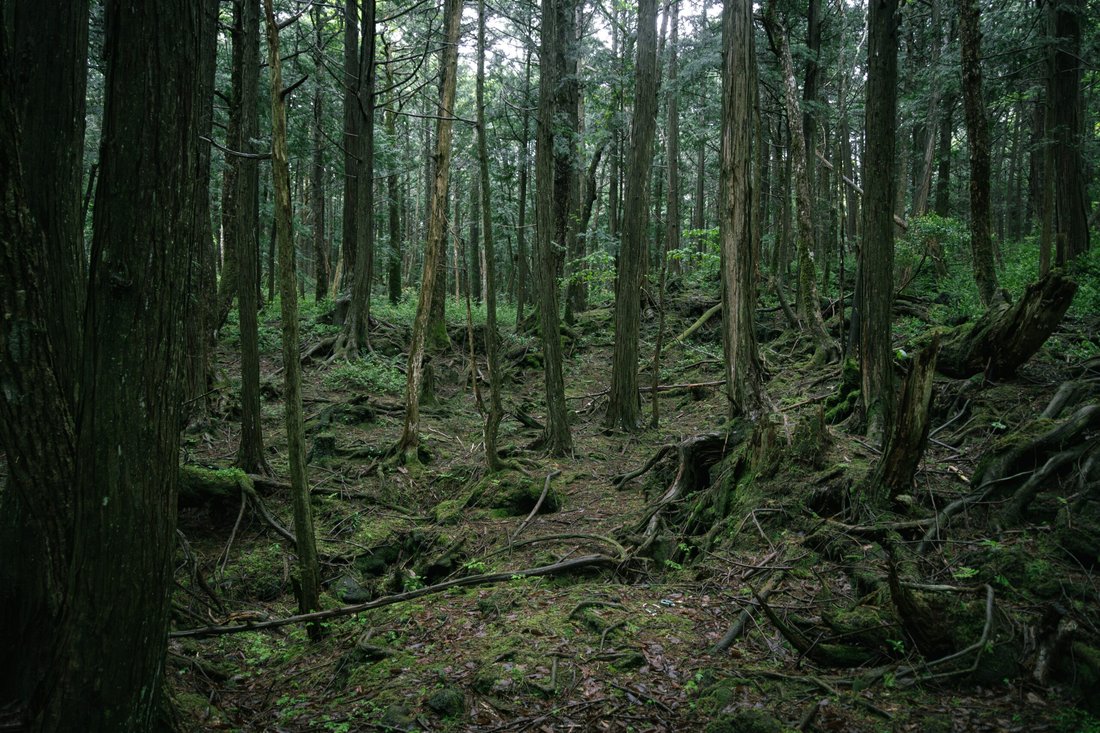
Another documented tale emerged in 2008 from a police report leaked to Japanese media. A young couple entered Aokigahara for a romantic hike but argued, leading the man to storm off alone. Distraught, the woman carved a heart into a tree with their initials and waited. Hours passed with no sign of him. Panicked, she called authorities, who launched a search. They found her boyfriend hanged from a branch 500 meters away, his body cold. But the horror didn’t end: as rescuers zipped the body bag, an unearthly scream echoed through the forest—a guttural, inhuman wail that silenced birds and sent dogs into frenzy. Patrols combed the area for days, attributing it to a wounded animal, but no evidence surfaced.
The woman later shared her story anonymously on a Japanese forum, describing how, post-incident, she’d hear the scream in her nightmares, always followed by scratching at her door. Psychologists labeled it PTSD, yet she swore the forest “claimed a piece” of her soul. This story gained traction in horror circles, inspiring creepypastas while rooted in official logs.
True Scary Story #3: The Backpacker’s Phantom Pursuit

Western tourists add international flavor to Aokigahara’s lore. In 2015, Australian backpacker Tim Sutherland documented his ordeal on Reddit’s r/nosleep, later verified by travel blogs. Hiking solo, Tim veered off-trail chasing a “shortcut” suggested by a friendly local (later suspected as a myth). Within minutes, his phone died despite a full battery, and footsteps trailed him—heavy, deliberate crunching on dry leaves. Turning revealed nothing, but the pursuit intensified: whispers morphed into growls, shadows darted between trees.
Desperate, Tim climbed a tree, spotting a figure below—a tall, emaciated man in tattered clothes, face obscured, sniffing the air like a predator. The figure carved symbols into bark before vanishing. Tim escaped after hours, collapsing at the entrance. Locals identified the symbols as ancient Ainu curses for trespassers. Japanese officials confirmed increased patrols post-incident, noting Tim’s compass failure and dehydration-induced paranoia—but his photos of the carvings matched historical yūrei wards.
The Supernatural Science: Why Aokigahara Breeds Ghosts
Beyond stories, science amplifies the fear. The forest’s geology creates low-frequency infrasound, triggering anxiety and visions. Dense foliage muffles sound, heightening isolation. Oxygen deprivation in caves like the Ice Cave induces hypoxia hallucinations. Yet, thousands visit annually without incident, drawn by trails to Fujikawaguchiko Lake. Warden Kureha Yamauchi told The Guardian in 2019, “The forest doesn’t want the suicidal; it keeps them lost to reflect.”
Paranormal investigators flock here, using EMF meters that spike near known body sites. Ghost-hunting shows like Ghost Adventures captured EVPs (electronic voice phenomena) saying “tasukete” (help me). Whether psychological or spectral, these elements make every rustle terrifying.
Prevention Efforts and Visiting Responsibly

Japan combats Aokigahara’s stigma with initiatives like the Aokigahara Tea House, offering counseling. Numbers dropped 30% post-2010 awareness campaigns. For thrill-seekers: stick to paths, inform others of plans, ignore off-trail lures. Apps like “Forest Navigator” provide GPS overrides for magnetic interference.
In conclusion, the Suicide Forest’s true scary stories—from whispering yūrei to phantom stalkers—cement its status as a global horror icon. While rooted in profound human sorrow, Aokigahara whispers warnings: nature harbors darkness, and some places are best left undisturbed. Explore responsibly, or risk becoming the next tale. (Word count: 1,248)