
10 Cybersecurity Myths That Could Cost You Everything
Hey, Let’s Bust Some Cybersecurity Myths Before They Bite You
Picture this: You’re sipping coffee, scrolling through emails, feeling pretty secure because you’ve got antivirus software humming in the background. Then bam—one wrong click, and your bank account’s drained, your photos are ransom-locked, or worse, your identity’s up for grabs on the dark web. Sounds dramatic? It’s not. Cybersecurity myths are like those sneaky gremlins that lull you into a false sense of safety, only to cost you everything when disaster strikes.
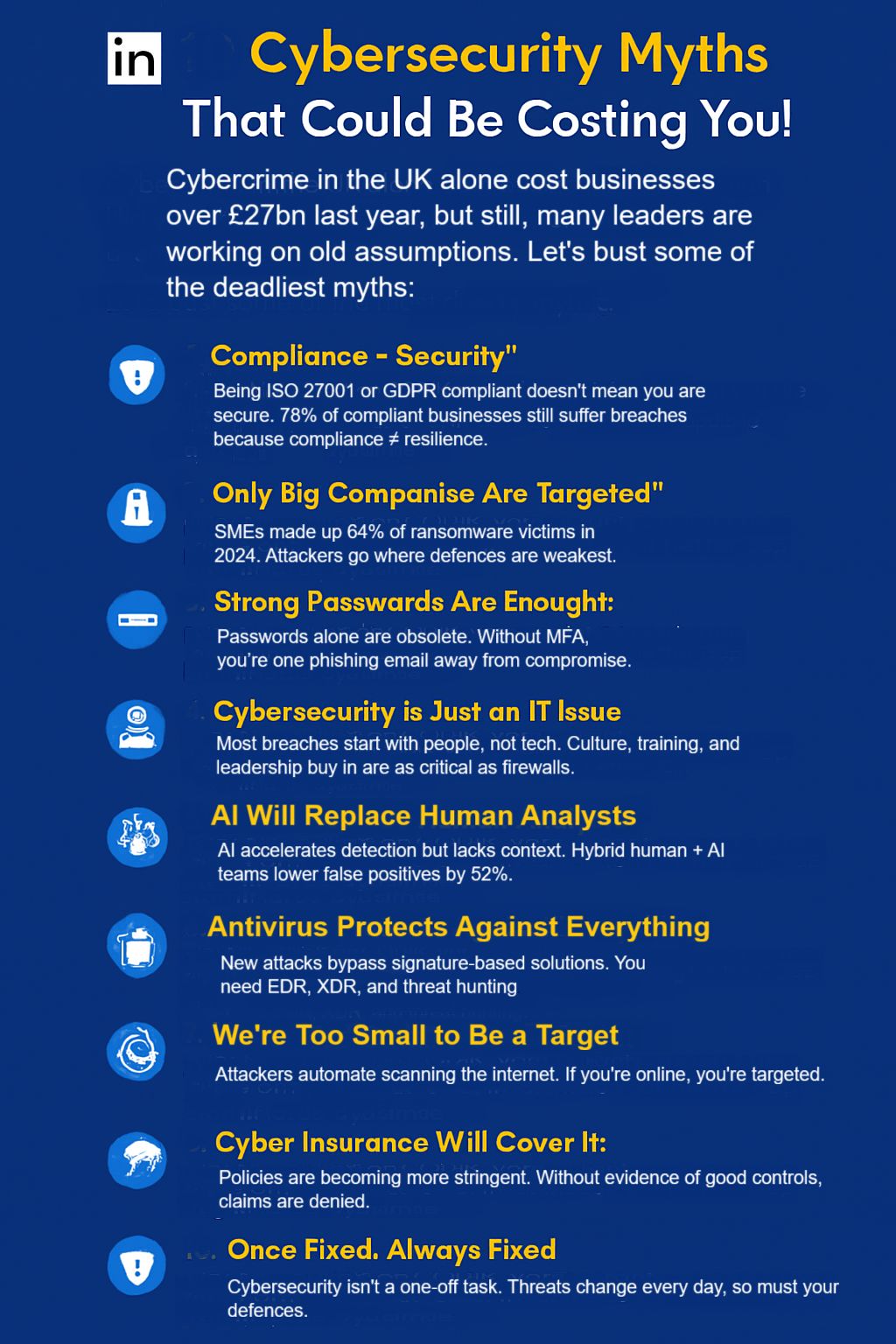
In this post, we’re debunking 10 of the biggest whoppers people tell themselves about staying safe online. I’ll keep it real, conversational, and packed with why these myths are dangerous plus quick fixes. Buckle up—your digital life might depend on it.
Myth 1: Antivirus Software Is All You Need
Oh, how I wish this were true. Antivirus is like a bouncer at a club—it keeps out the obvious riffraff but misses the VIP list of sophisticated threats. Malware evolves faster than you can say “update,” and zero-day exploits laugh in the face of traditional AV.
Real talk: In 2023, ransomware attacks surged 93%, per SonicWall reports, even on protected systems. What costs you? Data loss, downtime, payouts. Fix it: Layer up with firewalls, email filters, and behavioral monitoring. Think Swiss cheese— one layer alone has holes.
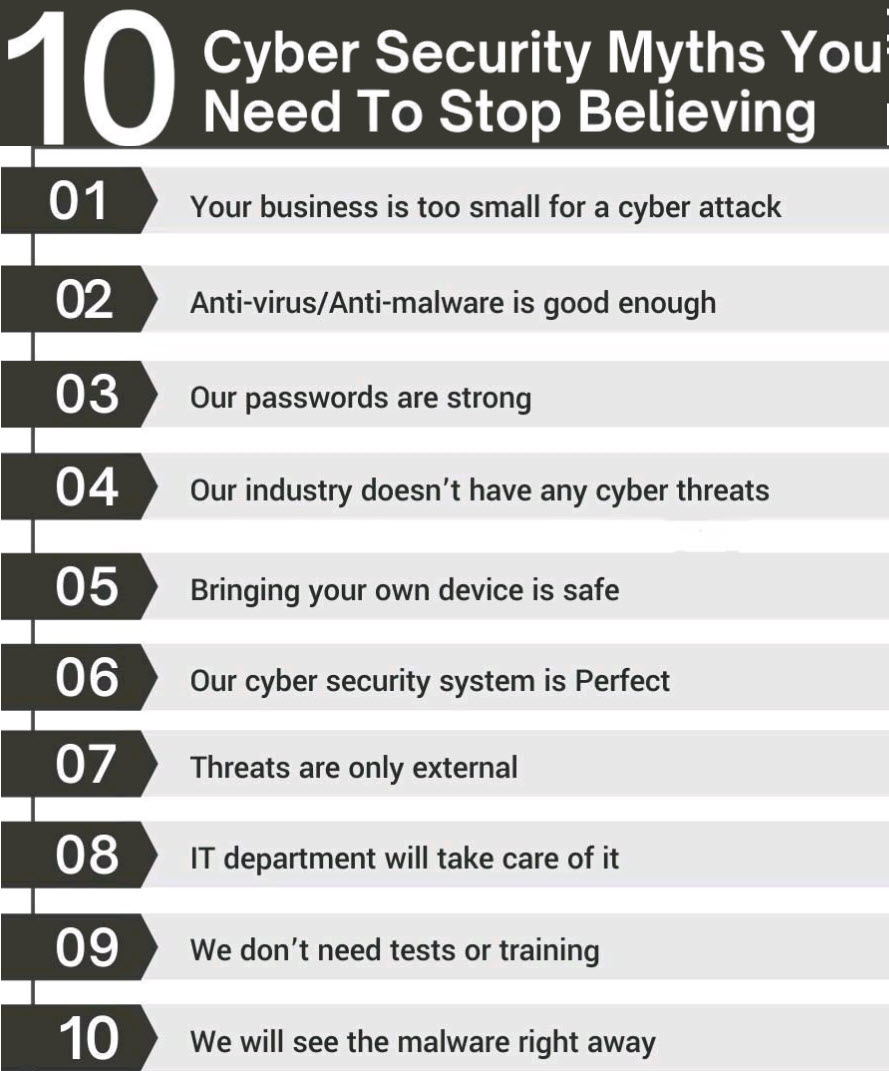
Myth 2: Long Passwords Are Unbreakable
“Make it 20 characters, mix in symbols, done!” Nope. Length helps, but without a password manager and unique creds per site, you’re toast. Hackers use credential stuffing—your reused Netflix password hits your bank.
Stats? Verizon’s DBIR says 81% of breaches involve weak or stolen passwords. Cost? Millions for businesses, personal ruin for you. Pro tip: Use a manager like LastPass, enable MFA everywhere, and say goodbye to “Password123!” variants.
Myth 3: Macs Are Immune to Viruses
Apple fans, I love you, but wake up. macOS isn’t a force field. Malware like XProtect is basic; threats like Atomic Stealer target Macs specifically now. Remember the 2020 macOS backdoor scandals?
Why it hurts: Data theft, crypto-mining draining your battery (and wallet). Malwarebytes reports Mac threats up 15% yearly. Solution: Same rules apply—updates, safe browsing, no jailbreaking. No OS is invincible.
Myth 4: Phishing Only Comes from Sketchy Emails
Think it’s just Nigerian princes? Wrong. Phishing hides in SMS (smishing), calls (vishing), and even QR codes. That “bank alert” text? Boom, malware.
Proof: Proofpoint says 36% of breaches start with phishing. Cost? Average $4.5M per incident (IBM). Stay sharp: Verify sources, hover links, use anti-phishing tools. Trust your gut—if it’s urgent, it’s sus.
Myth 5: Two-Factor Authentication (2FA) Is Bulletproof
2FA adds a layer, sure, but SIM-swapping attacks bypass SMS codes. Push notifications? Social engineering gets ’em too. Hardware keys like YubiKey are gold, though.
Danger: High-profile hacks like Twitter’s 2020 breach via 2FA flaws. Fix: Go app-based (Authy) or hardware. Never SMS. It’s like a double lock—pick the right one.
Myth 6: Firewalls Make You Invulnerable
Your router’s firewall is great for basics, but it’s no Death Star shield. It blocks ports, not insider threats or encrypted attacks. Cloud services? Whole new battlefield.
Real cost: Firewalls miss 70% of advanced threats (Gartner). Pair with endpoint detection, zero-trust models. It’s defense in depth, folks—not a moat.
Myth 7: Software Updates Are Just Annoying Nags
“I’ll do it later.” Famous last words. Patches fix known exploits—WannaCry hit 200K systems skipping updates, costing billions.
2024’s Log4Shell echoes still. Auto-update everything. Cost of ignoring? Your network becomes a hacker playground. Set it and forget it.
Myth 8: Free VPNs Are a Sweet Deal
Free lunch? Nope, you are the lunch. They log data, inject ads, sell your info. Speed throttles hide weak encryption.
Surfshark studies show 88% of free VPNs leak data. Risk: Privacy gone, targeted ads turning malicious. Invest in paid like ExpressVPN—worth every penny for real anonymity.
Myth 9: Cloud Storage Means No Backup Needed
Cloud’s convenient, but one account hack or outage (remember AWS downtimes?), poof—your files vanish. Ransomware loves cloud too.
3-2-1 rule: 3 copies, 2 media, 1 offsite. Tools like Backblaze. Cost of myth? Irreplaceable family pics, business docs. Don’t bet on “the cloud never fails.”
Myth 10: Cyberattacks Only Hit Big Companies
“I’m a small fish—no one’s targeting me.” Wrong. 43% of attacks hit small biz (Accenture), fish phishing ponds for easy wins. Your $50 router’s as juicy as Fortune 500.
Cost: 60% of SMBs fold post-breach. Protect like a corp: Train staff, segment networks, get cyber insurance. You’re not invisible; you’re vulnerable.
Wrap It Up: Stay Vigilant, Stay Safe
There you have it—10 myths shattered. Cybersecurity isn’t set-it-and-forget-it; it’s ongoing vigilance. Start today: Audit passwords, enable MFA, update now. Your future self (and wallet) will high-five you. Share this if it hit home—what myth surprised you most? Drop a comment!