
Quantum Leap: How Qubits Will Make Today’s Supercomputers Look Like Calculators
Ever Wondered Why Your Laptop Feels Slow?
Picture this: you’re trying to crack a massive puzzle, like optimizing traffic for an entire city or simulating a new drug molecule. Your supercomputer chugs away for days, maybe weeks, burning through electricity like there’s no tomorrow. Now imagine solving that same puzzle in seconds. Sounds like sci-fi? Welcome to the world of quantum computing, where qubits are about to turn today’s behemoth machines into relics—think abacuses next to iPhones.
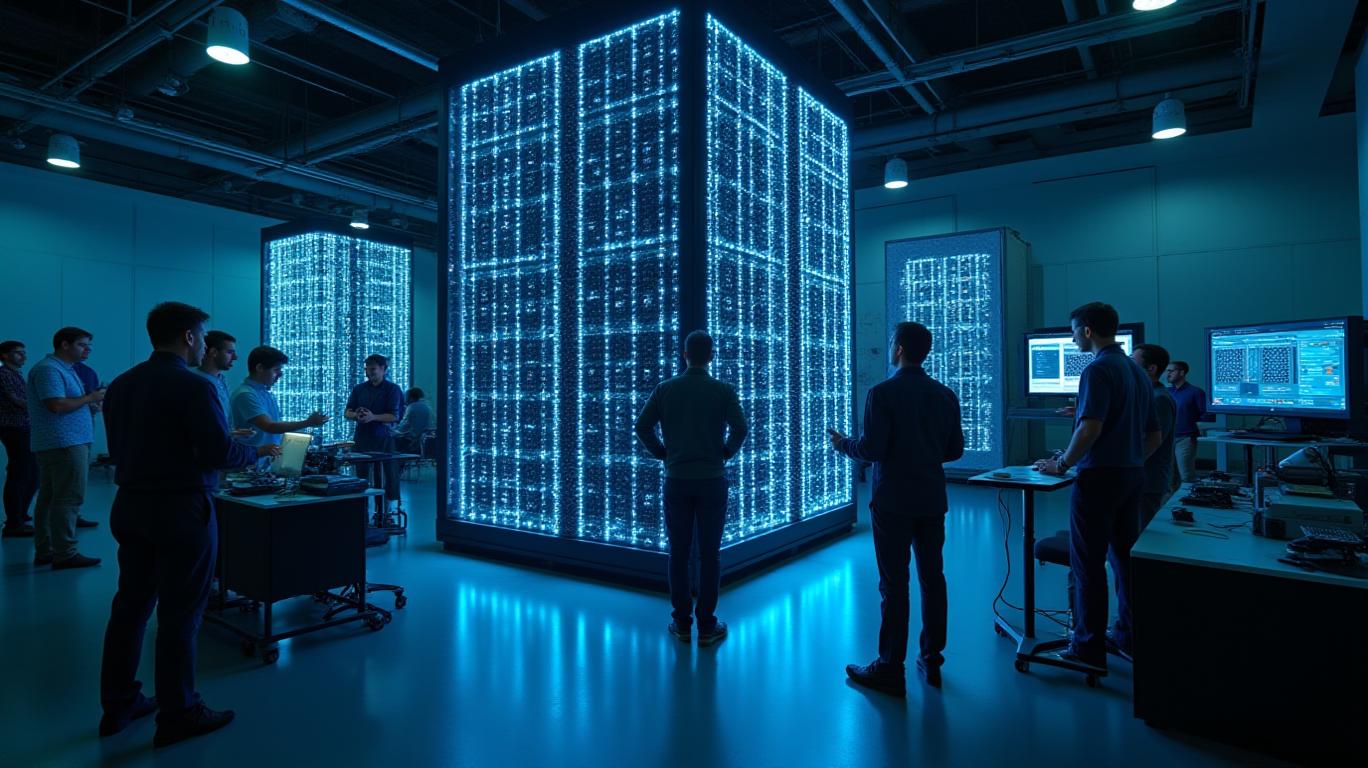
I’ve been geeking out over quantum tech for years, and let me tell you, it’s not just hype. Quantum computers aren’t faster versions of what we have; they’re a whole new paradigm. At the heart? Qubits. Stick with me, and by the end, you’ll see why supercomputers will soon look like calculators.
What the Heck Is a Qubit?
Let’s start simple. Classical computers—like the one you’re reading this on—use bits. A bit is binary: 0 or 1. On or off. Black or white. Easy peasy.
Qubits? They’re the quantum rebels. Thanks to quantum mechanics (yeah, that weird stuff from physics class), a qubit can be 0, 1, or both at the same time. This is called superposition. Imagine flipping a coin that’s heads, tails, and everything in between simultaneously until you look at it.
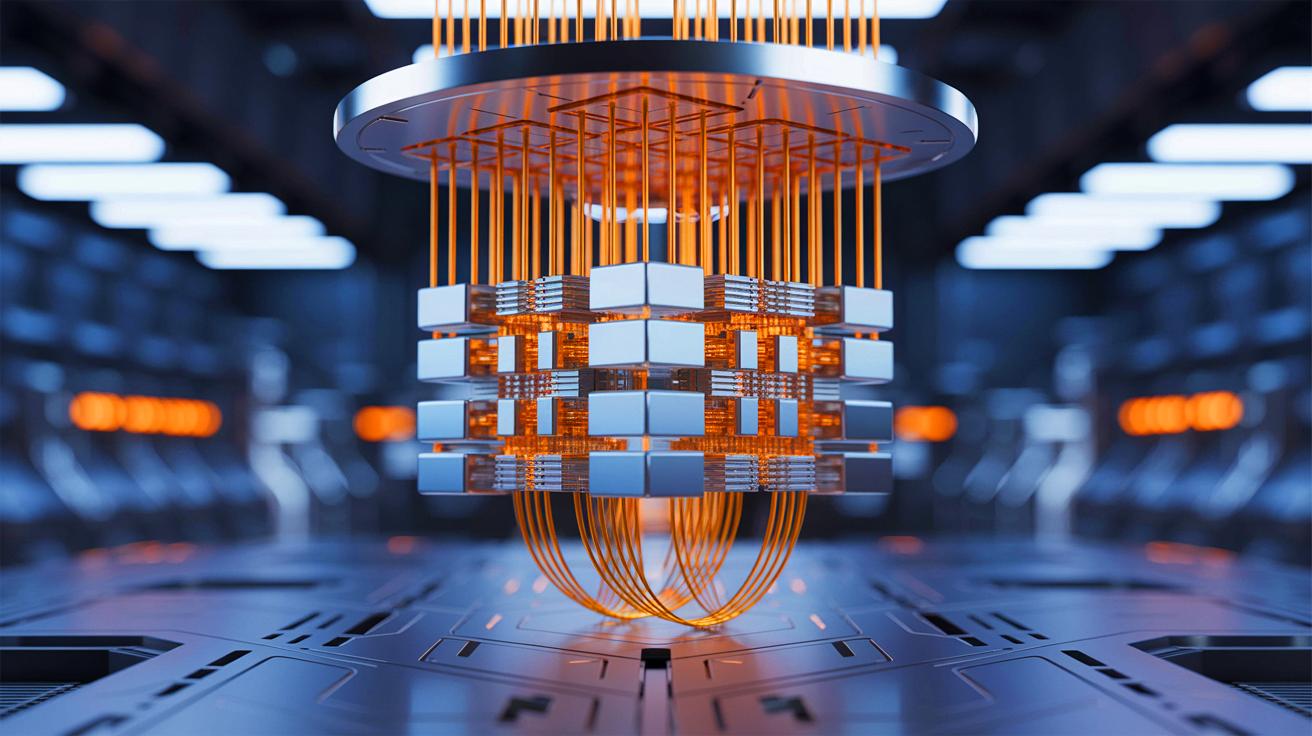
One qubit might not blow your mind, but scale it up. Two qubits can represent four states at once (00, 01, 10, 11). Three? Eight states. With 300 qubits, you’re juggling more possibilities than atoms in the universe. That’s 2^300 combos—way beyond what any classical supercomputer can touch.
Superposition Meets Entanglement: Magic Happens
Superposition is cool, but pair it with entanglement, and it’s game over. Entangled qubits link up so the state of one instantly influences another, no matter the distance. Einstein called it “spooky action at a distance,” and it’s real.
This combo lets quantum computers explore vast solution spaces in parallel. Classical computers check one path at a time; quantum ones check zillions simultaneously. It’s like sending an army of yous to try every door in a maze at once, then picking the best route instantly.
Classical Supercomputers vs. Quantum Beasts: The Smackdown
Today’s top supercomputer, Frontier, clocks 1.1 exaflops— a quintillion calculations per second. Impressive? Sure. But for certain problems, it’s useless.
Take factoring large numbers. Classical machines grind through trial divisions; it’d take billions of years to crack RSA encryption keys. Enter Shor’s algorithm on a quantum computer: it could do it in hours with enough qubits. Boom—cybersecurity flipped.
Or Grover’s algorithm for searching unsorted databases. Classical: linear time, like flipping through a phonebook page by page. Quantum: square root speedup. For massive datasets, that’s night and day.
Real demo? Google’s Sycamore hit “quantum supremacy” in 2019, solving a task in 200 seconds that’d take Summit supercomputer 10,000 years. Not practical yet, but a taste of what’s coming.
Applications That’ll Change Everything
Okay, theory’s fun, but what’s the payoff? Buckle up.
Drug Discovery: Simulating molecules quantum-style could slash years off developing new meds. Pfizer and IBM are already testing it for COVID variants.
Climate Modeling: Predict weather patterns or optimize energy grids with hyper-accurate simulations. Supercomputers approximate; qubits nail it.
Finance: Portfolio optimization, risk analysis—problems with exponential variables. Quantum could make Wall Street wizards obsolete.
AI and Machine Learning: Training models on huge datasets? Quantum speedup means smarter AI faster.
And logistics? Think Amazon routing packages globally or airlines scheduling flights. Savings in billions.
We’re talking a $1 trillion market by 2035, per McKinsey. Your calculator days are numbered.
The Bumps in the Quantum Road
No rose-tinted glasses here. Quantum computing’s tricky. Qubits are fragile divas—decoherence makes them lose their quantum magic from tiny vibrations or heat. Current systems need near-absolute zero temps.
Error rates suck too. Classical bits are 99.999% reliable; qubits? Maybe 99%. Fix with error correction, but that guzzles qubits—thousands for one reliable “logical” qubit.
Scalability’s the beast. IBM’s got 433-qubit Osprey; aiming for 100,000+. Google, Rigetti, IonQ—all racing. But we’re years from fault-tolerant machines.
Who’s Winning the Quantum Race?
Big players abound. IBM’s Quantum Network has cloud access for devs. Google’s Bristlecone pushes boundaries. China’s Jiuzhang claims supremacy with photons. Startups like Xanadu bet on room-temp photonic qubits.
Governments pour cash: US Quantum Initiative ($1.2B), EU’s Quantum Flagship (€1B). It’s a global sprint.
Fun fact: Quantum Advantage (useful supremacy) might hit by 2025-2030 for niche tasks. Full disruption? 2035+.
Your Quantum Future Starts Now
So, yeah—qubits won’t replace your laptop for Netflix. But for the hairy problems supercomputers sweat over? They’ll make ’em look like toys.
Imagine personalized medicine, unbreakable codes (post-quantum crypto’s brewing), or cracking fusion energy puzzles. It’s not if, but when.
Dive in: play with IBM Qiskit (free quantum coding), follow arXiv papers, or snag a quantum stock. The leap’s happening—don’t get left holding a calculator.
(Word count: 1028)