
Shutter Island Ending Explained: The Jaw-Dropping Twist and Hidden Meaning That Changes EVERYTHING!
Introduction to Shutter Island: A Psychological Masterpiece
Watch Related Video Coverage
Released in 2010, Shutter Island is a gripping psychological thriller directed by the legendary Martin Scorsese. Starring Leonardo DiCaprio in one of his most intense performances, the film has captivated audiences with its mind-bending narrative, atmospheric tension, and profound exploration of the human psyche. Based on Dennis Lehane’s 2003 novel of the same name, the movie delves into themes of trauma, guilt, reality versus delusion, and the dark underbelly of mental health treatment in the mid-20th century. What starts as a seemingly straightforward missing-person investigation spirals into a labyrinth of deception, leaving viewers questioning everything they thought they knew. At the heart of its enduring popularity is the enigmatic ending, packed with hidden meanings that demand multiple viewings. In this article, we’ll break down the plot, cast, a spoiler-free review, and—most crucially—the shocking truths behind the finale.
Plot Summary (Spoiler-Free)
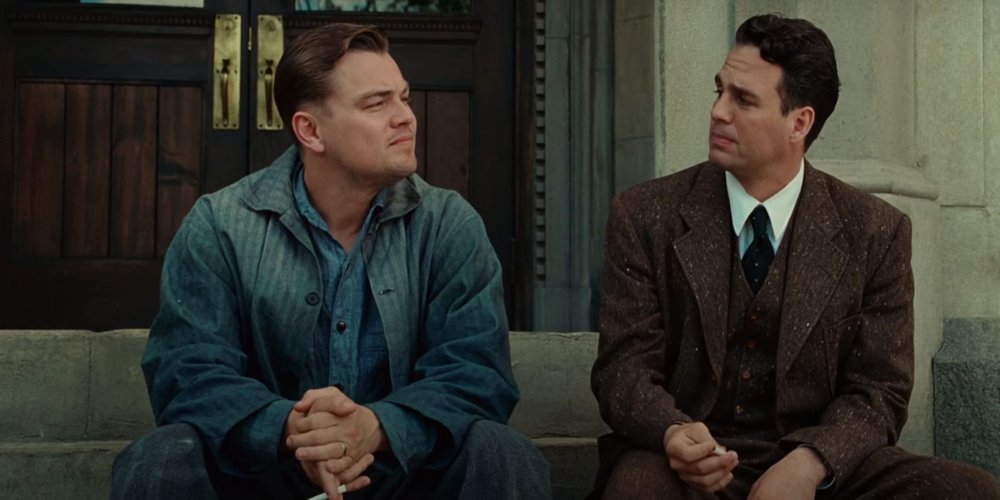
The story unfolds in 1954 on the remote and foreboding Shutter Island, home to Ashecliffe Hospital, a facility for the criminally insane. U.S. Marshals Teddy Daniels (Leonardo DiCaprio) and his new partner Chuck Aule (Mark Ruffalo) arrive by ferry to investigate the mysterious disappearance of Rachel Solando, a patient accused of drowning her three children. Ashecliffe is no ordinary hospital; it’s a fortress-like institution shrouded in secrecy, guarded by cliffs, stormy seas, and whispers of unethical experiments. As Teddy probes deeper, he encounters resistance from the staff, led by the enigmatic Dr. John Cawley (Ben Kingsley) and Dr. Jeremiah Naehring (Max von Sydow). Strange occurrences plague Teddy: cryptic notes, hallucinations, and visions of his late wife Dolores (Michelle Williams). The island’s isolation amplifies paranoia, blurring the lines between investigator and inmate. Scorsese masterfully builds dread through shadowy cinematography by Robert Richardson, a haunting score by Max Richter, and DiCaprio’s raw portrayal of a man unraveling at the seams. The plot twists like a Möbius strip, challenging perceptions of truth and sanity right up to the final frame.
Cast and Crew: Powerhouse Talent Behind the Madness
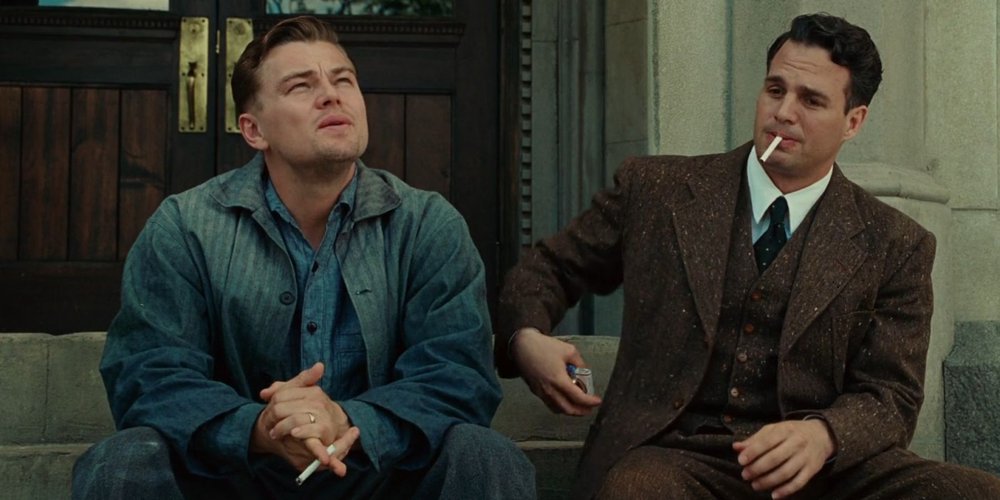
Leonardo DiCaprio delivers a tour-de-force as Teddy Daniels, channeling the vulnerability and rage that defined his collaborations with Scorsese in films like The Departed and The Aviator. DiCaprio’s ability to convey suppressed torment makes Teddy’s journey heartbreakingly real. Mark Ruffalo shines as the affable Chuck, providing levity before the darkness engulfs him. Ben Kingsley brings chilling authority to Dr. Cawley, his subtle expressions hinting at layers of compassion and calculation. Michelle Williams is ethereal and tragic as Dolores, appearing in Teddy’s feverish dreams. Supporting roles elevate the ensemble: Max von Sydow as the stern Dr. Naehring, Patricia Clarkson as a ghostly lighthouse keeper, and Jackie Earle Haley, Ted Levine, and John Carroll Lynch as hospital staff who blur the line between ally and adversary.
Martin Scorsese, drawing from his Catholic upbringing and fascination with guilt-ridden protagonists (think Taxi Driver or Raging Bull), directs with precision. The screenplay by Laeta Kalogridis stays faithful to Lehane’s novel while amplifying visual motifs. Production designer Dante Ferretti crafts a nightmarish Gothic world, from the decrepit Ward C to the ominous lighthouse. Cinematographer Robert Richardson’s black-and-white flashbacks and fish-eye lenses distort reality, mirroring Teddy’s fractured mind. The result is a film that grossed over $294 million worldwide on a $80 million budget, earning Oscar nominations for Best Cinematography and Production Design.
Movie Review: Why Shutter Island Still Haunts Us
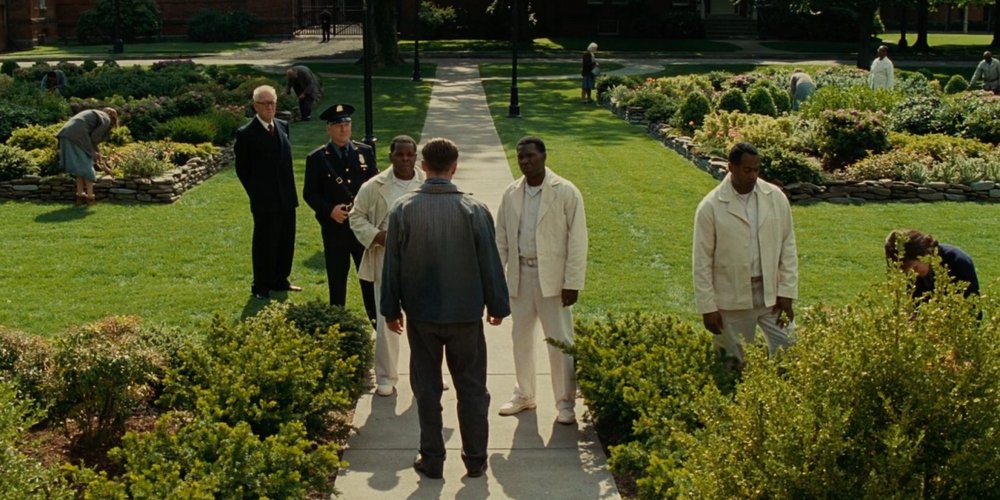
Shutter Island scores a solid 8.2/10 on IMDb and 68% on Rotten Tomatoes, praised for its suspense and performances but critiqued by some for its familiar twists. Scorsese avoids cheap jump scares, opting for cerebral terror rooted in psychological ambiguity. The film’s strength lies in its slow-burn pacing, which crescendos into existential dread. DiCaprio’s performance is career-best, rivaling his work in Inception (released the same year). It’s not just a thriller; it’s a meditation on post-WWII trauma, lobotomies, and the ethics of psychiatric care—echoing real events like the Tuskegee experiments and MKUltra.
What elevates it? Symbolism everywhere: water as repressed memory, fire as destruction, the lighthouse as enlightenment or damnation. Scorsese peppers clues—like anagrams (“Teddy Daniels” rearranges to “Andrew Laeddis”) and recurring phrases (“This is a game”)—rewarding attentive viewers. It’s rewatchable gold; first-timers gasp at reveals, veterans spot foreshadowing. Flaws? The final ambiguity might frustrate casual viewers seeking closure. Still, it’s essential Scorsese, blending noir with horror in a way that lingers like a bad dream. If you haven’t seen it, stream it now—but brace for obsession.
The Ending Explained: Unpacking the Hidden Meaning (MAJOR SPOILERS AHEAD)
Warning: If you haven’t watched Shutter Island, stop here. The finale recontextualizes the entire film, revealing Teddy Daniels as Andrew Laeddis, a patient at Ashecliffe. Andrew invented “Teddy” to cope with unimaginable trauma: his wife Dolores, schizophrenic and delusional, drowned their three children in the lake. When Andrew discovered the bodies, he shot her in denial-fueled rage. The hospital staff, led by Dr. Cawley, orchestrated a radical role-play: transforming the facility into a 1954 mystery where Andrew plays detective hunting Rachel Solando (an anagram for Dolores Chanal) and Andrew Laeddis (himself). Chuck is really Dr. Lester Sheehan, Naehring is involved, and Rachel’s “crime” mirrors Dolores’s.
The “investigation” culminates at the lighthouse, site of rumored brainwashing. Andrew glimpses the truth but relapses into delusion. Cawley pleads for one more try, but Andrew reverts to “Teddy,” muttering “living the only life I’ve got left to live” before lobotomy. Or does he? The hidden meaning hinges on ambiguity. As Andrew walks to surgery with “Chuck,” he whispers the film’s core line: “You know, this place makes me wonder… which would be worse—to live as a monster, or die as a good man?” Cut to black.
Interpretation 1: Tragic Relapse. Andrew accepts reality briefly but can’t bear the guilt. Lobotomy erases his pain, a mercy killing of the self. This aligns with themes of inescapable trauma—WWII Dachau horrors (Andrew liberated it) compound his loss, making sanity unbearable.
Interpretation 2: Deliberate Regression. Andrew knows the truth but chooses delusion. The final walk with “Chuck” (Sheehan) is a test; Andrew winks knowingly, preferring monstrous fantasy to painful reality. Why? Protecting his ego or signaling staff he’s “playing” to avoid transorbital lobotomy, a real 1950s procedure via eye sockets.
Clues support both: Glass of water (representing drowned kids) that Andrew rejects; scalpel dream foreshadowing surgery; Cawley’s optimistic “we can start over.” Scorsese leaves it open, mirroring real mental illness’s complexity. Hidden meanings abound: The name “Shutter Island” evokes closing eyes to truth; federal marshals symbolize law/enforcer roles Andrew clings to; the storm clears post-reveal, suggesting catharsis. Lehane confirmed the ambiguity, saying Andrew likely chooses the lobotomy path as “living the only life I’ve got left.”
The ending critiques 1950s psychiatry—lobotomies peaked then, with 40,000+ performed in the U.S. Ashecliffe parodies institutions like McLean Hospital. It’s a Rashomon-style puzzle: Whose reality? Andrew’s guilt manifests as conspiracy, questioning if “insanity” is societal label or survival mechanism. Fans debate online; Reddit threads dissect frames like the carousel horse (innocence lost) or German accents (Andrew’s war trauma).
Ultimately, Shutter Island‘s genius is forcing self-reflection: Are we all one trauma from delusion? Scorsese gifts no answers, only mirrors.
Final Thoughts and Legacy
Over a decade later, Shutter Island influences films like Gone Girl and Split. Its ending isn’t a gimmick—it’s profound commentary on memory’s fragility. Rewatch with this guide; you’ll see genius anew. What do you think happened? Share below.