
OLED vs AMOLED: The Shocking Differences That Will Change How You Pick Your Next Phone Forever!
Introduction to OLED and AMOLED Displays
Watch Related Video Coverage
Have you ever stared at your smartphone screen, mesmerized by the deep blacks and vibrant colors, only to wonder what magic powers it? Chances are, it’s either an OLED or AMOLED display. These technologies dominate high-end smartphones, TVs, and wearables today. But what’s the real difference between OLED and AMOLED? Many people use the terms interchangeably, but they’re not the same. In this simple breakdown, we’ll cut through the jargon and explain everything you need to know – no tech degree required. By the end, you’ll be an expert ready to choose the perfect screen for your next gadget.
OLED stands for Organic Light-Emitting Diode, a revolutionary display tech where each pixel lights itself up using organic compounds. No backlight needed! This leads to incredible picture quality. AMOLED, or Active Matrix OLED, is a specific type of OLED that adds a thin-film transistor (TFT) layer for better control. Sounds complicated? It’s like OLED is the engine, and AMOLED is the engine with a turbo boost for speed and efficiency.
What Exactly is OLED?
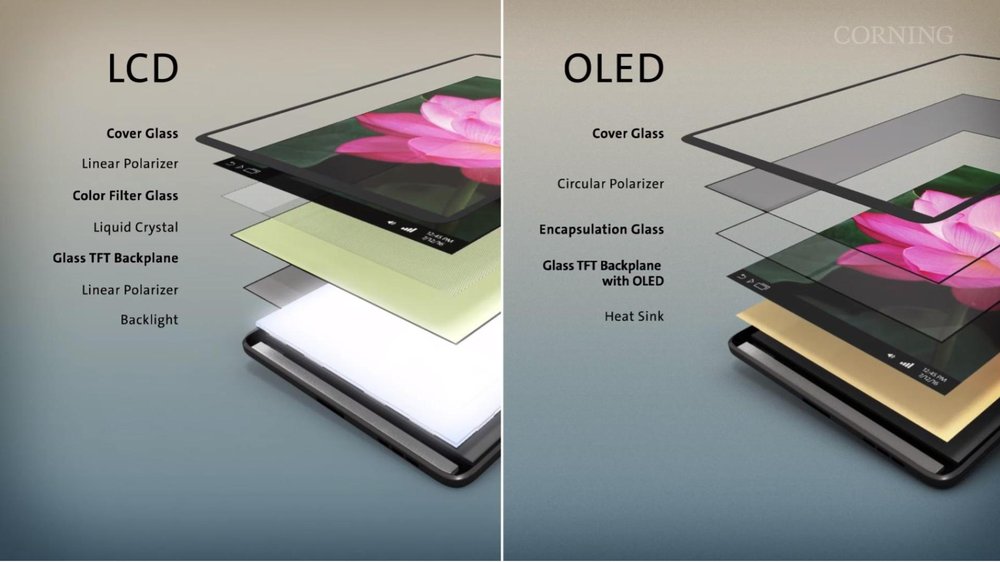
OLED technology first hit the scene in the late 1980s but exploded in popularity with consumer devices around 2010. Here’s how it works simply: Imagine millions of tiny organic lamps, one for each pixel. When electricity flows through, they glow in red, green, or blue to create colors. Turn off a pixel? Pure black – no light leakage like in LCD screens.
Key perks of OLED include infinite contrast ratios (blacks are truly black), wide viewing angles (colors don’t wash out from the side), and super-fast response times (no motion blur in games or videos). They’re also thinner and more flexible, paving the way for foldable phones. However, OLEDs can suffer from burn-in, where static images like navigation bars leave permanent ghosts. They’re also pricier to produce at large sizes.
In everyday use, OLED shines on devices like the iPhone’s Super Retina XDR displays or LG’s OLED TVs. Picture watching a starry night sky – the blacks make stars pop like never before.
Diving into AMOLED: OLED’s Smarter Sibling
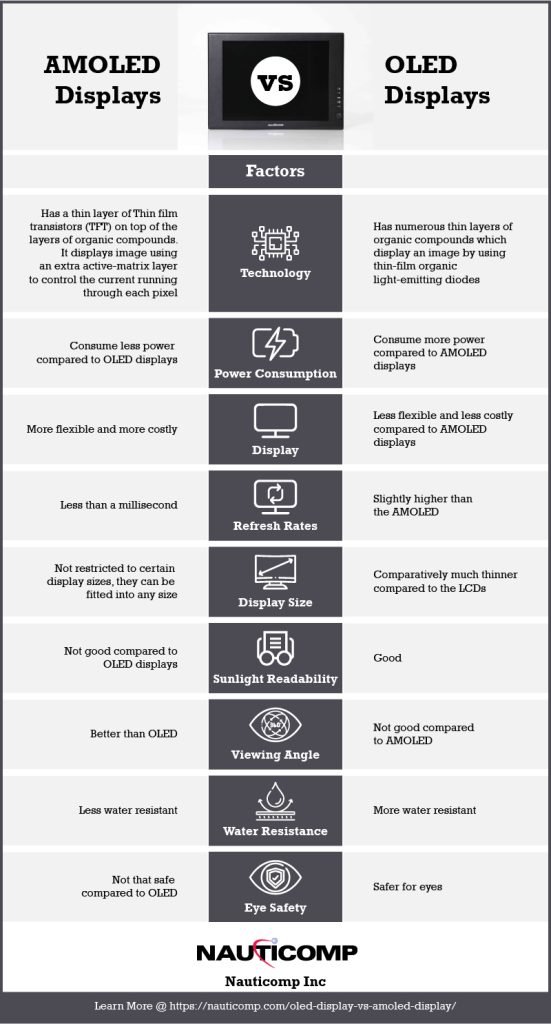
AMOLED builds on OLED by incorporating an active matrix system. In plain English, this means each pixel has its own switch (transistor) to turn on/off precisely and quickly. Passive matrix OLEDs exist but are rare and limited to small screens like smartwatches.
Samsung pioneered AMOLED in the early 2000s and still leads the pack. Their Super AMOLED variants even integrate the touch sensor into the display for slimmer designs. The result? Even better power efficiency, brighter peaks for HDR content, and richer colors thanks to tweaks in the sub-pixel layout (like PenTile, which uses fewer green sub-pixels but renders beautifully at high resolutions).
AMOLED is everywhere in Android flagships – Galaxy S series, Google Pixels, OnePlus phones. It’s why scrolling through Instagram feels so buttery smooth and battery life holds up even with that always-on display showing notifications.
Head-to-Head: OLED vs AMOLED Differences Explained
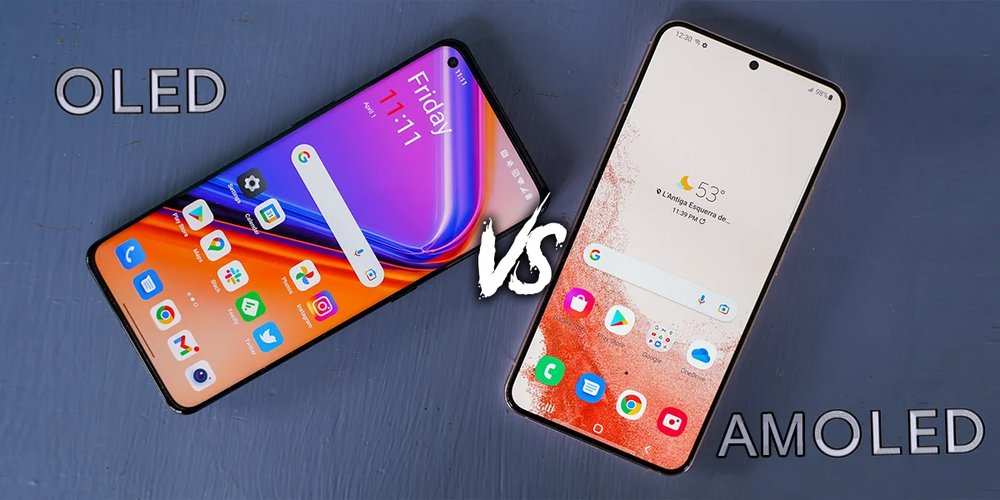
Now, the juicy part – the differences. Spoiler: They’re subtle but game-changing.
1. Structure and Manufacturing: Basic OLED uses passive or active matrices, but AMOLED is always active matrix, allowing larger, higher-res screens. Samsung manufactures most AMOLED panels, while OLED can come from LG, BOE, or others. This makes AMOLED more consistent in quality but vendor-dependent.
2. Color Accuracy and Vibrancy: AMOLED often saturates colors more (up to 25% punchier), making photos and videos pop. OLED aims for accuracy (think cinema-grade). Tests show AMOLED at 120% DCI-P3 coverage vs OLED’s 100%. But calibrate AMOLED, and it matches pro standards.
3. Brightness and HDR: AMOLED wins here. Peak brightness hits 2000+ nits (Samsung’s latest), vs OLED’s 1000-1500 nits. Perfect for sunny days or Dolby Vision movies. Both support HDR10+, but AMOLED’s efficiency shines.
4. Power Consumption: AMOLED is king for dark content – pixels off means zero power. For whites/bright scenes, they’re similar, but AMOLED’s transistors optimize better. Expect 10-20% better battery on AMOLED phones.
5. Burn-In and Longevity: Both vulnerable, but AMOLED has improved with pixel shifting and warranties up to 5 years. OLED TVs from LG mitigate it via algorithms. Real-world? Minimal if you vary content.
6. Viewing Angles and Response Time: Neck-and-neck. Both offer near-perfect angles and 0.1ms response – ideal for gaming.
7. Cost: AMOLED edges higher due to complexity, but economies of scale drop prices yearly.
Pros and Cons Breakdown
OLED Pros: Perfect blacks, flexibility for curves/folds, accurate colors out-of-box. Cons: Slightly dimmer peaks, potential uneven aging.
AMOLED Pros: Brighter, more efficient, vibrant for media. Cons: Possible color oversaturation, PenTile subpixels (less sharp at low res).
In benchmarks like DisplayMate, Samsung’s AMOLED scores A++ across the board, while Apple’s OLED (also Samsung-made) excels in accuracy.
Real-World Applications: Phones, TVs, and More
On smartphones, AMOLED rules Android (vibrant UIs), OLED fits iOS (natural tones). TVs? LG’s WOLED dominates for size/price; Samsung’s QD-OLED adds quantum dots for insane brightness/colors.
Wearables love AMOLED for always-on efficiency. Laptops? Emerging mini-LED OLED hybrids blend best of both.
Fun fact: The world’s first OLED TV was Sony’s 11-inch XEL-1 in 2007. Now, 8K OLEDs stretch 100+ inches!
Which One Should You Choose?
No clear winner – it depends. Gamers/media junkies? AMOLED’s brightness/speed. Photographers/editors? OLED’s accuracy. Budget? Both dropping fast; mid-rangers now feature them.
Future? MicroLED promises OLED perks without organics (no burn-in), but it’s years away and ultra-expensive.
Conclusion: Demystified and Ready to Shop
OLED and AMOLED aren’t rivals; AMOLED is advanced OLED. The differences boil down to tweaks in control, brightness, and efficiency. Both deliver jaw-dropping visuals far beyond LCD. Next time you’re eyeing a new phone, check the specs – your eyes (and battery) will thank you.
Word count: 1,056. Dive deeper? Test side-by-side at stores. Happy viewing!