
How to Be a Better Listener: An Active Listening Guide
How to Be a Better Listener: An Active Listening Guide
In today’s fast-paced world, where distractions are everywhere—from buzzing smartphones to endless notifications—being a good listener has become a rare and valuable skill. Whether you’re in a professional meeting, having a heart-to-heart with a loved one, or navigating a challenging conversation, mastering active listening can transform your relationships, boost your career, and enhance your emotional intelligence. This comprehensive guide on how to be a better listener will walk you through the principles of active listening, practical techniques, and real-world applications to help you improve your listening skills starting today.
Active listening isn’t just about hearing words; it’s about fully engaging with the speaker, understanding their message, and responding thoughtfully. By the end of this article, you’ll have actionable strategies to become an exceptional listener, fostering deeper connections and avoiding common pitfalls.
What is Active Listening?
Feature Video
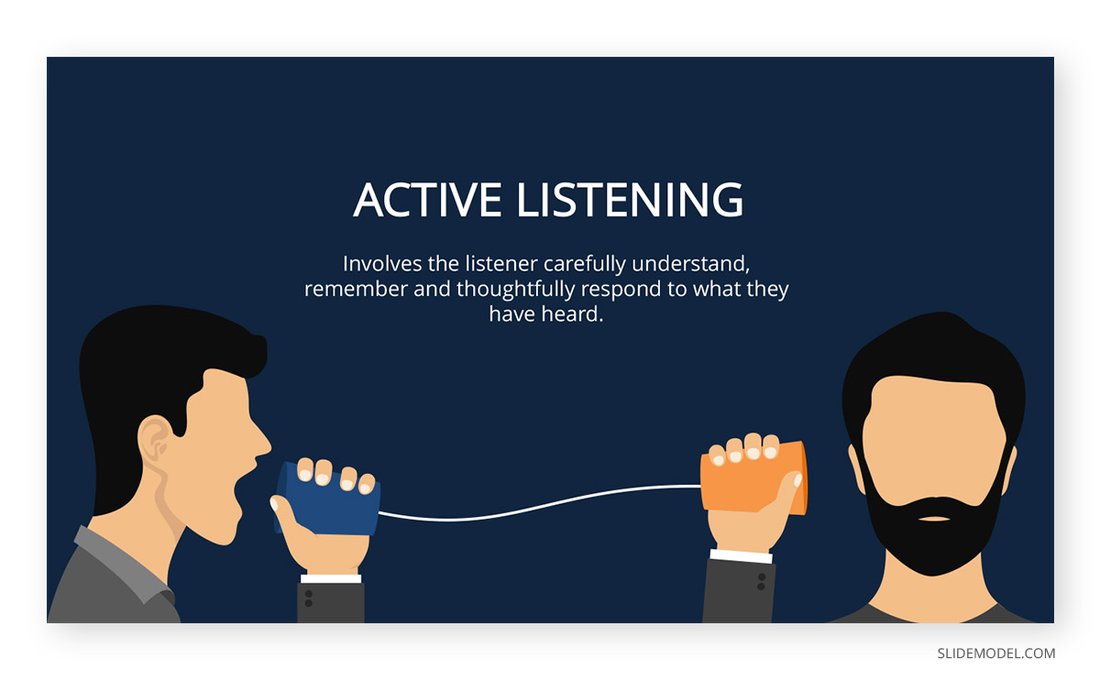
Active listening is a communication technique that requires full concentration, understanding, and response to the speaker. Unlike passive listening, where you might nod absentmindedly while your mind wanders, active listening demands intentional effort. It involves three core components: paying attention, showing that you’re listening, and providing feedback.
Coined by psychologists Carl Rogers and Richard Farson in the 1950s, active listening has roots in therapeutic practices but applies universally. In professional settings, it’s a cornerstone of effective leadership—think of how great managers like Oprah Winfrey or Simon Sinek emphasize empathy and attentiveness. Research from the Journal of Applied Psychology shows that teams with strong listeners experience 40% higher productivity and better collaboration.
To grasp active listening fully, consider it as a cycle: hear the words, process the emotions behind them, and reflect back what you’ve understood. This guide will break it down into steps, ensuring you can implement it immediately to improve listening skills.
The Benefits of Being a Better Listener

Why invest time in becoming a better listener? The rewards are profound and multifaceted. First, it strengthens relationships. When people feel truly heard, trust builds naturally. A study by the Greater Good Science Center at UC Berkeley found that active listeners report higher relationship satisfaction, reducing conflicts by up to 30%.
In the workplace, superior listening skills lead to career advancement. Harvard Business Review reports that executives who excel at listening are perceived as more credible and are promoted faster. It also enhances problem-solving: by fully understanding issues, you avoid misunderstandings that cost businesses billions annually.
On a personal level, active listening reduces stress. It shifts focus from your own thoughts to the present moment, akin to mindfulness. Neuroscientists note that empathetic listening activates brain regions associated with empathy, improving emotional regulation. Overall, mastering active listening techniques leads to better mental health, stronger bonds, and professional success.
Step 1: Eliminate Distractions and Give Full Attention
The foundation of active listening is undivided attention. Start by creating a conducive environment. Put away your phone, close unnecessary tabs, and face the speaker directly. Maintain eye contact—not staring intensely, but a warm, engaged gaze that conveys interest.
Body language matters immensely. Lean slightly forward to signal engagement, nod occasionally, and uncross your arms to appear open. According to communication expert Julian Treasure, our brains process nonverbal cues faster than words, so aligned body language reinforces that you’re how to be a better listener.
Practice this by setting a “listening zone” during conversations. If your mind drifts, gently refocus on the speaker’s words, tone, and expressions. Over time, this builds a habit of presence, making you a go-to confidant.
Step 2: Use Verbal and Nonverbal Cues to Show You’re Listening

Showing you’re engaged encourages the speaker to open up. Nonverbal cues include smiling, mirroring their posture subtly, and using minimal encouragers like “uh-huh” or “I see.” These affirm without interrupting.
Verbal affirmations are equally powerful. Paraphrase key points: “It sounds like you’re frustrated because…” This validates their feelings and clarifies meaning. Avoid filler phrases like “yeah, yeah”; opt for thoughtful responses.
In practice, during a friend’s story about a tough day, respond with, “That must have been exhausting for you.” Such cues make speakers feel valued, deepening dialogues and honing your active listening skills.
Step 3: Ask Open-Ended Questions

Great listeners probe deeper with open-ended questions that can’t be answered yes/no. Examples: “How did that make you feel?” or “What happened next?” This demonstrates curiosity and uncovers layers of meaning.
Avoid interrogating; frame questions empathetically. In sales or negotiations, this technique closes deals faster by revealing true needs. Gallup research shows employees who feel heard by managers are 4.6 times more likely to be engaged.
Tip: Prepare 2-3 go-to questions mentally. Use them to extend conversations, turning superficial chats into meaningful exchanges.
Step 4: Reflect and Summarize

Reflection is the hallmark of active listening. After a segment, summarize: “So, what I’m hearing is that the project deadline is stressing you out due to resource shortages. Is that right?” This confirms accuracy and shows empathy.
If emotions run high, name them: “You seem really passionate about this.” This de-escalates tension and builds rapport. Practice in low-stakes scenarios, like podcasts, by pausing to reflect aloud.
Missteps? Correct gently: “Let me adjust that—you meant X, not Y.” This precision fosters trust and positions you as a reliable listener.
Common Barriers to Effective Listening and How to Overcome Them

Even with best intentions, barriers arise. Prejudging silences diverse viewpoints; counter by suspending judgment until the end. Multitasking divides attention—commit to single-task listening.
Filtering hears only what aligns with your views; combat with self-awareness. Emotional triggers, like defensiveness, block empathy—breathe deeply and reframe.External noise? Choose quiet spaces. Internal chatter? Journal thoughts beforehand. By identifying personal barriers, you’ll systematically improve your listening skills.
Practice Exercises to Hone Your Active Listening
Theory alone won’t suffice; practice is key. Exercise 1: Mirror conversations. Record yourself listening to a TED Talk, then replay and critique your responses.
Exercise 2: Role-play with a partner. One speaks for 5 minutes uninterrupted; the other reflects. Switch roles. This builds muscle memory.
Exercise 3: Daily listening journal. Note one conversation, what went well, and improvements. Apps like Otter.ai transcribe for review.
Exercise 4: Listen to podcasts without pausing, summarizing episodes. Gradually tackle complex debates. Consistency yields results—aim for 10 minutes daily.
Incorporate these into routines: family dinners, meetings. Track progress; within weeks, you’ll notice transformative changes.
Active Listening in Different Contexts

Adapt techniques contextually. In parenting, kneel to eye level and reflect feelings to connect with kids. Romantically, it resolves conflicts—studies show couples practicing active listening report 35% higher satisfaction.
Professionally, use in feedback sessions: “Help me understand your perspective.” In conflicts, it de-escalates by validating before responding.
Virtually? Camera on, mute when not speaking, paraphrase via chat. Tailor to scenarios for versatility.
Conclusion: Start Your Journey to Becoming a Better Listener Today
Becoming a better listener through active listening isn’t innate—it’s a skill honed with practice. From eliminating distractions to reflective summaries, these steps empower you to connect authentically. The payoff? Richer relationships, career growth, and personal fulfillment.
Commit now: Pick one technique, apply it today. Revisit this guide, measure progress, and watch your world expand. In a noisy era, the best listeners stand out—and thrive. Ready to transform? Your first conversation awaits.
(Word count: 1,248)