
Is ‘Good Debt’ a Real Thing? A Clear Explanation
Understanding the Concept of ‘Good Debt’ vs. ‘Bad Debt’
Feature Video
In the world of personal finance, debt often carries a negative connotation. Many people view borrowing money as a fast track to financial ruin. However, not all debt is created equal. The idea of “good debt” has gained traction in recent years, sparking debates like: Is ‘good debt’ a real thing? The short answer is yes, but it requires a nuanced understanding. Good debt refers to borrowed money that can generate long-term value, increase your net worth, or provide opportunities for wealth-building. In contrast, bad debt typically finances depreciating assets or lifestyle choices that don’t yield returns.
This article provides a clear explanation of good debt, its examples, benefits, and risks. Whether you’re considering a mortgage, student loans, or a business loan, understanding this distinction can transform your approach to borrowing. By the end, you’ll know how to identify good debt opportunities and avoid the pitfalls of bad debt, optimizing your financial health for the future.
What Exactly Is ‘Good Debt’?

Good debt is any form of borrowing that works for you rather than against you. Financial experts like Dave Ramsey and Robert Kiyosaki often discuss this in books such as “Rich Dad Poor Dad.” The core principle is that good debt has a positive return on investment (ROI). It either appreciates in value over time or enhances your earning potential.
For instance, if you borrow money at a 4% interest rate to invest in something that grows at 7% annually, you’re ahead. This leverage allows you to build wealth faster than paying cash upfront. According to the Federal Reserve, household debt in the U.S. reached $17.5 trillion in 2023, with much of it categorized as good debt like mortgages and student loans. But is good debt truly “good”? It depends on your financial situation, discipline, and market conditions.
Key characteristics of good debt include low interest rates, long repayment terms, and collateral that builds equity. It’s strategic borrowing aligned with your goals, not impulsive spending.
Prime Examples of Good Debt
Let’s dive into real-world examples to illustrate why good debt is a legitimate concept.
Mortgages: Purchasing a home is the classic good debt scenario. Homes typically appreciate over time— the National Association of Realtors reports an average annual appreciation of 5-6%. A fixed-rate mortgage locks in payments, and you build equity with each payment. Renting, by contrast, builds wealth for your landlord. For many, a mortgage is an investment in stability and potential profit upon selling.
Student Loans: Education increases lifetime earnings. The Bureau of Labor Statistics shows college graduates earn about $1 million more over their careers than high school graduates. Federal student loans often have favorable terms (rates around 5-7%), making them good debt if the degree leads to a high-paying job. However, this assumes you choose a practical field and manage repayments wisely.
Business Loans: Entrepreneurs use these to start or expand ventures. If your business generates revenue exceeding loan costs, it’s good debt. Small Business Administration (SBA) loans, for example, offer low rates and long terms, fueling economic growth. Success stories like those of Amazon’s Jeff Bezos highlight how leveraged debt propelled empires.
Other examples include home equity loans for renovations (increasing property value) or auto loans for reliable vehicles essential for work commutes, provided the car retains value.
The Dark Side: What Makes Debt ‘Bad’?

To appreciate good debt, recognize bad debt. Bad debt finances consumption without returns—think high-interest credit cards for vacations or gadgets. Credit card debt averages 20-25% APR, per the Consumer Financial Protection Bureau, eroding wealth rapidly.
Examples include:
- Credit Card Debt: For non-essential purchases like dining out or luxury items that depreciate immediately.
- Payday Loans: Short-term with 400%+ APR, trapping borrowers in cycles.
- Car Loans for Luxury Vehicles: New cars lose 20% value upon driving off the lot; financing a $50,000 depreciating asset at 6% interest is poor math.
Bad debt increases your debt-to-income ratio, stresses budgets, and hinders savings. In 2023, U.S. credit card delinquency rates hit 3.2%, the highest in a decade, underscoring its dangers.
How to Distinguish Good Debt from Bad Debt

A simple test: Does the debt create income or appreciate in value? Calculate the ROI. For a mortgage: Potential home appreciation minus interest and fees. Use tools like Excel or online calculators from Bankrate.
Consider affordability—debt should be under 36% of your income (the 28/36 rule). Fixed vs. variable rates matter; fixed protects against hikes. Always shop rates and read terms. Good debt enhances freedom; bad debt enslaves.
Context is key. Student loans are good for a doctor but risky for an arts major with low job prospects. Personal factors like credit score (aim for 700+) influence access to favorable terms.
The Benefits of Embracing Good Debt Strategically
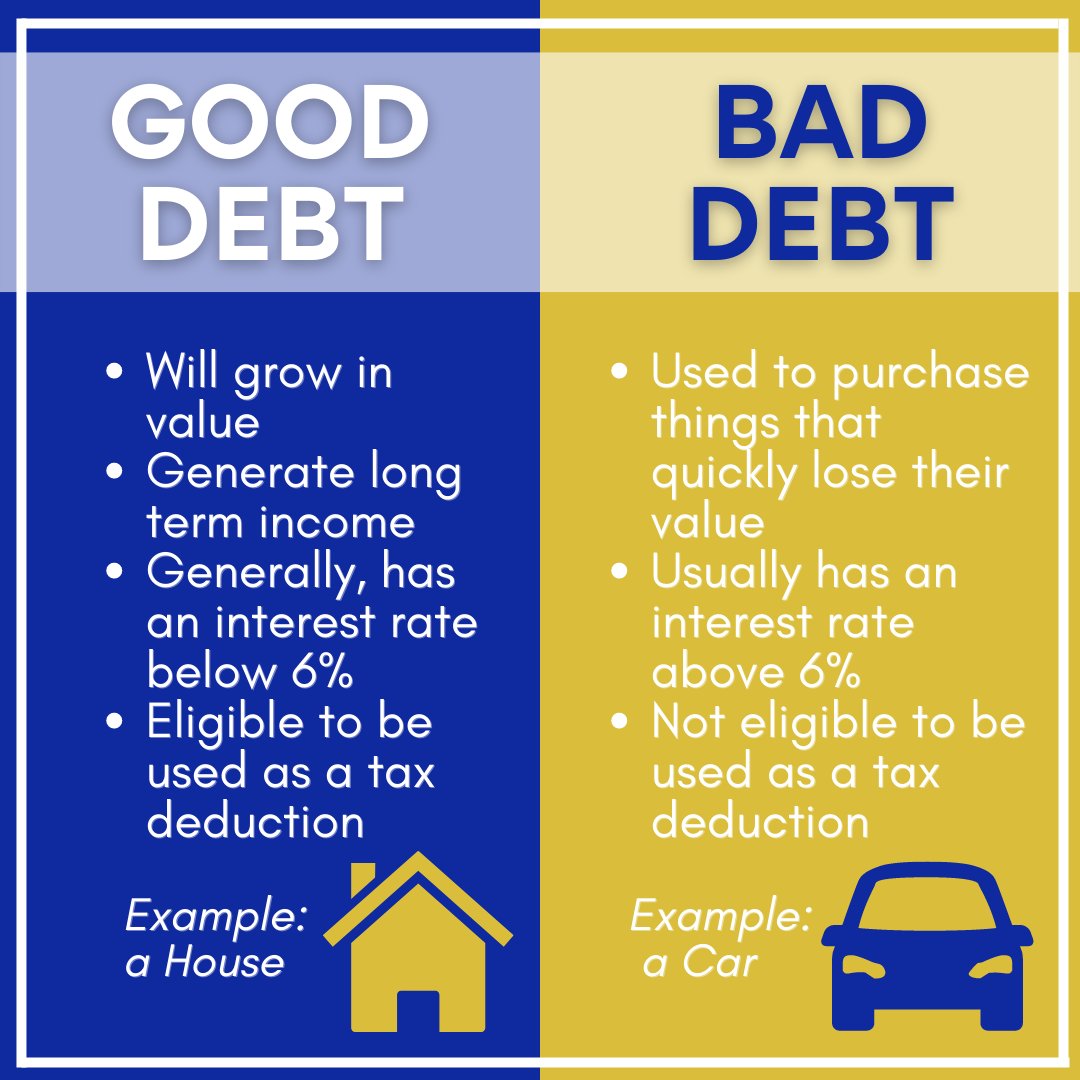
Good debt offers leverage. Warren Buffett advocates borrowing against appreciated assets at low rates to invest elsewhere. Tax advantages abound—mortgage interest is deductible, student loan interest up to $2,500 annually.
It accelerates wealth-building. Paying cash for a $300,000 home ties up funds; a mortgage frees capital for stocks averaging 10% historical returns. Inflation erodes debt value— at 3% inflation, a fixed loan effectively cheapens.
Psychologically, good debt fosters discipline, teaching financial management. Data from Experian shows homeowners have 40 times the net worth of renters, largely due to mortgage leverage.
Risks and Pitfalls of Even ‘Good’ Debt

Good debt isn’t risk-free. Over-leveraging caused the 2008 crisis. Interest rate rises (like 2022’s Fed hikes) inflate payments. Job loss amplifies vulnerability—always maintain 3-6 months’ emergency fund.
Market downturns hurt: Housing crashes devalue mortgages, student debt burdens without jobs. Behavioral traps like lifestyle inflation turn good debt bad. Mitigate with diversification, insurance, and regular reviews.
Practical Tips for Managing Good Debt
To harness good debt:
- Assess Readiness: Solid credit, stable income, clear plan.
- Compare Options: Use LendingTree or NerdWallet for rates.
- Budget Ruthlessly: Automate payments, extra principal reduces interest.
- Refinance Opportunistically: Drop rates save thousands.
- Monitor Metrics: Track debt-to-income, net worth quarterly.
Tools like Mint or YNAB aid tracking. Consult advisors for complex decisions.
Conclusion: Yes, Good Debt Is Real—Use It Wisely
Is ‘good debt’ a real thing? Absolutely. It’s a powerful tool for wealth creation when used judiciously. Mortgages, student loans, and business financing exemplify how borrowing builds assets and opportunities. Yet, discernment is crucial—avoid bad debt’s traps and manage risks.
Empower yourself with knowledge. Review your debts today: Are they working for you? Shift toward good debt, and watch your financial future flourish. For personalized advice, consult a certified financial planner. (Word count: 1,248)