
Deep Sea Shocker: Giant Phantom Jellyfish Caught on Camera 3 Miles Down!
Hold Onto Your Snorkel – A Ghost from the Abyss!
Imagine plunging three miles straight down into the ocean’s blackest depths, where sunlight’s never touched and pressure could crush a submarine like a soda can. That’s exactly where scientists stumbled upon something straight out of a sci-fi thriller: a massive phantom jellyfish, gliding like a spectral spaceship. Caught on camera by a remotely operated vehicle (ROV) during a deep-sea expedition, this elusive creature has ocean lovers and researchers buzzing. We’re talking Stygiomedusa gigantea, a jelly with a wingspan bigger than your dining table, pulsing through the void at depths that make Mount Everest look like a kiddie pool hill.
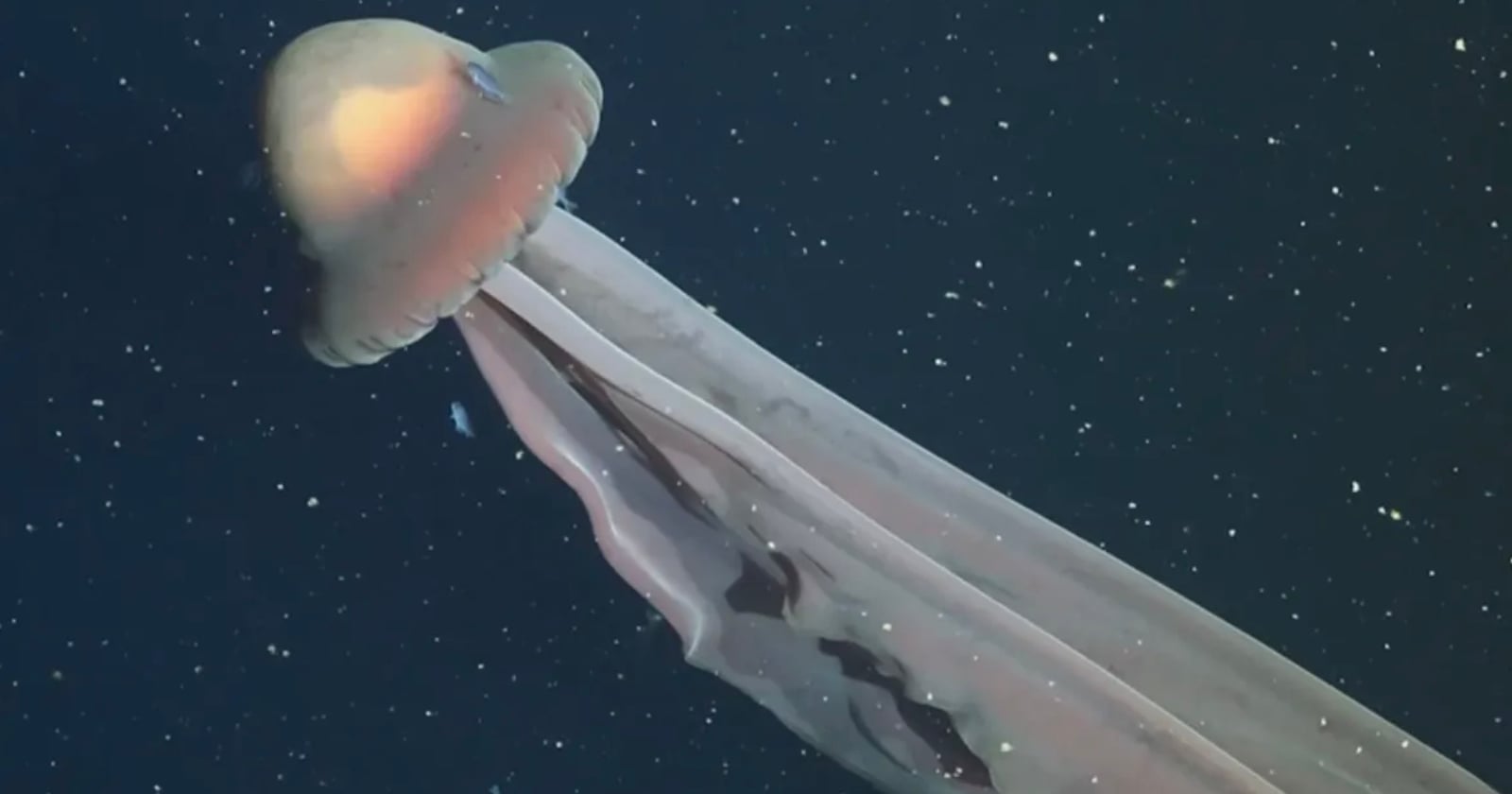
I mean, come on – how often do you get footage of a deep-sea unicorn? This wasn’t some grainy blob; it was crystal-clear HD glory, showing off its four ribbon-like arms trailing up to 33 feet long. First described over a century ago from dead specimens washed ashore, this jelly’s been more myth than reality until now. Spotted around 9,800 feet down off the U.S. West Coast, it’s got everyone asking: what other phantoms are hiding down there?
The Thrilling Capture: Lights, Camera, Jelly Action!
Picture this: It’s 2023, and a team from the Monterey Bay Aquarium Research Institute (MBARI) is piloting their ROV Doc Ricketts into the Monterey Canyon submarine abyss. They’ve done this a thousand times, chasing weird fish and glowing squid. But then – boom! – the lights pierce the darkness, and there’s this ethereal giant, its bell undulating slowly, arms fluttering like ghostly banners. The ROV crew back on the ship probably jumped out of their seats.
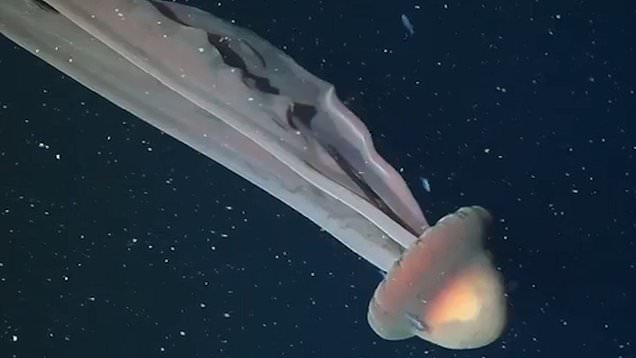
The video shows the jelly calmly drifting, unperturbed by the intruders. No frantic escapes, just majestic poise. Measuring about 3 feet across its bell alone, with those insane oral arms, it’s a predator built for snagging prey in the pitch black. Biologists geeked out immediately – only about a dozen sightings ever, mostly from the 1980s and ’90s. This fresh footage? Gold. It confirms they’re not just flotsam; they’re thriving down there, maybe even more common than we thought.
Who (or What) is the Phantom Jellyfish?
Let’s break it down like we’re chatting over coffee. Stygiomedusa gigantea isn’t your average beach jelly. No stinging tentacles everywhere – nope, it’s got these four super-long, frilly oral arms that act like fishing nets. They snag copepods, shrimp, and whatever else drifts by in the deep scattering layer. The bell? A translucent dome up to a meter wide, pulsating to propel it through water thicker than molasses under that insane pressure (over 4,000 psi!).
Named “phantom” for its rarity and ghostly look, it’s in the Ulmaridae family but marches to its own beat. Found worldwide in deep waters, from 6,500 to 21,000 feet, it defies easy classification. Females carry eggs in their arms, releasing larvae into the current. And get this: it might use bioluminescence to lure prey, though we need more data. Evolution’s wild card, perfectly adapted to eternal night.
Surviving the Crush: Life at 3 Miles Down
Three miles down? That’s hadal zone territory, where temps hover near freezing (around 39°F), oxygen’s scarce, and food’s a rare lottery win. How does a jelly hack it? Gelatinous bodies are low-density, perfect for buoyancy without bones. Their metabolism crawls slower than a sloth on vacation, conserving energy for months-long fasts.
The pressure? Jellies have no air pockets to implode; their squishy tissues equalize like pros. No eyes needed – they sense vibrations and chemicals. Food chains flip: giants like this feast on tiny plankton rains from above. It’s a world of slow-motion ballet, where a jelly’s glide covers miles without effort. This sighting reminds us the deep sea’s 95% unexplored – an alien planet on our doorstep.
Why This Footage is a Game-Changer
Beyond the wow factor, it’s science rocket fuel. Past sightings were hit-or-miss, from Antarctic expeditions to Japanese trawls. This ROV clip lets experts study live behavior: arm waving patterns, propulsion speed, even interactions with currents. DNA sampling could reveal genetics, helping track populations amid climate change.
Ocean acidification and warming might disrupt their food web, pushing jellies poleward. Plus, it spotlights tech’s role – high-def cams, LED lights, AI tracking. MBARI’s logged thousands of hours; this find proves persistence pays. Conservation-wise, it amps calls for deep-sea protected areas. No mining or drilling without knowing what’s there!
Fun Facts to Blow Your Mind
– Record Breaker: Longest arms ever recorded on a jelly – up to 10 meters!
– Rarity Royalty: Fewer than 100 specimens collected since 1910.
– Ghostly Glow: Possible red bioluminescence invisible to most predators.
– Deep Dive Champs: Spotted deeper than any other ulmarid jelly.
– Cinematic Cameo: Inspired deep-sea docs and even video games.
Imagine if we could swim with one – those arms wrapping around like silky scarves. But don’t: they’d sting!
What’s Next for Deep-Sea Hunters?
Teams like NOAA and Schmidt Ocean Institute are gearing up for more dives. Autonomous underwater vehicles (AUVs) will map jelly hotspots. Citizen science apps let you ID deep-sea critters from footage. Who knows – next could be a colossal squid party or undiscovered kraken kin.
This phantom’s debut hooks us deeper into the ocean’s secrets. It’s a reminder: Earth’s last frontier isn’t space; it’s under our waves. Dive in virtually via MBARI’s YouTube – trust me, you’ll be obsessed. What deep-sea shocker should we chase next? Drop your thoughts below!