
The Hidden Dangers of Sitting All Day and How to Reverse the Damage
In today’s fast-paced, desk-bound world, sitting all day has become the norm for millions. Whether you’re glued to a computer screen for work, binge-watching shows, or scrolling through social media, prolonged sitting is silently wreaking havoc on your body. Studies show that the average adult spends over 9 hours a day seated, contributing to a sedentary lifestyle epidemic. But what are the hidden dangers of sitting all day, and more importantly, how can you reverse the damage? This comprehensive guide uncovers the science-backed risks and provides actionable strategies to reclaim your health.
The phrase “sitting is the new smoking” isn’t hyperbole. Research from the American Heart Association links excessive sitting to increased mortality risk, even if you exercise regularly. Sedentary behavior disrupts metabolism, weakens muscles, and strains posture, leading to long-term health complications. By understanding these dangers and implementing simple changes, you can mitigate risks and improve your well-being. Let’s dive into the perils of prolonged sitting and proven ways to counteract them.
The Shocking Health Risks of Prolonged Sitting
Feature Video
Prolonged sitting doesn’t just make you feel sluggish; it triggers a cascade of physiological changes. One of the primary dangers of sitting all day is its impact on cardiovascular health. When you sit for hours, blood flow slows, enzymes that help break down fats decrease by up to 90%, and muscles burn less fat. A landmark study in the Annals of Internal Medicine found that sitting more than 6 hours daily raises the risk of early death by 20% for women and 15% for men, independent of exercise levels.
Musculoskeletal issues are another hidden threat. Sitting compresses the spine, leading to poor posture, lower back pain, and herniated discs. The hip flexors shorten and tighten, causing anterior pelvic tilt, which misaligns the pelvis and strains the lower back. According to the Journal of Orthopaedic & Sports Physical Therapy, desk workers experience up to 50% more back pain than those who stand intermittently. Neck and shoulder tension from forward head posture—known as “tech neck”—can result in chronic headaches and reduced mobility.
Metabolic disorders lurk beneath the surface too. Sitting all day impairs glucose metabolism, increasing type 2 diabetes risk by 112% per additional 8 hours, per Australian research. Insulin sensitivity drops as leg muscles, which account for 40% of body mass, remain inactive, failing to help regulate blood sugar. Obesity rates climb because sedentary behavior burns 30 fewer calories per hour compared to standing.
Mental health suffers as well. Prolonged sitting correlates with higher depression and anxiety rates. A study in the American Journal of Preventive Medicine revealed that sitting over 6 hours daily doubles depression risk in women. Reduced blood flow to the brain diminishes cognitive function, focus, and mood-regulating endorphins.
Other dangers include deep vein thrombosis (DVT) from poor circulation, weakened core muscles leading to instability, and even accelerated aging. Telomeres—protective chromosome caps—shorten faster in sedentary individuals, per a Sedentary Behavior Research Network analysis, mimicking the effects of smoking.
Scientific Evidence: Why Sitting is Toxic

Decades of research solidify the dangers of sitting all day. The Nurses’ Health Study, tracking 80,000 women over 14 years, showed that those sitting 11+ hours daily had a 12% higher mortality risk than those sitting 4 hours. Similarly, a meta-analysis in the British Journal of Sports Medicine confirmed that every additional hour of sitting beyond 8 hours increases cardiovascular disease risk by 14%.
Brain imaging studies from the University of California reveal that sedentary time correlates with thinner medial temporal lobes, linked to memory loss. On a cellular level, sitting suppresses lipoprotein lipase, an enzyme crucial for clearing harmful blood fats, fostering inflammation and plaque buildup in arteries.
These findings underscore that “active couch potatoes”—those who exercise but sit excessively—still face elevated risks. Breaking up sitting time is key, as even short standing bouts reset metabolic clocks.
How to Reverse the Damage from Sitting All Day

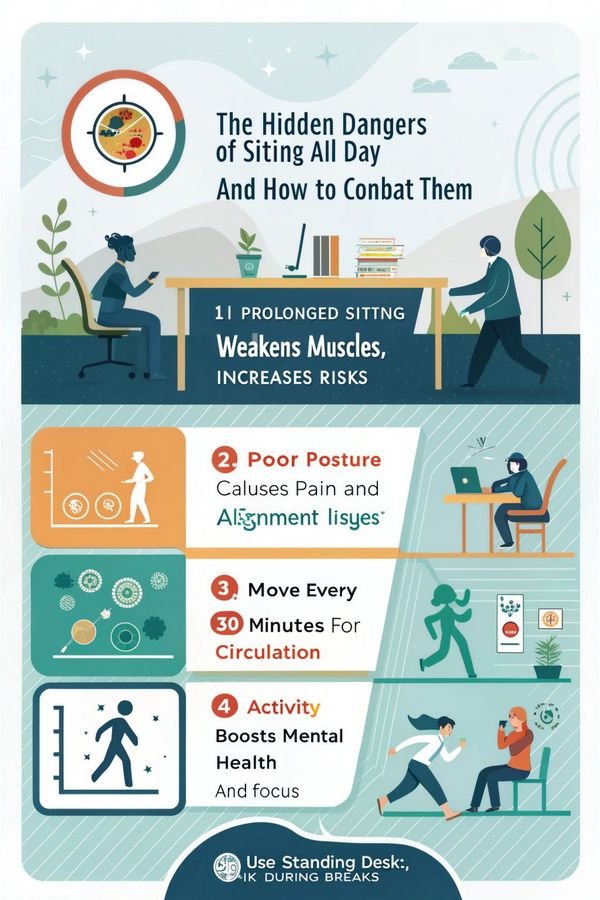
Reversing sitting damage requires consistent, small changes. Start with movement breaks: Set a timer for every 30 minutes to stand, stretch, or walk. The 20-8-2 rule—20 minutes sitting, 8 standing, 2 moving—can slash risks dramatically, per Cornell University ergonomics experts.
Invest in a standing desk or converter. Alternating positions reduces spinal pressure by 50% and boosts productivity. A Mayo Clinic study found standing desks burn 88 extra calories per 8-hour day, aiding weight management.
Strengthen weakened muscles with targeted exercises. For tight hip flexors, try lunges: Step forward into a lunge, lower until both knees are bent at 90 degrees, then push back. Do 3 sets of 10 reps daily. Glute bridges counteract posterior chain weakness: Lie on your back, feet flat, lift hips to form a straight line from knees to shoulders. Hold 5 seconds, repeat 15 times.
Core activation combats slouched posture. Planks—holding a forearm push-up position—build stability. Aim for 20-60 seconds, 3 times daily. Yoga poses like cat-cow and child’s pose improve spinal flexibility and relieve back pain.
Improve ergonomics: Adjust your chair so hips and knees are at 90 degrees, feet flat, screen at eye level. Use a lumbar support pillow to maintain the spine’s natural curve.
Daily Habits and Lifestyle Changes to Combat Sedentary Behavior

Integrate movement into your routine. Take calls standing or pacing. Park farther away, use stairs, or walk during lunch. Apps like Stand Up! or Focus Booster remind you to move.
Evening workouts amplify reversal efforts. High-Intensity Interval Training (HIIT) restores insulin sensitivity: Alternate 30 seconds sprinting with 1-minute walking for 20 minutes. Strength training 2-3 times weekly rebuilds muscle mass lost to sitting.
Nutrition plays a role. Combat metabolic slowdown with fiber-rich foods, lean proteins, and omega-3s to reduce inflammation. Stay hydrated—thirst often masquerades as fatigue, discouraging movement.
Mindfulness practices like meditation counter mental health dips. A 10-minute daily session boosts endorphins and focus.
Long-Term Strategies for a Sit-Less Life
Track progress with a pedometer aiming for 7,000-10,000 steps daily. Gradually increase non-exercise activity thermogenesis (NEAT) through fidgeting or standing meetings.
Corporate wellness programs promoting active workstations yield results: Participants report 20% less pain and higher energy. Advocate for these at work.
Monitor biomarkers via annual check-ups: Blood sugar, cholesterol, and BMI reflect reversal success.
Conclusion: Take Control Today
The dangers of sitting all day are real but reversible. By breaking sedentary patterns, strengthening your body, and optimizing your environment, you can undo years of damage. Start small—stand now, stretch tomorrow—and build momentum. Your heart, muscles, metabolism, and mind will thank you. Embrace an active lifestyle for longevity and vitality. Consult a doctor before major changes, especially with pre-existing conditions. Reclaim your health; the future you deserves it.
(Word count: 1217)