
7 Unsolved Mysteries of Ancient History That Still Haunt Archaeologists Today
Hey there, history buffs and mystery lovers! Have you ever stared at those ancient ruins or artifacts and wondered, “How the heck did they do that?” Yeah, me too. Archaeologists have been scratching their heads for decades—sometimes centuries—over some of the wildest enigmas from our past. These aren’t just dusty old puzzles; they’re mind-benders that rewrite what we think we know about ancient civilizations. Today, we’re diving into seven unsolved mysteries that still keep experts up at night. Buckle up; it’s going to be a thrilling ride through time.
1. Göbekli Tepe: The World’s Oldest Temple?
Picture this: Turkey, 1990s. A German archaeologist stumbles upon massive T-shaped pillars buried under a hill, some carved with foxes, scorpions, and birds. Göbekli Tepe dates back to around 9600 BCE—older than Stonehenge or the pyramids by a mile. These aren’t random rocks; they’re arranged in circles, like a prehistoric Stonehenge on steroids. But here’s the kicker: no signs of houses, graves, or settlements. Were hunter-gatherers building this mega-site before they even invented farming? Klaus Schmidt, the lead excavator, called it a “cathedral on a hill.” Yet, why bury it all? Was it a religious hub that kickstarted civilization, or something weirder? Only 5% excavated, and it’s still a total head-scratcher.
2. The Nazca Lines: Giant Desert Etchings with a Purpose?
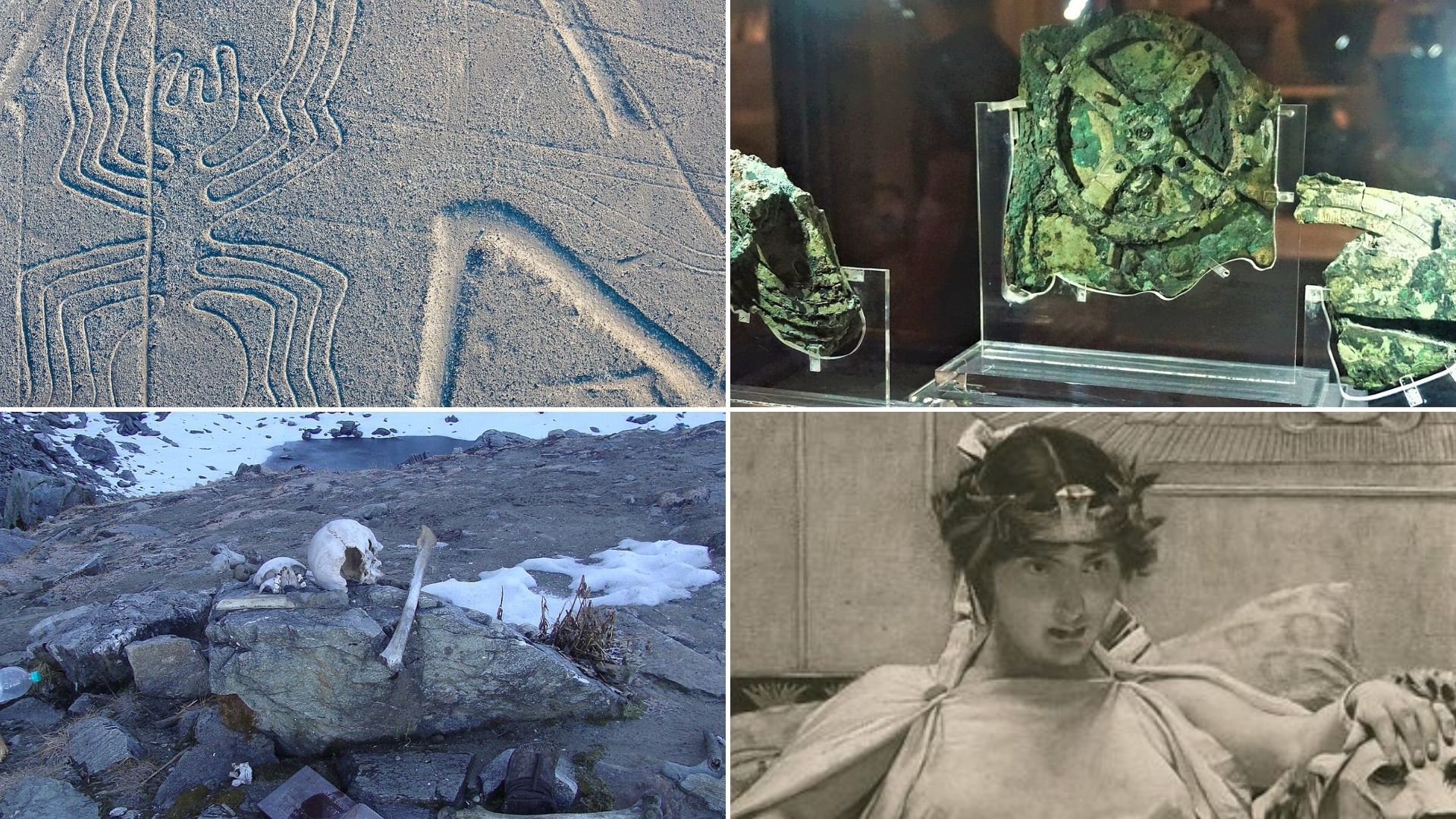
Down in Peru’s Nazca Desert, over 800 straight lines, zigzags, and massive geoglyphs—like a hummingbird the size of a Boeing 747—stretch across 200 square miles. Created by the Nazca culture between 500 BCE and 500 CE, they’re best seen from the air. Archaeologists know they scraped away dark rocks to reveal lighter soil underneath, but why? Water rituals? Astronomical calendars? Alien landing strips (yeah, some say that)? Maria Reiche spent decades mapping them, linking some to solstices, but most remain unexplained. Recent drone tech reveals even more hidden figures, but the “why” haunts us. Imagine ancient feet pounding the desert for centuries—what message were they screaming to the gods… or us?
3. Stonehenge: Druid Party Pad or Cosmic Calculator?
England’s iconic stone circle has stood for 5,000 years, its massive 25-ton sarsens hauled from 16 miles away. Bluestones from Wales? 150 miles! We’ve got theories: healing site, burial ground, solar observatory. The summer solstice alignment is spot-on, but recent digs found pig bones from feasts 500 miles away—epic ancient raves? Mike Parker Pearson’s “superhenge” nearby suggests a larger complex, maybe for ancestor worship. But no tools explain the precision cuts, and who were these Neolithic engineers? Carbon dating shifts timelines yearly. It’s like the ancients left us a giant Post-it note saying, “Figure it out,” and we’re still stumped.
4. The Antikythera Mechanism: Ancient Greek Computer?
Pulled from a 1901 shipwreck off Greece, this corroded lump from 100 BCE is the world’s oldest analog computer. Gears predict eclipses, planetary positions, even Olympic dates. X-rays show 30+ bronze meshing wheels—insanely advanced for Hellenistic times. Was it a rich guy’s toy, a temple oracle, or navigation tool? No other like it exists; the tech vanishes after. Researchers at UCL rebuilt it, confirming Saros cycle predictions, but its maker? Unknown. Derek de Solla Price called it “the most exciting artifact.” Imagine unwrapping this today—it’s like finding an iPhone in a pyramid. How did they know the math, and why’d the knowledge die?
5. Easter Island’s Moai: Walking Statues and a Collapsed Society
Those 1,000 giant stone heads (actually full bodies) on Rapa Nui? Carved from 1200-1600 CE by Polynesians using just stone tools. Some weigh 80 tons, “walked” upright via ropes (experiments prove it). But why topple them later? And how’d a tiny island sustain the workforce amid deforestation? Thor Heyerdahl’s expeditions linked them to South America, but DNA says Polynesian. Recent rongorongo script (undeciphered glyphs) hints at rituals or history. The island’s collapse—ecocide or rats?—warns modern us. Archaeologists debate if moai “walked” to platforms facing inland for protection. Still, the motive and methods baffle.
6. Puma Punku: Laser-Cut Andesite Blocks?
In Bolivia’s Tiwanaku site (500-1000 CE), Puma Punku’s H-shaped andesite blocks fit like Lego—precision to 0.1mm, with 90-degree angles no bronze tools could achieve. Massive gateways weigh 130 tons. Locals say Viracocha gods built it; skeptics cite ramps and levers. But drill holes and smooth curves scream high-tech. Spanish chroniclers described walls “fitted so well a pin wouldn’t go through.” Sediment layers suggest a cataclysmic flood buried it. Was it an advanced pre-Inca port? LiDAR scans reveal more underground. Archaeologists like Alexei Vranich puzzle over the quarrying—90km away uphill. It’s precision engineering that shouldn’t exist.
7. The Rongorongo Script: Easter Island’s Lost Rosetta Stone
Found on Easter Island wooden tablets in the 1860s, rongorongo is one of three undesciphered ancient scripts (with Indus and Linear A). Glyphs of birds, fish, plants—over 120 signs—etched in boustrofedon (zigzag) style. Priests read it ritually pre-contact, but missionaries burned most knowledge. But Thomas Barthel cataloged 24 tablets; AI and linguists try cracking it, linking to Rapanui language. Is it genealogy, astronomy, or myths? A 2023 study suggests proto-writing, not full language. Why’d it vanish with the civilization? It’s the key to moai motives, yet taunts us. Imagine decoding it—history rewritten overnight.
These mysteries aren’t just academic; they challenge our story of human progress. From star-gazing deserts to gear-filled shipwrecks, ancient folks were way smarter than we credit. Archaeologists keep digging (literally), with tech like ground-penetrating radar offering hope. What do you think—aliens, lost tech, or genius we forgot? Drop your theories below; let’s keep the haunt alive!