
The Ancient Greek Computer That Predicted Eclipses 2,000 Years Ago – And It’s Real
Imagine a Gadget Smarter Than Your Smartphone… From 2000 Years Ago
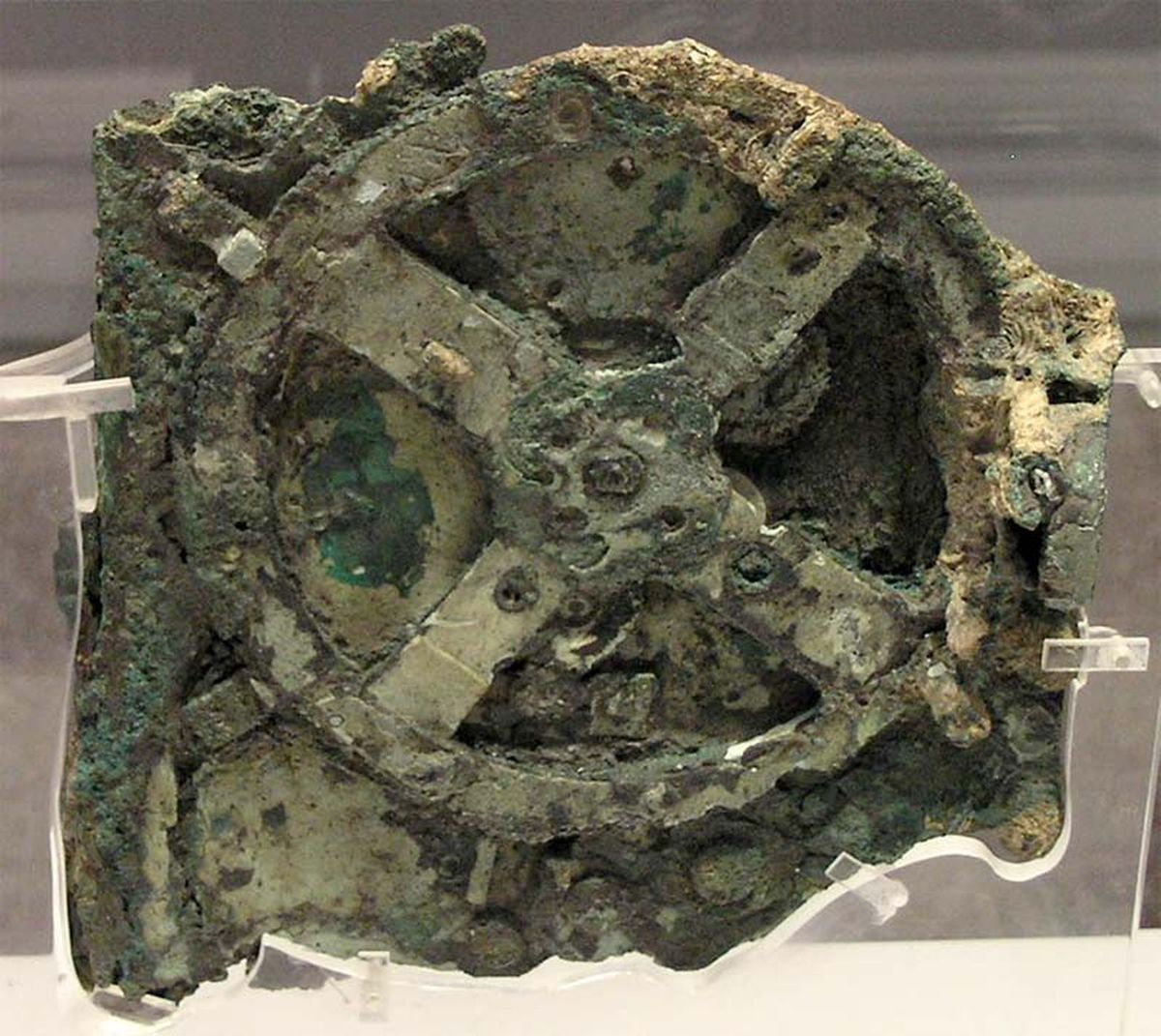
Picture this: You’re a sponge diver in 1901, plunging into the chilly Mediterranean off a tiny Greek island called Antikythera. You surface with not just treasure, but a corroded lump of bronze that looks like junk. Fast-forward over a century, and scientists reveal it’s the world’s oldest analog computer—a mind-bending device that tracked the stars, predicted eclipses, and modeled the cosmos. No joke, it’s real. Meet the Antikythera Mechanism, the ancient Greek gadget that’s rewriting what we think we know about lost technology. Buckle up; this story’s wilder than any sci-fi flick.
The Shipwreck That Changed Everything
In October 1901, a team of divers led by Captain Dimitrios Kontos stumbled upon a Roman cargo shipwreck dated to around 70-60 BC. Wedged between amphorae and statues was this enigmatic bronze disk, about the size of a pizza box—34 cm by 18 cm, fragmented into 82 pieces. At first, archaeologists shrugged it off as part of the ship’s decor. But when they started cleaning it up in Athens, gears popped out. Actual gears, interlocking like a pocket watch from hell.
Over the decades, it sat in the National Archaeological Museum, puzzling experts. It wasn’t until the 1970s, when X-ray tech advanced, that researchers like Derek de Solla Price peered inside. Holy gears, Batman! Over 30 bronze wheels, some as tiny as 1mm thick, meshed in a symphony of mechanical genius. Triangular teeth, spindles, and inscriptions in ancient Greek. This wasn’t jewelry; it was a calculator for the heavens.
What Did This Thing Actually Do?
Think of it as the Swiss Army knife of astronomy. The front dial showed the zodiac and Egyptian calendar, tracking the sun and moon’s positions. Crank a side handle, and pointers zipped around, simulating celestial cycles. The back had two spiral dials: one for the Metonic cycle (19 years, when lunar and solar calendars sync), another for the Saros cycle (18 years, 11 days—perfect for eclipse predictions).
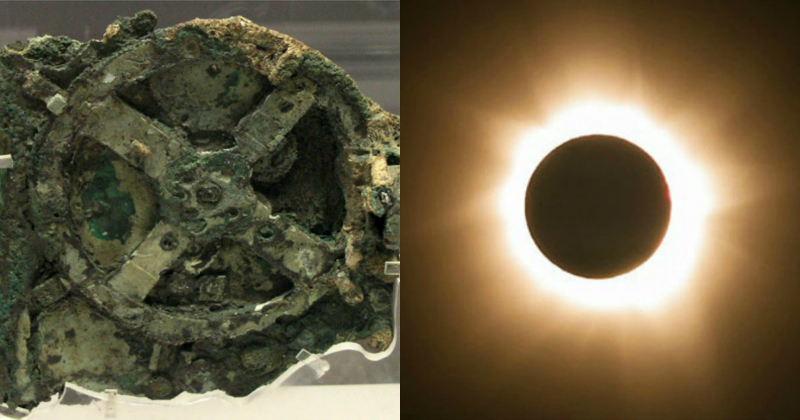
Flip it over (in your mind, anyway), and there’s a manual for game-changing predictions. Want to know when the next Olympic Games hit? Done. Planetary wanderings? Check. But the crown jewel? Eclipses. This bad boy could forecast solar and lunar eclipses down to the day, month, and even hour, using the Saros cycle’s 223 lunar months. No computers, no apps—just pure mechanical wizardry from folks who thought the Earth was flat? Nope, they knew better.
The Brain Behind the Bronze: How It Worked
Let’s geek out on the tech. At its heart, a central drive wheel turned four gear trains: one for the sun and moon, others for planets like Venus and Mars (though those are debated). The real black magic? A differential gear system—the first ever invented. It subtracted moon speed from sun speed to show lunar phases. Your car’s gearbox uses similar tech today, and we didn’t “rediscover” it until the 16th century.
Inscriptions call it a “parapegma,” listing star risings and settings. Dial it to a date, and it spits out festival timings or harvest moons. Accuracy? Within a day for cycles spanning centuries. Corrosion hid most details, but 2000s X-rays and 3D modeling by the Antikythera Mechanism Research Project (AMRP) unlocked more. They found it modeled the moon’s irregular orbit (thanks to epicyclic gearing) and even lunar-solar conjunctions. Mind. Blown.
Predicting Eclipses: Ancient Astrology Meets Hard Science
Eclipses terrified ancients—dragons eating the sun and all that. But not these Greeks. Using Babylonian math fused with Hipparchus’s astronomy (he lived ~150 BC, prime suspect for inventor), the mechanism cranked through the Saros cycle. Each turn predicted an eclipse series, noting if it’d be total, annular, or a dud based on latitude.
The back dial’s “Saros spiral” had 18 panels of 15 months each. A pointer marked the “golden number” or character (A-G) for eclipse type. One fragment reads: “223 for the risings of the stars, Hesperos the evening [star] sets below the horizon.” It wasn’t just prediction; it was a portable planetarium for sailors, priests, or scholars. Imagine pulling this out during a voyage: “Eclipse in 18 years? Pack the shades.”
Who Built It, and Why’d We Lose the Recipe?
Hipparchus of Rhodes gets the nod—star catalog king and eclipse calculator extraordinaire. Or maybe Posidonius, his student. Crafted in Rhodes or Corinth around 150-100 BC, it screamed “Rhodes workshop” from the gear style. But then? Radio silence. Rome conquered, knowledge scattered. No blueprints survived; gears were elite tech, like iPhones today.
Theories abound: Was it a one-off for a rich patron? Teacher’s tool? Olympiad calculator? Fragments suggest multiples existed, but none others found. War, rust, and time buried the rest.
Modern Recreations: Bringing Back the Magic
Today, wizards like Michael Wright built working replicas. Crank one, and the moon pointer dances with eerie precision. AMRP’s scans (using synchrotron X-rays) revealed hidden gears, like a calendar ring for ancient Athens. Apps and videos simulate it—check YouTube for “Antikythera eclipse prediction.” It’s 99% accurate over 100 years.
In 2021, divers revisited the wreck. Boom—new fragments! A 71cm-long “rule” piece with inscriptions, maybe part of a companion device. The saga continues.
Why This Matters More Than Ever
The Antikythera Mechanism shatters myths. Greeks weren’t primitive; they were gearhead geniuses millennia ahead. It bridges Babylonian tables, Greek geometry, and our digital age. In a world of AI hype, it reminds us: True innovation? Timeless.
Next time you curse your phone’s battery, thank the ancients. Their “computer” ran on elbow grease and ran circles around stars. What’s next from the deep? Stay tuned—this mechanism’s still computing mysteries. (Word count: 1028)