
The Witcher: Books vs. Show vs. Games – Key Differences Every Fan Should Know
Introduction to The Witcher Universe
Feature Video
The Witcher franchise has captivated millions worldwide, originating from Andrzej Sapkowski’s Polish fantasy book series in the 1990s. What started as short stories and novels has exploded into a multimedia phenomenon, including critically acclaimed video games by CD Projekt RED and a high-profile Netflix TV series starring Henry Cavill as Geralt of Rivia. But with such diverse adaptations, fans often debate: How do the Witcher books compare to the show and games? This article dives deep into the key differences across plots, characters, timelines, and more, helping you navigate “The Witcher books vs show vs games” landscape. Whether you’re a book purist, game enthusiast, or show binge-watcher, understanding these variances enhances your appreciation of this gritty, monster-slaying world.
The Witcher Books: Sapkowski’s Dark Fantasy Roots
Andrzej Sapkowski’s Witcher saga, beginning with “The Last Wish” (1993) collection of short stories, paints a morally ambiguous world inspired by Slavic folklore. The books follow Geralt, a mutant witcher who hunts monsters for coin, alongside sorceress Yennefer and princess Ciri, bound by destiny. Spanning seven main novels like “Blood of Elves” and the saga finale “Lady of the Lake,” the narrative blends fairy tale retellings with political intrigue, war, and prophecy.
Key to the books is their non-linear structure. Events jump timelines, emphasizing short stories over epic quests. Geralt’s witcher mutations are detailed gruesomely—sterility, enhanced senses, and alchemical trials that kill most candidates. Magic is chaotic, drawn from the fictional “Chaos,” with sorcerers aging slowly but losing fertility. Ciri’s Elder Blood lineage drives the plot, involving multiverse portals and elven prophecies. Sapkowski’s prose is witty, philosophical, and laced with dark humor, critiquing destiny, racism (non-humans vs. humans), and power. No grand “chosen one” arc dominates early; it’s character-driven vignettes. By 2023, English translations have sold millions, fueling the franchise’s global rise.
The Witcher Games: CD Projekt RED’s Interactive Masterpiece
CD Projekt RED’s trilogy—”The Witcher” (2007), “The Witcher 2: Assassins of Kings” (2011), and “The Witcher 3: Wild Hunt” (2015)—expands Sapkowski’s world into open-world RPGs. While inspired by the books, the games feature original stories post-“Lady of the Lake,” where Geralt searches for amnesia-stricken Ciri amid the Wild Hunt’s pursuit. “The Witcher 3” alone sold over 50 million copies, praised for choice-driven narratives, romance options, and breathtaking visuals.
Differences abound: Games linearize the timeline for gameplay, introducing new characters like Triss Merigold’s deeper romance (rivaling Yennefer in books) and villains like the Wild Hunt as central antagonists earlier. Combat is hack-and-slash with signs (magic blasts), potions, and bombs, contrasting books’ swordplay focus. Moral choices affect endings—save or sacrifice allies?—absent in static novels. World-building shines with expansive maps like Velen’s war-torn swamps and Skellige’s Viking isles, adding lore like School of the Griffin witchers. Sapkowski distanced himself, suing over royalties, but games arguably popularized the IP, blending book fidelity with gamer agency.
The Netflix Show: A Visual Spectacle with Creative Liberties
Netflix’s “The Witcher,” launched in 2019, adapts the books loosely across eight episodes per season (Season 3 in 2023, Season 4 pending). Showrunner Lauren Schmidt Hissrich reimagines timelines with three interwoven stories: young Geralt (Henry Cavill), Yennefer’s origin (Anya Chalotra), and Cintra’s fall with Ciri (Freya Allan). Cavill’s brooding Geralt, grunting dialogue, became iconic, but changes sparked debate.
The show accelerates events: Yennefer’s backstory as a hunchback is invented (books imply noble birth), and her romance with Geralt via djinn wish happens instantly. Ciri arrives earlier, merging timelines for TV pacing—books separate her saga. Monsters like the Striga are faithful, but fights emphasize choreography over books’ grit. Magic visuals dazzle with portals and fireballs, diverging from subtle book sorcery. Season 2 introduces game elements like Vesemir and Eskel, blending media. Cavill’s exit for Season 5 underscores tensions, yet the show’s 70 million households hooked prove its pull, prioritizing bingeable drama over strict adaptation.
Key Plot and Timeline Differences
Timeline is the biggest rift. Books use flashbacks; games follow a post-books chronology; the show mashes eras (e.g., Season 1 spans decades via “Continuum” explanations). Plot-wise, books’ “Blood of Elves” trains Ciri at Kaer Morhen—games expand this into tutorials, show compresses it. The Wild Hunt, a brief book myth, dominates games as invaders; show teases them via elves.
Nilfgaard’s invasion varies: Books detail Thanedd coup intricacies; games focus Northern Wars; show amplifies Cintra’s sack for emotional hooks. Endings differ wildly—books’ ambiguous multiverse finale vs. games’ 36+ variants (Ciri empress, witcher, or dead) vs. show’s ongoing prophecy. These shifts cater to mediums: Books philosophize, games branch, show hooks visually.
Character Portrayals: Who Changed the Most?
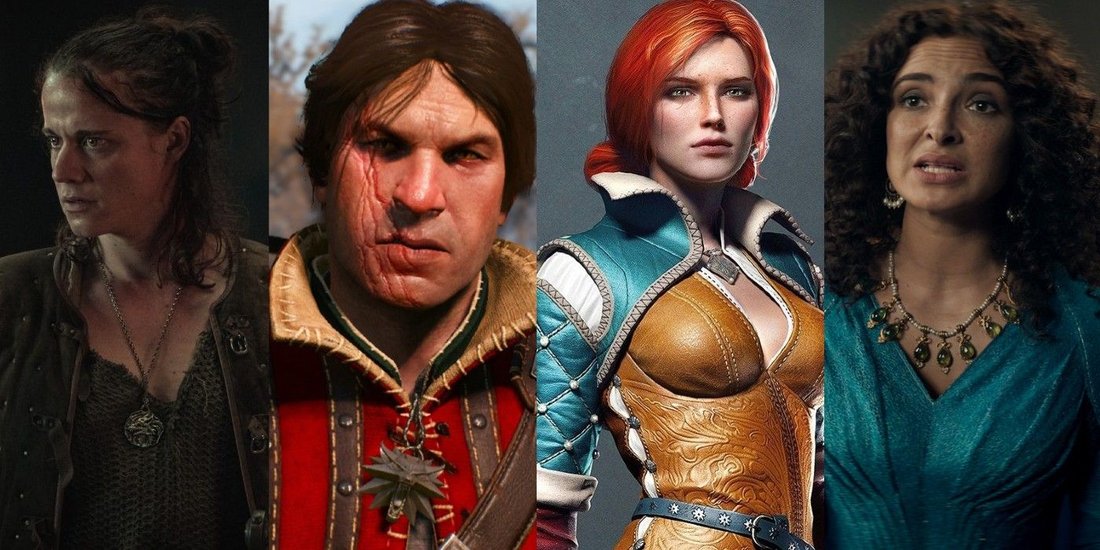
Geralt evolves: Books’ verbose poet-witcher quips cleverly; games’ stoic amnesiac grunts more; show’s Cavill mixes both with modern edge. Yennefer: Books’ haughty, infertile mage; games’ passionate lover; show’s empowered underdog with added trauma. Ciri shines differently—books’ feral heir, games’ empowered protagonist, show’s scared child growing fierce.
Triss Merigold gets upgrades: Minor book redhead becomes games’ seductive ally (player romance), show’s fiery sorceress. Villains like Vilgefortz morph—books’ scheming mage, games’ brutal foe, show’s shadowy plotter. These tweaks amplify drama: Games add depth via choices, show humanizes for empathy.
World-Building and Magic Systems
Books ground the Continent in racism-plagued politics, elves as oppressed ancients, dwarves merchants. Magic from Chaos demands price (insanity, mutations). Games enrich with Gwent cards, Bestiary entries, contracts—schools like Viper add witcher lore. Show’s portals and monoliths visualize Aen Elle elves, but simplifies politics for action.
Monsters: Books’ folklore beasts (leshen, dopplers) get psychological twists; games’ dynamic hunts with oils; show’s VFX spectacles like Kikimores. Differences enhance immersion per medium—books evoke dread, games challenge, show thrills.
Fan Favorites: Books, Games, or Show?
Polls vary: Reddit favors games for depth (Witcher 3’s GOTY status), book fans praise Sapkowski’s prose, show divides (77% Rotten Tomatoes Season 1). Games excel interactivity; books purity; show accessibility. Crossovers like comics bridge gaps.
Conclusion: Why Differences Enrich The Witcher
The Witcher books vs show vs games showcase adaptation’s power—each thrives uniquely. Books deliver literary grit, games interactive epics, show cinematic flair. Dive into all for full saga: Read “The Last Wish,” play Witcher 3, stream Netflix. Differences spark discourse, proving The Witcher’s enduring magic. (Word count: 1,248)