
The Feynman Technique: How to Learn Anything Faster
What is the Feynman Technique?
Feature Video
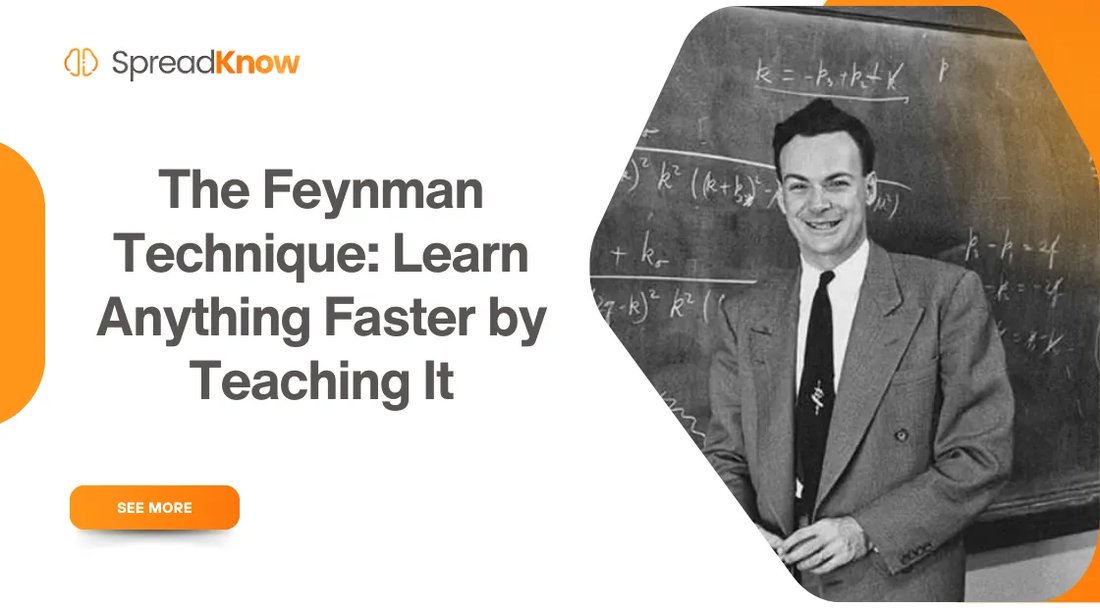
The Feynman Technique is a powerful learning method named after Richard Feynman, the Nobel Prize-winning physicist renowned for his ability to simplify complex ideas. This technique emphasizes understanding concepts deeply by teaching them as if explaining to a child. In today’s fast-paced world, where information overload is common, mastering how to learn anything faster is essential for students, professionals, and lifelong learners. By breaking down ideas into simple terms, the Feynman Technique not only accelerates learning but also ensures retention and true comprehension.
At its core, the method revolves around four straightforward steps that transform passive reading into active mastery. Whether you’re studying quantum physics, coding algorithms, or business strategies, this approach cuts through confusion. SEO enthusiasts and content creators have adopted it too, using it to grasp SEO algorithms or content optimization faster. Keywords like “Feynman Technique” and “learn anything faster” highlight its popularity in searches for effective study hacks.
The Origins of the Feynman Technique
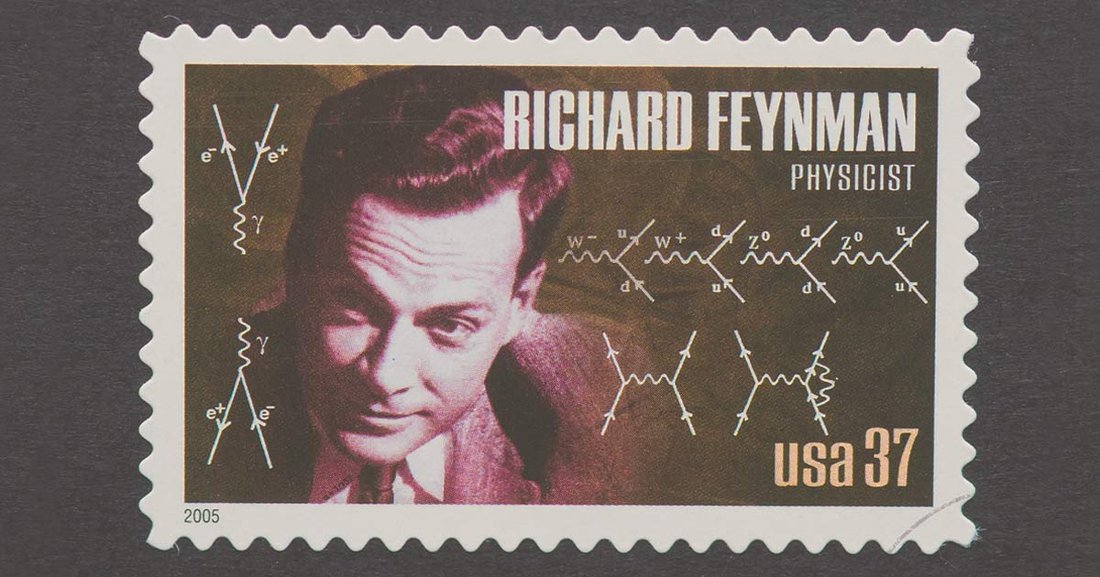
Richard Phillips Feynman (1918-1988) was a brilliant American theoretical physicist who contributed to the Manhattan Project and won the 1965 Nobel Prize in Physics for his work on quantum electrodynamics. But what set him apart was his teaching prowess. Feynman believed that if you couldn’t explain something simply, you didn’t understand it well enough—a mantra that birthed this technique.
Feynman’s notebooks, filled with simplified explanations, exemplify the method. He once cracked safes at Los Alamos using intuition honed by this simplistic thinking. Today, educators, entrepreneurs like Elon Musk, and productivity gurus promote it as a game-changer. Searches for “Feynman Technique explained” spike among those seeking proven ways to learn anything faster, underscoring its timeless relevance in personal development.
The Four Steps of the Feynman Technique

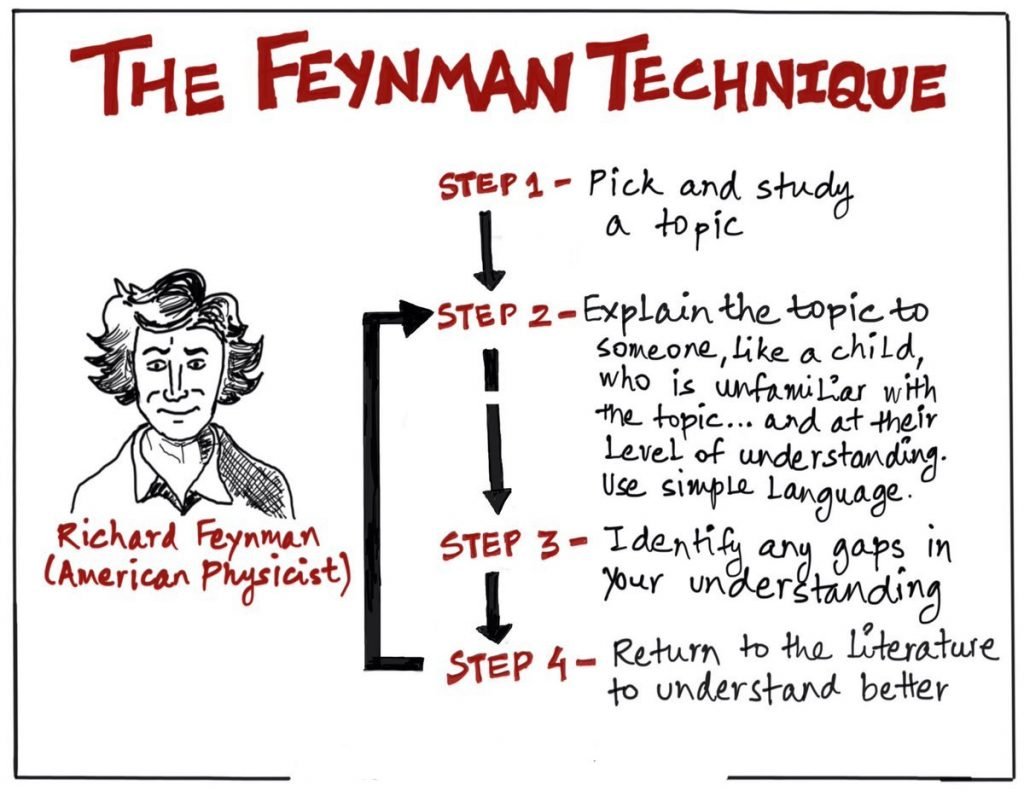
Implementing the Feynman Technique is deceptively simple, yet profoundly effective. Here’s a step-by-step breakdown:
Step 1: Choose a Concept
Select a topic you want to learn. Write its name at the top of a blank page. For instance, if you’re tackling “machine learning,” jot it down. This step forces commitment and sets the stage for deep focus. Avoid vague topics; specificity aids in learning anything faster.
Step 2: Explain It Simply

Pretend you’re teaching the concept to a 12-year-old. Use plain language, analogies, and avoid jargon. Write or speak it out loud. If studying relativity, say: “Time slows down when you move super fast, like a cosmic speed limit.” Gaps in your explanation reveal misunderstandings. This active recall boosts memory retention by 50-100%, per cognitive science studies.
Step 3: Identify Gaps and Simplify Further
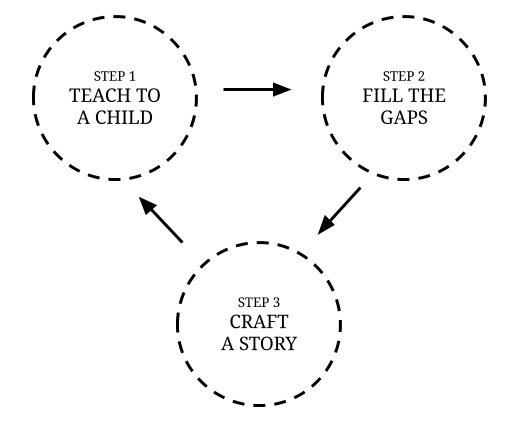
Stuck? Return to source materials—books, videos, or lectures—to fill holes. Then simplify again. Use visuals or stories. For SEO, explain Google’s algorithm as “a picky librarian sorting books by usefulness.” Iteration refines understanding, making complex ideas accessible and accelerating the learning curve.
Step 4: Organize and Review
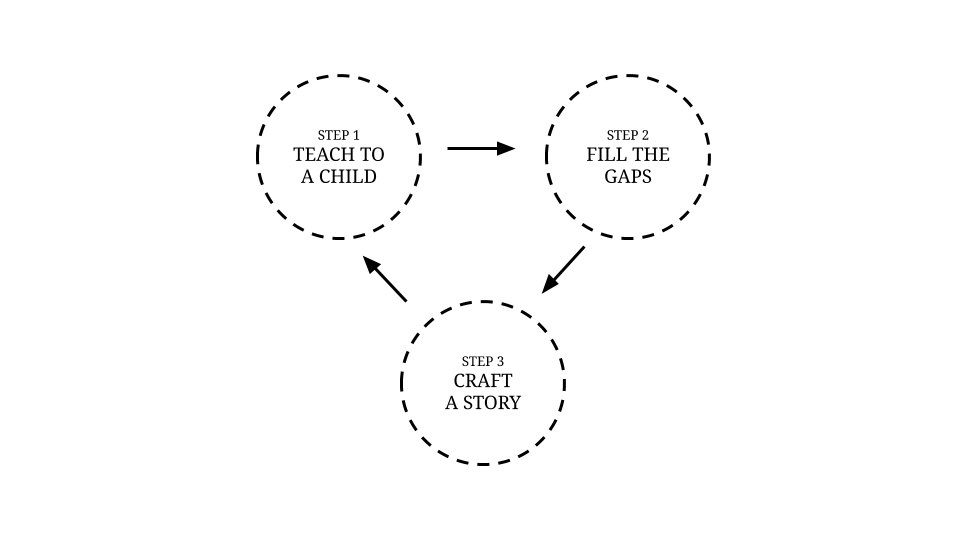
Refine your explanation into a simple narrative or analogical framework. Test by teaching someone else. Review periodically to solidify. Tools like Anki flashcards or mind maps enhance this. Professionals use it for presentations, turning esoteric knowledge into compelling talks.
Benefits of Using the Feynman Technique
Why choose this over rote memorization? First, it promotes deep understanding over superficial knowledge. Studies from the Journal of Educational Psychology show teaching others improves retention by 90%. Second, it saves time—learn anything faster by avoiding inefficient cramming.
Third, it builds confidence. Mastering simplification equips you for interviews, debates, or innovation. In tech, engineers use it to debug code intuitively. Entrepreneurs apply it to distill market trends. SEO benefits include creating content that ranks high by explaining topics users search for, like “how to learn anything faster.”
Additionally, it combats the Dunning-Kruger effect, where overconfidence masks ignorance. Regular practice enhances metacognition—thinking about thinking—vital for lifelong learning. Data from productivity apps like Notion shows users employing Feynman-inspired methods complete courses 30% quicker.
Real-World Examples of the Feynman Technique in Action

Consider a medical student learning anatomy. Instead of memorizing bones, they explain the skeleton as a “body’s scaffold, holding up muscles like tent poles.” Gaps prompt textbook dives, leading to mastery.
In programming, explain recursion: “A function calling itself, like Russian dolls opening to smaller dolls.” Coders at Google reportedly use similar simplifications. Elon Musk credits a variant for SpaceX innovations, breaking rocketry into first principles.
For language learning, treat grammar as “sentence recipes.” Business pros simplify Porter’s Five Forces as “a restaurant scouting competition, suppliers, and customers.” These examples prove versatility across domains, from STEM to humanities.
How to Apply the Feynman Technique Daily
Integrate it into routines. Morning: Pick one work concept, Feynman it in 20 minutes. Evenings: Review notes. Use apps like Explain Everything for voice recordings. Pair with Pomodoro—25 minutes per step.
For teams, host “Feynman Fridays” where colleagues simplify projects. Students: Apply before exams. Parents: Teach kids science this way. Track progress in journals. Over weeks, you’ll notice exponential gains in learning speed.
Adapt for digital age: Record TikTok-style explanations for self-review. Share on Reddit’s r/GetMotivated for feedback. SEO writers use it to craft viral posts on “learn anything faster” topics.
Common Mistakes and How to Avoid Them
Mistake 1: Skipping simplification. Solution: Force child-level language. Mistake 2: Ignoring gaps. Always revisit sources. Mistake 3: Not teaching aloud. Verbalization cements neural pathways.
Mistake 4: Overcomplicating analogies. Keep them relatable. Mistake 5: Inconsistency. Commit to daily practice. By dodging these, you’ll maximize the technique’s power.
Science Behind Why It Works
Cognitive psychology backs it. Active recall strengthens hippocampal connections. Spaced repetition from reviews leverages the forgetting curve. Dual coding—words plus visuals—doubles retention, per Paivio’s theory.
Neuroplasticity thrives on simplification, rewiring brains for efficiency. fMRI studies show explaining activates more brain areas than passive study, explaining faster learning.
Conclusion: Master Learning with the Feynman Technique
The Feynman Technique isn’t a gimmick; it’s a proven pathway to learn anything faster. By simplifying, identifying gaps, and teaching, you unlock profound understanding. Start today: Pick a topic, explain it plainly, and watch barriers crumble.
In an era of endless content, this method stands out. Boost your career, ace exams, or pursue passions efficiently. Search trends for “Feynman Technique” reflect its rising demand. Embrace it, and transform how you learn forever.
(Word count: 1217)