
Shocking Parallels: Identical Myths from Distant Cultures That Defy Explanation
Ever Wonder Why Stories from Opposite Sides of the World Sound Eerily the Same?
Picture this: you’re flipping through a book on Norse mythology, reading about a massive flood that wipes out humanity, only to stumble on the exact same tale in ancient Sumerian texts or Native American lore. No way, right? But it’s true. Across oceans and millennia, cultures that never met—think Ice Age tribes in Siberia and sun-worshipping Mayans—share myths so identical it’s like they copied from the same cosmic script. Coincidence? Ancient travelers? Or something weirder? Buckle up, because we’re diving into these mind-bending parallels that historians and anthropologists still argue over. These aren’t vague similarities; they’re plot-for-plot matches that defy easy explanation.
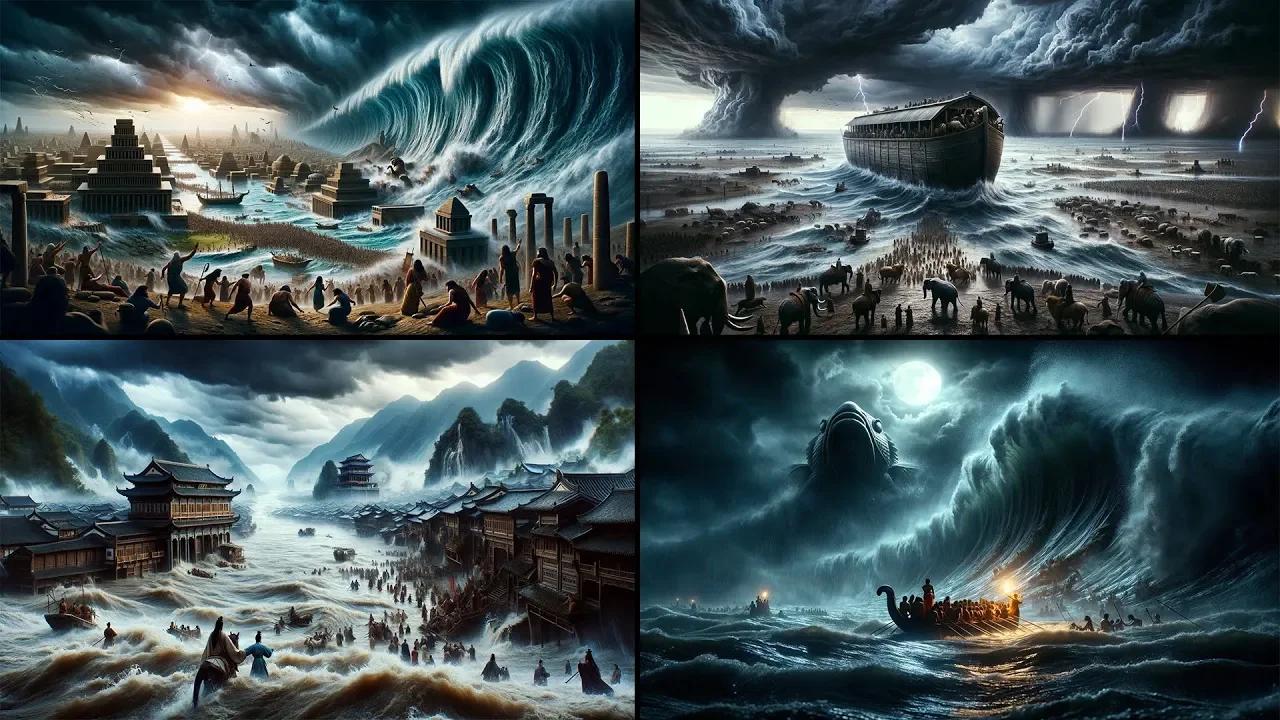
The Great Flood: Noah’s Ark Wasn’t the First Rodeo
Let’s start with the big one: the flood myth. You know the Bible’s Noah building an ark, gathering animals two-by-two, and riding out a divine deluge? That’s not unique. In Mesopotamia, the Epic of Gilgamesh from 2100 BCE features Utnapishtim doing the identical thing—gods warn him, he builds a giant boat, loads up beasts, and survives a 40-day flood sent by sky gods annoyed with noisy humans. Sound familiar?
Now jet to the Americas. The Maya Popol Vuh recounts twins saving humanity from a world-drowning flood hurled by angry creator gods. Inca legends speak of Viracocha flooding the world to punish wickedness, with survivors repopulating from mountain caves. Hopi Native Americans tell of three previous worlds destroyed by floods (and fire), with the Fourth World—the ours—facing the same fate. Even Australian Aboriginal Dreamtime stories describe ancestral beings unleashing floods to cleanse the earth.
Over 200 flood myths worldwide, from China to Polynesia, share core elements: divine wrath, a chosen survivor, an ark or boat, repopulation. These cultures had zero contact—Pacific Islanders didn’t chat with Scandinavians. Was it a shared memory of real mega-floods from melting Ice Age glaciers around 10,000 BCE? Or universal symbolism for chaos and rebirth? Either way, it’s spooky how the details align.
Bearded White Gods from the East: Quetzalcoatl’s Global Tour
Okay, floods are watery, but what about sky-high weirdness? Enter the “white bearded god” archetype popping up in the New World like an ancient celebrity endorsement. In Mexico, the Aztecs and Toltecs worshipped Quetzalcoatl, a tall, pale-skinned, bearded man with long white hair who arrived from the sea on a raft of snakes. He taught farming, law, astronomy, then sailed east promising to return.
Mesoamerica’s Maya called him Kukulcan, same description: fair-skinned, bearded, from the dawn sea, civilizer who vanished eastward. Down in Peru, the Incas revered Viracocha—identical profile: white, bearded, robed, emerging from Lake Titicaca, teaching crafts before heading west across the Pacific.
Hold up—these empires rose separately, pre-Columbus, with no transoceanic travel evidence. Yet all describe the same guy? Some speculate ancient mariners from Sumer or Egypt (bearded gods like Osiris) washed ashore, inspiring legends. Others point to the 16th-century Spanish conquistadors matching the description, fulfilling the “return” prophecy. But timelines don’t match; these myths predate Europeans by centuries. Alien visitors? Lost continent refugees? It’s the kind of parallel that keeps you up at night.
Dying and Rising Gods: Resurrection Before Jesus
Resurrection tales are another head-scratcher. Christianity’s cornerstone—Jesus crucified, buried, rising on the third day—echoes myths from antiquity. Egyptian Horus (or Osiris) is killed, dismembered, resurrected by Isis. Greek Dionysus is torn apart by Titans, reborn from his heart. Babylonian Tammuz dies and revives annually.
Head to India: Krishna is slain by a hunter’s arrow, body pierced, ascends to heaven. Persian Mithras slays a bull whose blood brings life, with followers celebrating a December 25 rebirth. Even farther: Mesoamerican Quetzalcoatl self-immolates on a pyre, promising fiery return.
Details match: virgin birth (Horus, Krishna, Mithras), 12 disciples (Horus’ followers), baptism, last supper, betrayal, crucifixion pose, three-day tomb time. Cultures separated by deserts and seas. Carl Jung called these “archetypes” from the collective unconscious—universal human psyche symbols. Skeptics say cultural diffusion via Silk Road traders. But how did it reach the Aztecs? These overlaps fueled early comparative mythology and still spark debates on religion’s origins.
World-Ending Battles and Cosmic Trees: Ragnarok Meets the End Times
Mythical apocalypses align too. Norse Ragnarok: gods battle giants and monsters in a final war, world sinks in fire-flood, two humans survive in a tree to reboot humanity. Aztec legend: Five Suns eras end in catastrophes—jaguar, wind, fire-rain, flood—culminating in earthquakes; survivors hide in caves.
Both feature wolf-devouring-sun, world-serpent floods, god-brother rivalries (Odin/Thor like Quetzalcoatl/Tezcatlipoca). Hindu Kali Yuga ends in fire-battle, Kalki avatar saves remnants. Yup’ik Eskimo tales mirror Ragnarok’s chain-bound monsters and rebirth.
Then there’s the World Tree: Norse Yggdrasil, Mayan Yaxche, Slavic oak-axis, Australian tree linking realms. Shamans climb it for spirit journeys—identical motif from Siberia to Scandinavia to South America. No shared language, yet same cosmic ladder?
Thunder gods wield hammers/axes too: Thor’s Mjolnir, Slavic Perun’s axe, Hindu Indra’s vajra, Maori Tawhiri’s lightning. Dragons/serpents slain by heroes everywhere: Apollo vs Python, Thor vs Jörmungandr, Aztec sun vs Cipactli.
So, What’s the Deal? Ancient Wi-Fi or Human Hardwiring?
These parallels blow the “independent invention” theory apart. Diffusion? Possible for Eurasia via migrations, but Pacific-to-Andes? Implausible. Real events? Ice Age cataclysms or comet impacts could seed global memories. Psychological? Jung’s archetypes fit—birth, death, flood as innate symbols.
Wilder ideas: advanced antediluvian civilization (Atlantis-style) or extraterrestrial influencers seeding myths. Von Däniken’s ancient astronauts point to these as “evidence.” Mainstream scholars lean toward convergent evolution of stories—humans everywhere face floods, death, so invent similar tales.
But the precision—beards, boats, three days dead—suggests more. Next time you hear a “unique” legend, dig deeper; it might be global. What do you think? Shared ancestors from a lost world? Drop your theories in the comments. These myths remind us: humanity’s story is weirder and more connected than we imagine.