
Quantum Computing’s Killer App: Cracking Unsolvable Problems Before Breakfast
Imagine Solving the World’s Toughest Puzzles Overnight
Picture this: You’re sipping your morning coffee, scrolling through headlines, and bam—scientists announce a breakthrough cancer drug, thanks to a quantum computer that simulated molecular interactions in seconds. What took supercomputers years? Done before breakfast. Sounds like sci-fi? It’s not. Quantum computing’s killer app isn’t just hype; it’s the ability to crack problems that classical computers deem “unsolvable.” Let’s dive in, shall we? I’ll keep it real, no PhD required.
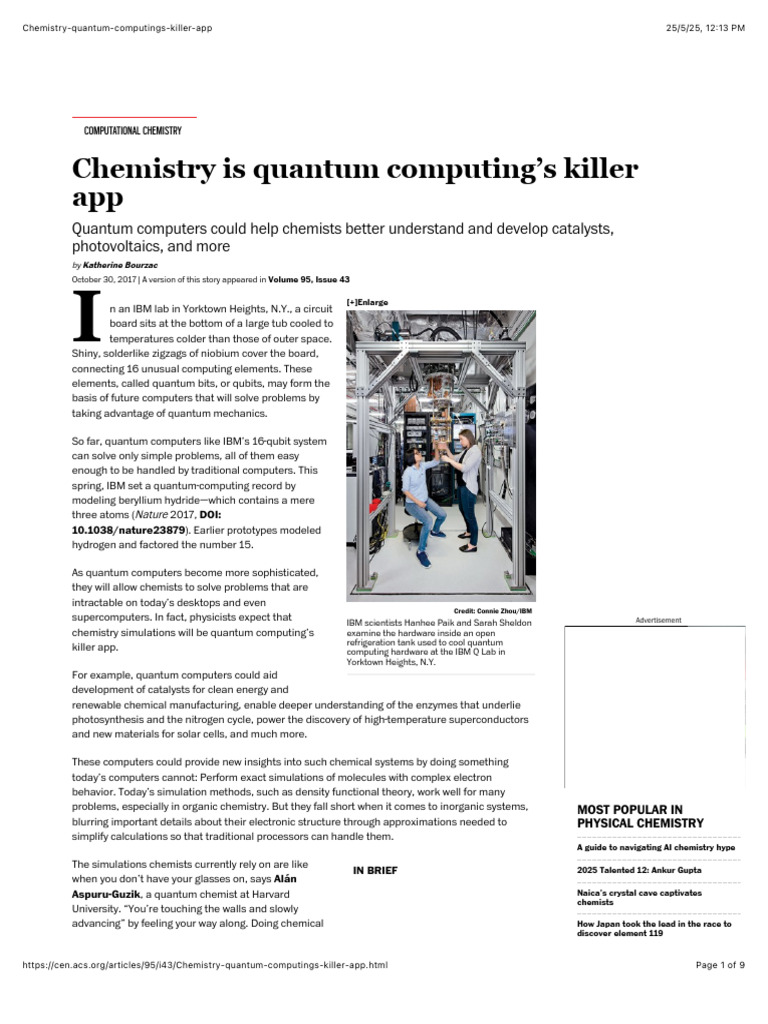
Quantum 101: Bits vs. Qubits, the Superhero Upgrade
First off, forget everything you know about regular computers. They run on bits—those trusty 0s and 1s that flip like light switches. Quantum computers? They use qubits, which can be 0, 1, or both at once thanks to superposition. It’s like having a coin that’s heads, tails, and spinning simultaneously until you look.
Then there’s entanglement—qubits linking up so the state of one instantly influences another, no matter the distance. Einstein called it “spooky action at a distance.” Add interference, where quantum states amplify correct answers and cancel wrong ones, and you’ve got a machine that explores millions of possibilities in parallel.
Today’s beasts like Google’s Sycamore or IBM’s Eagle aren’t playing games; they’re harnessing this weirdness to tackle exponential complexity. Classical computers hit a wall with problems scaling like 2^n—double the inputs, and runtime explodes. Quantum? It laughs in polynomial time. Hello, killer app.
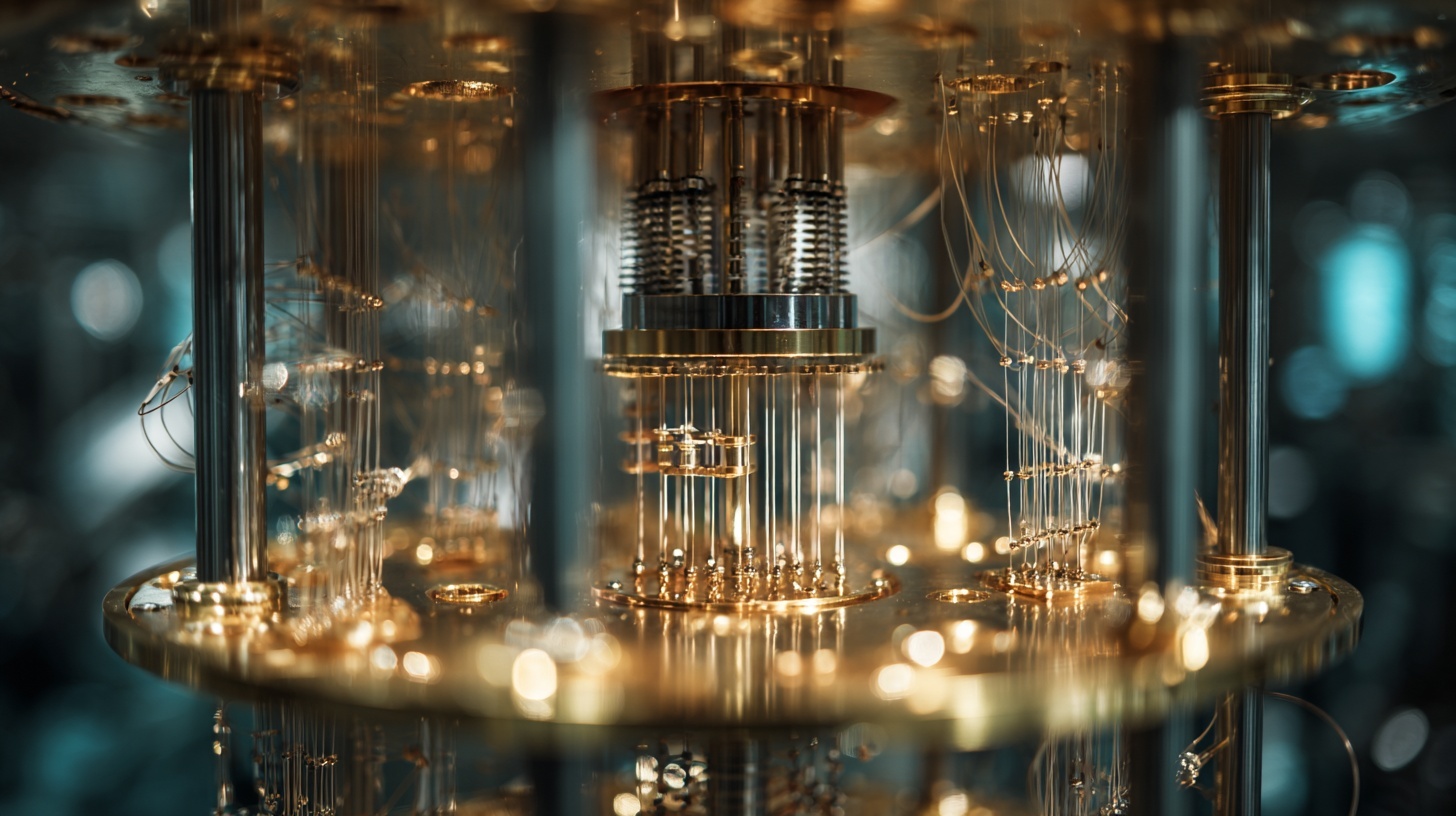
The Unsolvables: Problems Too Big for Brute Force
Let’s name names. Optimization nightmares like the Traveling Salesman Problem: Find the shortest route visiting 50 cities. A classical supercomputer? Forget it; it’d take longer than the universe’s age. Quantum’s Grover’s algorithm slashes search time from impossible to feasible.
Or factoring large numbers—core to RSA encryption keeping your bank safe. Shor’s algorithm on quantum hardware could crack 2048-bit keys in hours, not eons. Governments and crypto nerds are sweating.
Drug discovery? Simulating protein folding or quantum chemistry. Classic sims approximate; quantum ones model electrons exactly. Pfizer’s already partnering with IBM Quantum for this. Financial modeling? Portfolio optimization across millions of variables. BlackRock’s eyeing it to beat the market.
These aren’t “hard”—they’re computationally intractable. Quantum doesn’t make them easy; it makes them possible. That’s the killer app: turning NP-hard into “no problem.”
Killer App #1: Quantum Simulation – Chemistry’s Holy Grail
Hold onto your lab coat. The biggest win? Simulating molecules. Richard Feynman dreamed it in 1982: “Nature isn’t classical, dammit.” Quantum computers mimic quantum systems perfectly.
Take nitrogen fixation for fertilizers—feeds half the world but guzzles energy. Quantum sims could design better catalysts. Or batteries: Lithium-ion limits? Quantum models new materials, zapping EV range anxiety.
Google’s 2023 experiment simulated a chemical reaction in minutes that’d take classical machines forever. Xanadu’s photonic quantum computer did similar with light-based qubits. By 2030? Custom drugs tailored to your DNA, simulated overnight.
Conversational truth: It’s not magic. Error rates are high now (qubits are finicky snowflakes), but with error correction like Microsoft’s topological qubits, we’re close.
Killer App #2: Optimization and Machine Learning on Steroids
Business loves this. Supply chains? FedEx routes millions of packages daily. Quantum Approximate Optimization Algorithm (QAOA) finds near-perfect paths faster than humans or AI.
ML? Quantum machine learning (QML) like variational quantum eigensolvers train models on data classical GPUs choke on. Zapata Computing’s solving logistics for D-Wave clients. Imagine Amazon deliveries optimized to the inch.
Climate modeling too—predicting weather patterns or carbon capture efficiency. ExxonMobil’s quantum team is on it. These apps aren’t theoretical; pilots are live, saving millions.
The Crypto Crunch: Double-Edged Sword
Ah, the elephant. Quantum cracks RSA and ECC via Shor. China’s Jiuzhang 3.0 claims a crypto milestone. NIST’s post-quantum crypto race is on—lattice-based keys that quantum struggles with.
But here’s the flip: Quantum Key Distribution (QKD) for unbreakable encryption. Satellites like China’s Micius beam entangled photons for hack-proof comms. Killer app? Secure global networks before quantum thieves wake up.
Roadblocks: Why Not Breakfast Yet?
Honest talk: We’re not there. Qubits decohere fast—lose quantum magic to noise. Current noisy intermediate-scale quantum (NISQ) devices top 1000 qubits, but fault-tolerant needs millions.
IonQ’s 32-qubit machine hit 99.9% fidelity; Rigetti’s scaling hybrids. Investment? $40B+ poured in. IBM’s Quantum Network has 200+ orgs. Timeline? 5-10 years for commercial killer apps, 20 for full supremacy.
Skeptics say “quantum winter” like AI’s past hype cycles. But fusion of classical + quantum (hybrid algos) bridges the gap now.
Your Quantum Future: Get Ready to Ditch the Impossible
So, quantum’s killer app? Cracking unsolvables—sims, opts, searches—that redefine industries. Before breakfast? Hyperbole, but closer than you think. Pharma cures, green energy, smart finance.
Grab a qubit stake: Learn Qiskit (IBM’s free kit), follow arXiv papers, or invest in $IONQ, $RGTI. The revolution’s brewing. What’s your bet—drugs or dollars first?
(Word count: 1028)