
The Antikythera Mechanism: Ancient Greece’s Eclipse-Predicting Computer That Blew Minds 2,000 Years Before NASA
Imagine a Computer from 200 BC
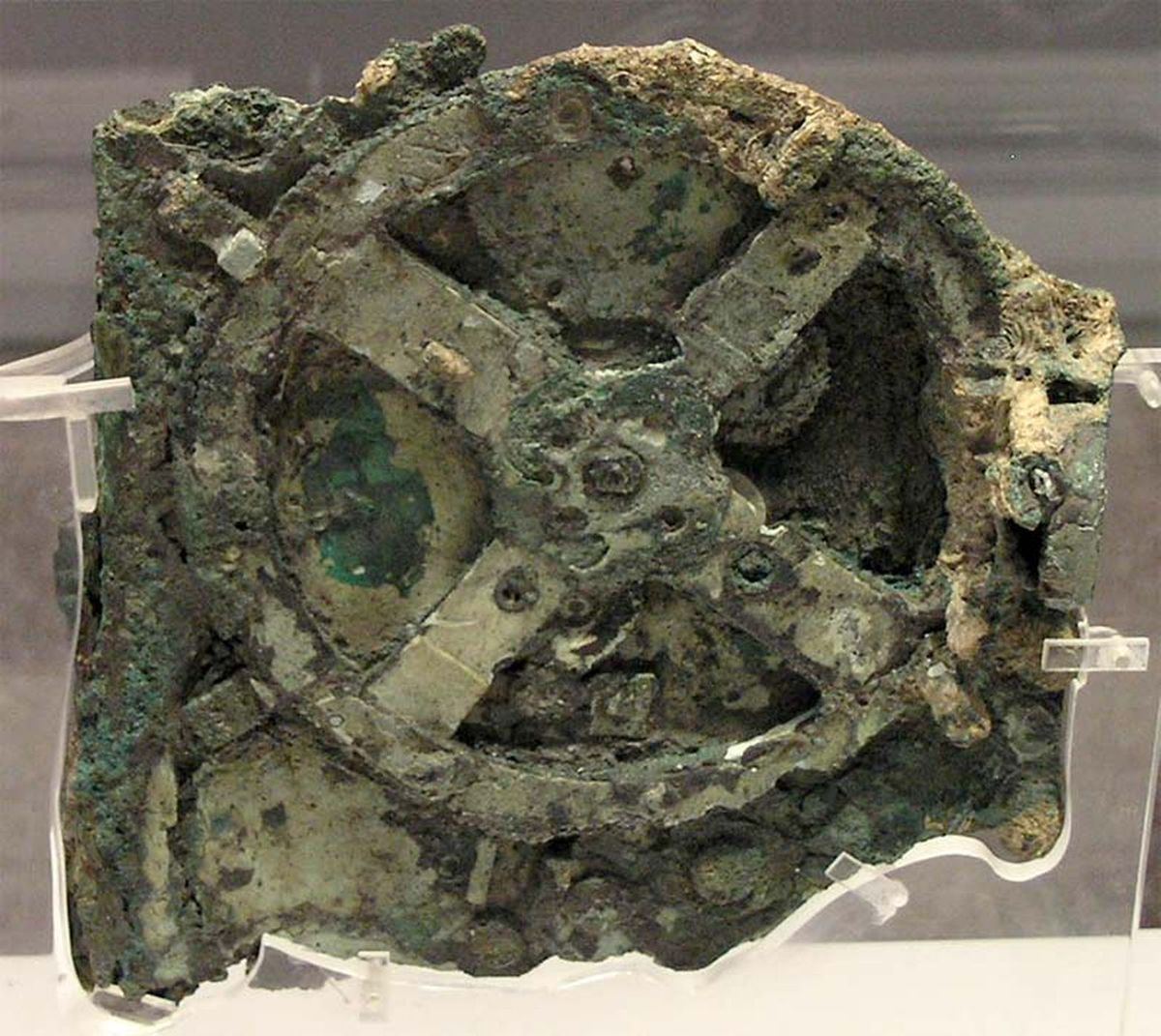
Picture this: You’re scuba diving in the Mediterranean, and you stumble upon a shipwreck loaded with ancient treasures. Among the statues and coins, there’s this weird, corroded lump of bronze gears. Fast forward a century, and scientists realize it’s not just junk—it’s the world’s oldest known analog computer, capable of predicting solar and lunar eclipses with spooky accuracy. We’re talking about the Antikythera Mechanism, a device from ancient Greece that makes NASA’s supercomputers look like they showed up late to the cosmic party. Discovered over 120 years ago, this bad boy was calculating celestial events 2,000 years before humans even dreamed of space agencies. Buckle up; this story is wilder than sci-fi.
The Shipwreck That Changed Everything
In 1901, sponge divers off the Greek island of Antikythera hauled up artifacts from a Roman cargo ship that sank around 70-60 BC. The haul was epic: marble statues, jewelry, you name it. But one piece puzzled everyone—a mangled mess of gears and inscriptions, about the size of a shoebox. Greek officials handed it to archaeologists in Athens, who poked at it but couldn’t figure it out. It sat in the National Archaeological Museum for decades, gathering dust.
Then, in the 1950s, historian Derek J. de Solla Price got curious. Using X-rays, he revealed a labyrinth of at least 30 interlocking bronze gears—precision-cut to within fractions of a millimeter. No one in antiquity was supposed to have tech like this. It was like finding a smartphone in a pyramid. Price called it an “ancient computer,” but skeptics scoffed. How could Greeks from 2,000 years ago out-engineer the Industrial Revolution?
Fast-forward to the 2000s. The Antikythera Mechanism Research Project, led by folks from Cardiff University and others, dove deep with modern tech: industrial CT scans, 3D modeling, even simulations. They decoded inscriptions and reverse-engineered the gears. Turns out, it was built around 150-100 BC, likely in Rhodes or Corinth, by master clockmakers inspired by Hipparchus, the eclipse-obsessed astronomer.
What Did This Thing Actually Do?
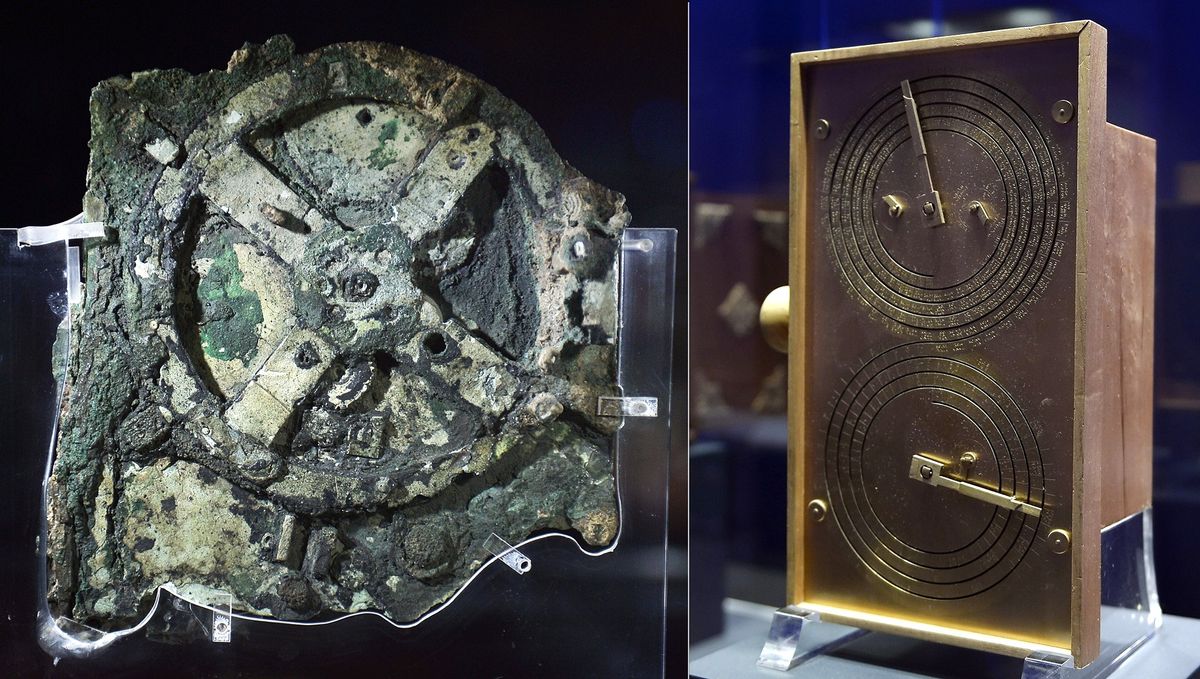
At its core, the Mechanism was a mechanical oracle for the sky. You turned a crank on the side, and gears whirred to life, simulating the universe. The front dial showed the zodiac and Egyptian calendar, tracking the sun, moon, and probably planets like Mercury and Venus. But the real magic? The back dials.
One predicted lunar and solar eclipses using the 223-month Saros cycle—a Babylonian trick the Greeks perfected. Another handled the four-year Olympiad cycle, spitting out dates for ancient games in Olympia, Delphi, and more. There’s even a dial for the 19-year Metonic cycle, syncing lunar and solar calendars. Inscriptions listed winners of past Olympics, like a sports almanac etched in bronze.
Think about it: No batteries, no electricity, just pure mechanical genius. Gears with triangular teeth meshed perfectly, driving pointers that danced across dials. A “differential gear” (lost until the 16th century!) let it model the moon’s irregular orbit—the first ever. It even factored in the precession of the equinoxes. NASA? They didn’t launch until 1958, and their early eclipse predictions leaned on tables and math this device automated hands-free.
How It Predicted Eclipses Like a Boss
Eclipses terrified ancient folks—omens of doom, right? But not for whoever owned this. Crank it to a date, and the eclipse dial (a spiral with 223 divisions) would point to when the next one hit, including color (red for lunar) and type (annular or total). Accuracy? Within hours, sometimes minutes, over centuries.
This beat any human calculator. Priests and astronomers slaved over star charts; the Mechanism did it in seconds. Hipparchus’s “theory of the anomalistic month” powered the moon gear, wobbling elliptically like the real deal. The sun gear drove it all predictably. Together, they nailed the syzygies—alignments for eclipses.
Modern tests? Researchers inputted known eclipses from 205 BC to 15 BC. The Mechanism nailed them. One inscription even forecasts an eclipse on a specific ancient date. NASA uses satellites and supercomputers today, but this was pocket-sized prophecy. Mind. Blown.
The Tech That Shouldn’t Exist
How’d they build it? Bronze was cast, gears hand-filed under magnification (maybe with water droplets as lenses). Tolerances rival Victorian watches. It had at least 37 gears—we think more, as corrosion hides fragments. A wooden case, ivory dials, and bling like engraved ships and gods.
Was it one-off or mass-produced? Probably elite toy for scholars or navigators. Shipwreck suggests trade value. Influences? Babylonian math, Greek geometry from Archimedes-types. No drawings survive, so recreating it took decades. In 2021, a working replica by Bill Taylor predicted eclipses flawlessly.
Comparisons to NASA? Their Pioneer computers in the 1960s were room-sized behemoths for basic orbits. The Mechanism packed more astro-smarts into a laptop-sized box, 2,000 years early. It’s why sci-fi nuts whisper “ancient aliens”—but nah, human ingenuity wins.
Mysteries Still Lurking
Not everything’s solved. Missing planet pointers? A Mars gear hinted at but incomplete. Was it solar-powered or hand-cranked only? Inscriptions mention “little sphere” for the moon’s phase—gorgeous. Ongoing digs at the wreck yield more fragments; 2023 scans revealed new inscriptions.
X-ray fluorescence shows it’s from Rhodes, linking to Posidonius, a Hipparchus fan. Cultural impact? It bridged astronomy and mechanics, paving for clocks, automata, even the Renaissance.
Why It Still Matters Today
The Antikythera Mechanism isn’t museum dust—it’s a wake-up call. We think tech is modern, but ancients crushed it. It reminds us: Curiosity + craft = miracles. NASA engineers study it for inspiration; it’s in the collections of the Smithsonian and more.
Next time you check a weather app for an eclipse, thank those Greek gearheads. They saw the stars’ dance and built a machine to join it. What’s next—quantum Antikythera? The cosmos awaits.
(Word count: 1,028)