
7 Bizarre Scientific Theories That Prove Your Reality Is an Illusion
Have you ever wondered if the world around you is just a clever trick? Modern science offers some mind-bending theories that challenge our perception of reality, suggesting it might be far less solid than we think. From quantum quirks to cosmic holograms, these ideas blur the line between what’s real and what’s illusory. In this article, we explore seven bizarre scientific theories that propose your everyday experience could be a grand deception. Buckle up as we dive into the weird world of physics and philosophy.
1. The Simulation Hypothesis
Proposed by philosopher Nick Bostrom in 2003, the simulation hypothesis argues that we are likely living in a computer simulation created by an advanced civilization. Bostrom’s trilemma states that either advanced civilizations never reach the point of creating simulations, they choose not to, or we’re almost certainly in one. With rapid advancements in virtual reality and computing power—think of today’s hyper-realistic video games—it’s plausible that future humans or aliens could simulate entire universes. Evidence? Glitches in physics, like the universe’s pixel-like Planck length, hint at digital underpinnings. If true, your reality is code, and you’re an NPC in someone else’s game.
2. The Holographic Principle
Emerging from string theory and black hole physics, the holographic principle suggests our three-dimensional universe is a projection from a two-dimensional surface, much like a hologram on a credit card creates a 3D image. Physicists like Gerard ‘t Hooft and Leonard Susskind developed this idea after studying black hole entropy, which scales with surface area, not volume. The AdS/CFT correspondence by Juan Maldacena provides mathematical support, equating gravity in a volume to quantum fields on its boundary. If the universe is holographic, what we perceive as depth and solidity is encoded on a cosmic “screen,” rendering reality a flat illusion projected into our minds.
3. The Many-Worlds Interpretation
Hugh Everett’s 1957 many-worlds interpretation (MWI) of quantum mechanics posits that every quantum measurement splits the universe into parallel branches, each realizing a different outcome. Instead of wave function collapse, all possibilities exist simultaneously in a vast multiverse. Schrödinger’s cat is both alive and dead—in separate worlds. This resolves quantum paradoxes without observers “causing” reality, but it implies your consciousness follows one path while infinite copies experience alternatives. Everyday choices branch realities endlessly, making “your” reality just one illusory slice of an infinite ensemble.
4. The Double-Slit Experiment and Observer Effect
One of quantum mechanics’ strangest demonstrations, the double-slit experiment shows particles like electrons behaving as waves when unobserved—creating interference patterns—and as particles when watched. Thomas Young’s original 1801 light version evolved into quantum tests proving observation collapses the wave function, determining particle paths. Interpretations vary, but the core idea is that reality at the quantum level depends on measurement. Scale this up: your perception might actively shape macroscopic events, turning the universe into a participatory illusion where unobserved elements remain probabilistic smears until you look.
5. Quantum Entanglement
Albert Einstein called it “spooky action at a distance.” Quantum entanglement links particles so that measuring one instantly affects its partner, regardless of distance—even light-years apart. John Bell’s 1964 inequalities, confirmed by experiments like Alain Aspect’s in 1982, prove this non-locality defies classical physics. In an entangled universe, distant events correlate instantaneously, suggesting space-time is an illusion. Reality might be a holistic web where separateness is a perceptual trick, and everything is interconnected beyond our sensory grasp.
6. The Block Universe Theory
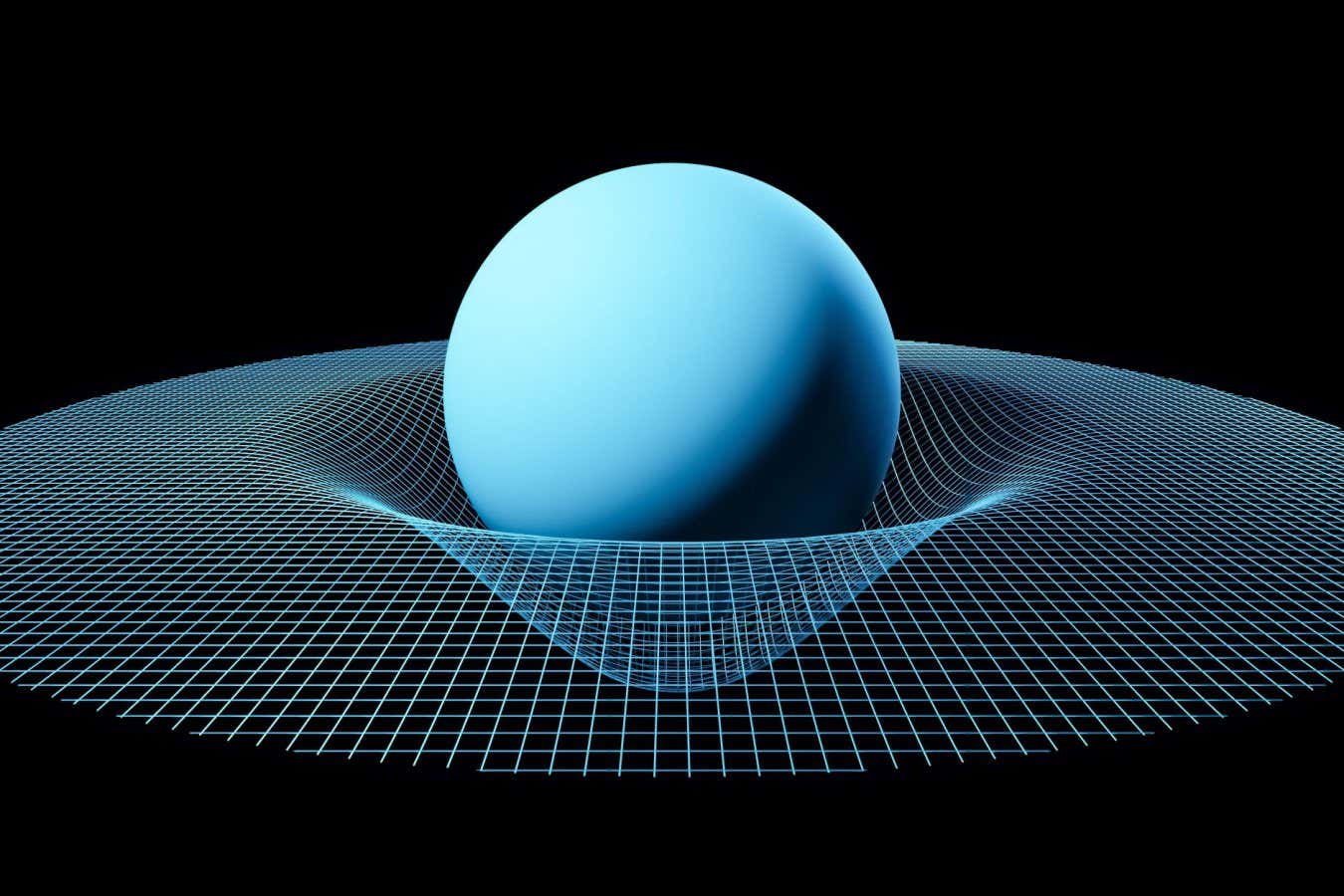
Rooted in Einstein’s special relativity, the block universe or eternalism views time not as flowing but as a static four-dimensional block where past, present, and future coexist eternally. Events are fixed like points in a crystal; your sense of “now” is an illusion created by consciousness moving through this block. Hermann Minkowski’s 1908 spacetime geometry supports this, showing simultaneity is relative. Free will? Perhaps illusory too, as all moments are predetermined. Your life unfolds in an unchanging tapestry, with motion through time merely subjective.
7. Boltzmann Brains
Ludwig Boltzmann’s 19th-century statistical mechanics idea gone wild: in an infinite, chaotic universe, random fluctuations could assemble a self-aware brain complete with false memories of a stable world far more likely than the actual cosmos. These “Boltzmann brains” vastly outnumber evolved beings, implying you’re probably one, hallucinating reality from thermal noise. Modern cosmology refines this for eternal inflation, where vacuum fluctuations spawn illusory minds. If true, the Big Bang, Earth, and your history are figments in a fleeting brain bubble.
These theories, while speculative, are grounded in rigorous science and peer-reviewed research. They don’t “prove” illusion but highlight how fragile our reality construct is. Quantum weirdness, relativistic time, and computational limits all conspire to question the tangible world. As physicist Richard Feynman said, “I think I can safely say that nobody understands quantum mechanics.” Next time you gaze at the stars, ponder: is it out there, or just in here? Exploring these ideas pushes the boundaries of knowledge, reminding us reality might be the ultimate optical illusion.