
Quantum Apocalypse: How Computers That Break Reality Will End Encryption Forever
Imagine a World Without Secrets
Picture this: you’re logging into your bank account, sending a confidential email to your boss, or even just scrolling through your encrypted messages on WhatsApp. Everything feels safe, right? That’s the illusion we’ve all been living under for decades. But what if I told you that a new breed of machines—quantum computers—is gearing up to rip that illusion apart like tissue paper? These aren’t your grandpa’s calculators; they’re reality-bending beasts that could make today’s unbreakable encryption as useless as a screen door on a submarine.
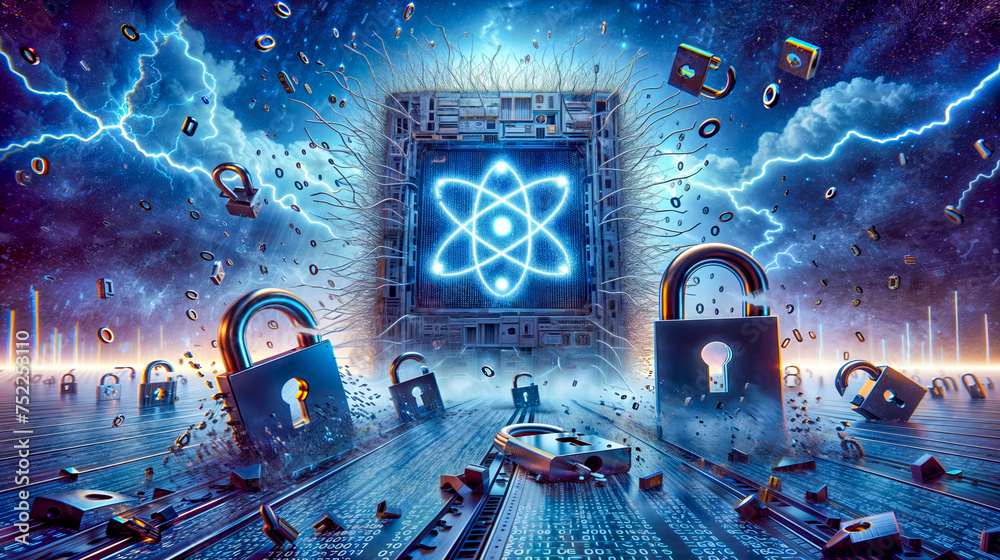
Welcome to the Quantum Apocalypse. It’s not some sci-fi thriller; it’s the looming crisis that’s got governments, tech giants, and cryptographers scrambling. In this post, we’re diving deep into how quantum computers will shatter encryption forever, why it’s happening sooner than you think, and what we can do about it. Grab a coffee, because this ride is wild.
What the Heck Are Quantum Computers, Anyway?
Let’s start with the basics, no PhD required. Classical computers—like the one you’re reading this on—work with bits. A bit is either 0 or 1, like a light switch on or off. They crunch through problems one step at a time, which is fine for most stuff but sloooow for insanely complex calculations.
Quantum computers? They use qubits, which can be 0, 1, or both at the same time thanks to quantum superposition. It’s like having a switch that’s on, off, and flickering in every possible state simultaneously. Add in entanglement—where qubits link up so the state of one instantly affects another, no matter the distance—and you’ve got machines that can explore millions of possibilities in parallel. Einstein called entanglement “spooky action at a distance,” and it’s about to haunt our digital world.
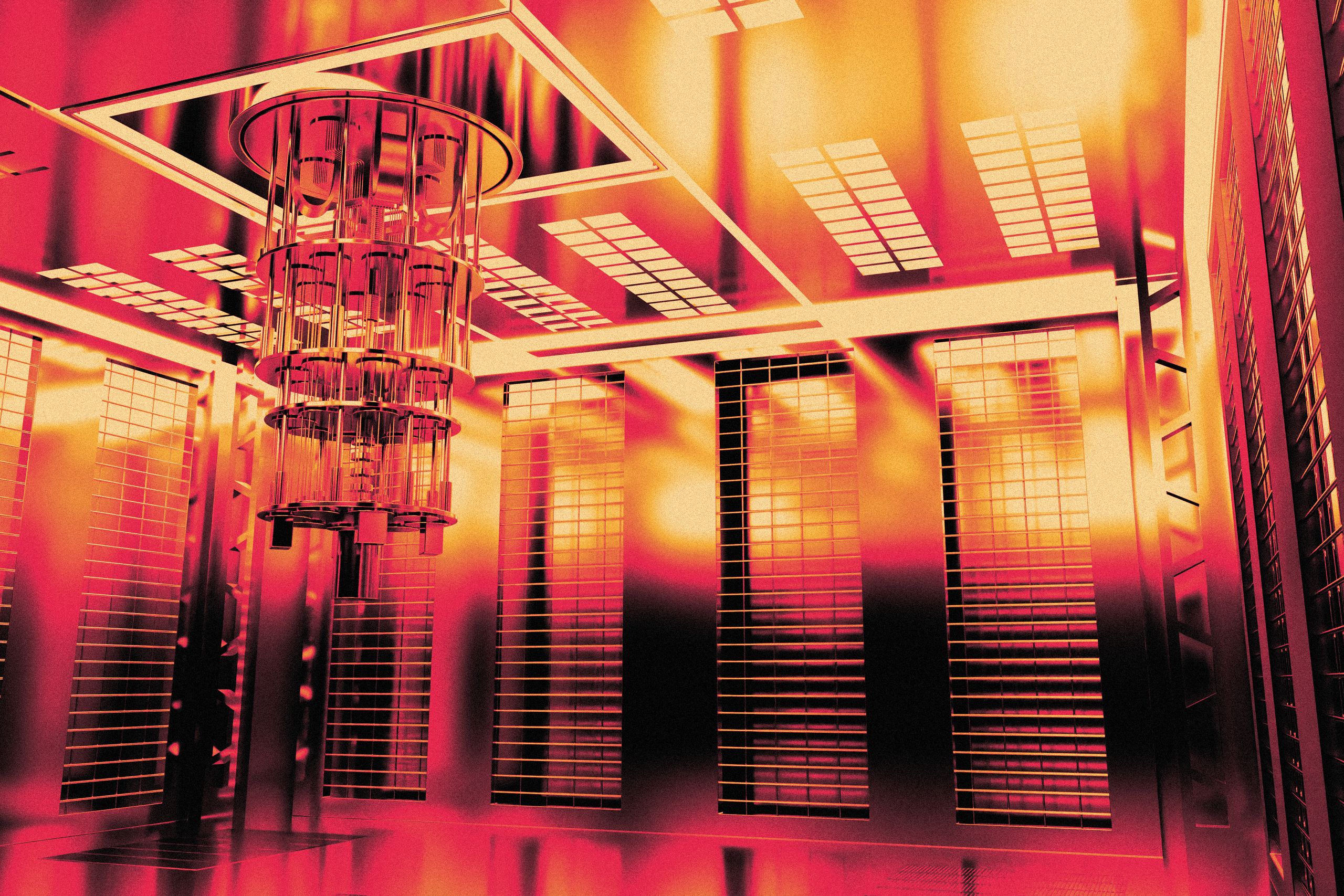
Companies like Google, IBM, and startups like Rigetti are building these monsters. Google’s Sycamore chip did “quantum supremacy” in 2019, solving a problem in 200 seconds that’d take a supercomputer 10,000 years. We’re talking 50-100 qubits now, but cracking encryption? That needs around 1-4 million stable qubits. Experts say we’re 5-15 years away. Tick-tock.
The Encryption Killer: Shor’s Algorithm
Here’s where it gets apocalyptic. Most of our online security relies on public-key encryption like RSA and ECC. These systems are built on the math problem of factoring huge numbers or solving discrete logarithms. For example, RSA uses two massive primes multiplied together to make a gigantic number. Factoring that back? It’s computationally infeasible for classical computers—like trying to find one specific grain of sand on every beach on Earth.
Enter Peter Shor and his 1994 algorithm. On a quantum computer, Shor’s can factor those monsters exponentially faster. A 2048-bit RSA key? A sufficiently powerful quantum rig could crack it in hours. ECC? Same story, even worse because it needs fewer qubits to break.
Think about it: your HTTPS websites, VPNs, blockchain wallets, military comms—all toast. Harvest-now-decrypt-later attacks are already happening. Hackers snag encrypted data today, wait for quantum to mature, then decrypt your life’s secrets tomorrow. Banks could lose trillions; governments’ classified docs? Exposed. It’s not hyperbole—NSA’s own warnings call it an “existential threat.”
The Current Quantum Arms Race
China’s not sleeping on this. They’ve poured billions into quantum, claiming a 66-qubit machine in 2020 and quantum satellites beaming unhackable keys via entanglement. The US? NIST is standardizing post-quantum crypto, and Biden’s 2022 executive order mandates federal agencies migrate by 2035. Big Tech’s racing too: Amazon, Microsoft, and Google offer quantum cloud services. IBM’s roadmap hits 100,000 qubits by 2023? Wait, no—their latest is error-corrected logical qubits, but scaling is brutal due to decoherence (qubits are fragile divas).
Yet progress is real. In 2023, IBM unveiled a 1,121-qubit Condor. Error rates are dropping with better gates. Pessimists say “quantum winter” looms, but optimists point to exponential improvements. My bet? By 2030, we’ll see the first breaks on smaller keys, forcing a panic upgrade.
Post-Quantum Crypto: Our Lifeline?
All hope’s not lost. Cryptographers have been prepping since the ’90s. Post-quantum cryptography (PQC) uses math problems quantum can’t touch easily: lattice-based (like hiding in high-dimensional crystals), hash-based signatures, multivariate polynomials, and code-based schemes.
NIST’s picked winners: CRYSTALS-Kyber for encryption, CRYSTALS-Dilithium for signatures, plus others like Falcon and SPHINCS+. These are slower and bigger—keys balloon from kilobytes to megabytes—but they’re quantum-resistant. Chrome tested Kyber in 2023; OpenSSH added it. Bitcoiners are forking for PQC upgrades.
But migration’s a beast. The “crypto agility” needed to swap algorithms across billions of devices? Years of work. Legacy systems in power grids, hospitals? Vulnerable forever if not updated. Cost? Hundreds of billions globally.
What This Means for You and Me
Feeling paranoid yet? Good. Here’s your action plan:
- Go hybrid: Use algorithms like Kyber + classical now for double protection.
- Quantum-safe VPNs: Mullvad and others are testing PQC.
- Hardware security modules: For businesses, upgrade HSMs to PQC-ready.
- Watch the news: When 1 million-qubit announcements hit, it’s go-time.
Personal tip: Ditch password managers relying solely on RSA; switch to hardware keys with PQC support coming soon. And for the love of bandwidth, prepare for fatter keys slowing your Netflix streams a tad.
The Bigger Picture: A New Digital Era
The Quantum Apocalypse isn’t just doom—it’s evolution. Quantum will supercharge drug discovery, optimize logistics, simulate molecules for clean energy. But security? We’ll rebuild stronger, with quantum key distribution (QKD) for truly unhackable links using physics laws.
China’s Micius satellite already demos QKD over 1,200 km. Fiber networks in Europe and the US are testing it. Long-term, a quantum internet could entangle the world in unbreakable security.
So, yeah, encryption as we know it ends. But from the ashes? A hyper-secure future. Stay vigilant, folks—this apocalypse is our upgrade prompt. What do you think—ready for the quantum leap, or bracing for impact? Drop your thoughts below.
(Word count: 1,028)