
The Shocking Psychology of First Impressions: Why 7 Seconds Can Change Your Life Forever
Ever Wonder Why That Split-Second Judgment Sticks?
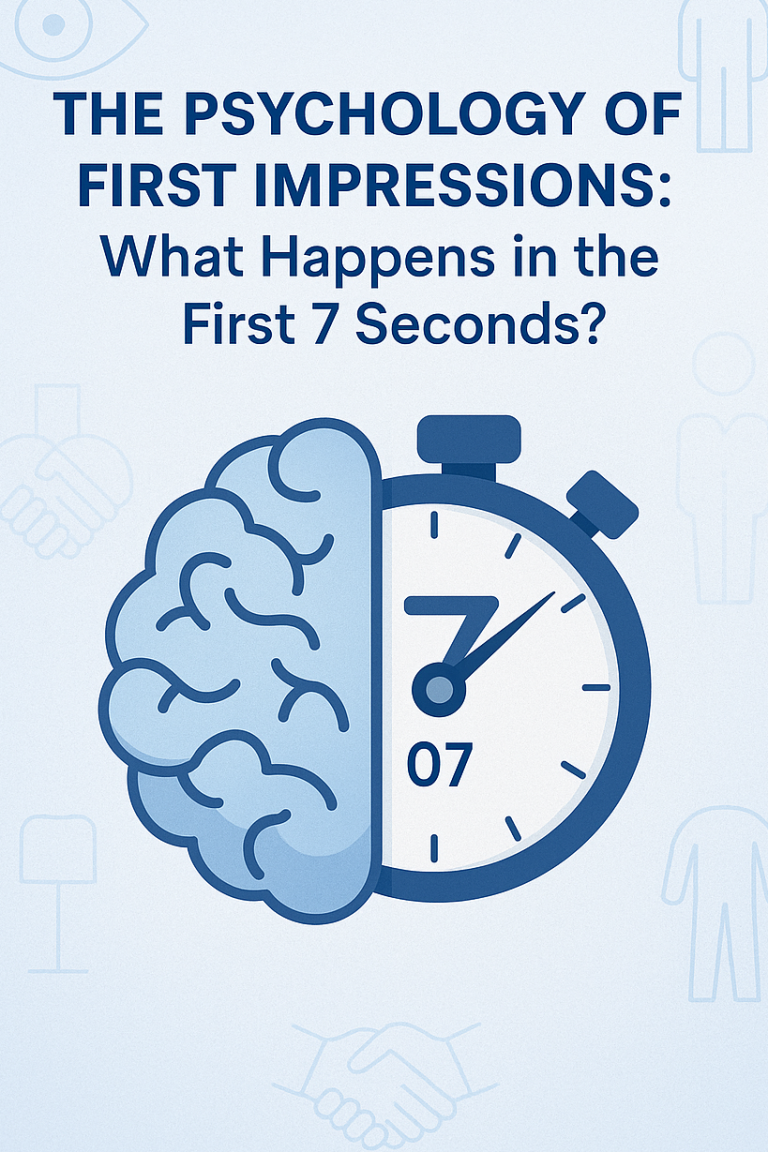
Picture this: You’re at a networking event, heart pounding a little as you approach a group of potential clients. You flash a smile, extend your hand, and… boom. In just seven seconds, they’ve sized you up. Confident leader? Shy introvert? Trustworthy pro? Their brain has already filed you away, and good luck changing that label later. Sounds dramatic? It’s not—it’s cold, hard psychology. Studies from places like Princeton University show we form lasting impressions in under a tenth of a second, but that magic seven-second window? That’s when it all solidifies. Why does it matter? Because those seven seconds can snag you a dream job, spark a lifelong romance, or tank your big opportunity. Let’s dive into the shocking science and how you can hack it.
The Brain’s Lightning-Fast Judgment Machine
Your brain isn’t politely waiting for a full intro. Nope, it’s a survival beast from caveman days. Back then, spotting a friend or foe in seconds meant life or death. Fast-forward to today, and that amygdala—the fear and emotion hub—kicks into gear the moment eyes meet. Researchers at NYU found we judge attractiveness, likability, and competence in 100 milliseconds. But give it seven seconds, and the prefrontal cortex chimes in, weaving a full story. It’s called the “halo effect”: One positive trait (like a warm smile) makes you seem smarter, kinder, everything-er.
Think about it. In job interviews, Harvard Business Review notes interviewers decide “hire or no” in seconds, rationalizing later. Dating apps? Swipe left in a blink based on a photo. Seven seconds isn’t hype—it’s your brain on autopilot, and it’s brutally efficient.
Body Language: The Silent Screamer
Words? They barely register in those first moments. It’s all non-verbal—93% of communication, per UCLA’s Mehrabian rule (though debated, it rings true here). Posture screams confidence: Stand tall, shoulders back, and you’re golden. Slouch? Instant “unreliable” vibe.
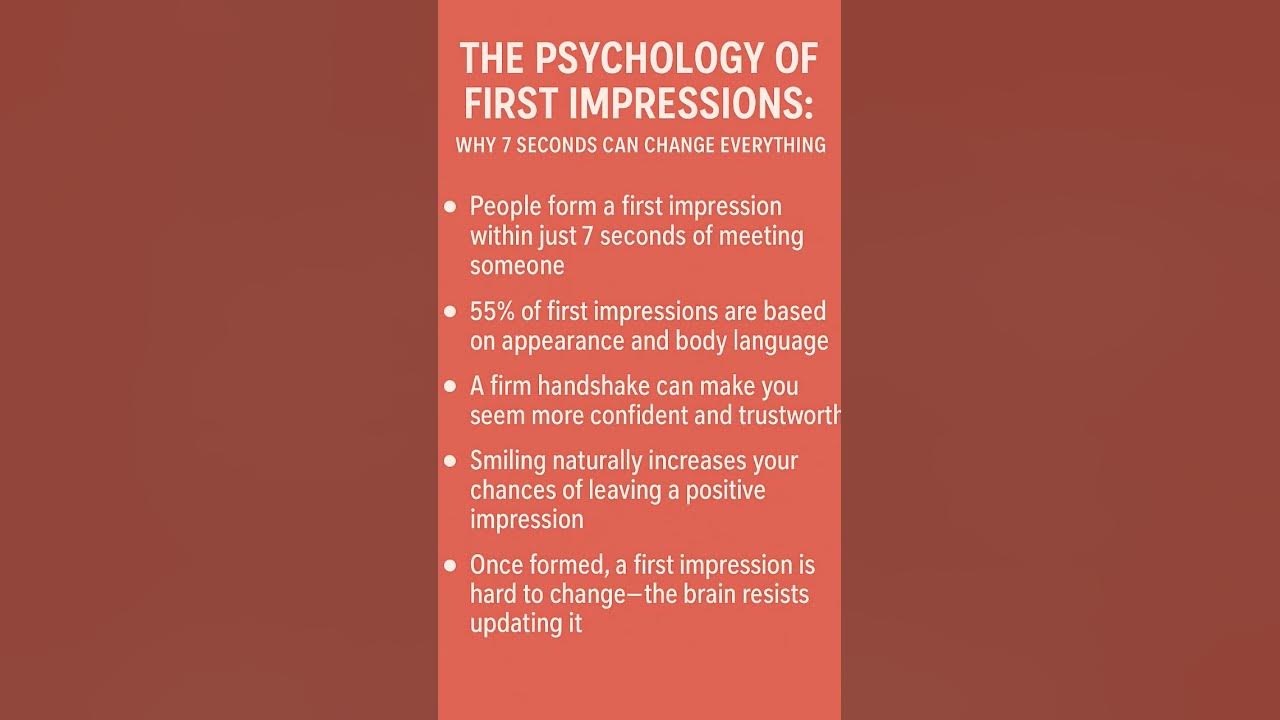
Eyes are daggers. Direct gaze for three seconds builds trust; too little, you’re shady; too much, creepy. Handshakes? Firm and dry says “alpha,” limp fish screams “pushover.” A study in the Journal of Personality and Social Psychology showed people infer extroversion from stride speed alone. Walk briskly into a room? You’re seen as energetic. Shuffle? Meh.
And don’t get me started on micro-expressions. That split-second frown? Your subconscious clocks it as dislike. We’re wired to read these Darwinian signals—it’s why politicians prep gestures like pros.
First Impression Killers You Didn’t See Coming
We’ve all botched it. That coffee stain on your shirt? Instant slob label. Dandruff? Unhygienic. Even your scent—too much cologne overloads the olfactory bulb, triggering aversion.
Grooming gaps are brutal. A 2019 LinkedIn survey found 57% of hiring managers nix candidates for poor appearance. Tattoos or piercings? Depends on context, but they polarize fast. And fidgeting? It broadcasts anxiety, eroding trust. Worst: The “fake smile.” Real ones crinkle your eyes (Duchenne smile); fakes don’t, and people smell phoniness.
Oh, and context matters. In a boardroom, edgy hair might tank you; at a startup, it’s cool. Mismatch your vibe to the room, and those seven seconds bury you.
Hacks to Crush Those Seven Seconds Every Time
Ready to weaponize this? Start with the power pose: Amy Cuddy’s TED talk gem—two minutes of Wonder Woman stance boosts testosterone, slashes stress. Walk in like you own it.
Dress the part. One color trick: Navy blue screams trust (think cops, suits). Mirror their energy—match pace, tone subtly for rapport. Smile genuinely: Practice in the mirror till your eyes dance.
The “head tilt” nods empathy; open palms signal honesty. Name drop early: “Hi, I’m Alex—great to meet you.” Personalizes instantly. And breathe—deep inhales calm nerves, steady your voice.
Pro tip: Prepare your “entry story.” A fun fact or question disarms: “I just survived a coffee spill apocalypse—how’s your day?” Turns judgment into connection.
Real-Life Sagas: When Seven Seconds Rewrote Destinies
Take Sarah, a sales rep I know. First client meeting: Rushed in, hair messy, mumbling. Seven seconds in, eyes glazed over—deal lost. Retool: Polished look, firm grip, “Excited to solve your pain points.” Next pitch? Signed on the spot.
Or Mark Zuckerberg’s early pitches. Scruffy hoodie? Critics called him unserious. Now? Calculated casual. Changed perceptions, built billions.
Romance edition: My buddy Jake swiped right on Tinder, but first date nerves hit. Stuttered hello, checked phone. Ghosted. Lesson learned: Eye contact, teasing opener. Second date? Engaged a year later. Seven seconds flipped the script.
Even celebs flop. Remember that viral video of a politician’s awkward wave? Career dented overnight. Proof: Impressions echo.
The Ripple Effect: Why It Lingers and How to Fix Bad Ones
Those seven seconds aren’t isolated—they’re anchors. Confirmation bias locks in: Good start? You get the benefit of doubt. Bad? Every slip amplified.
MIT studies show it takes 20 positive interactions to undo one negative first impression. Brutal, right? But recoverable: Consistency, vulnerability (“I was nervous—let’s chat more”), and time.
In life, it’s everywhere: Classrooms (teachers label kids Day 1), courts (jurors prejudge), sales (buyers bolt). Master it, and doors fling open.
Your Seven-Second Makeover Challenge
Today, audit yourself. Film your walk-in. Critique: Posture? Smile? Energy? Practice till it’s autopilot awesome. Next interaction—job fair, date, coffee chat—deploy it. Watch magic happen.
First impressions aren’t shallow; they’re survival shorthand. In our hyper-connected world, nailing seven seconds isn’t optional—it’s your superpower. Go change some lives, starting with yours.