
How to Automate Your Savings and Forget About It
In today’s fast-paced world, saving money often feels like an uphill battle. Between bills, unexpected expenses, and the temptation of impulse buys, it’s easy to let your savings goals slip away. But what if you could set up a system that works for you 24/7, effortlessly building your financial future without constant monitoring? Enter automated savings—a “set it and forget it” strategy that’s revolutionizing personal finance. This article explores how to automate your savings, the best tools to use, and tips to maximize your results. Whether you’re a beginner saver or looking to optimize your current setup, automating your savings can help you reach financial freedom faster.
Why Automate Your Savings?
Feature Video
Automation removes the emotional and mental hurdles of manual saving. Studies from behavioral economists like Richard Thaler show that people are more likely to save when it’s frictionless. By automating transfers from your checking to savings account right after payday, you “pay yourself first” without thinking twice. This out-of-sight, out-of-mind approach leverages payday anchoring, where funds are allocated before you can spend them.
The benefits are clear: consistency leads to compound growth. For instance, automating $200 monthly into a savings account at 4% APY could grow to over $150,000 in 30 years. Plus, it reduces decision fatigue. Apps and banks make it seamless, often with zero fees. In an era of inflation and economic uncertainty, automating savings builds a safety net effortlessly. According to a 2023 Vanguard report, automated savers contribute 15% more annually than manual ones.
Step 1: Link Your Accounts and Set Up Automatic Transfers

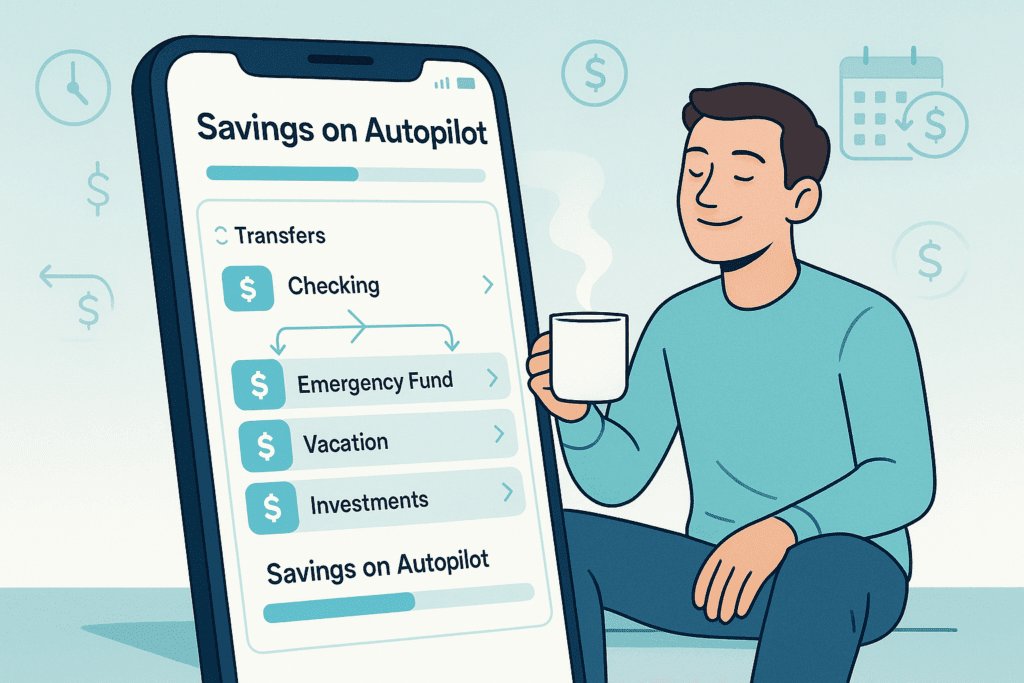
Start simple: most banks offer free automatic transfers. Log into your online banking portal, select “Transfers,” and schedule recurring moves from checking to savings. Aim for payday deposits—transfer 10-20% immediately. Tools like Ally Bank or Capital One 360 allow customizable schedules, including bi-weekly options.
For precision, calculate your savings rate using the 50/30/20 rule: 50% needs, 30% wants, 20% savings/debt. Automate that 20% first. If you’re paid bi-weekly, set two smaller transfers to mimic steady progress. Pro tip: Use separate savings accounts for goals like emergencies (3-6 months expenses), vacations, or down payments. Label them clearly for motivation—banks like Marcus by Goldman Sachs excel here with no-fee buckets.
Word of caution: Ensure enough buffer in checking to avoid overdrafts. Start small, say $50/week, and scale up as habits form. This foundational step is the cornerstone of “forget about it” savings.
Step 2: Choose High-Yield Savings Accounts for Maximum Growth

Traditional banks offer paltry 0.01% interest, but online high-yield savings accounts (HYSAs) deliver 4-5% APY as of 2024. Automate into these for turbocharged growth. Top picks include Discover (4.25% APY), SoFi (4.5%), and CIT Bank (4.65%), all FDIC-insured up to $250,000.
Switching is easy: Open a new account, link your payroll direct deposit for bonuses (often $200+), then automate transfers. Many have no minimums or fees. For automation pros, enable “auto-saver” features that boost transfers based on account balances. This passive compounding turns your savings into a wealth machine—$500/month at 5% APY yields $185,000 in 20 years.
Step 3: Leverage Round-Up Apps for Micro-Savings
Apps like Acorns, Qapital, and Digit (now Oportun) round up purchases to the nearest dollar, funneling change into savings or investments. Buy a $3.75 coffee? It rounds to $4, saving $0.25. These pennies add up—users save $30-50/month effortlessly.
Acorns invests round-ups in diversified ETFs, ideal for long-term growth. Qapital adds rules like “save $5 if I skip coffee today.” Link your cards, set rules, and forget. Integration with banks via Plaid ensures security. A 2023 study found round-up users saved 3x more than traditional methods, proving micro-habits drive macro results.
Best Apps and Tools to Supercharge Automation

Beyond basics, fintech shines. YNAB (You Need A Budget) automates categorizations and goal transfers. Mint or Empower track spending and nudge savings. For advanced users, Empower’s auto-invest robo-advisor allocates to stocks/bonds based on risk.
Robinhood and Wealthfront offer automated investing with zero commissions. Set recurring deposits into index funds for 7-10% historical returns. PayPal and Venmo now have savings vaults with auto-transfers. Internationally, Monzo or Starling Bank lead with pots for segregated savings. Choose based on needs: Acorns for beginners, Wealthfront for investors.
Security matters—use apps with bank-level encryption and two-factor authentication. Most are free or low-cost ($3-5/month), paying for themselves via savings.
Automate Investments for Long-Term Wealth

Savings alone won’t beat inflation; automate investments too. Set up Roth IRA contributions via Vanguard or Fidelity—max $7,000/year (2024). Their auto-invest plans dollar-cost average into low-fee funds like VTI (total stock market).
Employer 401(k)s with auto-escalation increase contributions 1% yearly. Apps like Betterment optimize taxes automatically. This “forget it” investing has built millionaires: consistent $300/month since age 25 at 8% return hits $1M by 65.
Tips to Make Automation Stick and Scale

Review quarterly—adjust for raises (auto-bump 50% of increases to savings). Windfall rule: Automate 50% of bonuses/tax refunds. Gamify with apps offering badges or matches (Chime’s SpotMe).
Build an emergency fund first (3-6 months), then fun goals to stay motivated. Share goals with apps like Qapital’s “family challenges.” Track net worth monthly via Personal Capital for dopamine hits from progress.
Common Mistakes to Avoid in Automated Savings
Don’t over-automate without a budget—apps can’t fix overspending. Avoid low-interest accounts; shop rates via Bankrate.com. Watch fees in investment apps. Pause during job loss but resume ASAP. Inflation erodes cash, so ladder into bonds/CDs automatically.
Finally, behavioral pitfalls: “Automation bias” leads to neglect. Annual audits prevent drift.
Conclusion: Your Path to Financial Freedom Starts Now
Automating savings transforms intention into action. By setting up transfers, using HYSAs, round-ups, and investment bots, you create a flywheel of wealth. Start today: Pick one step, like scheduling a $100 transfer, and build from there. In a year, you’ll thank yourself. Financial independence isn’t luck—it’s automation. Forget about it, and watch your future secure itself.
(Word count: 1218)