
The 12-Second Miracle That Beat the Odds: Wright Brothers’ Secret Kitty Hawk Triumph
In the annals of human achievement, few moments rival the quiet drama of a December morning in 1903. Against blistering winds and endless skepticism, two brothers from Dayton, Ohio, etched their names into eternity with a feat that lasted just 12 seconds. This was no ordinary flight—it was the dawn of powered aviation, a triumph born from ingenuity, perseverance, and a remote beach called Kitty Hawk. The Wright Brothers’ story isn’t just history; it’s a blueprint for defying impossible odds.
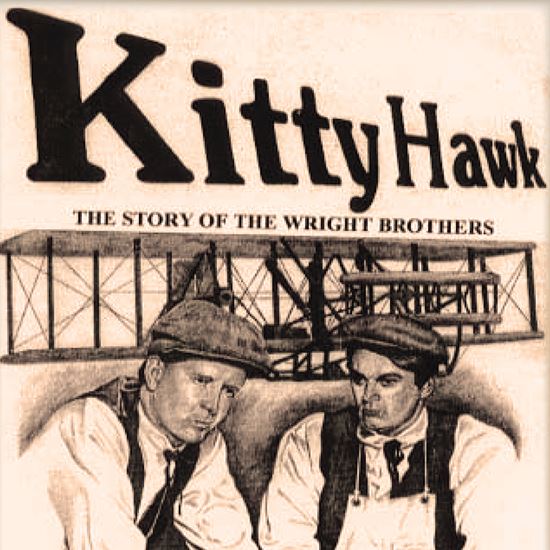
The Wright Brothers: Humble Beginnings in Innovation
Wilbur and Orville Wright were not born into privilege or scientific aristocracy. Operating a modest bicycle shop in Dayton, Ohio, the brothers honed their mechanical skills amid the bicycle boom of the late 19th century. By 1896, inspired by pioneers like Otto Lilienthal and Octave Chanute, they turned their gaze skyward. Gliders became their obsession. In 1900, they constructed their first, testing it on the dunes of Kitty Hawk, North Carolina—a spot chosen for its steady winds, soft sands, and isolation.
What set the Wrights apart was their scientific rigor. Unlike thrill-seeking inventors, they built a wind tunnel to test wing shapes, pioneering aerodynamic data that debunked prevailing theories. Their 1901 glider disappointed, flying poorly, but it fueled relentless iteration. By 1902, after 1,000 glider flights and refined control systems like wing warping, they achieved mastery. These bicycle mechanics had out-engineered the experts, laying the groundwork for powered flight.
Why Kitty Hawk? The Strategic Choice for Aerial Experiments
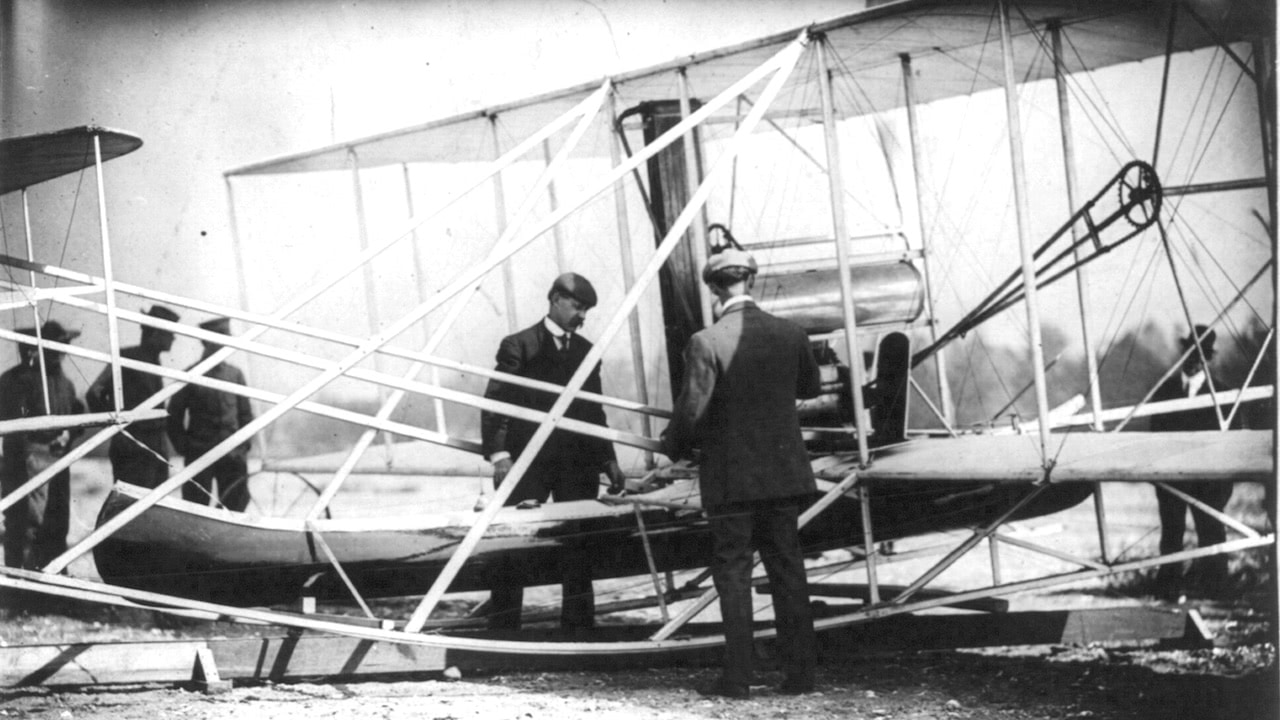
Kitty Hawk wasn’t random. In 1900, Wilbur wrote to the U.S. Weather Bureau seeking a site with “winds not over 20 miles per hour” and “soft level ground.” The Outer Banks delivered: Kill Devil Hills offered 60-foot dunes for safe landings, consistent breezes for lift, and seclusion from prying eyes. The Wrights craved secrecy amid rival inventors like Samuel Langley, whose government-backed Aerodrome had crashed spectacularly in 1903.
Arriving seasonally from 1900 to 1903, the brothers camped in a canvas tent, hauling materials by rail and wagon. Local fishermen like Bill Tate became allies, providing shelter and witnessing history. Kitty Hawk’s isolation was a double-edged sword—harsh winters and mosquitoes tested their mettle—but it shielded their innovations from copycats, allowing uninterrupted progress.
The Flyer: Engineering a Miracle Machine
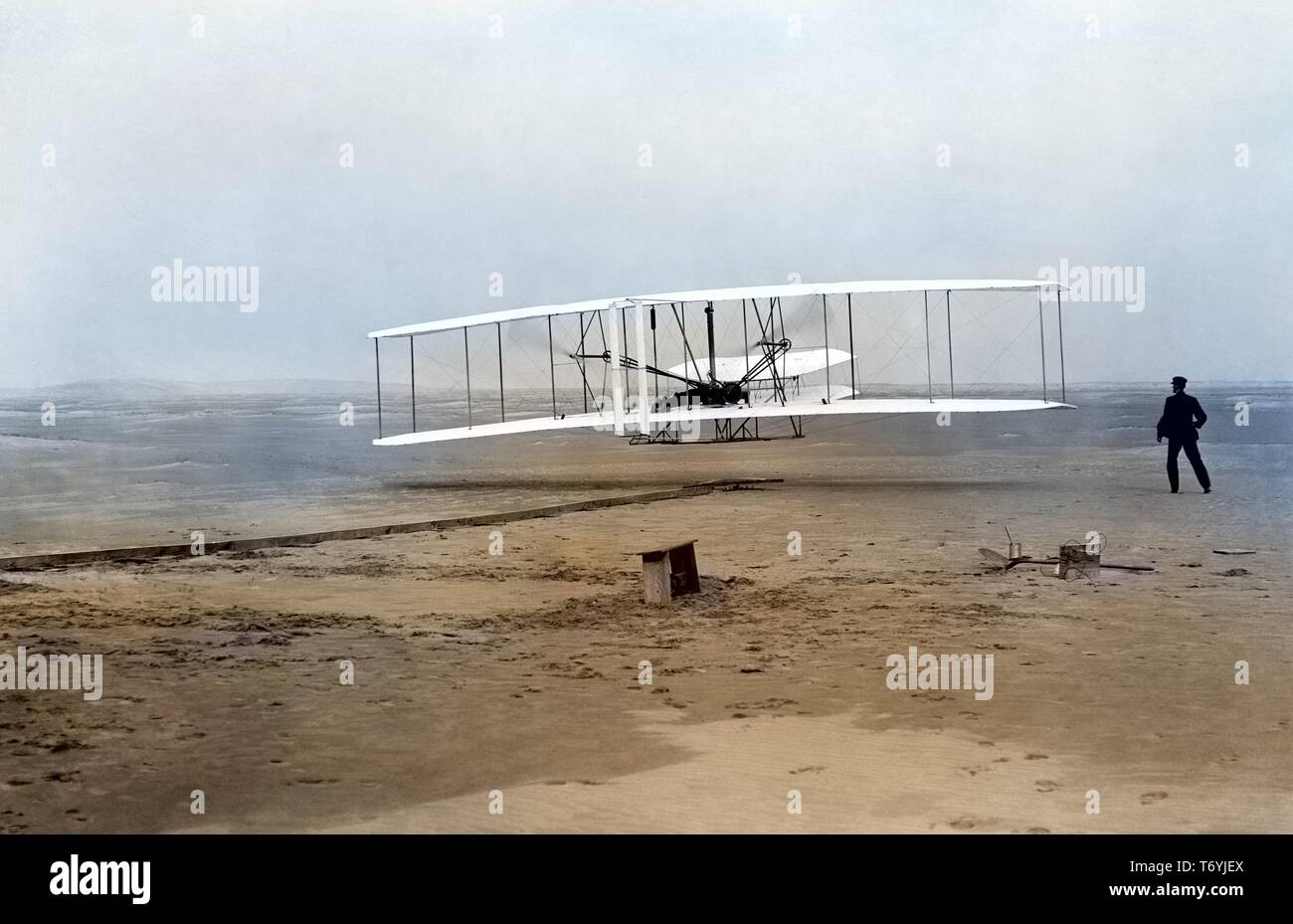
The 1903 Wright Flyer was a marvel of simplicity and precision. A 40-foot biplane with a 6.5-foot chord, it weighed 605 pounds with pilot. Its 12-horsepower engine, hand-built by Charlie Taylor, drove twin propellers via chains. Canard wings upfront provided pitch control, while rear rudders and wing warping handled yaw and roll—the first true three-axis control system.
Construction took months in Dayton’s bicycle shop. Aluminum castings failed initially, demanding redesigns. Propellers, carved from maple after calculations showed standard ones inefficient, achieved 75% efficiency. Every component screamed ingenuity: hip cradle for pilot control, skids for landings. By September 1903, the Flyer shipped to Kitty Hawk, reassembled amid gales that delayed tests until December.
December 17, 1903: The Dawn of Powered Flight
After weeks of glitches—propeller shaft breaks, transmission woes—the big day arrived. At 10:35 a.m., with 27 mph winds howling across Kill Devil Hills, Orville climbed aboard. Wilbur steadied the wing. Five witnesses, including the tateless Tates, gathered. A coin flip decided Orville flew first.
The Flyer skimmed 10 feet off the sand, tracing a straight line for 120 feet. Ground effect and wind kept it aloft for exactly 12 seconds before settling. Elation erupted. Repairs followed swiftly. Wilbur’s second flight covered 175 feet in 12 seconds. Orville’s third stretched to 200 feet in 15 seconds. The pinnacle: Wilbur’s fourth soared 852 feet in 59 seconds, banking gently.
A smashed front skid ended the day—no more flights. But four successes proved controllability, the holy grail of flight. The Wrights telegraphed home: “SUCCESS FOUR FLIGHTS THURSDAY MORNING ALL AGAINST TWENTY ONE MILE WIND STARTED FROM LEVEL WITH ENGINE POWER ALONE AVERAGE SPEED THROUGH AIR THIRTY ONE MILES LONGEST 57 SECONDS INFORM PRESS HOME CHRISTMAS.”
Unpacking the 12-Second Miracle: Science Behind the Triumph
That inaugural 12 seconds wasn’t luck. Kitty Hawk’s winds—equivalent to 40 mph forward speed—generated immense lift. The Flyer’s 200-square-foot cambered wings, with 1-in-6 curvature, produced superior lift-to-drag ratios per their wind tunnel data. Thrust from 180-pound engine overcame 90-pound drag.
Control was key. Traditional rudders failed; the Wrights’ wing warping and integrated rudder twisted the aircraft like a bird. Orville’s steady hands on the cradle wires maintained equilibrium. Calculations later showed a true airspeed of 34 mph, covering 120 feet ground distance due to wind shear. This “miracle” validated their aeronautical tables, revolutionizing engineering.
Beating the Odds: Skepticism, Setbacks, and Secrecy
The Wrights faced derision. The New York Herald mocked: “FLYING MACHINES WHICH DO NOT FLY.” Langley’s $50,000 flop fueled doubt. Publishers rejected their papers. Undeterred, they patented in 1902 but flew privately, demanding contracts before demos. Secrecy at Kitty Hawk thwarted spies; even locals downplayed sightings as “kite tricks.”
Odds stacked high: 1901 glider averaged 25 feet amid vortex issues; 1902 nearly killed Wilbur. Financial strain bit—no investors. Yet persistence prevailed. Post-1903, they refined Flyers II and III, circling France in 1908 to stun doubters.
The Enduring Legacy of Kitty Hawk
The 12-second flight birthed an industry. By 1908, aircraft circled battlefields; by 1927, Lindbergh crossed oceans; today, Boeing dominates skies. The Wrights’ principles—systematic testing, control primacy—underpin aviation. Kitty Hawk’s dunes, now Wright Brothers National Memorial, draw 500,000 visitors yearly.
Orville lived to 1948, witnessing jets; Wilbur died in 1912. Their story inspires: innovation thrives on grit, not glamour. That 12-second miracle reminds us—against odds, human flight isn’t impossible; it’s inevitable.
(Word count: 1028)