
NASA’s Secret: The Alien Megastructure Hiding in Plain Sight
Ever Wondered What’s Lurking Out There?
Picture this: You’re scrolling through space news, sipping your coffee, when bam—a star that’s acting like it’s got a massive construction project blocking its light. No planets, no predictable eclipses, just wild, irregular dips in brightness up to 22%. Sounds like sci-fi, right? But it’s real, and it’s called Tabby’s Star, or KIC 8462852 if you want to get technical. Discovered by citizen scientists in 2015 using NASA’s Kepler Space Telescope data, this weirdness has astronomers scratching their heads and conspiracy theorists pointing fingers at aliens. And here’s the kicker: NASA’s data is out there for everyone to see. Is this their “secret” megastructure hiding in plain sight? Let’s dive in, because you won’t believe what we’ve uncovered.
The Discovery That Broke the Internet
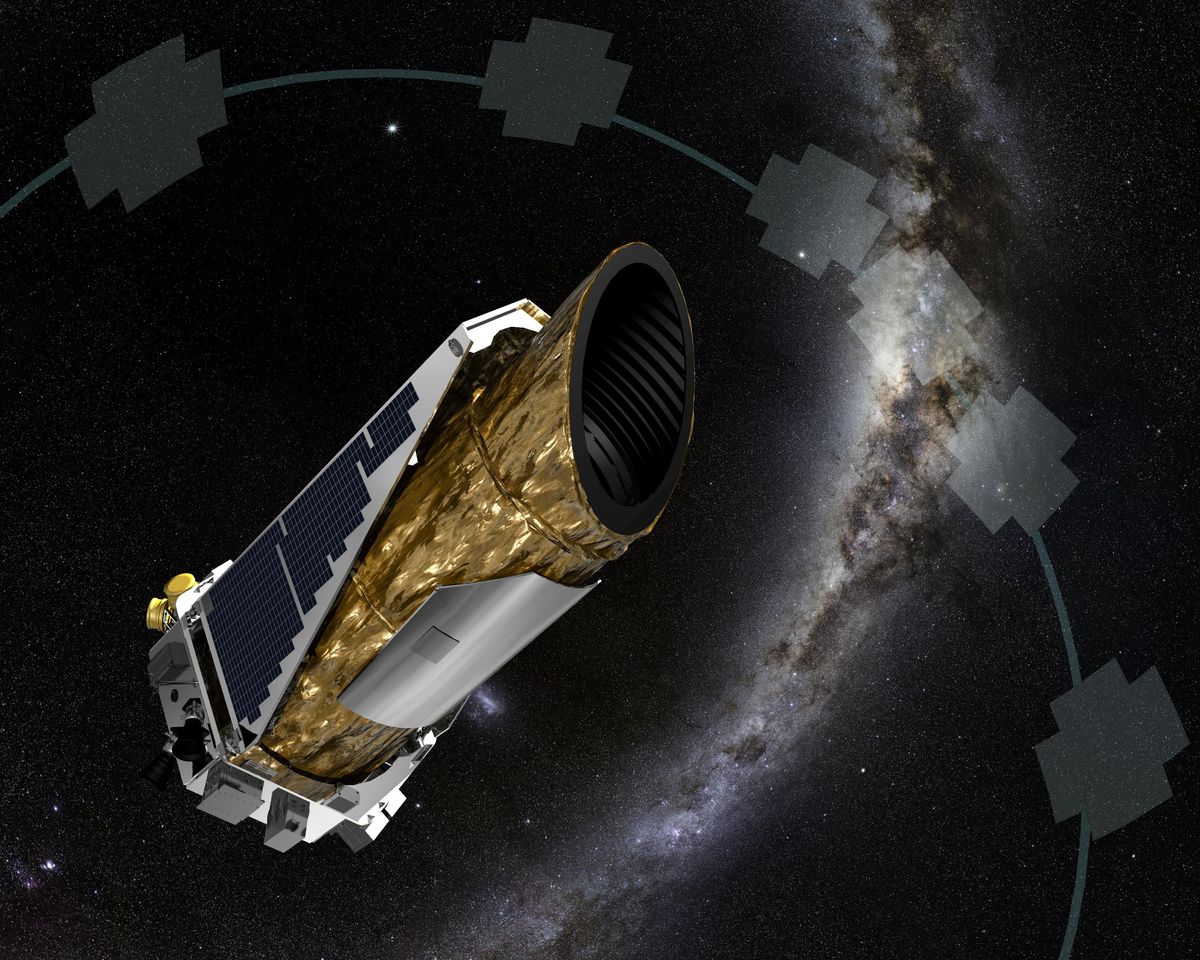
Back in 2015, a team led by Tabetha Boyajian—hence “Tabby’s Star”—spotted something bonkers in Kepler’s exoplanet-hunting data. Kepler stares at stars for tiny dips caused by planets transiting across them. Normal dips? 1% max. Tabby’s? Up to 22% in one event, and it happens irregularly, like the star’s throwing a rave with faulty lights.
These weren’t one-off blips. Kepler caught multiple dimming events from 2009 to 2013, some lasting days, others weeks. Then, in 2017, astronomer Bradley Schaefer confirmed even bigger dips in archival plates dating back a century. The star’s brightness had faded 3% per decade for 100 years before suddenly stabilizing. What the heck? Social media exploded. Was it aliens? NASA stayed mum at first, but the data was public—anyone could download it. That’s the “hiding in plain sight” part. No cover-up, just mind-blowing facts staring us in the face.
Crunching the Numbers: Why It’s Not Your Average Star
Let’s geek out on the data. Tabby’s Star sits 1,480 light-years away in the constellation Cygnus, a main-sequence F-type star, stable and boring… until it’s not. The dips aren’t symmetric like planet transits; they’re jagged, like something huge and patchy is blocking the light.
Imagine a cloud of dust or a swarm of comets. But math doesn’t add up. For a 22% dip, you’d need comets the size of Earth clumping together—hundreds of them, fresh and intact, which defies physics. Dust? It should heat up and glow in infrared, but Spitzer Telescope observations in 2015 showed no excess IR. In fact, the dust signature was 100 times less than needed. Boyajian herself said, “This isn’t natural.”
Fast-forward to 2018: The star brightened mysteriously by 14% over months, then dimmed again in patterns. Ground-based telescopes like Las Cumbres Observatory caught it live. It’s like the star’s mood swings are scripted by an otherworldly architect.
Natural Theories: Grasping at Straws?
Astronomers hate jumping to ET conclusions, so they’ve thrown everything at it. Comet swarms? Proposed early, but the sheer number required (648 massive comets for one dip) is absurd—equivalent to a star system’s entire Oort cloud fragmenting at once.
Dust from planetary collisions? Nope, no debris ring detected. A planet on a wonky orbit? Too slow for the short dips. Internal stellar weirdness, like pulsations? Stars don’t dim that much without exploding.
One wild idea: a “shard” of a destroyed planet or supercontinent-sized fragments. Intriguing, but lacks evidence. Another: magnetic reconnection events ejecting material. Cool, but doesn’t explain the shape. Every natural explanation strains credibility, leaving a nagging gap. As astronomer Jason Wright put it, “Extraordinary claims require extraordinary evidence, but so do extraordinary natural explanations.”
The Alien Megastructure Hypothesis: Dyson Swarm in Disguise?
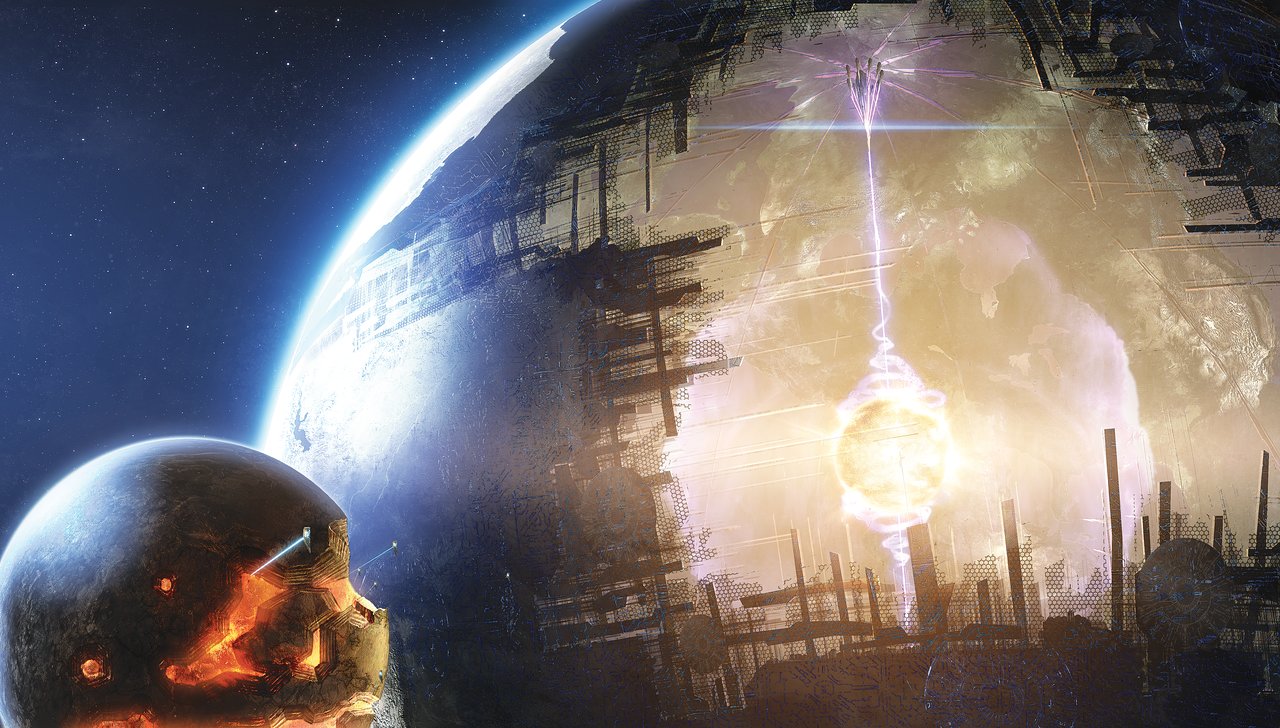
Now, the fun part—what if it’s aliens? Not little green men phoning home, but a Type II civilization on the Kardashev scale, harnessing their star’s energy with a Dyson swarm. Picture billions of solar panels orbiting Tabby’s Star, not a solid shell (which would be unstable), but a loose cloud of statites or mirrors.
In 2015, Penn State astronomer Jason Wright co-authored a paper suggesting this. The irregular dips? Panels under construction, maintenance, or migrating for optimal light. The century-long fade? Gradual build-up. The 2017 brightening? Panels repositioned or new tech deployed.
Why Tabby’s? It’s young (few million years old), metal-rich—perfect for advanced tech. And the location? Far enough not to freak us out, close enough to spot. SETI scanned it for signals—no radio chatter, but megastructures might be passive or encrypted. Breakthrough Listen observed in 2015 and 2017: zilch on comms, but who says aliens use our tech?
This isn’t crackpot stuff. Freeman Dyson himself inspired it in 1960. If real, it’s the smoking gun for intelligent life—game over for Fermi’s “Where is everybody?”
NASA’s “Secret”: Data Drops and Official Silence
So, NASA’s secret? There isn’t one—they’re scientists, not X-Files agents. Kepler data is open-source; Planet Hunters crowdsourced the find. NASA funded follow-ups with Spitzer, Hubble peeked (no resolution on structure), and TESS monitors it now.
But they tread carefully. In 2015, NASA said it’s “intriguing” but likely natural. No press conferences screaming “aliens!” Why? Science demands proof, not hype. Yet, they’ve poured resources in—James Webb Space Telescope might image it soon, resolving any structure at 1,480 ly with its infrared magic.
The real secret is how this hides in plain sight: Public data, peer-reviewed papers, TED talks by Boyajian. We’re all detectives now. Crowdfunding bought telescope time; amateurs track it nightly. NASA’s empowering us to uncover it ourselves.
What’s Next for Tabby’s Star?
Recent twists: 2022 saw another dimming cycle, analyzed by Boyajian’s team—still weird. JWST observations are queued; if it spots artificial flat spectra or non-gray blockers, boom. Polarimetric studies hint at translucent panels, not dusty clouds.
Meantime, AI sifts Kepler data for Tabby-like stars—found a few mini-Tabbys, but nothing matches. If it’s aliens, expect escalation: More ET signals? Or quiet until they notice us staring.
Are We Ready for the Truth?
Tabby’s Star isn’t solved, and that’s thrilling. Natural or not, it challenges our cosmic loneliness. Maybe it’s comets; maybe Dyson panels powering an interstellar empire. NASA’s not hiding it—they’re handing us the telescope.
What do you think? Alien megastructure or stellar hiccup? Dive into the data yourself at MAST archive. The universe is weirder than fiction, and Tabby’s proving it daily. Stay curious, space fans—this could rewrite everything.