
Quantum Computing’s Dirty Secret: Why It’s Not Ready to Rule the World (Yet)
Hey, Quantum Hype Train—Slow Down!
Picture this: headlines screaming about quantum computers cracking unbreakable codes, revolutionizing medicine, and optimizing everything from traffic to climate models. Google claims “quantum supremacy,” IBM boasts ever-bigger machines, and venture capital flows like quantum bits in superposition. It’s sexy, it’s futuristic, and it’s got everyone buzzing. But here’s the dirty secret I’ve been dying to spill: quantum computing isn’t ready to rule the world. Not even close. Don’t get me wrong—it’s mind-blowingly cool tech with insane potential. But between the hype and reality lies a chasm wider than Schrödinger’s cat’s both-alive-and-dead dilemma. Grab a coffee, and let’s unpack why we’re still in the “yet” phase.
The Quantum Dream: What We’re Promised
First off, a quick refresher for the non-physicists among us (that’s me on most days). Classical computers use bits—0s and 1s. Quantum computers use qubits, which can be 0, 1, or both at once thanks to superposition. Entanglement lets qubits link up in ways that make parallel processing look like child’s play. The promise? Solving problems in minutes that would take classical supercomputers billions of years. Think factoring huge numbers to shatter RSA encryption, simulating molecules for new drugs, or optimizing supply chains with god-like efficiency.
I mean, who wouldn’t want that? Governments are pouring billions in. China, the US, Europe—it’s a new space race. But excitement often blinds us to the gritty details. Quantum computers aren’t just faster laptops; they’re fragile snowflakes in a blizzard.
Dirty Secret #1: Decoherence—the Ultimate Buzzkill
Enter decoherence, the quantum computing villain. Qubits thrive in perfect isolation, but the real world is noisy. A stray photon, cosmic ray, or even a vibrating molecule can collapse superposition faster than your New Year’s resolutions. We’re talking microseconds of coherence time on a good day. Current machines? They fight decoherence with error-correcting codes, but that’s like patching a sinking ship with tape.
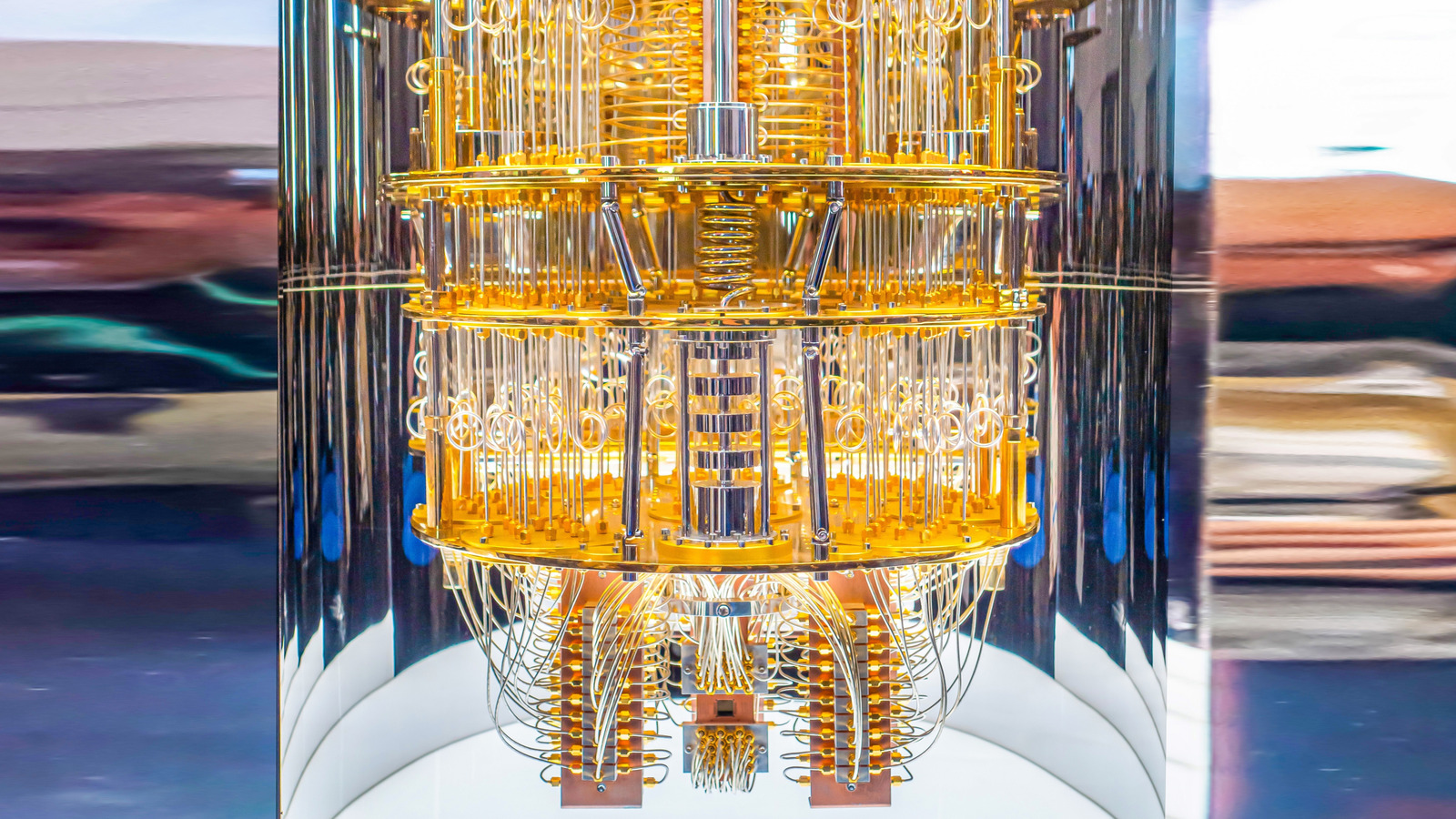
Imagine trying to solve a puzzle while someone keeps shaking the table. That’s quantum life. Labs keep qubits at near-absolute zero (-273°C) in vacuum chambers with magnetic shields. Heroic? Yes. Practical for world domination? Nope. Scaling this means bigger, colder, more isolated systems—hello, engineering nightmares.
Noisy Machines and the NISQ Era
We’re in the NISQ phase—Noisy Intermediate-Scale Quantum. IBM’s got 433 qubits in its Osprey, Google’s Sycamore hit 70-something for supremacy claims. Impressive? Sure. Useful? Barely. Error rates are sky-high: 1% per gate operation. Run a deep algorithm with thousands of gates, and errors compound exponentially. It’s like playing telephone with 100 people—by the end, the message is gibberish.
John Preskill, the NISQ coiner, admits these are proofs-of-concept, not problem-solvers. They’ve done cool demos, like simulating simple molecules or random circuit sampling, but nothing you’d bet your career on. Venture-funded startups promise “quantum advantage” soon, but skeptics (including me) say it’s marketing fluff until fault-tolerant quantum computers arrive.
Scalability: From Hundreds to Millions of Qubits
To do real work, you need logical qubits—error-corrected ones. One logical qubit might require 1,000 physical ones. For Shor’s algorithm to crack encryption? 20 million physical qubits. We’re at hundreds. And they’re not identical; each machine is bespoke, handmade in cleanrooms by PhDs wearing bunny suits.
Interconnects? Qubits must talk without decohering. Photonic links, ion traps, superconducting loops—pick your flavor, all have trade-offs. Superconducting qubits (Google/IBM fave) need dilution fridges the size of refrigerators. Trapped ions (IonQ) are stable but slow to entangle. Neutral atoms? Promising, but early days. No one’s cracked reliable scaling yet. It’s like building a skyscraper with Jenga blocks.
The Infrastructure Headache
Forget the qubits; the support system is bonkers. Cryogenics guzzle megawatts—Google’s setups rival data centers. Wiring thousands of qubits means thousands of control lines snaking through the fridge, each a decoherence risk. Manufacturing? Yields are low; most qubits are duds.
Cost? A single quantum machine runs $10-100 million. Cloud access (Amazon Braket, Azure Quantum) is pay-per-shot, but you’re renting toys, not transformers. And power grids? Quantum farms could strain them like Bitcoin mining did.
Software Woes: Algorithms Aren’t Magic
Hardware’s half the battle. Quantum algorithms like Grover’s or QAOA need fault-tolerance to shine. Right now, we hybridize: classical computers orchestrate quantum bursts. Useful for some optimization, but not revolutionary. Programming qubits? It’s arcane—Qiskit, Cirq, Pennylane. Even experts struggle with noise models.
Plus, not everything benefits. Quantum speedups are for specific problems (factoring, search). Your Netflix queue? Classical suffices. Hype ignores that 99% of computing stays classical.
Real-World Hurdles: Security and Beyond
Encryption panic? “Harvest now, decrypt later” attacks loom, but no quantum cracker exists. NIST’s post-quantum crypto standards are rolling out as a hedge. Drug discovery? Quantum sims of small molecules work, but proteins are light-years off.
Climate modeling, AI training? Promising papers, scant demos. Quantum machine learning? Mostly vaporware. It’s like fusion power—always 10-20 years away.
So, When’s the Party?
Optimists (Rigetti, PsiQuantum) say fault-tolerant QC by 2030. Pessimists (D-Wave’s critics, some MIT folks) push 2040+. I’m betting 2035-ish for niche wins, full maturity post-2050. Roadmap: 1000-qubit NISQ by 2025, 1M physical by 2030s with error correction.
Progress is real—qubit counts double yearly, coherence improves. Governments mandate quantum strategies; startups raise billions. But rushing risks disillusionment, like blockchain’s crypto winter.
Why Care? The Balanced View
Quantum’s not a scam, just overhyped. It will change the world—in chemistry, materials, crypto. But patience! Invest in hybrids, post-quantum security, talent pipelines. For now, marvel at the science, not the savior narrative.
Quantum computing’s dirty secret? It’s hard as hell, and that’s okay. The journey’s the fun part. Stay tuned—I’ll be here debunking (and cheering) every qubit milestone. What’s your take? Hype or hope?