
The Secret to High-Speed Learning Using Spaced Repetition
Unlocking the Power of Spaced Repetition for High-Speed Learning
Feature Video
In today’s fast-paced world, mastering new skills quickly is a competitive edge. Whether you’re a student cramming for exams, a professional upskilling for a promotion, or a lifelong learner pursuing hobbies, high-speed learning is essential. Enter spaced repetition, a scientifically proven technique that revolutionizes how we retain information. Far from rote memorization, spaced repetition optimizes your brain’s natural forgetting curve, turning short-term knowledge into long-term mastery. This article dives deep into the secret of high-speed learning using spaced repetition, exploring its mechanics, benefits, implementation strategies, and tools to supercharge your cognitive abilities.
What is Spaced Repetition and Why Does It Work?
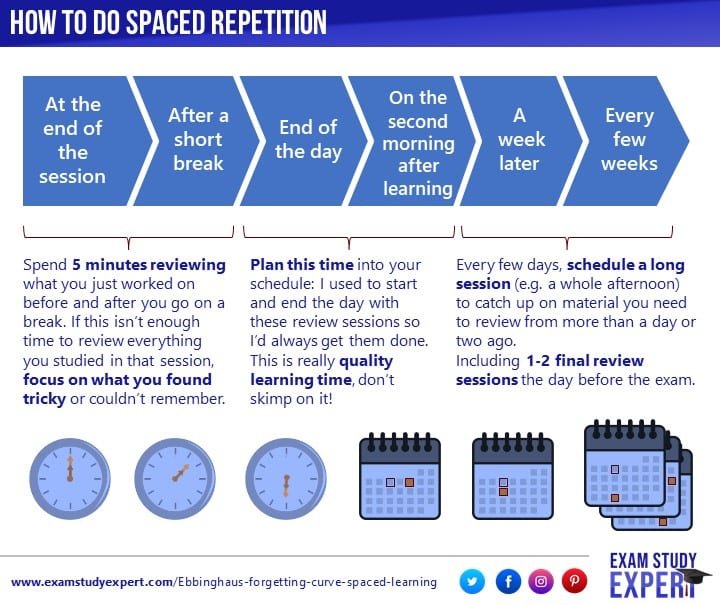
Spaced repetition is a learning method that involves reviewing information at increasing intervals over time. Instead of cramming all at once, you revisit material just before you’re about to forget it. This technique was pioneered by Hermann Ebbinghaus in the late 19th century through his forgetting curve experiments, which showed that we forget up to 90% of new information within a day without reinforcement.
The magic lies in the spacing effect: information reviewed at optimal intervals strengthens neural pathways, making recall effortless. Modern cognitive science, backed by studies from psychologists like Robert Bjork, confirms that spaced repetition boosts retention by 200-300% compared to massed practice. For high-speed learning, it means you can acquire languages, facts, or concepts in half the time. Imagine fluency in Spanish in months, not years, or acing certifications on the first try.
At its core, spaced repetition algorithms predict when you’ll forget something based on your performance. Easy recalls extend intervals; difficult ones shorten them. This adaptive approach ensures efficient brain training, minimizing wasted effort and maximizing speed.
The Science Behind Spaced Repetition: Forgetting Curve Explained
Ebbinghaus’s forgetting curve is the cornerstone. It plots memory retention dropping sharply after learning, then leveling off. Spaced repetition hits the curve at its steepest points, “resetting” it upward. Neuroplasticity plays a role too—repeated activation of synapses strengthens them via long-term potentiation (LTP), a process studied in fMRI scans showing enlarged hippocampal activity in spaced learners.
Recent meta-analyses in journals like Psychological Science validate this. One study on medical students using spaced repetition saw exam scores rise 15-20%. For high-speed learning, it combats the testing effect inversely: active recall during reviews embeds knowledge deeper than passive reading. Apps leverage SuperMemo’s SM-2 algorithm or Anki’s enhanced versions, calculating intervals with precision. This isn’t hype—it’s neuroscience-backed high-speed learning.
How to Implement Spaced Repetition for Rapid Skill Acquisition

Start simple: create flashcards with a question on one side and answer on the other. Use the Leitner system manually—cards move between boxes based on mastery, with Box 1 daily and Box 5 monthly. For high-speed, digitize it.
Step 1: Break content into atomic facts. “Photosynthesis” becomes “What is the primary pigment in photosynthesis? Chlorophyll.” Avoid paragraphs; focus on recall triggers.
Step 2: Rate difficulty post-review (easy/hard/again). Algorithms adjust spacing: 1 day, 3 days, 1 week, etc.
Step 3: Daily sessions of 20-30 minutes. Consistency trumps marathon sessions—your brain consolidates overnight via sleep spindles.
For languages, pair with immersion; for math, solve problems. High-speed tip: interleave topics to enhance discrimination learning, as per UCLA research.
Top Tools and Apps for Spaced Repetition Mastery

Tech amplifies spaced repetition. Anki, free and open-source, dominates with customizable decks and mobile sync. Its algorithm outperforms others, ideal for med students memorizing anatomy.
SuperMemo, the OG since 1987, offers advanced SM-17 for pros. Quizlet and Memrise add gamification—Memrise’s memes boost engagement for vocab. For enterprises, Mochi or RemNote integrate note-taking with SRS.
High-speed learners love Brainscape’s confidence-based repetition, proven 2x faster than flashcards alone. Integrate with Notion or Obsidian via plugins for a knowledge ecosystem. Pro tip: use shared decks from AnkiWeb for instant content like GRE words or piano scales.
Real-World Success Stories: Spaced Repetition in Action

Tim Ferriss learned Japanese kanji in 2 weeks using SRS precursors. Today, polyglots like Benny Lewis swear by it for 10+ languages. In tech, developers master APIs via spaced coding challenges on platforms like LeetCode with SRS extensions.
A Harvard study on undergrads showed spaced repetition cut study time by 50% while raising grades. Professionals at Duolingo report 3x retention. Even musicians use it—apps like Tenuto for scales. These cases prove: spaced repetition scales high-speed learning across domains.
Advanced Tips to Turbocharge Your Learning Speed
1. Active Recall First: Test before peeking—strengthens retrieval strength.
2. Feynman Technique Integration: Explain concepts simply on cards for deep understanding.
3. Multisensory Cards: Add images, audio for 30% better retention (dual-coding theory).
4. Session Optimization: Morning reviews for peak encoding; avoid fatigue.
5. Track Metrics: Aim for 80-90% correct rate; adjust difficulty.
Combine with Pomodoro (25-min bursts) and deliberate practice. Avoid overload—20 new cards/day max for sustainability. For burnout-proof high-speed learning, gamify with streaks and rewards.
Common Pitfalls and How to Avoid Them

Newbies overload decks, leading to abandonment. Solution: start small, 10 cards/day. Passive reading sneaks in—enforce recall. Ignoring context? Use cloze deletions: “The capital of France is [Paris].”
Mobile distractions kill focus—dedicated review time. If progress stalls, refine cards: make them specific, vivid. Consistency is key; missing days compounds forgetting. Track with habit apps like Habitica.
The Future of Spaced Repetition in AI-Driven Learning

AI enhances SRS. Duolingo’s AI adapts paths; future tools like neural implants (Neuralink?) could personalize intervals via brainwave data. VR flashcards immerse learners. Research from DeepMind integrates SRS with RLHF for superhuman tutors.
High-speed learning evolves—combine with microlearning for bite-sized mastery. As remote work booms, SRS platforms will dominate corporate training, slashing onboarding from months to weeks.
Conclusion: Start Your High-Speed Learning Journey Today
Spaced repetition isn’t a gimmick—it’s the secret weapon for high-speed learning, backed by science and proven in practice. By leveraging the forgetting curve, adaptive algorithms, and consistent reviews, you compress years of study into months. Download Anki, craft your first deck, and watch retention soar. Whether conquering exams, careers, or curiosities, this technique empowers exponential growth. Commit today; your future self will thank you. (Word count: 1,248)