
How to Negotiate Your Rent in a Competitive Housing Market: Proven Strategies and Tips
Introduction to Rent Negotiation in a Tight Market
Feature Video
In today’s competitive housing market, finding an affordable rental can feel like a battle. With low vacancy rates, high demand, and rising costs, tenants often wonder if negotiating rent is even possible. The good news? Yes, it is. Savvy renters who prepare properly can successfully lower their rent or secure better terms, even in hot markets like major cities or college towns. This comprehensive guide explores how to negotiate your rent effectively, drawing on expert advice from real estate professionals and successful tenant stories. Whether you’re renewing a lease or hunting for a new place, these rent negotiation tips will empower you to save hundreds or even thousands annually.
Keywords like “rent negotiation strategies” and “how to negotiate rent increase” are searched thousands of times monthly, reflecting widespread interest. By understanding market dynamics, timing your approach, and building a strong case, you can turn the tables. Let’s dive into the step-by-step process.
Research the Local Rental Market Thoroughly

The foundation of any successful rent negotiation is knowledge. Before approaching your landlord, arm yourself with data on comparable rentals—known as “comps” in real estate. Use websites like Zillow, Apartments.com, Craigslist, and Rent.com to survey similar units in your area. Note square footage, amenities, location, age of the building, and recent rent prices.
For instance, if similar two-bedroom apartments nearby rent for $1,800 while yours is listed at $2,000, you have leverage. Check historical trends too: Has rent in your neighborhood softened recently? Tools like RentCafe or local housing reports from sources like the U.S. Census Bureau can reveal vacancy rates—anything above 5-7% favors tenants.
Pro tip: Visit open houses or contact leasing agents for off-market intel. Document everything with screenshots and printouts. This data transforms you from a desperate renter into an informed negotiator, showing landlords you’re serious about fair value.
Timing Your Rent Negotiation Perfectly
Timing is everything in rent negotiations. Avoid peak seasons like summer moving periods when demand surges. Instead, target off-peak months: winter (November-February) often sees higher vacancies as fewer people relocate. If renewing, start talks 60-90 days before your lease ends—landlords want stability and hate vacancies.
Other ideal moments include after major repairs (use them as bargaining chips), economic downturns, or when the property has sat vacant longer than average. In competitive markets, newly listed units might offer flexibility to fill quickly. Data from the National Multifamily Housing Council shows landlords are more amenable during low-occupancy periods.
Schedule an in-person or video meeting rather than email. Politely say, “I’d love to discuss renewing my lease and making this a long-term arrangement.” This sets a collaborative tone from the start.
Build a Compelling Case for Lower Rent
Your pitch should highlight value to the landlord, not just your needs. Emphasize your reliability: “I’ve been a tenant for two years with on-time payments and no issues.” Offer a longer lease—12-24 months reduces turnover costs for them.
Address property flaws constructively: “The AC unit is outdated, leading to higher utility bills. A rent adjustment could cover maintenance.” Back it with comps: “Similar units nearby are $150 less; I’d stay if we meet at $1,850.”
Quantify benefits: Landlords spend $1,000-$3,000 re-renting (per Apartment List studies), plus lost income. Position yourself as the low-risk choice. Practice your script to stay confident and concise—aim for 5-10 minutes.
Effective Rent Negotiation Tactics and Scripts
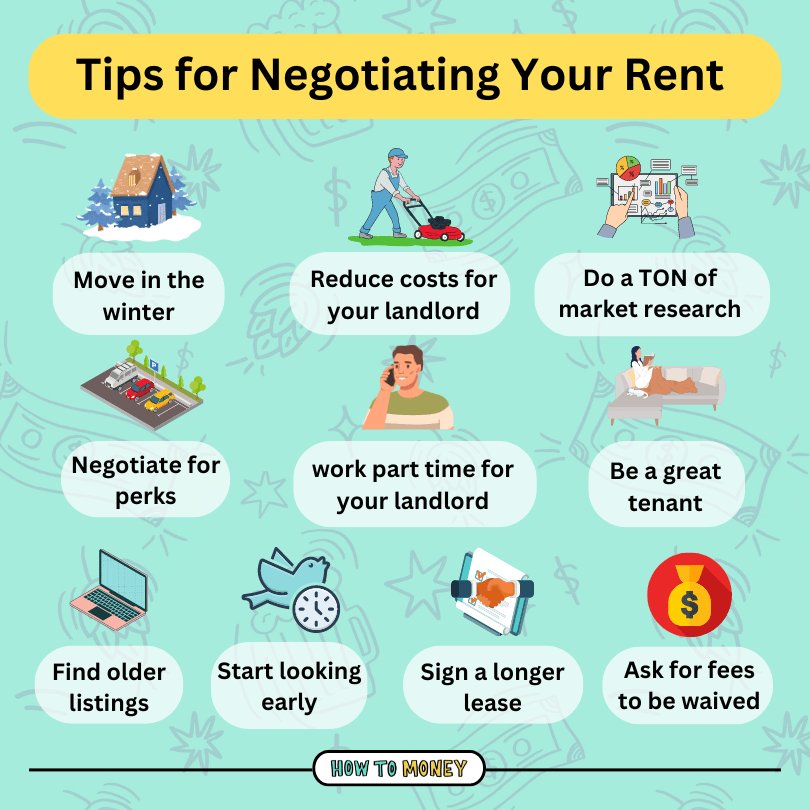
Enter negotiations with a specific ask but room to compromise. Start high (or low, for rent): “Could we do $1,800 instead of $2,000?” Use silence—after your proposal, pause. Landlords often fill gaps with concessions.
Sample script: “Hi [Landlord’s Name], I’ve loved living here and want to stay long-term. Comparable units are renting for $1,850. With my perfect payment history, could we renew at that rate? I’m flexible on a two-year lease.” If they counter, respond: “I appreciate that. What about $1,875 with free parking?”
Tactics include the “nibble”—after agreeing, ask for extras like waived fees. The “flinch” (genuine surprise at their offer) buys thinking time. Always get concessions in writing via email: “Just confirming our agreement on $1,850 rent starting June 1.”
Beyond Rent: Negotiate Fees, Amenities, and Perks
Don’t fixate solely on base rent. In competitive markets, landlords might budge more on add-ons. Common wins:
- Waived application or pet fees (saving $50-200).
- Free month’s rent upfront.
- Upgrades like new appliances, carpet, or paint.
- Utility concessions or parking spots.
- Flexible lease terms, like month-to-month options.
According to Forbes, 60% of successful negotiations yield non-rent perks. Bundle asks: “If rent stays at $2,000, can we include covered parking and no pet fee?” This feels like a package deal.
Common Mistakes to Avoid in Rent Negotiations
Pitfalls can derail your efforts. Don’t threaten to leave—it’s emotional and backfires. Avoid negativity about the property; focus on positives. Never negotiate angry or via text—tone matters.
Skipping comps leaves you dataless. Lowballing excessively (e.g., 30% off) insults; aim for 5-10% reductions. Forgetting follow-up risks verbal agreements evaporating. Finally, don’t accept the first offer—counter always.
Real tenant story: Sarah in Austin negotiated $100 off monthly by presenting comps and offering 18 months. She saved $1,800 yearly—proof preparation pays.
Leveraging Professional Help and Legal Know-Your-Rights
In some areas, rent control laws cap increases (e.g., 5% in parts of California). Check local ordinances via HUD.gov or tenant unions. If facing unfair hikes, polite reminders of regulations work wonders.
Hire a tenant lawyer for $200-500 if stakes are high, or join Facebook groups like “Renters of [Your City]” for advice. Apps like Hemlane or LeaseRunner track market data automatically.
Conclusion: Take Control of Your Rental Costs Today
Negotiating rent in a competitive housing market isn’t luck—it’s strategy. By researching comps, timing right, crafting a value-driven pitch, and negotiating smartly, you can secure better deals. Even a 5% reduction on $2,000 rent saves $1,200 yearly—money for savings or fun.
Start today: Gather your data, schedule that chat, and advocate for yourself. Landlords respect proactive tenants. With housing costs projected to rise (per Moody’s Analytics), these skills are essential. Share your success stories in comments—what worked for you?
(Word count: 1,248)