
The Hidden World of Dark Patterns: How Websites Trick You Into Unwanted Actions
In today’s digital age, websites have become the gateway to our online lives, from shopping and streaming to social networking and news consumption. But beneath their sleek designs lies a shadowy underbelly known as dark patterns. These deceptive user interface tricks manipulate visitors into making choices they didn’t intend, often leading to unwanted subscriptions, purchases, or data sharing. Coined by UX designer Harry Brignull in 2010, dark patterns exploit cognitive biases to prioritize business goals over user experience. This article dives deep into the hidden world of dark patterns, revealing how websites trick you, common examples, psychological underpinnings, and strategies to protect yourself.
What Are Dark Patterns?
Feature Video
Dark patterns are intentional design choices that nudge users toward decisions benefiting the website owner, often at the user’s expense. Unlike accidental usability flaws, these are deliberate manipulations disguised as standard UI elements. Imagine trying to cancel a subscription only to face endless hoops, or adding one item to your cart only to find extras sneaked in. According to a 2023 report by the Nielsen Norman Group, over 80% of popular websites employ at least one dark pattern, costing consumers billions annually in unintended charges.
The term gained traction after Brignull’s DarkPatterns.org cataloged them, influencing regulators worldwide. The European Union’s Digital Services Act (DSA) now mandates transparency, fining platforms like Amazon for practices such as disguised ads. In the U.S., the FTC has cracked down on companies using these tricks, with settlements exceeding $100 million in recent years. Understanding dark patterns empowers you to navigate the web wisely, avoiding the traps that websites use to trick you.
A Brief History of Dark Patterns
Dark patterns evolved alongside e-commerce’s boom in the early 2000s. Pioneered by sites like Ryanair, which buried fees in fine print, they proliferated as A/B testing tools allowed real-time optimization of conversion rates. By 2018, Princeton researchers analyzed 1,800 U.S. shopping sites, finding 11.1% used deceptive patterns. Today, with AI-driven personalization, dark patterns are more sophisticated, adapting to individual behaviors for maximum manipulation.
High-profile cases spotlight their impact. LinkedIn settled a $13 million lawsuit in 2015 over email subscription tricks. Epic Games faced backlash for Fortnite’s loot box mechanics, mimicking casino slot machines—a pattern called “variable reward schedules.” These examples illustrate how dark patterns aren’t fringe tactics but core strategies in the competitive digital economy.
Common Types of Dark Patterns and How Websites Trick You
Dark patterns come in myriad forms, each exploiting different psychological vulnerabilities. Here’s a breakdown of the most prevalent ones:
1. Roach Motel (or Hotel California)

Named after the Eagles’ song lyric “you can check out anytime you like, but you can never leave,” this pattern makes signing up or subscribing effortless while cancellation is a nightmare. Websites trick you with one-click sign-ups via social media, then hide unsubscribe buttons behind labyrinthine menus, fake loading screens, or mandatory phone support. A 2022 study by Which? found 72% of UK subscription services used this tactic, trapping users in cycles of unwanted payments.
2. Sneak into Basket

Ever added socks to your Amazon cart, only to checkout with warranty add-ons you didn’t select? This is the sneak-into-basket pattern, where extraneous items hitch a ride. Retailers like Overstock have been notorious, pre-checking boxes for “free” trials that bill later. It preys on confirmation bias, where users skim rather than scrutinize, leading to impulse buys averaging $20 extra per transaction per FTC data.
3. Disguised Ads and Misdirection
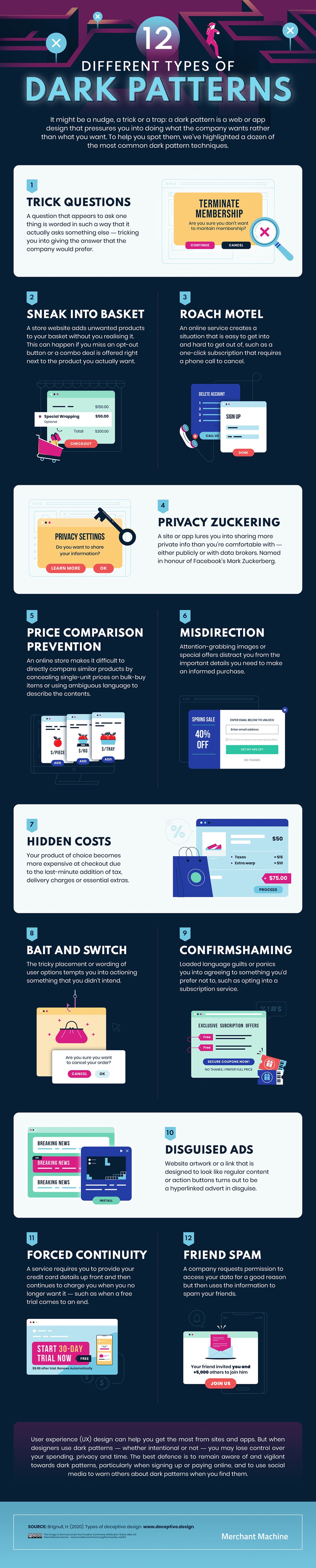
Websites trick you by camouflaging ads as native content, like fake “Download Now” buttons leading to malware instead of your desired file. News sites often use “Next Story” buttons that subscribe you to newsletters mid-article. This misdirection leverages the Zeigarnik effect—our tendency to complete unfinished tasks—pushing clicks without consent. Chrome’s ad blocker now flags over 10,000 such instances daily.
4. Forced Continuity and Nagging
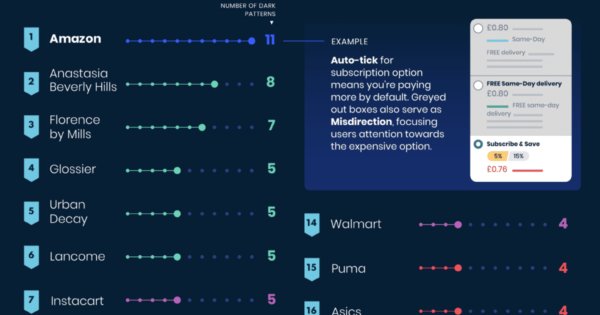
Forced continuity auto-renews “free trials” without reminders, billing your card silently. Nagging pop-ups bombard you with countdown timers (“Only 5 spots left!”) creating artificial scarcity. Booking.com excels here, with fake urgency prompts boosting bookings by 12%, per internal leaks. These tap into loss aversion, a bias identified by Kahneman and Tversky, making “no” feel like missing out.
5. Privacy Zuckering
Named after Mark Zuckerberg after Cambridge Analytica, this buries privacy-hostile options in dense legalese. Cookie consent banners default to “Accept All,” with “Reject” requiring custom tweaks across dozens of trackers. A 2023 Forbrukerrådet report audited 50 Norwegian sites, finding 90% privacy-zuckered users into data harvesting, fueling ad revenues worth trillions globally.
Psychological Principles Behind Dark Patterns
Dark patterns weaponize behavioral economics. Choice architecture, as Richard Thaler describes, subtly influences defaults—opt-out vs. opt-in boosts participation by 300%. Anchoring sets inflated reference prices, making discounts seem generous. Social proof via fake reviews (“1,000 people bought this today”) builds false consensus.
Friction manipulation is key: reducing steps for desired actions (e.g., buy) while amplifying them for opposites (cancel). Neuroscientific studies via fMRI show these trigger dopamine hits akin to gambling, explaining addictive scrolling on platforms like TikTok or Instagram.
Real-World Examples: Websites That Trick You
Amazon’s one-click purchasing buries returns in submenus, while one-click checkout skips review screens. Spotify’s Premium upsell modals use guilt-tripping copy (“Don’t miss out on ad-free music”). Airlines like Ryanair confirm flights but sneak on travel insurance via unchecked boxes. Even nonprofits aren’t immune—donation pages prefill escalating amounts.
In gaming, EA’s Star Wars Battlefront II loot boxes sparked #StopStarWarsLootBoxes, prompting Belgium to ban them as predatory. These cases show dark patterns transcend industries, from fintech (Robinhood’s pushy options trading) to streaming (Netflix’s auto-play chaining binges).
The Legal and Ethical Fight Against Dark Patterns
Regulation is ramping up. California’s CCPA requires clear opt-outs, while the UK’s Age Appropriate Design Code targets kids. Apple’s App Tracking Transparency reduced Facebook’s revenue by $10 billion in 2021 by curbing sneaky tracking. Tools like Dark Pattern Detection browser extensions (e.g., Rumola) scan sites in real-time.
Ethically, designers face backlash. The UX community’s #NoDarkPatterns pledge has thousands of signatories. Companies like Basecamp ban them outright, prioritizing trust for long-term loyalty over short-term gains.
How to Spot and Avoid Dark Patterns
Arm yourself: Pause before clicking—hover over buttons to reveal true links. Use incognito mode to evade tracking. Read privacy policies? Use summaries from sites like TOS;DR. Browser extensions like uBlock Origin block disguised ads, Privacy Badger auto-rejects trackers.
For subscriptions, set calendar reminders pre-trial end. Shop via price comparison sites to sidestep basket sneaks. Report violations to FTC.gov or EU’s DSA portal. Educating yourself demystifies the hidden world of dark patterns, reclaiming control.
The Future of Web Design: Beyond Deception
As awareness grows, ethical design rises. Progressive Web Apps emphasize transparency, AI ethics frameworks like those from OpenAI deter manipulative UIs. Consumers wield power—boycotts forced HelloFresh to simplify cancellations in 2022.
Ultimately, dark patterns erode trust, with 67% of users abandoning sites post-deception (Baymard Institute). Transparent alternatives thrive; Etsy’s clear policies yield 20% higher retention. The web’s future hinges on ethical innovation, not tricks.
In conclusion, the hidden world of dark patterns reveals how websites trick you daily, but knowledge is the ultimate shield. Stay vigilant, demand better, and shape a fairer digital landscape. (Word count: 1,248)