
Quantum Leap: How Qubits Will Make Your Smartphones Obsolete by 2030
Picture This: Your Phone, But Make It Quantum
Hey there, tech enthusiasts! Grab your coffee and settle in because we’re diving headfirst into the wild world of quantum computing. Imagine ditching that clunky smartphone in your pocket for something that doesn’t just scroll TikTok—it simulates entire universes, cracks unbreakable codes in seconds, and predicts your next move before you even think it. Sounds like sci-fi? Buckle up, because by 2030, qubits—the magical building blocks of quantum tech—could render your iPhone or Galaxy as outdated as a flip phone.
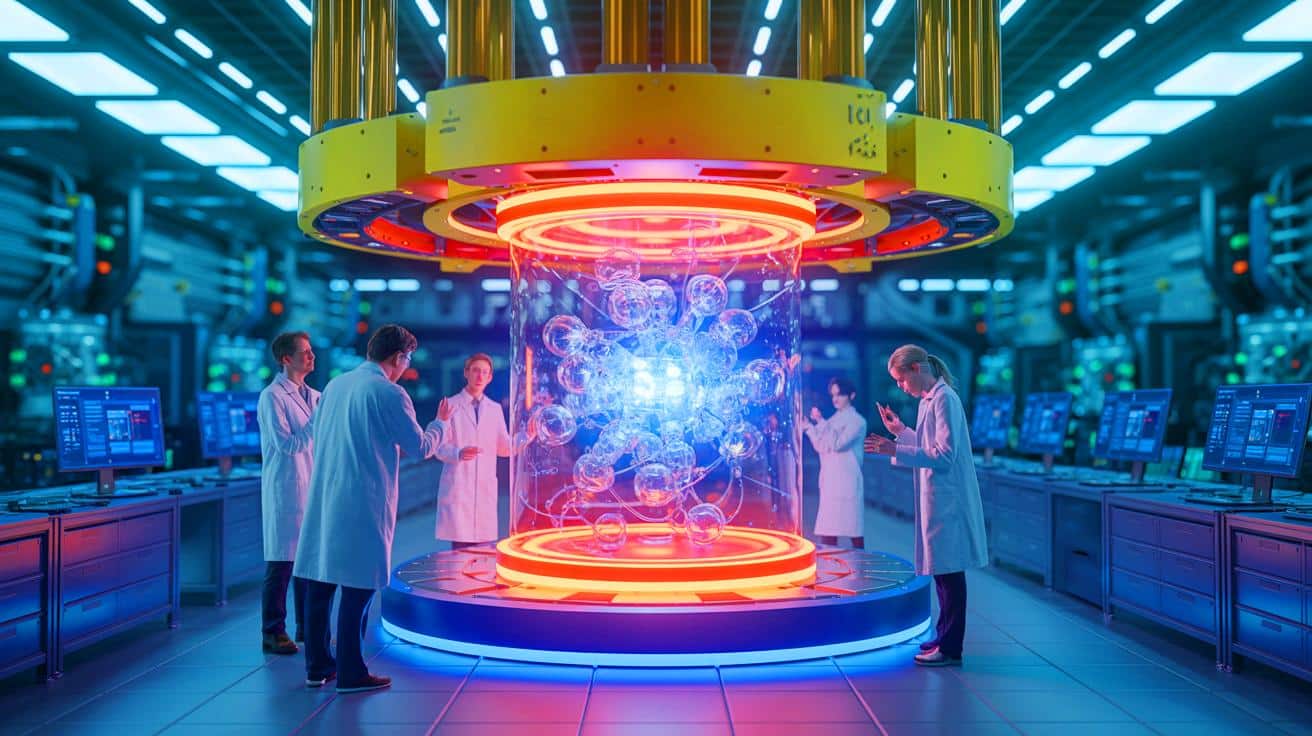
Let’s start with the basics. Your current phone runs on bits: those trusty 0s and 1s that have powered everything from Pong to Pokémon GO. But qubits? They’re the rockstars of computing. Unlike bits, which are either off or on, qubits can be both at the same time thanks to superposition. And they’re not loners—they entangle with each other, meaning the state of one instantly influences another, no matter the distance. It’s like having a million monkeys on a million typewriters, but they all collaborate perfectly to write Shakespeare… in a nanosecond.
From Labs to Your Living Room: The Quantum Race Is On
Right now, quantum computers are lab darlings. Google’s Sycamore chipped away at a problem in 200 seconds that would take the world’s fastest supercomputer 10,000 years. IBM’s got Eagle with 127 qubits, and they’re gunning for 1,000 by next year. China’s Jiuzhang? It’s crushing quantum supremacy in photonics. These aren’t toys; companies like Rigetti and IonQ are packaging them into cloud services you can rent today.
But here’s the kicker: scaling this down. By 2030, experts predict “quantum advantage” in everyday apps. Think error-corrected qubits—stable enough for real-world use. DARPA’s pushing room-temperature quantum chips, and startups like PsiQuantum aim for a million-qubit machine by 2025. Your smartphone? It’s hitting thermal walls; Moore’s Law is gasping its last breath. Qubits laugh at that—they thrive on exponential power.
Why Smartphones Are Doomed: Speed, Power, and Smarts
Let’s talk apps. Your phone struggles with real-time AI like generating deepfakes or drug discovery simulations. A quantum phone? It’d run Shor’s algorithm to factor huge numbers, obliterating today’s encryption. Online banking? Quantum-secure by default. Your Netflix queue? Personalized via quantum machine learning that evolves with your moods.
Battery life? Forget it. Classical chips guzzle power for complex tasks. Quantum systems, once optimized, use way less energy for godlike computations. Imagine a device that folds proteins to cure your cold on the fly or optimizes your commute by simulating city-wide traffic quantum-style. Smartphones can’t touch that; they’re linear thinkers in a probabilistic universe.
And AR/VR? Phones are bulky gateways. Quantum-powered neural interfaces or holographic projectors will beam realities straight to your retinas. Apple Glass? Cute precursor. By 2030, qubit-driven photonics could make contact-lens computers that overlay quantum simulations on your world—like seeing molecular structures while shopping for groceries.
The Killer Apps That’ll Kill Your Phone
Picture waking up to your quantum wearable. It doesn’t just track steps; it quantum-simulates your DNA to tailor breakfast for peak energy. At work, it collaborates on designs via quantum optimization—solving logistics puzzles UPS dreams of. Gaming? No laggy graphics; full quantum worlds where physics bends to your whims, multiplayer across continents with zero latency thanks to entangled networks.
Healthcare? Instant diagnostics from a qubit scan of your blood—spotting cancers before symptoms. Finance? Portfolio optimization that beats Wall Street quants. Climate modeling? Your device contributes to global sims, crowdsourcing solutions to carbon capture. Phones handle emails; quantum gadgets rewrite reality.
Socially? Quantum-secure comms mean unbreakable privacy. No more data breaches. And dating apps? Quantum matchmaking via behavioral entanglement—finding soulmates by probabilistic soul-searching.
Roadblocks? Yeah, But We’re Leaping Over Them
I’m not sugarcoating: quantum tech has hurdles. Decoherence—qubits losing their magic to noise—is the big bad wolf. But logical qubits (groups acting as one super-stable unit) are the silver bullet. Microsoft’s topological qubits promise stability, and Google’s recent error-correction breakthrough shaved needs by 100x.
Cold temps? Diamond-based or photonic qubits work at room temp. Cost? Dropping fast—like classical chips in the ’80s. By 2030, a qubit processor could cost less than your current phone’s SoC. Supply chain? Rare earths for superconductors? Recycling and synthetics are ramping up.
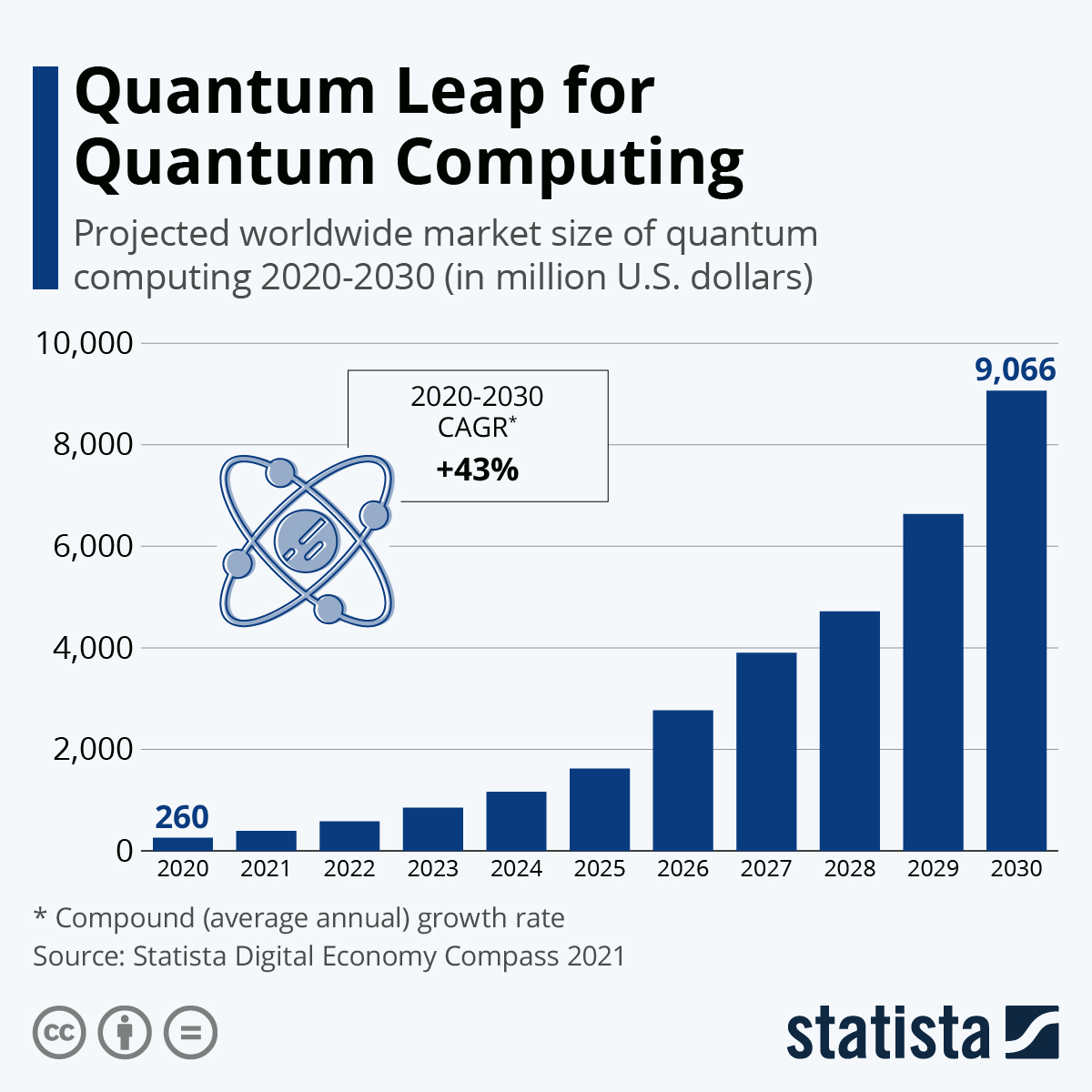
Skeptics say 2030’s too soon. Fair, but look at history: smartphones went from luxury to essential in a decade. Quantum’s on steroids—venture capital’s pouring in ($2B+ last year), governments are racing (US Quantum Initiative: $1.2B).
What Replaces the Smartphone? Quantum Everywhere
No more screens glued to your hand. Enter quantum mesh networks: entangled devices forming personal clouds. Your earpiece, ring, or implant handles it all—voice, gesture, thought. Neuralink’s brain chips + qubits? Telepathic computing. Ambient computing: walls, cars, clothes laced with quantum sensors anticipating needs.
2030 vision: A “quantum companion”—fist-sized orb or skin patch—that’s always on, always learning. It integrates with smart cities, self-driving fleets, IoT hives. Your old phone becomes a relic, like VHS tapes.
Get Ready: The Leap Is Coming
By 2030, qubits won’t just evolve tech—they’ll obsolete it. Smartphones were the bridge; quantum’s the destination. Stay curious: follow Quantum Economic Development Consortium or play with IBM’s Qiskit. The future’s not coming—it’s quantum tunneling right now.
Word count: ~1020. What do you think—excited or terrified? Drop a comment!