
Quantum Leap: How Quantum Computers Will Shatter Today’s Tech Giants
Imagine a Computer That Thinks in Probabilities
Hey there, tech enthusiasts! Picture this: you’re sitting in a world where your smartphone’s processor feels like a dinosaur, and the cloud servers powering Netflix or Google Search chug along like old steam engines. Enter quantum computers. These bad boys don’t just crunch numbers—they dance with probabilities, superposition, and entanglement. It’s like upgrading from a bicycle to a spaceship. But here’s the kicker: when quantum tech hits prime time, it won’t just evolve our gadgets. It’ll shatter the empires of today’s tech giants like Google, Amazon, Microsoft, and Apple. Buckle up; we’re diving into how this quantum leap could rewrite the rules of the game.
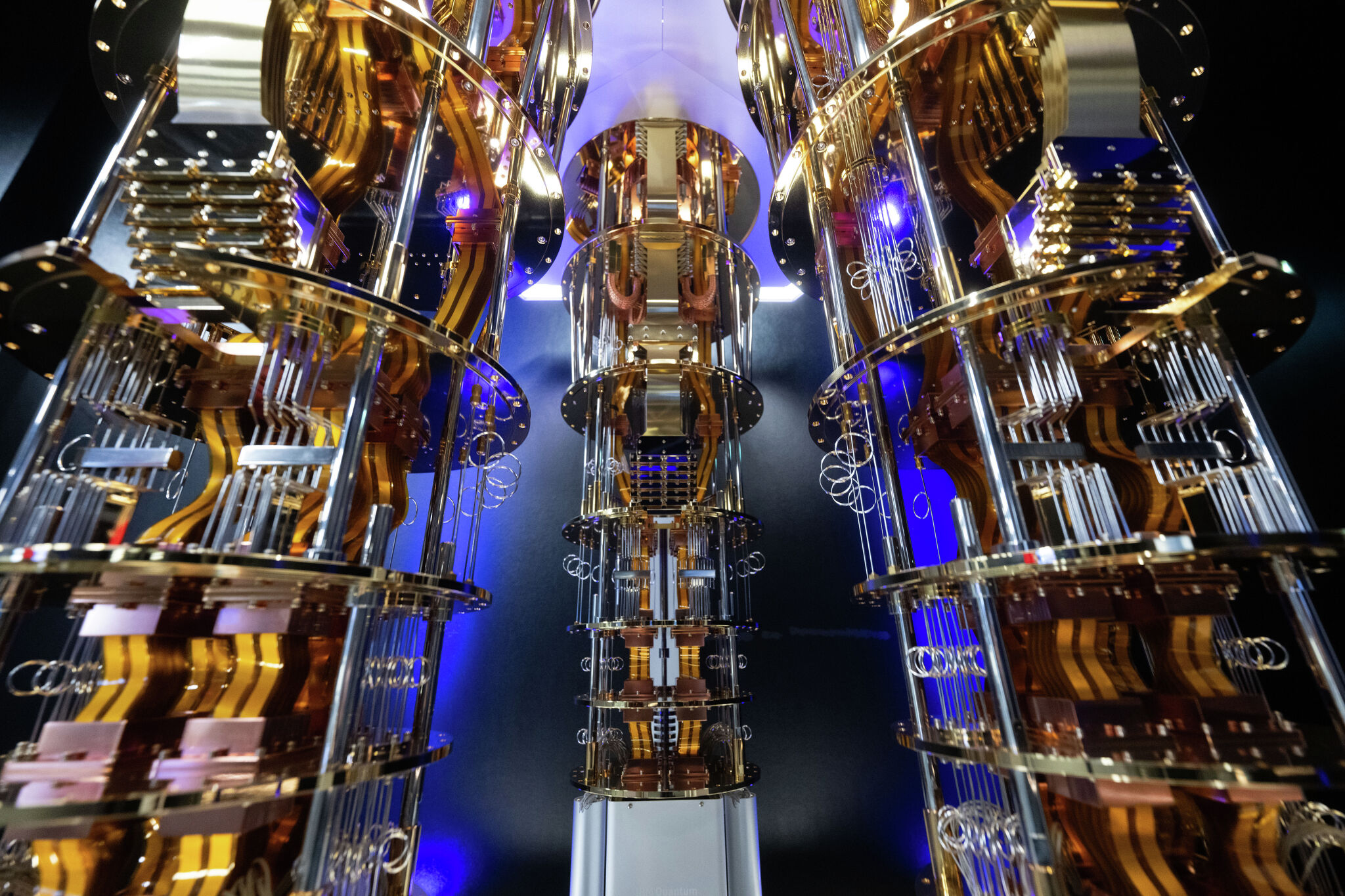
Quantum computing isn’t some sci-fi dream anymore. Companies like IBM, Google, and even startups are already running real quantum machines. Google’s Sycamore chip claimed “quantum supremacy” back in 2019 by solving a problem in 200 seconds that would take the world’s fastest supercomputer 10,000 years. Mind blown? That’s just the appetizer. As qubits scale up—think millions instead of today’s hundreds—these machines will solve problems that classical computers simply can’t touch.
Why Your Laptop’s Bits Are No Match for Qubits
Let’s break it down simply. Classical computers use bits: 0 or 1, on or off. Reliable, but limited. Quantum computers use qubits, which can be 0, 1, or both at once thanks to superposition. Throw in entanglement—where qubits link up so the state of one instantly influences another—and you’ve got exponential power. It’s like searching a haystack not by checking every straw, but by magically knowing where the needle is.
Today’s tech giants built fortunes on classical computing. Amazon’s AWS? Optimized with classical algorithms. Google’s search? Machine learning on GPUs. But quantum will flip the script. Problems like factoring large numbers (bye-bye, secure encryption) or simulating molecules (hello, instant drug discovery) become trivial. I mean, who needs petabytes of data centers when a quantum rig does it in minutes?
Encryption Apocalypse: Say Goodbye to Secure Internet
Shiver me timbers—quantum computers will crack the cryptographic foundations of our digital world. RSA and ECC encryption, the backbone of HTTPS, banking apps, and blockchain? They’re toast. Shor’s algorithm on a quantum computer can factor huge primes in polynomial time, rendering them useless.
Tech giants like Google and Apple rely on this for everything from Gmail to iMessage. Imagine hackers (or governments) decrypting years of stored data overnight. Banks? Amazon’s e-commerce? All vulnerable. The giants are scrambling—Google’s working on post-quantum crypto, but it’s a band-aid. New quantum-secure protocols are coming, but the transition will be chaotic. Startups like PsiQuantum or IonQ could leapfrog incumbents by building fully error-corrected quantum networks first. The giants might pour billions into quantum, but agility wins in disruption.
AI on Steroids: Google’s Moat Crumbles
Artificial intelligence is the golden child of Big Tech. OpenAI (backed by Microsoft), Google’s DeepMind—they dominate with massive neural nets trained on classical hardware. Quantum changes that. Grover’s algorithm speeds up unstructured searches quadratically, perfect for training AI models on vast datasets.
Quantum machine learning could optimize neural networks in ways classical can’t, spotting patterns in quantum noise or high-dimensional data. Imagine Amazon recommending products not just “pretty good,” but perfectly, optimizing supply chains in real-time. Or Apple designing chips that evolve via quantum simulation. But here’s the shatter point: today’s AI giants are classical-bound. Quantum-native companies will train models 100x faster, cheaper. Microsoft’s Azure Quantum is a start, but nimble players like Xanadu (photonic quantum) might outpace them, stealing market share in AI services.
Pharma’s Quantum Pill: Big Pharma Gets a Wake-Up Call
Drug discovery is a trillion-dollar slog—10-15 years, billions spent, 90% failure rate. Classical simulations approximate molecules; quantum ones simulate them exactly. IBM and ExxonMobil are already partnering on quantum chemistry.
Tech giants dipping into health? Google’s Verily, Amazon’s PillPack—they’ll be sidelined. Pfizer, Johnson & Johnson? Quantum will let startups screen millions of compounds instantly, slashing costs. A fault-tolerant quantum computer with 1 million qubits (expected by 2030s) could model protein folding like AlphaFold on crack. The winners? Quantum firms like Rigetti or Merck’s quantum investments. Today’s pharma-tech hybrids? They’ll fracture as pure quantum players dominate personalized medicine.
Logistics and Finance: Optimization Overlords Fall
Amazon’s warehouses, FedEx routes, Wall Street trades—all scream for better optimization. Classical algorithms approximate; quantum’s QAOA (Quantum Approximate Optimization Algorithm) nails it. UPS could save billions rerouting trucks via quantum traffic sims.
Finance? Monte Carlo simulations for risk assessment? Quantum versions run exponentially faster. JPMorgan’s quantum team is prototyping, but hedge funds with quantum edge will crush Goldman Sachs. Tech giants like Amazon (logistics king) face existential threats—quantum logistics firms could automate everything flawlessly. Apple’s supply chain? Disrupted. The giants’ scale advantage evaporates when quantum levels the computational field.
The Shake-Up: Who Survives the Quantum Quake?
So, will Google crumble? Not entirely—they’re quantum leaders with Willow chip hitting 105 qubits. IBM’s roadmap to 100,000. Microsoft’s topological qubits. But legacy bloat slows them. Amazon’s AWS Braket democratizes access, yet true disruption comes from specialists: Honeywell’s Quantinuum, Chinese giants like Alibaba, or dark horses like PsiQuantum aiming for 1 million qubits by 2025.
New giants will rise—quantum cloud providers, software layers for hybrid classical-quantum apps. Today’s titans must pivot hard or perish. Regulations, error rates (quantum’s “noisy” now), and energy needs are hurdles, but scaling’s inevitable. By 2040, quantum could be a $1 trillion market, per McKinsey.
Excited? Terrified? Me too. Quantum isn’t just faster—it’s a paradigm shift. Tech giants, adapt or shatter. The quantum leap is coming; who’s ready to jump?