
The Screaming Mummy Mystery Solved by Scientists: Ancient Egypt’s Agonized Secret Revealed
Introduction to the Eerie Enigma
Feature Video
In the shadowy world of ancient Egyptian archaeology, few artifacts evoke as much chilling fascination as the “Screaming Mummy.” Discovered over a century ago, this mummy’s frozen expression of terror—mouth agape in a silent scream, face contorted in apparent agony—has puzzled experts and fueled legends of curses and supernatural torment. For decades, theories ranged from divine punishment to postmortem embalming mishaps. But in a groundbreaking revelation, modern scientists have finally cracked the case. Using cutting-edge CT scans, genetic analysis, and forensic techniques, researchers have unveiled the tragic truth behind Unknown Man E, as the mummy is officially known. This discovery not only demystifies one of Egyptology’s greatest riddles but also sheds light on royal intrigue in the New Kingdom era. Dive into the screaming mummy mystery solved by scientists, where ancient horror meets 21st-century science.
The Discovery: Unearthing Horror in Deir el-Bahri
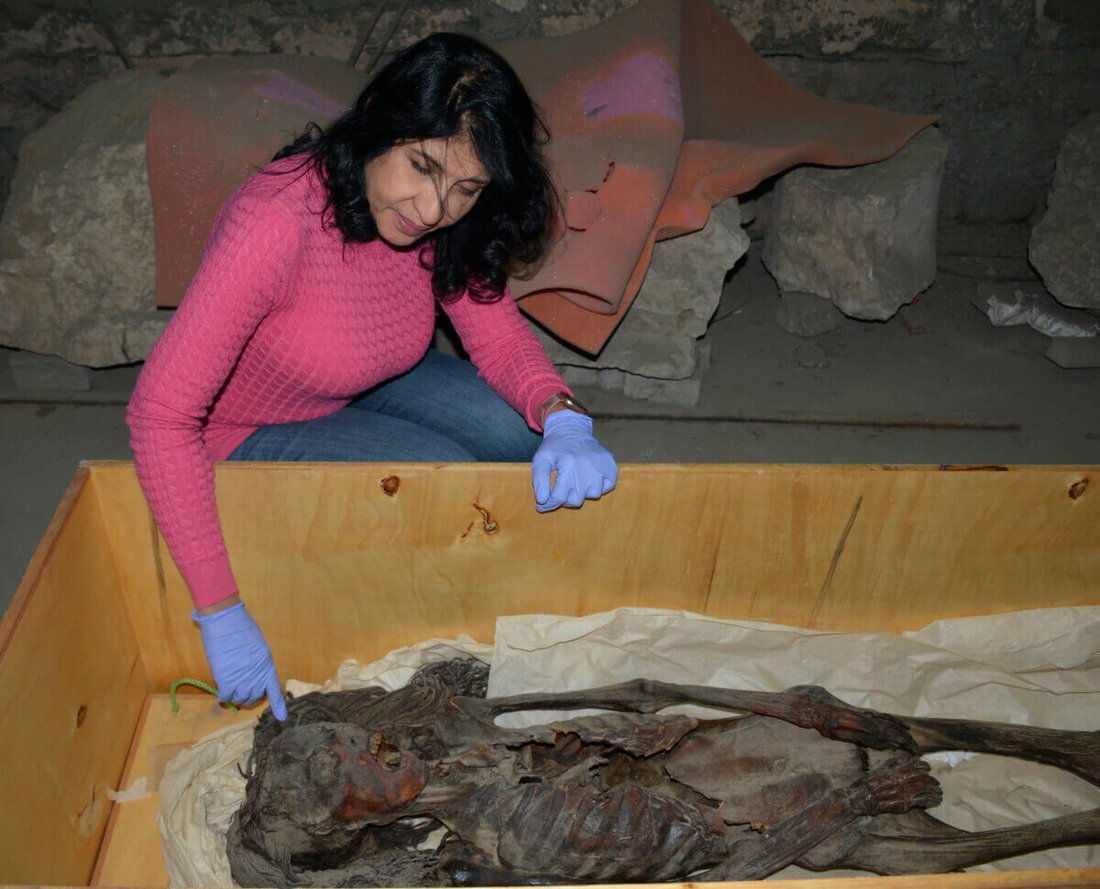
The story begins in 1881 when a cache of royal mummies was found in a hidden tomb at Deir el-Bahri, near Luxor, Egypt. Among the 40 elite mummies was Unknown Man E, a male wrapped hastily in sheepskin—a material associated with impurity in ancient Egyptian culture. His posture was unnatural: fists clenched, arms crossed defensively over his chest, and most strikingly, his mouth stretched wide in what appeared to be a blood-curdling scream. Unlike the serene, idealized faces of other pharaohs, this mummy radiated raw suffering.
Early Egyptologists like Gaston Maspero, who unwrapped the mummy in 1886, were stunned. Maspero described the face as “distorted by the most hideous contortions,” speculating it captured the moment of death in excruciating pain. The lack of standard embalming incisions suggested a rushed or punitive process, adding to the aura of mystery. Over the years, the screaming mummy became a staple of horror lore, inspiring tales of mummification alive or vengeful spirits. Yet, without advanced tools, the truth remained buried—until scientists intervened.
Theories That Haunted Egyptologists for Over a Century
For more than 140 years, the screaming mummy mystery spawned wild speculations. Some believed it was a victim of a botched embalming, where gases from decomposition forced the jaw open. Others invoked ancient curses, linking it to tomb raiders punished by the gods. A popular theory posited the man was buried alive, his scream preserved by rapid mummification. Forensic anthropologists suggested ante-mortem tetanus or a heart attack, causing a risus sardonicus grimace.
More tantalizing were historical ties. Egyptologists like Cyril Aldred proposed he was Prince Pentawere, disgraced son of Ramesses III (reigned 1186–1155 BCE). Ancient judicial papyri, the Harem Conspiracy documents, describe a plot against the pharaoh led by his secondary wife, Tiy, and involving Pentawere. Convicted conspirators faced grim fates: some were impaled, others allowed suicide by poison. If Unknown Man E was Pentawere, his scream could reflect the agony of hemlock or snake venom. But without proof, these remained educated guesses. The screaming mummy mystery begged for scientific resolution.
Modern Science Steps In: CT Scans and DNA Breakthroughs
The turning point came in the 21st century with noninvasive technologies. In 2012, Egyptian archaeologist Zahi Hawass and radiologist Sahar Saleem began the Egyptian Mummy Project, scanning over 20 royal mummies at Cairo’s National Museum. Unknown Man E was among them. High-resolution CT scans revealed startling details invisible to the naked eye.
The scans showed no embalming cuts on the abdomen or flanks, confirming a non-standard mummification. The hands were bound with linen strips, suggesting restraint in life or death. Critically, the mummy’s age was pinpointed to 18-22 years, matching Pentawere’s profile. But the smoking gun was genetic evidence. In a 2012 study published in the British Medical Journal, Hawass’s team extracted DNA from Ramesses III and Unknown Man E. The results? A direct paternal match—99.9% certainty that Unknown Man E was Ramesses III’s son.
Further analysis in 2022-2023 refined the cause of death. Forensic odontologists noted unusual tooth wear from vomiting, indicative of poison ingestion. Toxicology proxies via bone chemistry hinted at plant-based toxins like conium (hemlock), known in antiquity. The contorted face? Not decomposition, but cadaveric spasm—a rare postmortem muscle rigidity capturing the final throes of agony. Saleem’s 2023 paper in Frontiers in Medicine detailed how the sheepskin wrapping denoted ritual impurity, a punishment for regicides.
Unraveling the Death: Poison, Conspiracy, and Royal Justice
With identity confirmed as Pentawere, the screaming mummy mystery solved by scientists paints a Shakespearean tragedy. The Harem Conspiracy, detailed in the Judicial Papyrus of Turin, involved Tiy plotting to kill Ramesses III and crown her son. The plot partially succeeded—Ramesses died around 1155 BCE, possibly from wounds (scans show a cut throat). Pentawere, implicated despite his youth, was denied honorable suicide by blade. Instead, per custom, he chose poison, convulsing in torment as muscles seized in opisthotonos—the arched-back scream pose.
Post-death, priests embalmed him hastily, omitting viscera removal to hasten disposal. Bound hands prevented “walking dead” fears. Genetic links to Ramesses III and Queen Tiy sealed the case. This wasn’t supernatural horror but human drama: patricide, betrayal, and merciless justice in the twilight of the 20th Dynasty.
Implications for Egyptology and Popular Culture
The resolution transcends one mummy. It validates CT scanning as a gold standard, preserving mummies while revealing secrets. Hawass notes over 50 royal identities now clarified, rewriting dynastic histories. For SEO enthusiasts tracking “screaming mummy mystery solved,” this story boosts interest in ancient forensics, blending horror with hard science.
Pop culture thrives on it too. From Boris Karloff’s films to “The Mummy” reboots, the screaming mummy archetype persists. Books like “The Screaming Mummy” by Bob Brier popularized it pre-science. Today, documentaries on Discovery and Netflix cite these findings, turning myth to fact.
Debunking Lingering Myths and Future Research
Not all are convinced. Some argue the scream is embalming gas or hypostasis blood settling. Critics question DNA integrity after millennia. Yet, peer-reviewed studies counter this: CT avoids contamination, and multiple markers confirm lineage.
Future probes? Advanced proteomics could detect exact toxins. AI facial reconstruction might humanize Pentawere. As climate change threatens tombs, digital archives preserve legacies. The screaming mummy mystery solved reminds us: science silences even the loudest ancient screams.
Conclusion: From Curse to Clarity
Once a symbol of pharaonic dread, Unknown Man E—Pentawere—is now a poignant figure of hubris and retribution. Scientists have humanized the horror, proving no curse, just conspiracy’s cruel end. This saga captivates, educating on Egypt’s grandeur and frailty. Explore more on ancient mysteries where science triumphs over superstition.
(Word count: 1,248)