
They Found a Glowing ‘Lost City’ 2 Miles Underwater – And It’s Alive!
Imagine Plunging Two Miles Deep
Picture this: you’re strapped into a tiny submersible, squeezed into a titanium sphere barely bigger than a phone booth. Outside, it’s pitch black, colder than your freezer, and the pressure could crush a tank like a soda can. No light, no life—or so we thought. But then, out of the void, lights flicker. Towering spires rise like ghostly skyscrapers, glowing with an otherworldly blue-white hue. Welcome to the Lost City, a hydrothermal wonderland discovered 2 miles (that’s over 3 kilometers) beneath the Atlantic Ocean. And get this—it’s not ruins of some ancient civilization. It’s alive, pulsing with bizarre life forms that thrive in hellish conditions. Buckle up, because this story will blow your mind.
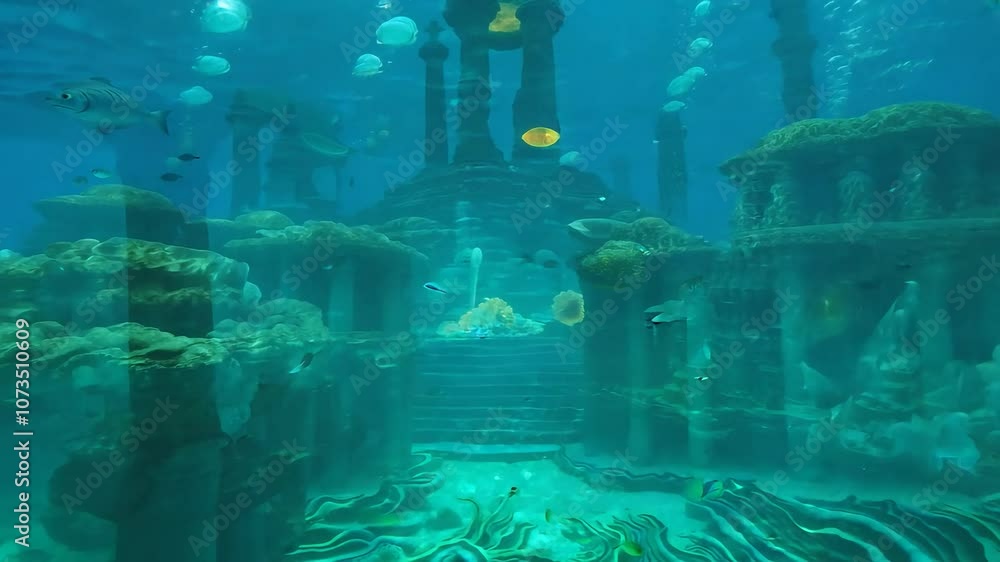
The Day They Stumbled Upon a Submarine Metropolis
It was the year 2000. A team from the University of Washington, led by Deborah Kelley and Gigi Rolliz, was poking around the Mid-Atlantic Ridge aboard the research vessel Atlantis. They weren’t hunting for Atlantis knockoffs; they were mapping seafloor features. But when their sonar pinged something weird—massive chimneys up to 200 feet tall—they deployed the Alvin submersible. What they found wasn’t volcanic black smokers like those famous ones in the Pacific. Nope. This was a field of pristine white carbonate towers, some as tall as a 20-story building, shimmering in the sub’s lights.
They named it Lost City because, honestly, it looked like the submerged remains of a mythical metropolis. But unlike crumbling stone, these structures are growing, actively forming from chemical reactions deep in Earth’s crust. Serpentinization, they call it—rock reacting with seawater to spew out hydrogen-rich fluids at a comfy 40-90°C (104-194°F). That’s like a warm bath compared to the boiling 400°C vents nearby. And the glow? It’s from the fluids mixing, creating a natural luminescence that makes the whole place look like a bioluminescent dream.
Not Dead Rocks— A Thriving Underwater Jungle
Here’s where it gets wild: this “city” is teeming with life. Forget fish or coral; we’re talking extremophile microbes that make sci-fi look tame. These guys munch on hydrogen and methane produced by the vents, turning chemicals into energy via chemosynthesis—no sunlight required. Thick mats of bacteria carpet the towers, some forming slimy biofilms visible to the naked eye.
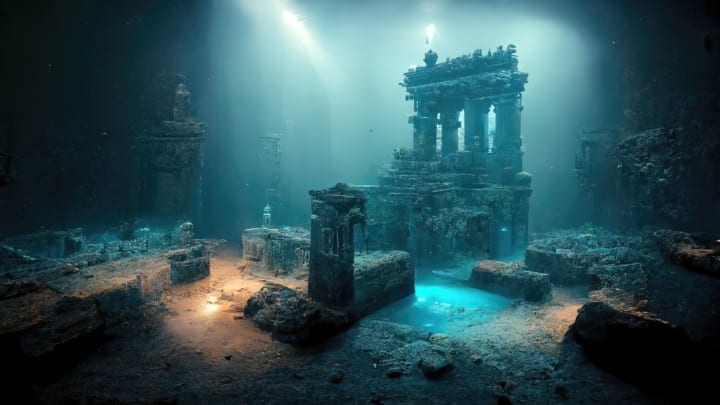
Zoom in, and you’ll spot amphipods (shrimplike critters) grazing on the microbial buffet, plus weird snails and limpets adapted to this alkaline soup. No predators, no chaos—just a stable ecosystem powered by Earth’s belly. Scientists have cultured over 20 new species of microbes here, some that produce enzymes we could use for biofuels or medicine. It’s like stumbling into an alien zoo, right in our backyard ocean.
Why This Glows Brighter Than Neptune’s Lair
The glow isn’t just pretty; it’s a clue to the planet’s secrets. Those carbonate spires? They’re made of calcium carbonate, like limestone caves, but formed super fast—centimeters per year. Fluids bubble up at pH 9-11 (super alkaline), painting the structures in layers of aragonite and brucite. When the sub’s lights hit, or when fluids react, you get that eerie phosphorescence. Dive footage shows towers venting plumes that shimmer like underwater auroras.
Compared to acidic black smokers, Lost City’s vents are “slow and steady.” They’ve been active for 30,000 to 120,000 years—ancient on human scales, but young geologically. No sulfur stench here; instead, it’s a clean, hydrogen-fueled haven. Researchers return with samples glowing under microscopes, revealing RNA worlds that hint at life’s origins.
Could This Be Where Life Began?
Hold onto your snorkel: Lost City might mimic primordial Earth. Billions of years ago, our planet was a hot mess of volcanoes and impacts. Scientists like Nick Lane argue alkaline vents like these could have sparked life. Why? The natural pH gradient matches cell membranes, pumping protons for energy without fancy proteins. It’s the “hydrothermal mound hypothesis”—life bubbling up from rock pores, not shallow ponds.
Even cooler, it’s relevant to astrobiology. Europa, Enceladus, Mars—these icy worlds might hide similar vents under ice shells. NASA’s hunting for Earth analogs, and Lost City fits the bill. If microbes thrive here without sun, imagine what lurks in alien oceans. One study found organic compounds forming spontaneously in vent fluids—building blocks of life, abiogenically.
Myths, Movies, and Modern Exploration
Of course, everyone loves the Atlantis angle. Plato’s tale of a sunken utopia? Lost City fuels the fire, though it’s pure geology. Hollywood’s cashed in—think The Abyss or Aquaman vibes—but real life trumps fiction. No gold, but endless science gold.
Since 2000, expeditions keep uncovering more. In 2009, they found a twin field 10 miles away. Robots like Hercules and subs like Limiting Factor have mapped thousands of square meters. Future plans? Drilling into the crust to tap vent power, or deploying observatories for live-streamed deep-sea drama. Climate change might even boost these systems as oceans absorb CO2, potentially altering chemistry.
What Does It Mean for Us Surface-Dwellers?
Beyond geeky thrills, Lost City challenges our ocean ignorance. We’ve mapped less than 25% of the seafloor, yet it holds 80% of Earth’s habitable space. This discovery reminds us: life’s resilient, diverse, and everywhere. It pushes biotech—enzymes from here could clean oil spills or fight superbugs. And philosophically? In a world of doom-scrolling, knowing beauty and life pulse in the abyss gives hope.
Next time you stare at the sea, remember: two miles down, a glowing city thrives. Not lost, but found—and very much alive. Want to dive deeper? Check out NOAA’s deep-sea cams or join a citizen science project. The ocean’s calling—who’s answering?