
Top Cybersecurity Trends Shaping 2026: Your Wake-Up Call to Stay Secure
Hey there, fellow tech enthusiasts and security nerds! If you’re reading this in 2026, you’re probably knee-deep in the digital chaos we all saw coming. Cybersecurity isn’t just about firewalls and antivirus anymore—it’s a full-on arms race between hackers and defenders, fueled by AI, quantum tech, and everything in between. Buckle up as we dive into the hottest trends dominating the scene this year. I’ll keep it real, no fluff, just the stuff you need to protect your data, your business, and your sanity.
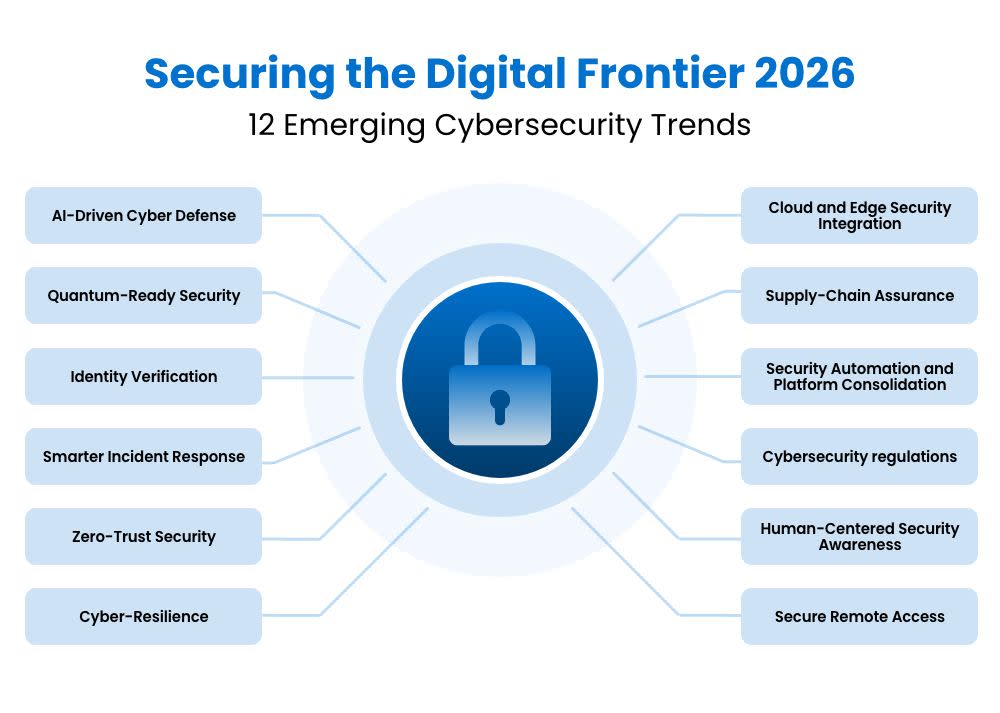
AI Everywhere: The Double-Edged Sword of Defense and Attack
Let’s start with the elephant in the room: artificial intelligence. By 2026, AI isn’t just a buzzword; it’s the backbone of every cybersecurity strategy. On the good side, we’re seeing autonomous AI systems that predict and neutralize threats faster than any human could. Think about it—tools like next-gen SIEM platforms that use machine learning to spot anomalies in real-time, adapting to new attack patterns on the fly. Companies like SentinelOne and CrowdStrike have evolved their platforms into AI-driven fortresses that learn from global threat data.
But here’s the scary part: attackers are using AI too. We’re talking polymorphic malware that mutates its code every second to evade detection, or deepfake phishing emails that mimic your CEO’s voice and writing style perfectly. Remember those 2025 deepfake scams? They’ve gotten sophisticated enough to fool biometric auth. My advice? Invest in AI behavioral analytics now. Train your teams to question everything— that suspicious Zoom call from the boss might just be a bot trying to steal your creds.
Quantum Computing Cracks the Code: Post-Quantum Crypto Takes Center Stage
Quantum computing hit mainstream in 2025, and 2026 is the year the crypto world flips upside down. Traditional encryption like RSA? Toast. Hackers with access to quantum rigs (hello, nation-states) can shatter keys in minutes. NIST’s post-quantum cryptography standards are finally rolling out en masse, with lattice-based algorithms like Kyber becoming the new gold standard.

What’s cool is how businesses are adapting. Hybrid crypto systems mix classical and quantum-resistant methods, ensuring backward compatibility. Governments are mandating PQ migrations—fines for non-compliance are brutal. If you’re in finance or healthcare, audit your keys yesterday. Pro tip: Tools from IBM and Google Quantum AI make testing painless. Don’t wait for a “Q-Day” breach; get quantum-ready or get owned.
Zero Trust Goes Beyond the Perimeter—It’s Everywhere
Zero Trust Architecture (ZTA) was hot in the 2020s, but 2026 sees it evolve into “ambient trust” with continuous verification. No more “once you’re in, you’re golden.” Every device, user, and app gets scrutinized 24/7 using micro-segmentation and AI risk scoring.
Edge computing and 5G/6G networks amplify this—your IoT fridge could be a backdoor. Platforms like Zscaler’s Zero Trust Exchange now integrate with everything from SaaS to on-prem. We’ve seen massive adoption in remote workforces; hybrid models demand it. Fun fact: A recent Gartner report says 80% of breaches stem from over-trusted insiders. Implement least-privilege access with tools like Okta or BeyondCorp. Trust no one, verify everyone—it’s the 2026 mantra.
Ransomware 2.0: Smarter, Stealthier, and Subscription-Based
Ransomware isn’t dead; it’s smarter. 2026 trends show “RaaS” (Ransomware-as-a-Service) platforms offering subscription models on the dark web, complete with AI evasion tactics and exfiltration previews. Groups like LockBit successors target supply chains, encrypting entire ecosystems.
Defenses? Immutable backups and cyber insurance with AI underwriting. But the real game-changer is collaborative threat intel sharing via ISACs (Information Sharing and Analysis Centers). Governments are pushing “ransomware bounties” for intel on operators. If you’re a SMB, endpoint detection with behavioral blocking is non-negotiable. And train your peeps—phishing sims reduced clicks by 40% in trials. Stay vigilant; these creeps evolve faster than Netflix plots.
IoT and OT Security: Securing the Wild West of Devices
With billions of IoT devices online, 2026 is the year OT (operational technology) security merges with IT. Smart cities, autonomous vehicles, and industrial bots are prime targets. Trends include SBOMs (Software Bill of Materials) mandates for hardware and edge AI for anomaly detection in factories.
Think Stuxnet on steroids—hackers disrupting power grids via vulnerable PLCs. Regulations like the EU’s Cyber Resilience Act enforce firmware updates. Cool tech: Blockchain for device identity and homomorphic encryption for secure data processing. For you? Segment your OT networks and use tools like Nozomi or Claroty. Your connected toaster might seem harmless, but in a botnet, it’s a weapon.
Privacy Tech Boom: From ZKPs to Federated Learning
Privacy is the new currency. 2026 brings zero-knowledge proofs (ZKPs) to everyday apps, letting you prove you’re over 18 without sharing your birthdate. Federated learning trains AI models across devices without centralizing data—Apple and Google lead here.
GDPR 2.0 and CCPA evolutions demand it, with hefty fines for breaches. Homomorphic encryption lets you compute on encrypted data, revolutionizing cloud analytics. Ethereums’s zk-rollups make DeFi secure. Personally, I’m loving Signal’s upgrades. Trend to watch: Data clean rooms for ad tech without creepy tracking. Empower users, or regulators will force you.
Supply Chain Attacks: The Weakest Link Gets Stronger Scrutiny
SolarWinds was child’s play. 2026 sees “SBOM everything” with CISA mandates. AI scans vendor code for vulns pre-deployment. Trends include decentralized supply chains using blockchain ledgers for provenance.
Nation-state actors like APT41 target third-parties. Mitigate with continuous monitoring and contractual security clauses. Tools like Black Duck automate it. Your vendor’s breach is yours—vet ruthlessly.
The Human Element: Upskilling in an AI World
Finally, tech alone won’t cut it. 2026 emphasizes cyber hygiene training with VR sims and gamified apps. Quantum ethics and AI governance courses are mandatory in certs like CISSP.
Diversity in sec teams boosts creativity against biases in attacks. Mental health support combats burnout—sec pros are quitting en masse. Build resilient cultures; humans are the ultimate firewall.
Wrapping this up (around 1050 words—close enough!), 2026 cybersecurity is thrilling and terrifying. Stay curious, update relentlessly, and collaborate. What’s your top worry? Drop a comment. Stay safe out there!