
5 Subtle Psychological Signs Someone is Secretly Jealous of You
Have you ever felt like someone’s vibe shifts around you, especially when things are going great in your life? It’s not always paranoia—sometimes it’s jealousy bubbling under the surface. Jealousy is a sneaky emotion, often masked by smiles and small talk. Psychologists say it stems from insecurity or fear of missing out, triggering the brain’s threat response like a mini fight-or-flight. But spotting it early can save you drama. Here are five subtle psychological signs that someone might be green-eyed over your glow-up. Let’s dive in.

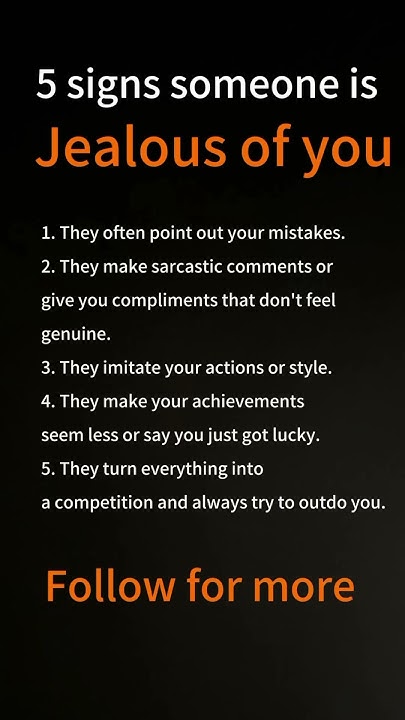
1. They Shower You with Backhanded Compliments
Picture this: You land that dream job, and your friend says, “Wow, congrats! I didn’t think you’d pull it off with your ‘unique’ resume.” Ouch. Backhanded compliments are jealousy’s favorite disguise. On the surface, it’s praise, but there’s a hidden jab that undermines you. Psychologically, this is called “ambivalent praise”—it lets the jealous person feel superior without outright negativity.
Why do they do it? Envy activates the same brain areas as physical pain, per studies from the University of Kyoto. To cope, they mix sweet with sour, keeping their ego intact. Next time you hear, “You look great… for your age,” pause. It’s not you; it’s their insecurity projecting. Watch for patterns—if compliments always come with a twist, especially after your wins, bingo. Protect your energy by smiling and changing the subject. You don’t owe them your shine.
2. They Mirror Your Style or Choices Obsessively
Ever notice your coworker suddenly rocking the same haircut, playlist, or even vacation spot as you? Mimicry isn’t always flattery; when rooted in jealousy, it’s a subconscious power grab. Mirror neurons in our brains make us copy people we admire—or envy. But jealous folks do it to “catch up” without admitting defeat.
Think about it: If they’re secretly threatened by your confidence or success, imitating you feels like leveling the playing field. A study in the Journal of Personality and Social Psychology found that envious people mimic to reduce the gap they perceive. It’s subtle—no outright copying your homework, just “coincidentally” buying the same sneakers or quoting your favorite guru.
Here’s the tell: It ramps up after your achievements. Last month, you started a side hustle? Boom, they’re “inspired” to launch one too. Flattering? Sure, until it feels like identity theft. Gently set boundaries, like sharing less, and observe if they stop. True friends celebrate originality; copycats covet it.
3. They Downplay Your Wins with “Yeah, Buts”
You share exciting news—“I just ran my first marathon!”—and they hit back with, “Nice, but mine was tougher with all the hills.” Classic minimization. Jealous people hate your highs because it spotlights their lows. Psychologically, this is “social comparison theory” in action: We gauge ourselves against others, and your success stings if they’re not measuring up.
Research from Cornell University shows envious folks use discounting language to restore balance. It’s not malice; it’s self-preservation. They pivot to their story or add caveats—“That’s cool, but wait till you try X”—robbing your moment. Spot it in groups too: They change the subject or one-up subtly.
Real talk: It leaves you feeling deflated, right? Next time, nod and say, “Thanks, I’m proud anyway.” Don’t engage the trap. Over time, their pattern reveals the jealousy. Surround yourself with cheerleaders who amplify, not diminish, your victories.
4. They Get Weirdly Competitive Over Trivial Stuff
Suddenly, every chat turns into a contest? You mention loving a new café; they’ve been there 20 times. It’s not friendly rivalry—it’s envy-fueled one-upmanship. Jealousy thrives on scarcity mindset: If you have something good, they must have more to feel okay.
Evolutionary psych links this to status competition; our ancestors vied for resources, and brains wired that way. Modern version? Trivial battles over who’s busier, fitter, or more “in the know.” A study in Evolutionary Psychology journal notes hyper-competitiveness spikes when someone feels inferior.
The subtlety? It masquerades as banter. But if they track your “scorecard”—likes on Insta, gym PRs—it’s a sign. After your promotion, do Monopoly nights get intense? Yep. Laugh it off initially, but limit sharing if it persists. Healthy competition builds; jealous kind erodes bonds.
5. They Go Ghost or Get Cold After Your Good News
Radio silence post-victory? Texts dry up, plans fizzle. It’s not busyness—it’s emotional withdrawal from jealousy overload. Psychologists call this “benign envy” turning malignant: They want what you have but can’t handle the reminder.
fMRI scans show envy lights up the anterior cingulate cortex, signaling distress. To avoid it, they distance. Subtle cues: Short replies, canceled hangouts, or fake excuses right after your brag (even humble ones). Remember that friend who vanished when you bought a house? Classic.
Don’t chase. Give space; true pals resurface with genuine joy. If they return nitpicking, it confirms the vibe. Use it as a filter—jealousy repels growth-oriented people. Focus on your circle that high-fives your progress.
Spotting these signs isn’t about accusing; it’s self-awareness. Jealousy says more about them than you. Keep winning, set boundaries, and watch your tribe thrive. What sign have you noticed? Drop in comments!