
Flat Earth Theory: Key Arguments and Why People Still Believe It
The flat Earth theory has persisted for centuries, captivating minds despite overwhelming scientific evidence to the contrary. Proponents argue that our planet is a flat disk rather than a globe, challenging everything from NASA’s space missions to basic physics. In this comprehensive article, we explore the main flat Earth theory arguments, delve into the psychological and social reasons why people believe in flat Earth, and examine its growing popularity in the digital age. Whether you’re a skeptic, a believer, or simply curious, understanding these perspectives sheds light on one of modern society’s most intriguing pseudoscientific debates.
The Origins and History of Flat Earth Theory
Feature Video
Flat Earth beliefs aren’t new; ancient civilizations like the Babylonians and early Egyptians envisioned the world as a flat plane covered by a dome-like sky. However, by the 5th century BCE, Greek philosophers such as Pythagoras and Aristotle provided evidence for a spherical Earth through observations of lunar eclipses and the changing positions of stars.
The modern flat Earth movement reignited in the 19th century with Samuel Rowbotham’s 1849 pamphlet Zetetic Astronomy: Earth Not a Globe. Rowbotham, using pseudoscientific experiments like the Bedford Level, claimed the Earth was flat and stationary. This laid the groundwork for organizations like the Flat Earth Society, founded in 1956 by Samuel Shenton, which continues to promote these ideas today.
In the internet era, YouTube and social media have exploded the theory’s reach. Influencers like Eric Dubay and Mark Sargent have millions of views, blending flat Earth with conspiracies about government cover-ups. Today, flat Earth conferences draw thousands, proving its enduring appeal despite ridicule from mainstream science.
Core Flat Earth Theory Arguments
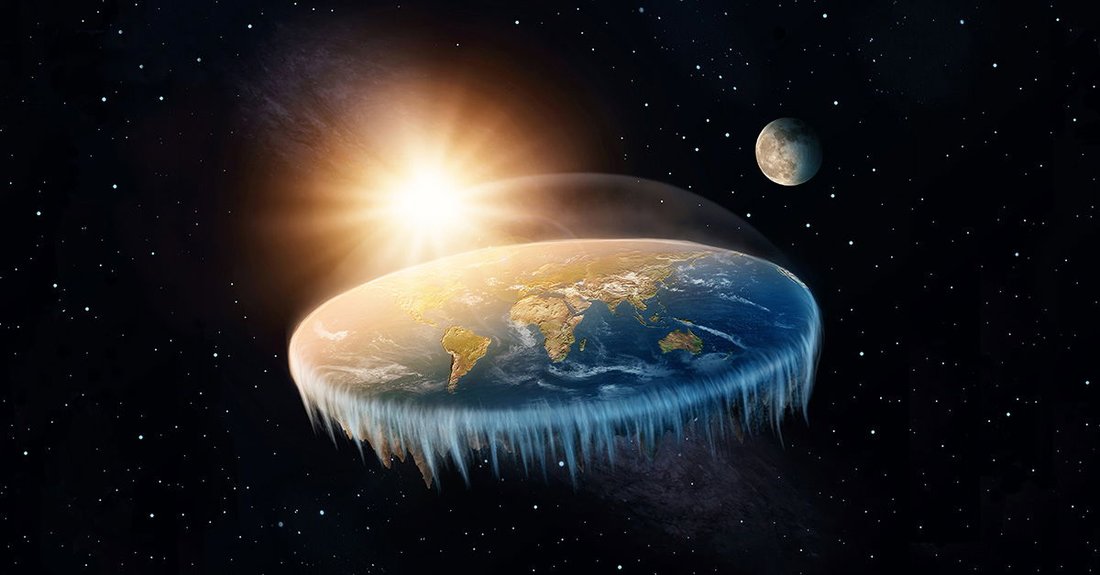
Flat Earth advocates present several arguments, often rooted in personal observations and distrust of authority. Here are the most common ones:
The Horizon Always Appears Flat
One cornerstone argument is that the horizon looks flat from any vantage point, even airplanes at 35,000 feet. Believers claim this proves no curvature, dismissing photos of a curved horizon as fisheye lens distortions. They argue that on a globe 25,000 miles in circumference, curvature should drop about 8 inches per mile squared, making distant objects invisible—yet experiments like observing ships over the horizon supposedly debunk this.
Water Doesn’t Curve
Oceans and lakes remain level, say flat Earthers, because water naturally seeks a flat surface and can’t “stick” to a spinning ball. They point to the Suez Canal, over 100 miles long with no locks for curvature, as evidence. Gravity, they claim, is a hoax; instead, the Earth accelerates upward at 9.8 m/s², mimicking gravitational pull.
Antarctic Ice Wall and the Firmament Dome
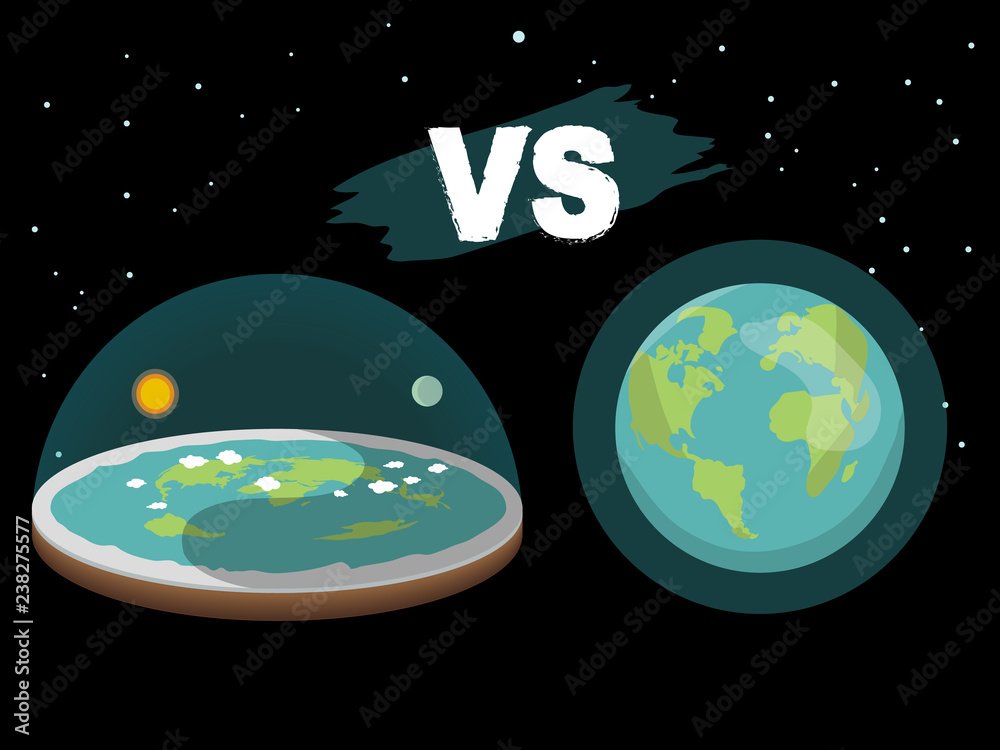
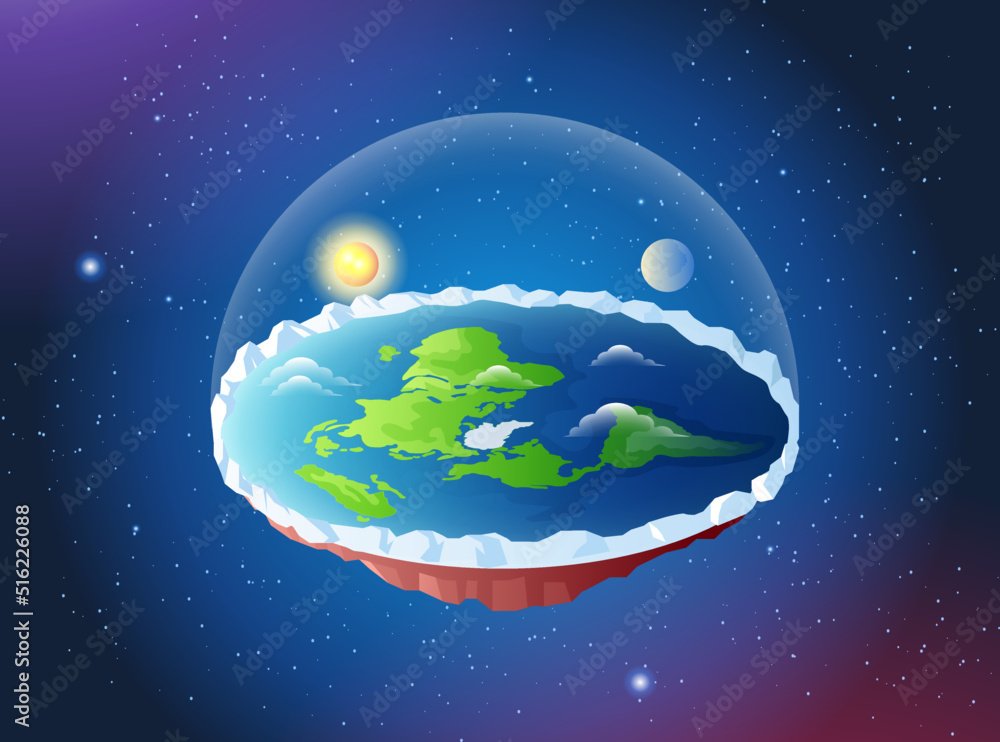
The flat Earth model posits a disk surrounded by a massive Antarctic ice wall, preventing oceans from spilling off. Beyond lies an infinite ice plane. Above is a firmament—a solid dome holding back cosmic waters—supported by biblical references like Genesis 1:6-8. Sun, moon, and stars are small, local lights circling above the plane, explaining day-night cycles without a rotating globe.
Space Travel is a Hoax

NASA and space agencies are accused of faking all evidence of a round Earth, from Apollo missions (allegedly filmed in studios) to satellite imagery (CGI composites). High-altitude balloon footage showing a flat horizon is cited as “proof,” while the Van Allen radiation belts supposedly make space travel impossible. Private companies like SpaceX are part of the same deception.
Why Do People Believe in Flat Earth Theory?
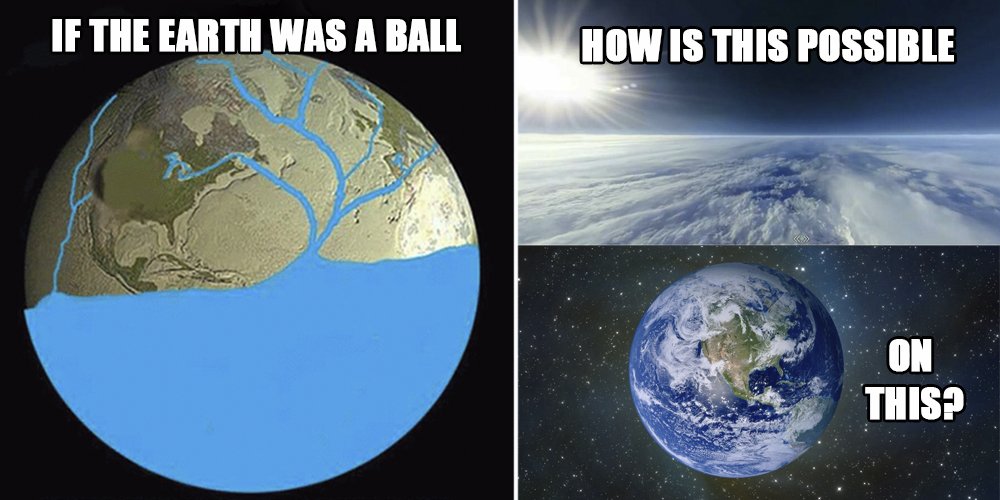
With irrefutable evidence like satellite photos, GPS, and circumnavigation, why do people cling to flat Earth? The reasons are multifaceted, blending psychology, sociology, and technology.
Distrust in Institutions and Conspiracy Mindset
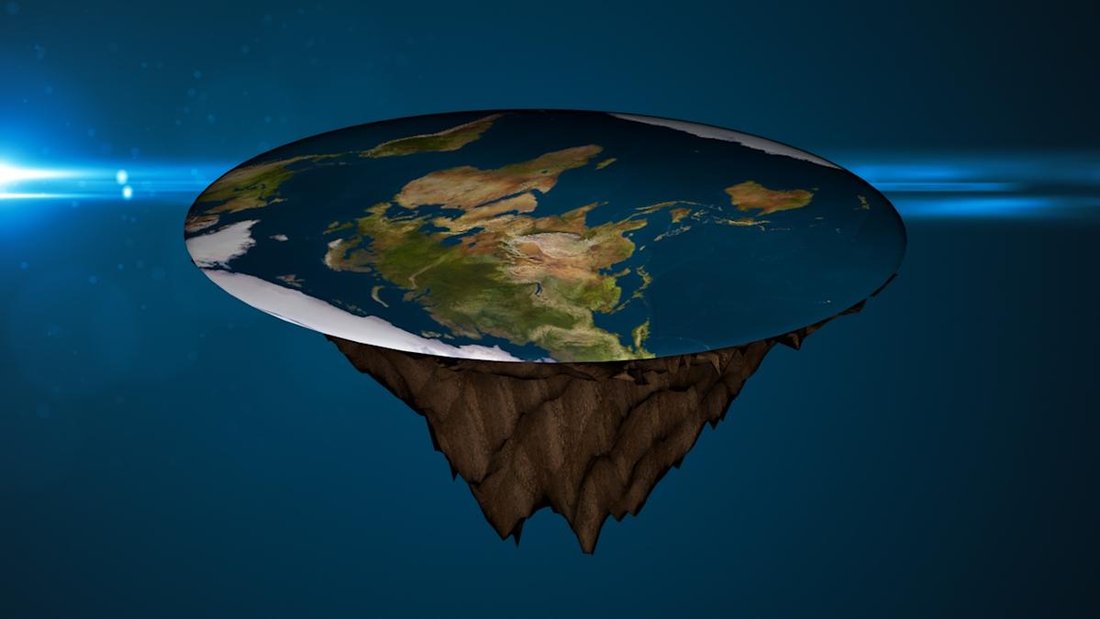
Many believers view governments, NASA, and scientists as part of a global elite hiding the truth to control humanity. This stems from real scandals like Watergate or Tuskegee, fostering a “question everything” ethos. Flat Earth fits neatly into broader conspiracies like hollow Earth or reptilians, providing a unified worldview where official narratives are lies.
A 2018 YouGov poll found 2% of Americans firmly believe the Earth is flat, with 14% unsure—higher among younger demographics exposed to online echo chambers. Social media algorithms amplify fringe content, creating filter bubbles where flat Earth videos dominate feeds.
Psychological Comfort and Community
Believing in flat Earth offers empowerment: ordinary people “discovering” truths hidden from the masses. Cognitive biases like confirmation bias (seeking evidence that fits preconceptions) and the Dunning-Kruger effect (overestimating one’s knowledge) play roles. Experiments are simple and DIY, contrasting complex globe math.
Communities provide belonging. Online forums, Discord servers, and conventions foster friendships, turning skepticism into identity. For some, it’s religious—aligning with literal Bible interpretations where Earth has “ends” and “corners.”
The Role of Modern Media and Influencers
YouTube’s algorithm favors sensationalism; flat Earth videos often outpace dry science explainers. Celebrities like Kyrie Irving and B.o.B. tweeting support brought mainstream attention in 2017, sparking viral debates. Gaming mods and VR simulations even let users “experience” a flat world, blurring reality.
Economic incentives exist too: Merchandise, books, and Patreon donations fund influencers. A 2023 study by the University of Central Florida noted flat Earth’s growth correlates with misinformation spikes during COVID-19, when trust in experts plummeted.
Scientific Counterarguments to Flat Earth Claims
While respectful of beliefs, science offers robust rebuttals. Eratosthenes measured Earth’s circumference in 240 BCE using shadows in wells 500 miles apart—simple geometry proving sphericity. Modern proofs include:
Flight Paths: Southern Hemisphere routes like Sydney to Santiago are shorter over Antarctica on a globe, impossible on flat maps.
Gravity and Physics: Upward acceleration would require impossible energy (reaching light speed in a year), and gyroscopes detect Earth’s rotation.
Space Evidence: Independent amateurs launch balloons and rockets showing curvature; ISS livestreams are verifiable.
Eclipses and Seasons: Lunar eclipses cast Earth’s round shadow; seasons vary by latitude as predicted on a tilted globe.
Debunking videos by Professor Dave Explains and SciManDan have billions of views, yet believers often dismiss them as shills.
The Cultural Impact and Future of Flat Earth Theory
Flat Earth has infiltrated pop culture, from memes to NBA controversies. It highlights broader issues: science literacy, media literacy, and polarization. Educators combat it with hands-on demos, like Foucault pendulums proving rotation.
Will it fade? Probably not soon. As AI generates deepfake “proofs,” misinformation evolves. Yet, increased space tourism (Virgin Galactic, Blue Origin) may provide undeniable visuals.
Conclusion: Seeking Truth in a Round World
Flat Earth theory arguments, from horizon observations to ice wall claims, resonate because they empower individuals against perceived authority. People believe due to distrust, community, and cognitive comfort, amplified by digital media. While scientifically untenable, it underscores the human quest for meaning.
For skeptics, engaging believers empathetically—focusing on shared experiments—bridges divides better than mockery. Ultimately, the Earth remains round, but understanding flat Earth reveals more about us than the planet itself. Explore, question, and verify: that’s the true path to knowledge.
(Word count: 1,248)