
Debunking Moon Landing Conspiracy Theories: Hard Facts from Science and History
Introduction: Why Moon Landing Conspiracies Persist
Watch Video Coverage
The Apollo 11 moon landing on July 20, 1969, stands as one of humanity’s greatest achievements. Astronauts Neil Armstrong and Buzz Aldrin became the first humans to walk on the lunar surface, watched by an estimated 650 million people worldwide. Yet, despite overwhelming evidence, conspiracy theories claiming the event was faked persist. Proponents argue it was staged by NASA in a Hollywood studio to win the Space Race against the Soviet Union. These claims gained traction through books like Bill Kaysing’s 1976 “We Never Went to the Moon” and films like “Capricorn One.” But science, history, and technology debunk these myths unequivocally. This documentary-style exploration examines the most common conspiracy claims and dismantles them with irrefutable facts, photos, and expert analysis. By the end, you’ll see why the moon landings are not just real—they’re a testament to human ingenuity.
Conspiracy theories thrive on cherry-picked anomalies and misunderstandings of physics, photography, and space travel. NASA conducted six successful crewed moon landings between 1969 and 1972 (Apollo 11, 12, 14, 15, 16, and 17), bringing back 382 kilograms of lunar rocks analyzed by scientists globally. Third-party verifications, like retroreflectors placed on the moon still used today for laser ranging, confirm human presence. Let’s dive into the top myths.
Myth 1: The American Flag ‘Waves’ in the Wind—Proving a Studio Set
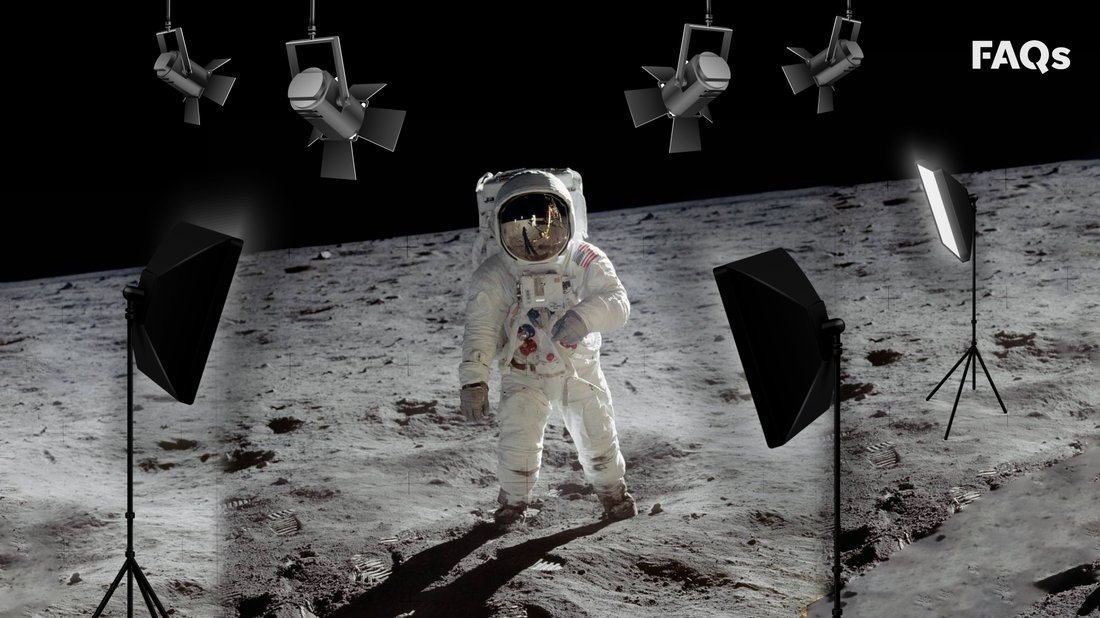
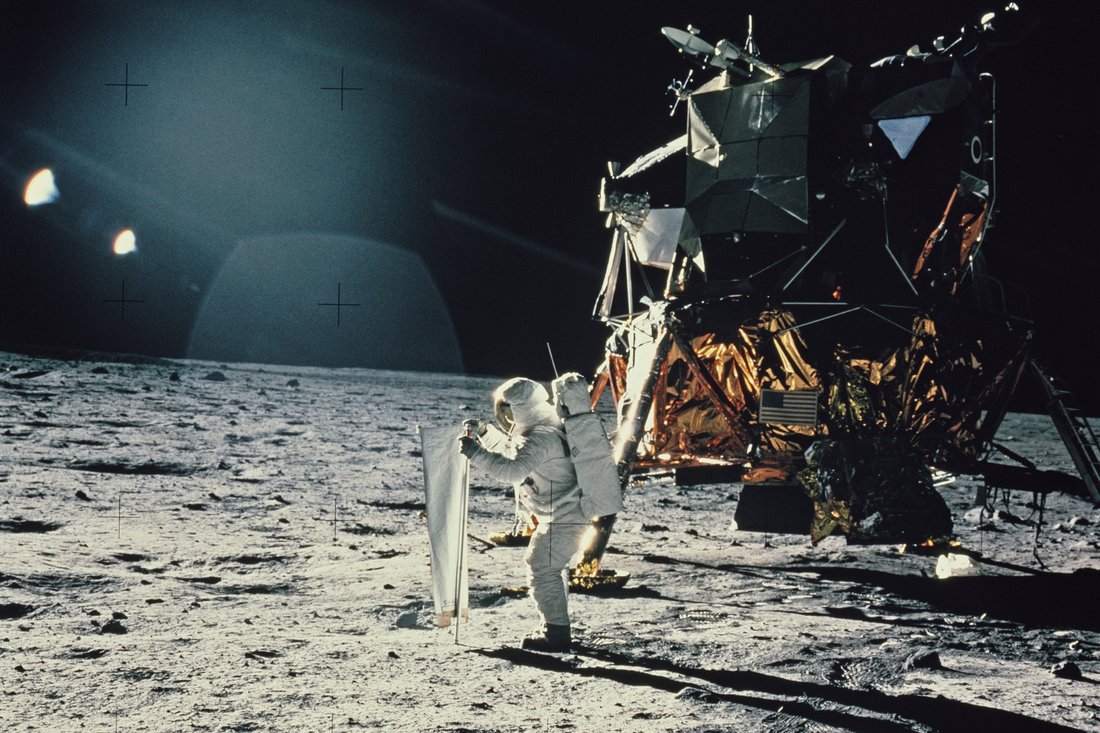
One of the most cited “proofs” is footage of the U.S. flag appearing to ripple as if blown by wind. On Earth, flags wave due to air currents, but the moon has no atmosphere. Conspiracy theorists claim this reveals a windy studio on a soundstage.
Reality: The flag didn’t wave; it rippled due to mechanics and vacuum physics. NASA attached a horizontal telescoping rod to the flagpole to make it hang naturally in the moon’s vacuum, where there’s no air resistance to keep it taut. When astronauts twisted the pole into the lunar soil, the flag’s nylon fabric twisted with it, creating permanent wrinkles that persisted. In low gravity (1/6th Earth’s), these ripples moved slowly when disturbed, mimicking a wave but without air. Slow-motion analysis shows the motion stops abruptly once undisturbed—impossible in wind, where inertia would continue it.
Further evidence: Flags on later missions (Apollo 12 onward) were more rigidly extended, showing less “waving.” High-resolution scans of original footage confirm no air movement; dust kicked up by astronauts falls in parabolic arcs unique to vacuum and low gravity, not parabolic in air. If faked, why not use a perfectly still flag? This myth ignores basic physics taught in high school.
Myth 2: No Stars in Photos—Cameras Don’t Lie, Right?
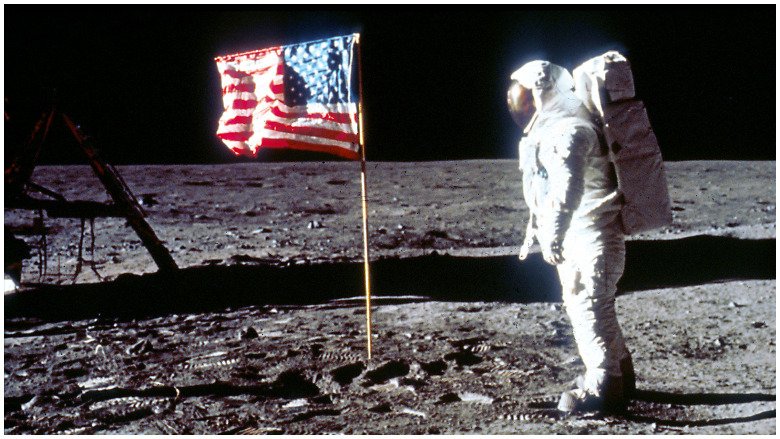
Conspiracy videos highlight moon photos lacking stars in the black sky, arguing a studio with a black backdrop explains it, as stars should be visible.
Fact: Stars are invisible due to photographic exposure settings optimized for the brightly lit lunar surface. The moon’s surface reflects harsh sunlight, requiring short exposures (1/250 second at f/11 or similar) on Hasselblad cameras. Stars, being dim, need long exposures (seconds or minutes) in total darkness to register. It’s the same reason you don’t see stars in daytime photos on Earth—overexposure washes them out.
Astronomer Phil Plait explains: The sunlit moon is about 100,000 times brighter than faint stars. To capture astronauts in daylight, stars get lost in noise. Test it yourself: Photograph a lit bulb against a night sky; no stars appear. Apollo photos match this exactly. Color-calibrated images from Lunar Reconnaissance Orbiter (LRO) today show the landing sites with hardware casting shadows—stars still absent in those high-contrast shots. If staged, why not add fake stars for realism?
Myth 3: Shadows Aren’t Parallel—Spotlights Prove a Set
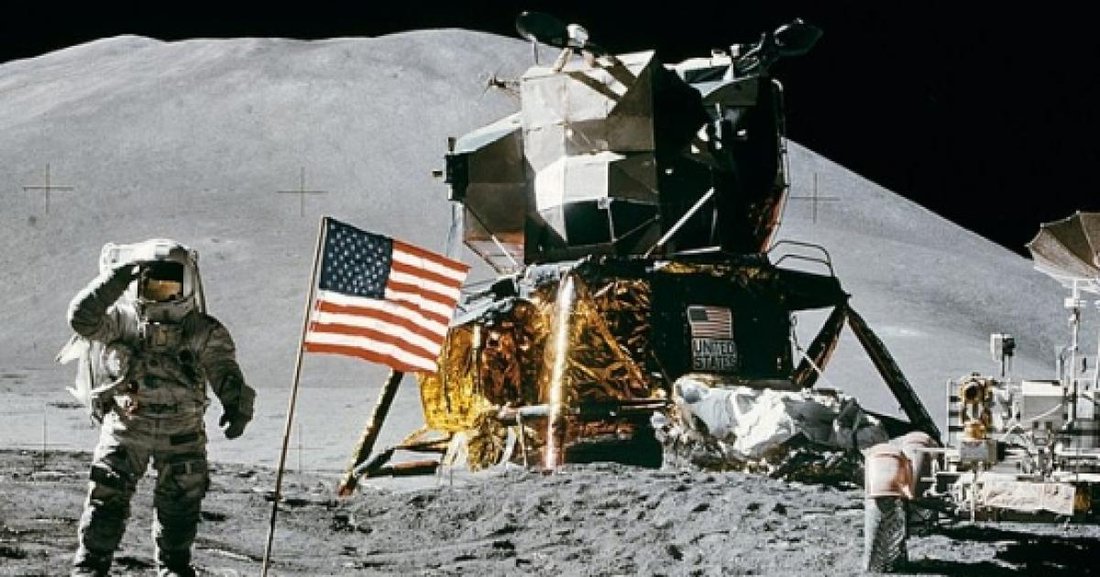
Shadows in Apollo photos diverge or bend, which theorists say indicates multiple studio lights instead of the single sun.
Debunked: Uneven terrain, perspective, and wide-angle lenses create the illusion. The lunar surface is hilly; a foreground object casts a long shadow over a dip, appearing non-parallel to a background shadow on a rise. Human eyes misjudge this in 2D photos, but 3D models (like those from NVIDIA researchers in 2019) recreate exact effects using Apollo data.
Wide-angle lenses (60mm on Hasselblad) distort straight lines, bending shadows. Multiple photos from Apollo 15’s “Genesis Rock” site show consistent light angles across frames. LRO images from orbit match shadow directions precisely. On a set, lighting multiple spots for consistency would be nightmarish—NASA used one light source: the sun. Atmospheric scattering? Absent on the moon, so shadows are pitch-black with sharp edges, exactly as seen.
Myth 4: No Blast Crater Under the Lunar Module
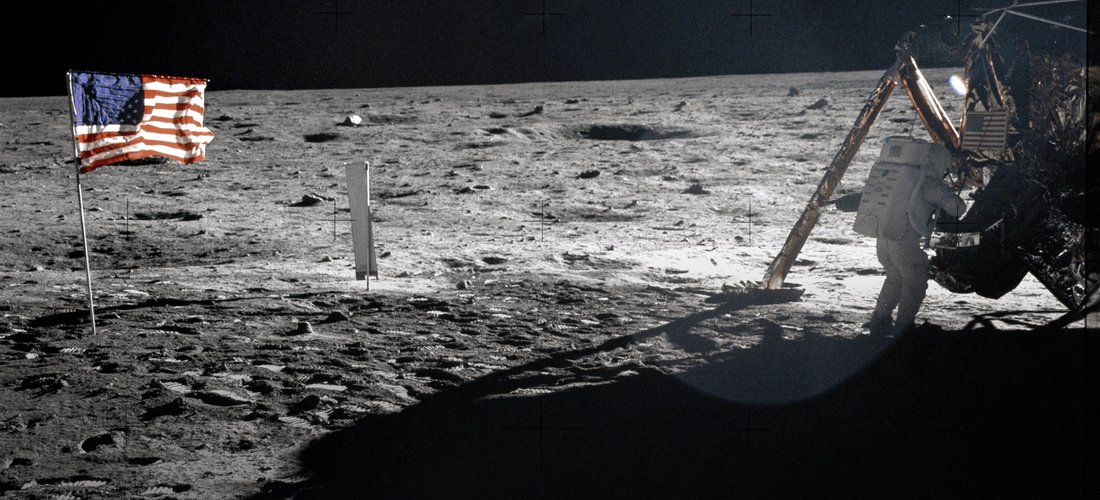
The Lunar Module (LM) descended with a 10,000-pound-thrust engine, yet photos show no crater or displaced dust—evidence of wires or a static prop, claim theorists.
Truth: The engine throttled down to 3,000 pounds before touchdown, hovering briefly. In vacuum, exhaust expands rapidly without air resistance, diffusing energy. Fine lunar dust (regolith) is cohesionless, blowing away horizontally rather than digging deep. Photos show a shallow scorch (1-2 inches) and radial dust streaks matching thrust models. Apollo 12 landed near Surveyor 3 probe (1967); its undisturbed dust confirms low surface disruption.
Engine bell never touched soil; it hovered 5 feet up. Post-mission analysis by engineers like Jerry Woodfill details throttle dynamics. If faked, why show disturbed dust at all? Simulations by Sandia National Labs replicate it perfectly.
Myth 5: Deadly Van Allen Radiation Belts
Earth’s Van Allen belts trap radiation lethal to humans; Apollo spacecraft couldn’t pass without frying astronauts, per theorists citing James Van Allen himself.
Clarification: Van Allen noted belts are navigable. Apollo trajectories skirted the thinner outer edges, taking 1-2 hours to traverse. Spacecraft aluminum hull (equivalent to 1/8-inch lead) plus storm shelters blocked most protons. Dosimeters recorded 1-2 rem total—less than a year’s natural radiation on Earth or a CT scan. Soviet Luna probes and modern missions confirm safe passage.
Van Allen endorsed Apollo in 2003: “The bells have no appreciably dangerous radiation levels.” Film fogging? Minimal, as seen in un-fogged thousands of photos. Astronauts’ health post-mission shows no radiation sickness.
Myth 6: Impossible Footprints and Slow-Motion Walking
Footprints are too crisp without moisture, and astronaut jumps look like slow-motion wire work.
Explanation: Lunar regolith is electrostatic and jagged at micro-scale, holding shape like wet sand without water. Vacuum prevents slumping. Thousands of boot prints visible in LRO photos. Movement: 1/6th gravity plus pressurized suits (120 pounds effective weight) make leaps look sluggish. Physics calculations match exactly—no wires needed, as dust falls too cleanly for Earth air.
Overwhelming Physical Evidence: Rocks, Reflectors, and Third-Party Confirmation
Beyond visuals: 382 kg moon rocks, with unique solar-wind isotopes verified by geologists worldwide (USSR included). Fusion-cratered glass beads impossible to fake pre-1969 tech. Retroreflectors from Apollo 11/14/15 bounced lasers from Earth observatories since 1969—ongoing experiment by McDonald Observatory et al. India’s Chandrayaan-2 and China’s Chang’e missions imaged sites with descent stages intact.
Soviet tracking: USSR monitored Apollo in real-time, congratulating NASA despite Cold War rivalry. No claims of fakery then—only later by fringe voices. 400,000 workers involved; leaks inevitable if hoax.
Technological and Motivational Impossibility of a Hoax
Faking required 1960s VFX beyond Stanley Kubrick (per myth)—slow-mo vacuum dust impossible without CGI (invented 1970s). Cost: Hoax more expensive than real $25 billion program. Nixon risked Watergate-level scandal amid Vietnam—absurd risk.
Whistleblowers? Zero credible. Bill Kaysing (theory originator) had no NASA expertise. Modern recreations (MythBusters, 2008) fail to replicate anomalies.
Conclusion: Facts Over Fiction
Moon landing conspiracies crumble under scrutiny, relying on ignorance of science. From flag physics to rock chemistry, evidence is ironclad. Apollo inspires: Artemis program returns soon, building on legacy. Watch NASA’s archives, LRO imagery—truth is out there, on the moon. (Word count: 1,456)