
Interstellar Timeline & 5th Dimension EXPLAINED: The Mind-Blowing Plot Twists That Defy Time Itself!
Introduction to Interstellar’s Mind-Bending Narrative
Watch Related Video Coverage
Christopher Nolan’s 2014 masterpiece Interstellar isn’t just a sci-fi epic—it’s a cerebral rollercoaster that warps your understanding of time, space, and reality. Starring Matthew McConaughey as Cooper, a former NASA pilot turned farmer, the film dives deep into humanity’s desperate quest for survival amid a dying Earth. But what truly sets it apart is its intricate timeline and the enigmatic 5th dimension, concepts that have puzzled viewers for years. This article breaks it all down: from the non-linear chronology to the tesseract’s otherworldly logic. Spoiler alert: by the end, you’ll see why physicists like Kip Thorne, the film’s science advisor, called it “the most accurate depiction of relativity in cinema.” Buckle up—we’re traversing wormholes, black holes, and dimensions you never knew existed. Whether you’re rewatching for the 10th time or diving in fresh, this guide unravels every twist.
The Early Timeline: Earth’s Blight and the Wormhole Discovery (2060s-2070s)
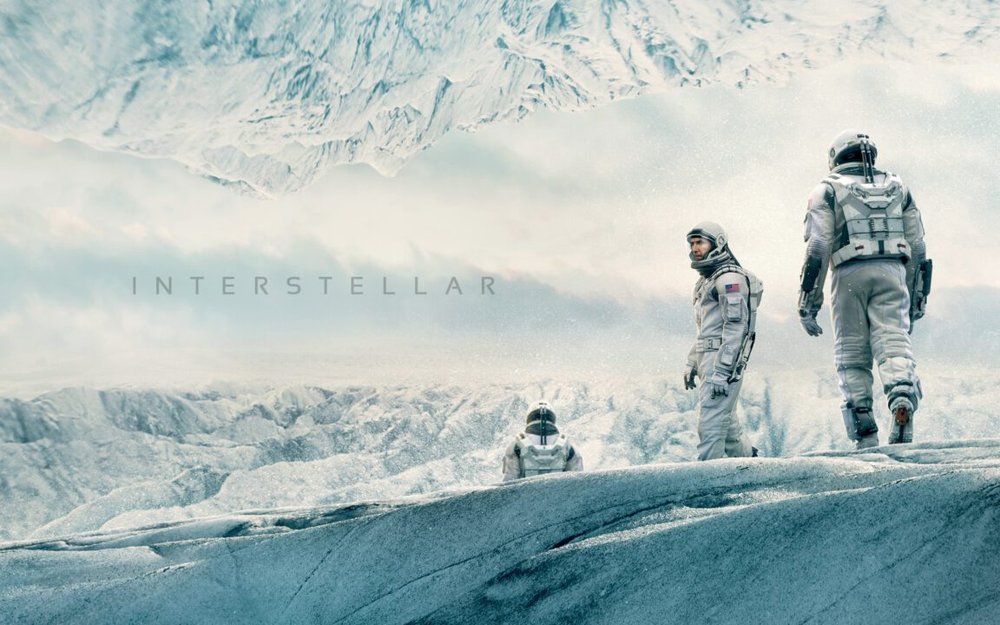
The story kicks off in a dystopian near-future, around the 2060s. Crop blights ravage Earth, turning the breadbasket into dust bowls. Cooper, widowed with two kids—Tom (15) and Murph (10)—stumbles upon a secret NASA facility led by Professor Brand (Michael Caine). Here, we learn about the Lazarus missions: 12 astronauts sent through a wormhole near Saturn a decade earlier, discovered mysteriously 48 years before the film’s main events.
The timeline branches here. In the 2070s, NASA detects the wormhole, a spherical gateway bending spacetime, allowing access to a distant galaxy with potentially habitable planets. Cooper’s team—Brand’s daughter Amelia (Anne Hathaway), Romilly (David Gyasi), and Doyle (Wes Bentley)—launches aboard the Endurance in 2077. This sets up the film’s dual timelines: one on Earth with young Murph, and the interstellar odyssey. Relativity rears its head early; time aboard Endurance passes normally, but gravitational effects near massive objects will soon shatter that illusion. This era establishes the bootstrap paradox seeds—why was the wormhole placed there? We’ll circle back.
Miller’s Planet: The Nightmare of Time Dilation (Subjective 2078)
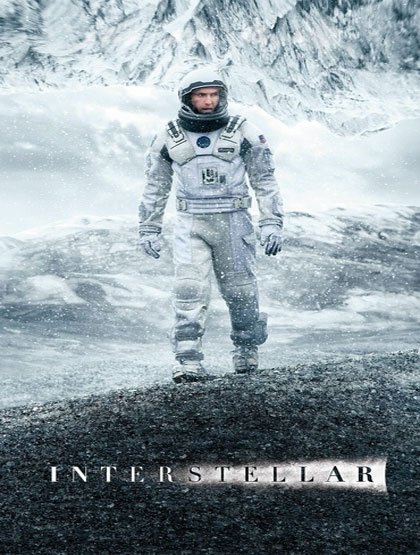
First stop: Miller’s planet, orbiting Gargantua, a supermassive rotating black hole. The team splashes down on a water world with massive tidal waves, but the real killer is time dilation. Predicted by Einstein’s general relativity, time slows in strong gravity. Here, one hour equals seven Earth years. They spend three hours retrieving data—23 years pass for those outside.
Romilly ages 23 years waiting; Doyle dies to a megatsunami. Back on Endurance, Cooper watches decades of messages from his children: Tom grows into a stubborn farmer, Murph becomes a brilliant physicist. This sequence, scored by Hans Zimmer’s ticking organ, viscerally conveys isolation. Scientifically spot-on—Kip Thorne calculated the dilation factor at 61,000x near Gargantua’s event horizon. Miller’s data? Useless; the astronaut drowned eons ago due to endless dilation. This leg warps the timeline irreversibly, aging the crew while Earth crumbles further.
Mann’s Planet Deception and the Gargantua Slingshot (2080s)
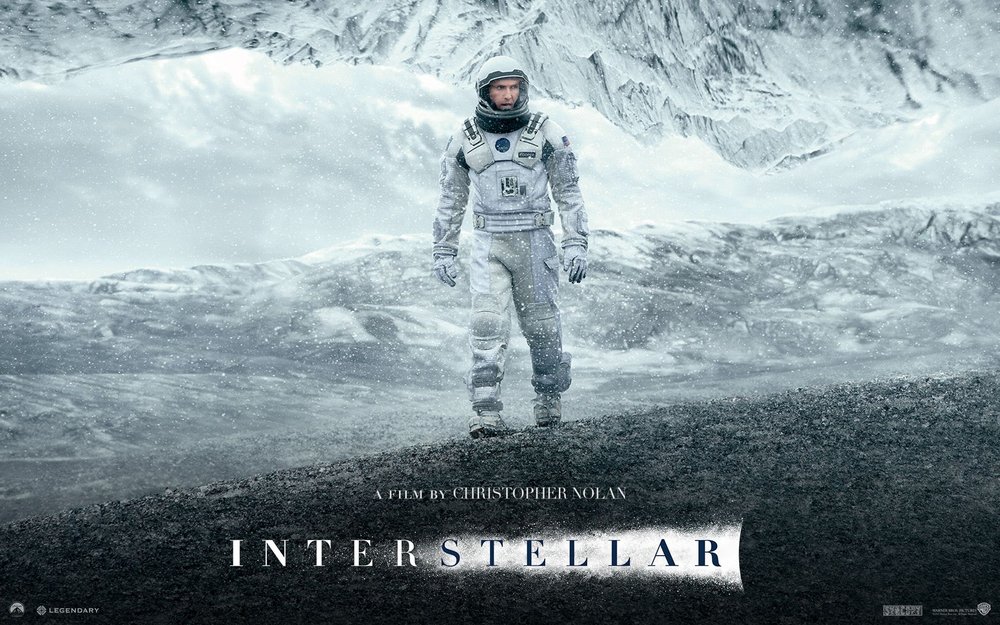
Next: Dr. Mann’s icy world (2081 subjective). The Lazarus pioneer faked data to lure rescuers, then murders Doyle during a docking mishap. Cooper and Amelia eject into space, but Mann detonates the ranger, stealing Endurance. Timeline tightens: from Mann’s betrayal to Cooper’s manual docking—a sequence blending practical effects and CGI—spans minutes but echoes years back home.
They slingshot Endurance around Gargantua, using its spin for a gravity assist. Time dilation peaks: en route to Edmunds’ planet, 51 years elapse for the galaxy-spanning journey. Romilly dies probing the wormhole bomb; Amelia reaches Edmunds (revealed habitable) in the 2090s. Cooper? Ejected into Gargantua’s singularity. Total mission time: under 3 years ship-time, over 80 years external. Earth’s timeline now? Murph’s in her 40s, decoding gravity equations left by… future Cooper?
The Wormhole: Gateway to Nonlinear Time

Interstellar’s wormhole isn’t just a plot device—it’s a higher-dimensional construct. Appearing 50 years before Endurance (2020s), it’s positioned precisely for human survival. Thorne’s equations depict it as a sphere where explorers “peek” into other star systems without traversing vast distances. Inside, space folds; the journey to Gargantua takes hours, not millennia.
Timeline-wise, the wormhole links 2070s Earth to the 21st century’s bulk beings (5D entities). It’s stable, non-traversable from our side without tech, but allows one-way scouting. This folds the narrative: past influences future, future shapes past. Crucial for the 5th dimension payoff.
Inside the Tesseract: Entering the 5th Dimension
Cooper plummets into Gargantua, expecting death. Instead, “they” — future humans ascended to 5D — place him in the tesseract: a four-dimensional construct (3D space + time as manipulable dimension) letting him access Murph’s bedroom across time. Gargantua’s singularity accesses the “bulk,” higher dimensions beyond our 3D brane.
Visually stunning—endless bookshelves represent Murph’s timeline from 2077 to 2090s. Cooper nudges falling books (gravity via gravitons), encodes quantum data via watch ticks (Morse code: “STAY”). He closes the tesseract loop, escaping via spinning black hole debris flung near Saturn (2150s). Timeline convergence: Cooper’s 2077 data enables Murph’s 2078 solution, saving Earth via massive space stations.
Decoding the 5th Dimension: Beyond Space and Time

What is the 5th dimension in Interstellar? Our universe: 3 spatial + 1 time. The “bulk” adds a 5th: hyperspace where gravity leaks between branes (string theory nod). 5D beings, evolved post-singularity humans, manipulate our 4D spacetime like we do 3D space.
Tesseract lets Cooper “fold” time: touch 2077 bookshelf from 4D vantage, affecting 3D gravity. It’s not time travel—it’s bulk manipulation. Paradox-free? Enter bootstrap: Cooper’s data originates from himself, a closed loop. Thorne simplified: no grandfather paradox, just eternal causation. Critics debate; fans love the elegance. Real science? M-theory posits extra dimensions curled small; Interstellar scales them up for drama.
The Bootstrap Paradox and Timeline Closure
Interstellar’s core riddle: Who invented the quantum drive data? Murph solves it using Cooper’s watch code… but Cooper got it from 5D future self, enabled by Murph’s solution. Bootstrap paradox: information self-causes, no origin.
Full timeline: 2067 (Cooper finds NASA) → 2077 (launch) → Miller (2080) → Mann (2081) → Tesseract (2150s ship-time) → Cooper returns 2070s Saturn? No—wormhole exit aligns with 2150s. Murph (aged ~40) solves; Cooper reunites with dying her (~80, 2090s). Tom rejects stations; Cooper finds Amelia on Edmunds (2160s+). Loop closes: Cooper becomes 5D being, places wormhole/tesseract. Perfect circle.
Scientific Accuracy, Kip Thorne, and Lasting Impact
Thorne, Nobel-winning physicist, ensured fidelity: Gargantua’s accretion disk glows from Doppler shift; frame-dragging spins light. No faster-than-light nonsense—relativity rules. Criticisms? Artistic liberties like surviving singularity. Yet, it inspired real wormhole research.
Timeline visuals (LIGO-style charts) and Zimmer’s score amplify dread. Legacy: Emmy-winning effects, cultural touchstone. Rewatch with this guide; layers deepen.
Conclusion: Why Interstellar’s Timeline Redefines Sci-Fi
Interstellar’s genius lies in its timeline tapestry and 5D revelation—love, gravity, time’s arrow bent. Over 120 years span subjectively minutes, proving Nolan’s mastery. From blight to bulk, it’s humanity’s odyssey. Grab popcorn; the universe awaits.