
The Forgotten Queen Who Crushed Julius Caesar’s Fleet: Rome’s Greatest Humiliation
Ever Heard of the Woman Who Made Caesar Sweat?
Picture this: It’s 48 BC, and Julius Caesar, the man who’s about to become dictator for life, is stuck in Alexandria, Egypt. His grand plans for world domination hit a snag—not from some burly Roman rival, but from a teenage queen with a grudge and a knack for arson. We’re talking Arsinoe IV, Cleopatra’s feisty little sister, who orchestrated one of the most embarrassing setbacks in Caesar’s career by torching his precious fleet. Yeah, Rome’s greatest general, humiliated by a woman half his age. Buckle up, because this forgotten tale is wilder than any Netflix docudrama.
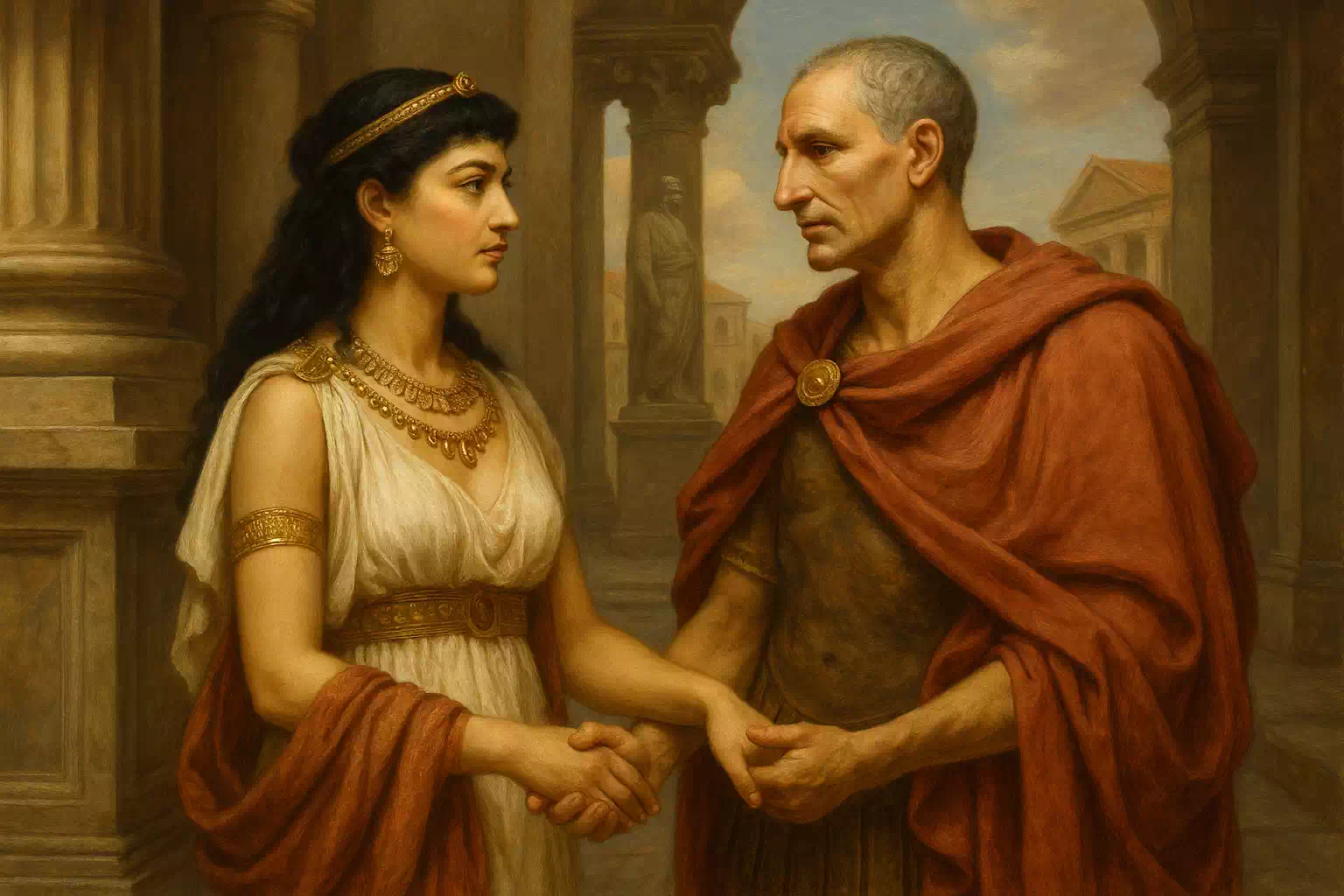
The Ptolemaic Family Drama: Sibling Rivalry on Steroids
To get why Arsinoe was out for blood, you gotta dive into the Ptolemaic dynasty’s soap opera. These were the Greek rulers of Egypt, descendants of Ptolemy, one of Alexander the Great’s generals. Incest? Check. Power grabs? Double check. Cleopatra VII—yeah, the Cleopatra—was the eldest, married to her brother Ptolemy XIII in that classic Egyptian pharaoh tradition (ew, right?). But Ptolemy had advisors pulling strings, and they hated Caesar’s meddling.
Caesar shows up chasing Pompey, his enemy in the civil war. Pompey gets beheaded as a “gift” to Caesar, but instead of gratitude, the Egyptians turn hostile. Cleopatra sneaks into Caesar’s quarters (wrapped in a carpet, legend says), wins him over, and boom—Ptolemy XIII’s drowned in the Nile during a battle. Enter Arsinoe IV, about 17 years old, who’s been sidelined but now seizes the moment. The Alexandrian mob crowns her queen, pitting her against her sister. It’s like Game of Thrones but with pyramids and more eyeliner.
Arsinoe wasn’t just a figurehead. She had charisma, led troops, and rallied the Egyptian forces. Her general, Ganymedes, was a beast—freed slave turned military genius. Together, they besieged Caesar in the royal quarter of Alexandria. Caesar had maybe 4,000 men against 20,000 Egyptians. Things were looking dicey for the Roman eagle.
The Burning of the Fleet: Caesar’s Nautical Nightmare
Here’s where it gets juicy. Caesar’s lifeline was his fleet—72 ships anchored in the harbor, packed with supplies and reinforcements. Without them, he’s toast. Arsinoe and Ganymedes? They weren’t playing. They launched a daring night attack. Egyptian ships, smaller but nimble, swarmed the Romans under cover of darkness.
Imagine the chaos: Flaming arrows light up the sky, pitch-soaked boats ram into Caesar’s galleys, setting them ablaze. The fire spreads like wildfire (pun intended), consuming sails, decks, everything. Ancient sources like Caesar’s own Alexandrian War say over half his fleet—maybe 40 ships—went up in smoke. Some accounts claim the blaze was so fierce it jumped to the famous Library of Alexandria (though that’s debated). Caesar barely escapes by swimming to safety in full armor, losing his purple cloak in the process. Talk about a bad hair day.
This wasn’t just a tactical win; it was psychological warfare. Arsinoe paraded through Alexandria on a golden chariot, hailed as the savior queen. Caesar, trapped with dwindling food and water, sends desperate pleas to his allies: Mithridates of Pergamon and reinforcements from Asia. Rome’s invincible general reduced to begging? That’s humiliation with a capital H. The Senate back home must’ve been whispering, “Maybe that bald guy’s not so great after all.”
From Triumph to Tragedy: Arsinoe’s Rollercoaster Ride
Caesar claws his way back. His reinforcements arrive, crushing the Egyptians at the Battle of the Nile in 47 BC. Ptolemy XIV (another brother) is installed as a puppet, Cleopatra returns as queen, and Arsinoe? Captured. Caesar spares her life—classy move—and drags her to Rome in chains for his quadruple triumph in 46 BC. Picture her: Once a queen, now paraded barefoot behind elephants, jeered by the Roman mob. It was spectacle gold.
But Arsinoe’s story doesn’t end there. After Caesar’s assassination in 44 BC, Mark Antony takes a shine to her (or maybe just wanted to spite Cleopatra). He exiles her to the Temple of Artemis in Ephesus, a cushy prison. Cleopatra, ever the schemer, nags Antony until he has Arsinoe murdered in 41 BC—strangled on the temple steps. Brutal. At 21, the queen who humbled Caesar meets her end, all because of family feud.
Why Is Arsinoe the Forgotten One?
Cleopatra hogs the spotlight—seductress, ally of Caesar and Antony, mom to Caesarion. Arsinoe? She’s a footnote, dismissed as a pawn or villainess. But think about it: She commanded armies, outmaneuvered the master strategist at sea, and forced Caesar into one of his riskiest fights. Women in ancient history often get erased unless they’re “glamorous” like Cleo. Arsinoe’s no damsel; she’s a warrior queen who punched Rome in the gut.
Modern pop culture ignores her too. No Elizabeth Taylor biopic for Arsinoe. But statues of her survive—a beautiful one from the Vatican shows her as Isis, symbolizing her power. Archaeology whispers her story: Coins minted in her name, inscriptions praising her victories. She’s Rome’s greatest “what if”—what if she’d won? Egypt free, Caesar drowned, history flipped.
Lessons from the Flames: Power, Betrayal, and Badass Queens
Arsinoe’s saga screams timeless truths. Power corrupts families—Ptolemies married siblings and still backstabbed each other. Bold moves pay off: That fleet attack was genius guerrilla warfare. And underdogs can topple giants; a teenage queen nearly ended Caesar’s legend.
Next time you hear Caesar crossing the Rubicon, remember the Nile. Arsinoe IV didn’t just burn ships—she scorched Rome’s ego. She’s the forgotten queen reminding us history’s full of unsung heroes (and villains). Dig into Suetonius, Dio Cassius, or Caesar’s commentaries if you’re hooked. Who’s your favorite ancient badass? Drop a comment—let’s chat history’s hidden gems.