
The 2,000-Year-Old Battery That Proves Ancient Mesopotamians Mastered Electricity
Imagine Plugging In… 2,000 Years Ago?
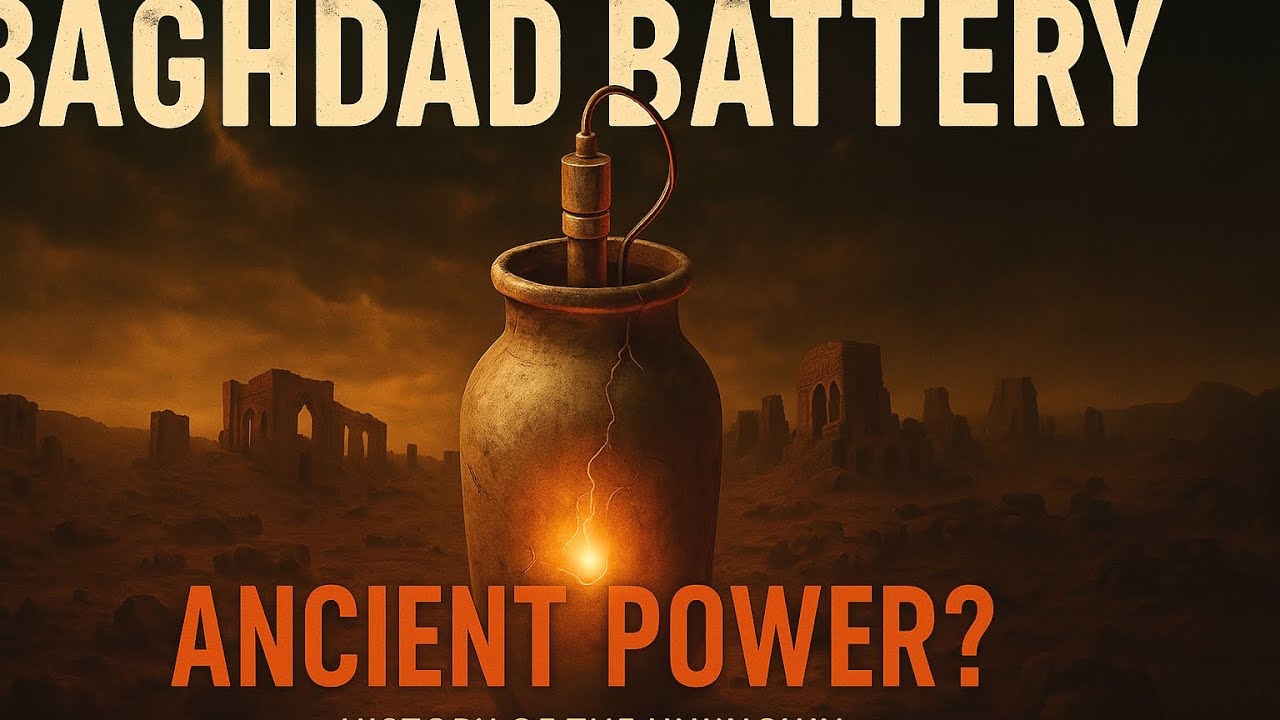
Picture this: You’re wandering through the dusty ruins of ancient Mesopotamia, the cradle of civilization, and you stumble upon something that looks suspiciously like a modern AA battery. Okay, maybe not exactly, but close enough to blow your mind. That’s the Baghdad Battery—a quirky artifact that’s been puzzling scientists, historians, and conspiracy theorists for decades. Discovered in the 1930s, this little terracotta pot, complete with copper cylinder and iron rod, has sparked (pun intended) endless debates. Did the ancient Mesopotamians, those clever folks from modern-day Iraq, actually harness electricity way before Edison stole the spotlight? Buckle up, because we’re diving deep into this electrifying mystery.
The Discovery: Unearthed in the Shadow of Babylon
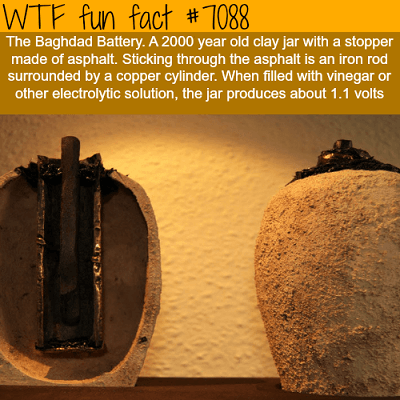
Let’s rewind to 1936. German archaeologist Wilhelm König was working at the National Museum of Iraq in Baghdad when he spotted these odd jars among artifacts from the Parthian period—roughly 250 BC to 224 AD. That’s smack in the heart of Mesopotamian territory, home to Sumerians, Babylonians, and later the Parthians who carried the torch.
Over 100 similar jars have been found near Baghdad, but König zeroed in on one: a small clay vase, about 5 inches tall, with a copper tube sealed by asphalt and an iron rod inside. It screamed “battery” to him. He even published a paper suggesting it generated electricity for electroplating gold onto silver or religious rituals. Fast forward to the 1970s, and experimenters started testing replicas. Spoiler: They worked! But more on that later.
These weren’t random finds. The region was a hotbed of innovation—writing, wheels, math. Why not electricity? The battery’s design? A clay pot (electrolyte holder), vinegar or grape juice (acidic electrolyte), copper (positive electrode), iron (negative). Sound familiar? It’s galvanic cell basics, like Alessandro Volta’s 1800 pile, but 2,000 years earlier.
How Does This Ancient Gadget Actually Work?
Skeptical? I was too. But let’s geek out on the science. Fill the pot with acidic liquid—like wine vinegar common back then—and you’ve got a voltage generator. Modern recreations by folks like Winfried Otto in the ’70s measured 0.8 to 2 volts per jar. String 10 together? You’ve got 8-20 volts, enough to power a small LED or, crucially, electroplate metal.
Take the nearby Khujut Rabu site: artifacts with thin gold coatings that scream electroplating. No fire or mercury needed—just juice from these batteries. In 2005, a team at the University of Pennsylvania replicated it: copper vase, iron rod, lemon juice electrolyte. Boom—steady current. They even zapped a silver piece with gold salts underwater. The gold stuck perfectly, no fuss.
But voltage alone doesn’t “prove” mastery. What about current? Enough for practical use? Tests show 1-5 milliamps—low, but ideal for plating tiny religious icons or jewelry. Imagine Mesopotamian priests with glowing electroplated idols during rituals. Eerie, right? Or practical craftsmen gilding statues for kings.
The Smoking Gun: Electroplating Evidence
Here’s where it gets juicy. Excavations reveal Parthian silver objects with unnaturally even gold layers, microns thick—hallmarks of electrolysis, not smearing or mercury gilding (which leaves residues). Chemical analysis? No mercury. Just pure, electrodeposited gold.
Compare to later Romans or Greeks: no such tech. Yet Mesopotamians had it? They also used similar pots for storage, so hiding in plain sight. And get this: Texts from the era mention “sacred fires” or “breath of gods”—could be sparks or shocks from batteries? The Epic of Gilgamesh has electric storm gods; maybe inspired by real zaps.
Critics say it’s coincidence. Pots for scrolls? But why the copper-iron combo? Random? Nah. Engineering screams intent. A 2019 study in Electrochimica Acta confirmed: optimal materials for 0.5-1V output. Not storage jars—power sources.
Debunking the Debunkers: What’s the Alternative?
Not everyone’s convinced. Some say “just a drinking vessel” or “scroll holder.” But why seal with bitumen? Why iron rod corroded exactly like in electrolytes? Experiments with neutral water? Zero voltage. Acid? Zap!
Another theory: medical—electroshock therapy for pain, like old TENS units. Vinegar shocks on acupuncture points? Plausible, given Ayurvedic parallels. Or rituals: shocking devotees to commune with gods. The low current fits—tingle, not fry.
Skeptics like Paul Craddock argue no direct proof. Fair, but absence of evidence isn’t evidence of absence. No wires found? Maybe organic, rotted away. Like how we missed aqueducts for centuries. Occam’s razor: simplest explanation is battery.
And power? Multiple jars in series, linked by wires (bronze common). A “battery farm” for workshops? Suddenly, ancient Mesopotamia looks like Silicon Valley BC.
Implications: Rewriting History with a Spark
If true, this shatters timelines. Electricity predates Greeks by millennia. No “Dark Ages”—Mesopotamians leapfrogged. Did knowledge spread to Egypt, lost in library fires? Or independent inventions?
It proves ancients were no primitives. They mastered chemistry, materials science. Copper corrosion inhibitor? Check. Acid production via fermentation? Nailed it. This battery hints at lost tech: maybe electroplating spread via Silk Road, influencing Baghdad’s golden age later.
Modern ties? Inspired Baghdad Batteries in DIY electronics. Museums showcase replicas lighting bulbs. TED Talks buzz about it. Even NASA eyed it for alien tech theories—though that’s tinfoil hat territory.
Why It Matters Today: Igniting Curiosity
Beyond wow-factor, it reminds us: history’s full of gaps. One artifact flips textbooks. Next dig could unearth wires, schematics. Until then, the Baghdad Battery whispers: Ancients were electric.
So, next time you charge your phone, tip your hat to Mesopotamia. They might’ve beaten you to it. What do you think—mastery or myth? Drop a comment; let’s spark debate!