
The Shocking Psychology Behind Why You Can’t Stop Scrolling
Hey, Admit It: Your Phone Owns You
Picture this: You’re chilling on the couch, Netflix paused, and suddenly your thumb takes over. Up, down, swipe, tap. Minutes turn into hours, and poof—your evening’s gone. Sound familiar? You’re not alone. Billions of us are trapped in this endless scroll cycle, and it’s not just laziness or boredom. There’s some seriously sneaky psychology at play here, engineered by the smartest minds in Silicon Valley. Buckle up, because we’re diving into the shocking reasons why you can’t stop scrolling—and how it hijacks your brain.
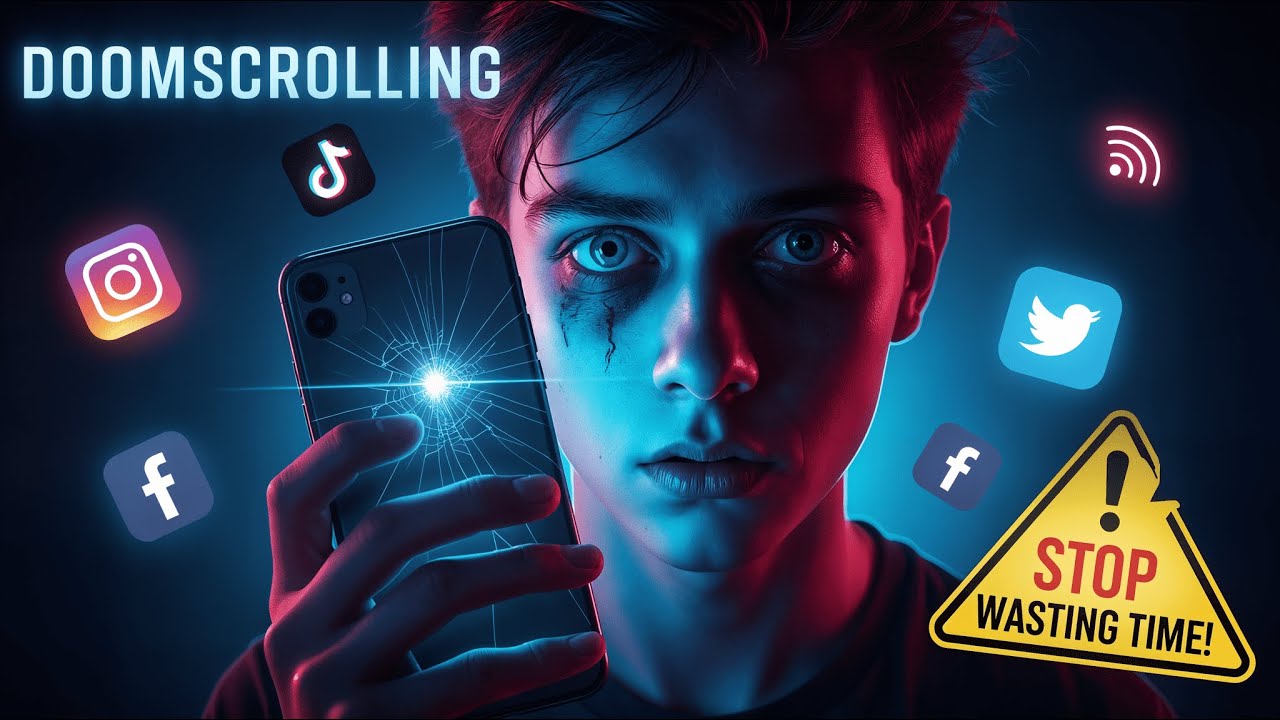
The Dopamine Hit: Your Brain’s Favorite Drug
Let’s start with the star of the show: dopamine. That feel-good chemical your brain pumps out when you eat chocolate, win a game, or—bam—see a funny meme. Social media apps are like digital slot machines, doling out these hits unpredictably. One post? Meh. Next? Hilarious cat video! Your brain lights up, craving more because it never knows what’s coming next.
Psychologist B.F. Skinner nailed this with his “variable ratio reinforcement schedule” back in the 1930s. Pigeons pecked levers for food pellets at random intervals, becoming obsessed. Fast-forward to today: Instagram’s algorithm serves content that’s just rewarding enough to keep you pulling the lever (aka scrolling). Studies from the University of London show our dopamine spikes mimic those of gamblers. No wonder you feel that itch to check your phone 150 times a day—it’s addiction-level stuff, and it’s by design.
Infinite Scroll: The Bottomless Pit
Remember when websites had “next page” buttons? Thank goodness those are gone, right? Wrong. Infinite scroll is the devil’s invention. Pioneered by Twitter (now X) and perfected by Facebook and TikTok, it removes any friction. No loading screens, no decisions—just endless content flowing like a river.
Why does this trap us? Cognitive load theory. Our brains hate decisions; they drain mental energy. Infinite scroll eliminates choice, turning passive consumption into autopilot mode. A study by the American Psychological Association found users scroll 30% longer on infinite feeds. It’s like eating from a never-ending buffet—you keep going until you’re sick, but with your attention span instead of your stomach.
FOMO: The Fear That’s Always Lurking
Ever refreshed your feed thinking, “What if I miss something epic?” That’s FOMO—Fear Of Missing Out—and it’s social media’s secret weapon. Psychologist Dan Herman coined the term in the 2000s, but apps supercharged it. Stories vanish in 24 hours? Limited-time posts? Your brain panics, whispering, “Everyone’s living their best life without you!”
Research from the Journal of Social and Clinical Psychology links heavy social media use to anxiety and depression, fueled by FOMO. We scroll to fill that void, comparing our behind-the-scenes to others’ highlight reels. It’s a vicious loop: Scroll to ease FOMO, see more perfect lives, feel worse, scroll more. Sneaky, huh?
Notifications: Ding! Your Pavlovian Bell
Ring a bell? You’re salivating already, thanks to Ivan Pavlov’s dogs. Apps do the same with push notifications. That “ding!” triggers your brain’s salience network—the part that screams, “Pay attention!” Even if it’s just a like, your reward center activates.
Nir Eyal’s book Hooked breaks it down: Trigger (notification) → Action (open app) → Reward (content) → Investment (like/comment). It’s a habit loop on steroids. A 2022 study by Carnegie Mellon showed notifications fragment attention, reducing productivity by 40%. Turn ’em off? Easier said than done when apps guilt-trip you with “You have unread messages!”
The Social Comparison Trap
Scrolling isn’t just mindless—it’s a comparison contest you didn’t sign up for. Leon Festinger’s social comparison theory from 1954 says we gauge ourselves against others. Social media floods us with curated perfection: vacations, abs, promotions. Your brain fills in the gaps: “They have it all; I don’t.”
A meta-analysis in Psychological Bulletin confirms upward comparisons tank self-esteem. Upward? When you compare to “better” people. Apps amplify this with algorithms pushing aspirational content. Result? You scroll longer, chasing that validation like, or share that offsets the envy. It’s emotional quicksand.
Attention Economy: You’re the Product
Tristan Harris, ex-Google ethicist, calls it the “attention economy.” Tech giants like Meta and ByteDance make billions by selling your eyeballs to advertisers. Every scroll is data gold: What you like, how long you linger. They tweak feeds in real-time to maximize “session length.”
Internal Facebook leaks revealed they prioritize “engagement” over well-being. Features like autoplay videos? They exploit the Zeigarnik effect—your brain hates unfinished tasks, so you watch “just one more.” It’s not accidental; it’s psychological warfare for profit.
Breaking the Scroll Spell: Real Talk Tips
Okay, enough doom-scrolling science. How do you fight back? First, awareness is power. Track your usage with apps like Screen Time or Digital Wellbeing. Shocking to see 5 hours daily? Yeah.
Set boundaries: Grayscale your phone (makes it less dopamine-y), delete apps, or use “do not disturb” religiously. Try the 20-20-20 rule for eyes, but mentally: Every 20 minutes, look 20 feet away for 20 seconds—and put the phone down.
Replace the habit. Bored? Read a book, walk, call a friend. Dopamine from real life hits different. Apps like Forest gamify focus—grow virtual trees while you stay off socials. And curate ruthlessly: Unfollow envy-triggers, follow uplifting accounts.
Finally, remember: Scrolling won’t fill the void. It’s engineered to make you want more, not satisfy. Reclaim your time, one mindful swipe at a time. Your future self (with evenings free) will thank you.
(Word count: 1028)