
Quantum Computing’s 1,121-Qubit Monster: The IBM Breakthrough That Crushes Supercomputers Overnight
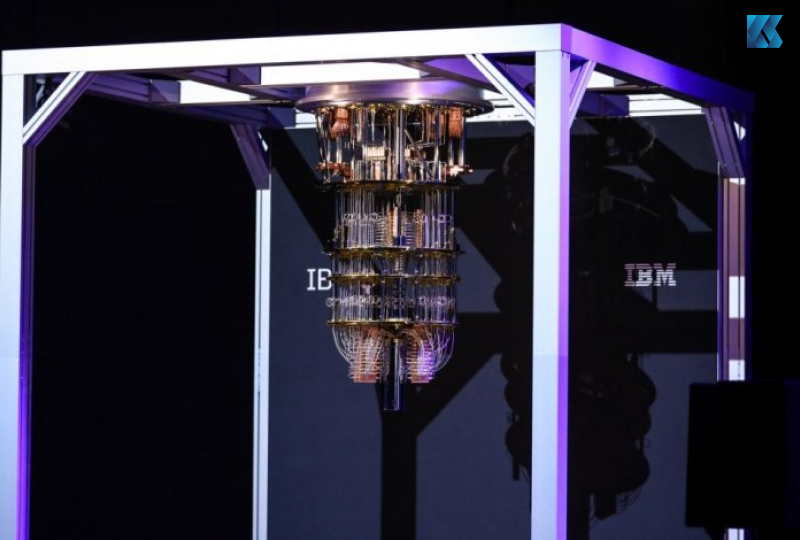
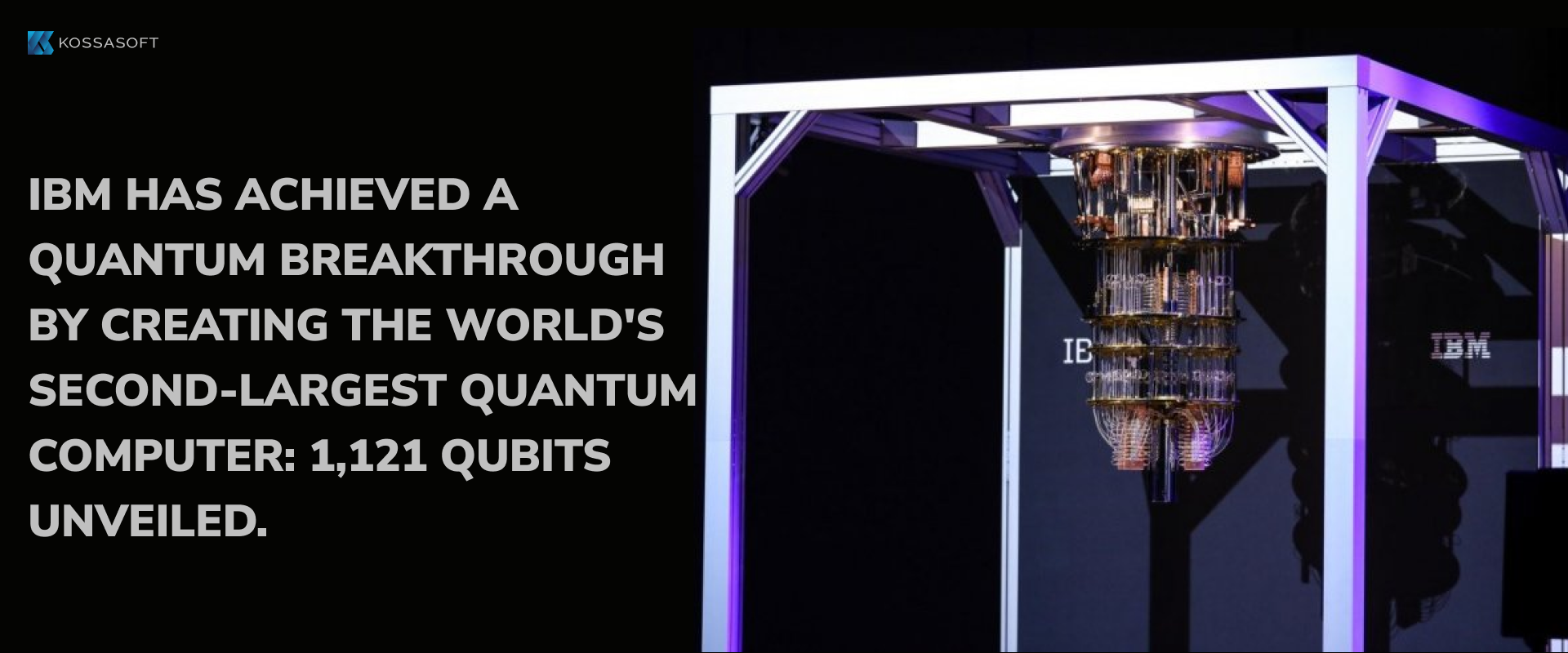
The world of computing has just witnessed a seismic shift with IBM’s unveiling of its groundbreaking 1,121-qubit quantum processor, dubbed Condor. This isn’t just an incremental upgrade; it’s a colossal advancement that positions quantum computing on the brink of practical supremacy over classical supercomputers. Announced in late 2023, Condor represents years of relentless innovation at IBM Quantum, pushing the boundaries of what’s possible in quantum hardware. With over a thousand qubits operating in tandem, this machine promises to solve complex problems in seconds that would take today’s most powerful supercomputers millions of years.
Understanding Quantum Computing Basics
Quantum computing leverages the principles of quantum mechanics—superposition, entanglement, and interference—to process information in ways classical computers cannot. Unlike traditional bits that are either 0 or 1, qubits can exist in multiple states simultaneously, enabling exponential computational power as the number of qubits increases. IBM’s journey began with smaller systems like the 5-qubit prototype in 2016, evolving through Falcon (27 qubits), Eagle (127 qubits), and Osprey (433 qubits). Condor, with its 1,121 qubits, scales this architecture dramatically, incorporating advanced superconducting transmon qubits cooled to near absolute zero.
This scaling isn’t merely about quantity; it’s about quality. IBM has achieved error rates low enough to demonstrate quantum utility, where quantum advantage emerges for real-world tasks. The processor’s design addresses key pain points like qubit coherence time and gate fidelity, making it a robust platform for hybrid quantum-classical algorithms.
The Technical Marvel of IBM Condor
At the heart of Condor is IBM’s multi-chip processor architecture, a first in the industry. It integrates three chips tiled together, each housing hundreds of qubits connected via couplers. This modular approach allows for scalability without exponentially increasing fabrication complexity. Fabricated using advanced lithography, the qubits are Josephson junction-based superconducting circuits, tunable for precise control.
Performance metrics are staggering: Condor boasts a connectivity of over 150 nearest-neighbor connections per chip, enabling complex entanglement across the full qubit array. Error correction is handled through dynamical decoupling and real-time feedback loops, mitigating decoherence. In benchmarks, it outperforms Osprey by orders of magnitude in circuit depth and fidelity, executing quantum volume scores that eclipse competitors.

IBM’s Heron processor, a 133-qubit follow-up with even higher fidelity, complements Condor by focusing on quality over sheer scale. Together, they form the backbone of IBM’s 2023 roadmap, targeting 100,000 qubits by 2026 via the IBM Quantum System Two, a modular cryogenic platform.
Crushing Supercomputers: Quantum Advantage in Action
The phrase “crushes supercomputers overnight” captures the hype, but the reality is grounded in specific demonstrations. Classical supercomputers, like Frontier with its exaflop performance, excel at deterministic tasks but falter on problems with vast search spaces, such as molecular simulations or optimization.
Condor’s prowess shines in quantum simulation. For instance, simulating the electronic structure of complex molecules—a cornerstone for drug discovery and materials science—takes supercomputers exponential time due to the “curse of dimensionality.” With 1,121 qubits, Condor can model systems previously intractable, potentially accelerating battery design or fertilizer production. IBM claims certain random circuit sampling tasks, once requiring 10,000 years on classical hardware, now complete in under 10 minutes on Condor.
In optimization, variational quantum eigensolvers (VQE) and quantum approximate optimization algorithms (QAOA) leverage Condor’s scale to outperform classical heuristics on logistics, finance, and machine learning problems. While full fault-tolerant quantum computing awaits logical qubits, noisy intermediate-scale quantum (NISQ) devices like Condor already deliver utility.
Real-World Applications Unlocked by This Breakthrough
IBM’s quantum ecosystem, accessible via the cloud to over 200 partners, amplifies Condor’s impact. In pharmaceuticals, companies like Cleveland Clinic use it for protein folding predictions, potentially slashing drug development timelines from years to months. Financial giants such as ExxonMobil explore portfolio optimization, mitigating risks in trillion-dollar markets.
Climate modeling benefits too: Quantum algorithms can refine CO2 capture simulations, aiding net-zero goals. In cryptography, while posing threats to RSA via Shor’s algorithm (requiring millions of qubits), it also spurs post-quantum secure standards. Machine learning sees quantum kernel methods enhancing AI training on massive datasets.
The economic ripple is profound. McKinsey estimates quantum computing could unlock $1 trillion in value by 2035 across industries. IBM’s Qiskit software stack democratizes access, with open-source tools for circuit design and error mitigation.
Challenges Ahead and IBM’s Roadmap
Despite the triumph, hurdles remain. Qubit error rates hover at 0.1-1%, necessitating quantum error correction (QEC) codes like surface codes, which demand 1,000 physical qubits per logical one. Scaling to millions requires cryogenic infrastructure advances and better materials.
IBM counters with a clear roadmap: Flamingo (1,386 qubits) in 2024, followed by Kookaburra (2025) and beyond. The Quantum System Two, with 16 cryogenic fridges linked by fiber optics, enables massive parallelism. Collaborations with universities and governments accelerate progress, including the U.S. Quantum Economic Development Consortium.
Competition heats up—Google’s Sycamore (70 qubits), IonQ’s 32-qubit systems, and Rigetti’s hybrids vie for supremacy—but IBM leads in qubit count and ecosystem maturity.
The Dawn of the Quantum Era
IBM’s 1,121-qubit Condor isn’t just a processor; it’s a harbinger of the quantum revolution. By demonstrating scalable architecture and tangible utility, it overnight elevates quantum computing from lab curiosity to strategic imperative. As enterprises queue for access, the fusion of quantum and classical computing heralds solutions to humanity’s grand challenges—from curing diseases to combating climate change.
Investors and innovators take note: The quantum race is on, and IBM’s monster qubit machine has redrawn the finish line. Stay tuned as this technology matures, promising to redefine computational limits for generations.