
12,000-Year-Old Göbekli Tepe Secrets: The Hunters Who Built Civilization Before History Knew
In the rolling hills of southeastern Turkey lies Göbekli Tepe, a site that challenges everything we thought we knew about the dawn of civilization. Dating back 12,000 years, this prehistoric sanctuary was constructed by hunter-gatherers long before the invention of agriculture or writing. These enigmatic monuments, buried deliberately around 8,000 BCE, reveal a world where nomadic peoples erected massive stone circles adorned with intricate carvings, hinting at complex social structures, spiritual beliefs, and symbolic languages predating known history.
The Astonishing Discovery of Göbekli Tepe
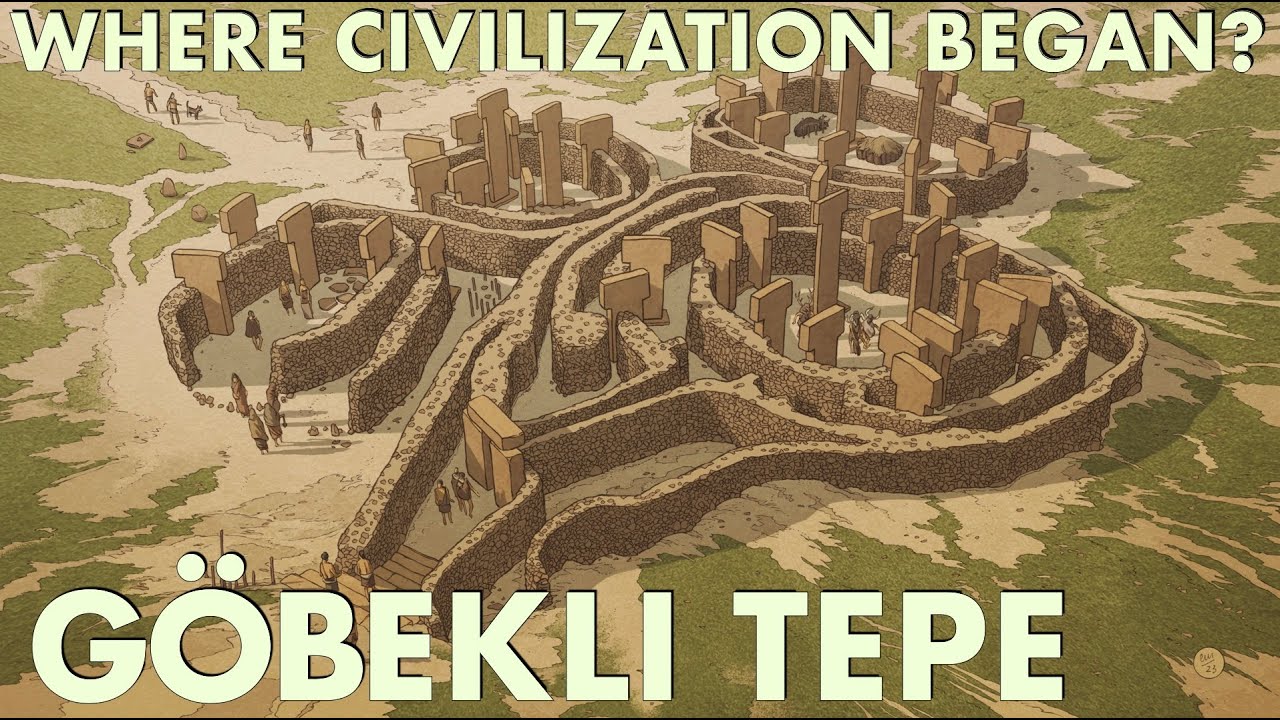
Göbekli Tepe was first noticed in 1963 during a Turkish-American survey, but its true significance emerged in 1994 when German archaeologist Klaus Schmidt recognized the artificial hills as ancient enclosures. Excavations began in 1995 under Schmidt’s leadership, sponsored by the German Archaeological Institute and the Şanlıurfa Museum. What they uncovered stunned the world: 20 circular structures, each up to 30 meters in diameter, enclosing T-shaped limestone pillars weighing up to 20 tons each.
Unlike typical Neolithic sites, Göbekli Tepe shows no signs of permanent habitation—no houses, no grain stores, no domestic animal bones. Instead, it served as a ceremonial center, drawing people from afar. Radiocarbon dating places the oldest layers at around 9600 BCE, making it older than Stonehenge by 6,000 years and the Egyptian pyramids by 7,000. This discovery flipped the script on human progress: complex societies arose before farming, not after.
Decoding the T-Shaped Pillars and Carvings
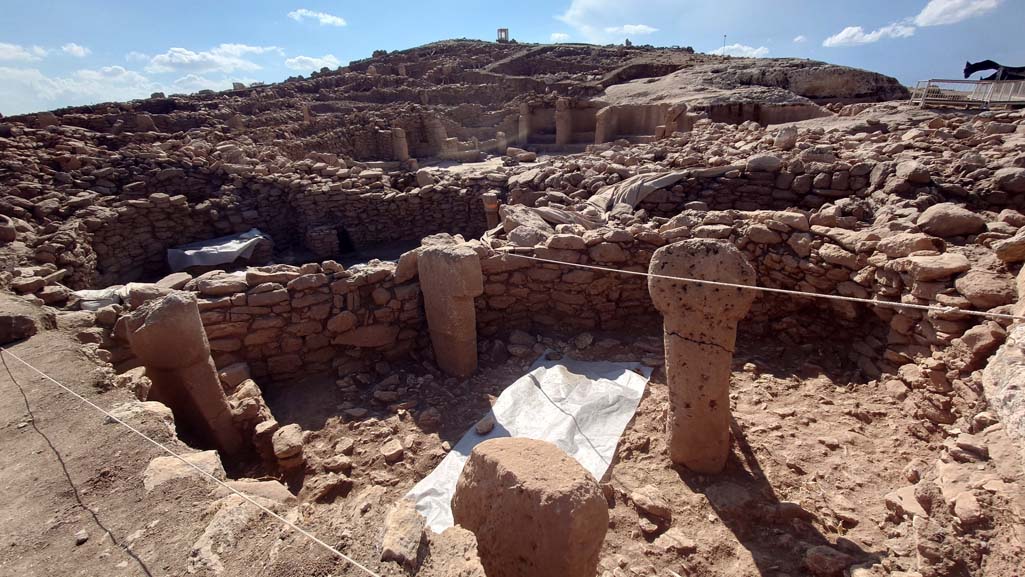
The site’s hallmark is its towering T-shaped pillars, some reaching 5.5 meters high. These monoliths, quarried from nearby bedrock, feature bas-reliefs of wild animals—foxes, snakes, boars, birds, and scorpions—alongside abstract symbols and anthropomorphic figures. Scholars interpret these as totemic representations, possibly clan emblems or deities. One pillar, dubbed the “Vulture Stone,” depicts what some see as a comet swarm linked to a prehistoric impact event around 10,950 BCE, potentially explaining the Younger Dryas cold snap.
Enclosures are arranged in rings, with pillars facing inward, suggesting ritual gatherings. Low benches line the walls, perhaps for participants. The precision of construction—pillars aligned with astronomical events like solstices—indicates advanced knowledge of engineering and celestial observation. Tools found include flint blades and grinding stones, but no metal, confirming its Pre-Pottery Neolithic A (PPNA) context.
Hunter-Gatherers Who Defied Expectations
Who built Göbekli Tepe? Not farmers, but mobile hunter-gatherers subsisting on wild gazelle, aurochs, equids, and birds, as bone analysis reveals. Yet, mobilizing hundreds to haul 16-ton pillars implies seasonal congregations of thousands, fostering social hierarchies and labor organization unseen in earlier Paleolithic cultures.
Evidence suggests feasting rituals with vast quantities of gazelle bones, indicating communal events that strengthened alliances. This challenges the linear model of civilization: temples preceded cities. Göbekli Tepe may have been a “cathedral on a hill,” catalyzing the Neolithic Revolution by drawing people together, spurring innovations like domestication nearby at sites like Nevalı Çori.
Unveiling Göbekli Tepe’s Spiritual Secrets
At its core, Göbekli Tepe whispers of a profound spirituality. Pillars resemble stylized human forms with arms, belts, and loincloths, possibly ancestor spirits or shamanic figures. Animal carvings dominate, reflecting a worldview where predators symbolized power and danger. Foxes, often shown alone, might represent trickster archetypes, while vultures suggest sky burials or afterlife beliefs.
Burial of the site intact around 8000 BCE—filled with debris and stones—hints at a deliberate decommissioning, perhaps due to shifting beliefs or environmental changes. No grave goods or human remains in main enclosures point to it as a pilgrimage site, not a necropolis. Recent geophysical surveys reveal over 200 enclosures, mostly unexcavated, promising more revelations about this lost religion.
Rewriting the Timeline of Human Civilization
Göbekli Tepe demolishes the idea that sedentism and agriculture birthed monumental architecture. Here, hunter-gatherers achieved feats rivaling later civilizations, suggesting religion or ritual unified early societies. Proximity to the Fertile Crescent links it to the origins of farming; perhaps pilgrims stayed longer, experimenting with wild grains.
Comparisons to Jericho’s tower or Çatalhöyük show Göbekli Tepe as a precursor. Its influence rippled outward, seeding the spread of megalithic culture across Europe and the Near East. Climate data ties its flourishing to the end of the Ice Age, with warmer conditions enabling population growth.
Ongoing Mysteries and Future Excavations
Only 5% of Göbekli Tepe is excavated, leaving vast potential. Drones and ground-penetrating radar map hidden structures, including possible water channels. Debates rage: Was it a skull cult site, given modified crania found nearby? Do symbols form a proto-script?
Preservation efforts, aided by UNESCO World Heritage status since 2018, combat erosion and tourism. Turkish-German teams continue digs, with 2023 finds including new pillars and artifacts. Future DNA analysis of remains could trace builders’ origins to Anatolian hunter-gatherers.
Göbekli Tepe’s secrets continue to unfold, proving history’s first chapters were etched in stone by nomads who dreamed big. This 12,000-year-old enigma reminds us: civilization’s roots run deeper than we imagined, built by hunters whose legacy endures.