
The Spruce Goose: Howard Hughes’ Colossal 1947 Flying Boat That Flew Once and Vanished into Legend
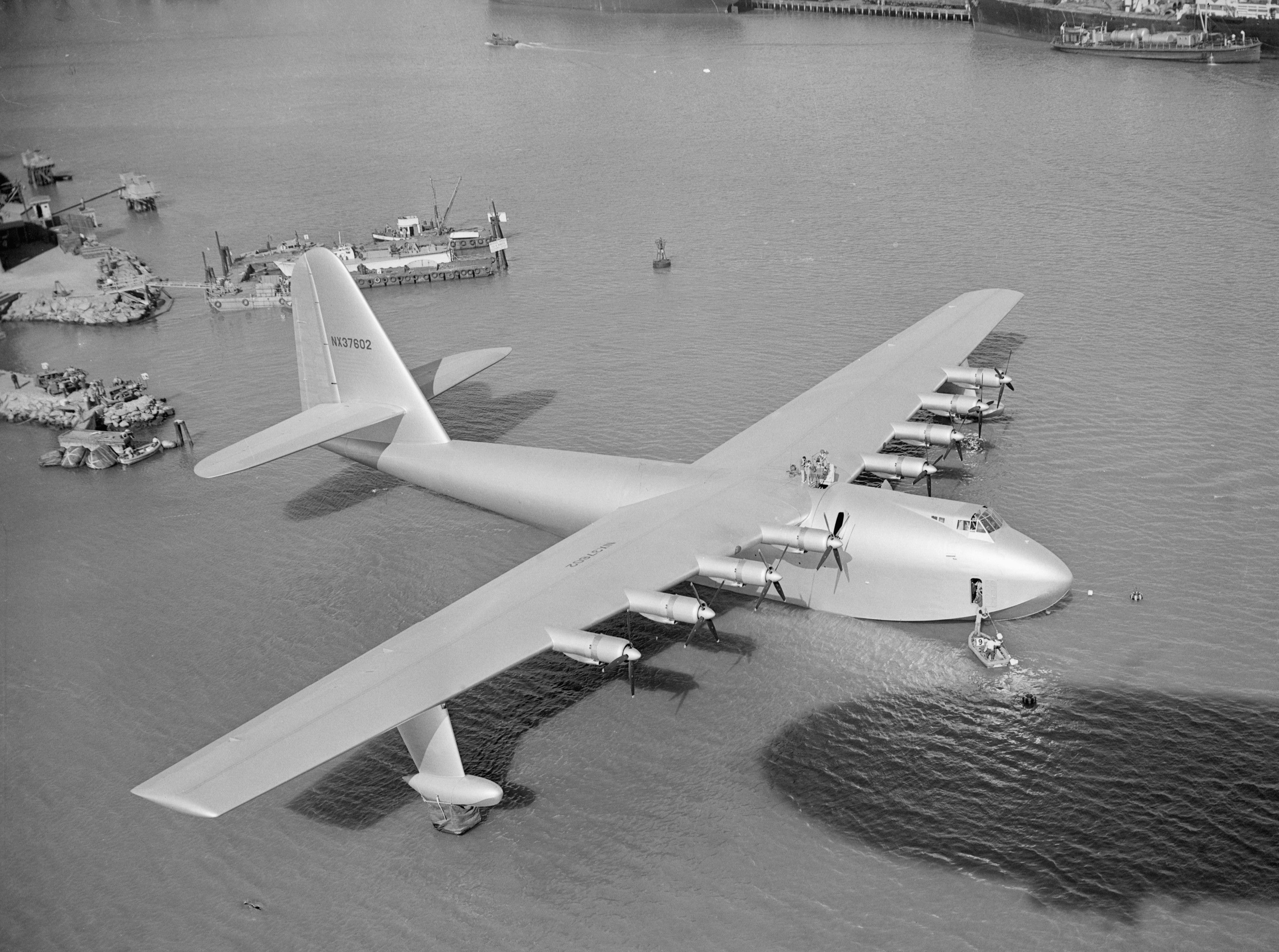
In the annals of aviation history, few aircraft capture the imagination quite like the Spruce Goose. This massive flying boat, officially known as the Hughes H-4 Hercules, represented the pinnacle of ambition during World War II. Conceived by aviation pioneer Howard Hughes, it was designed to transport troops and cargo across the Atlantic Ocean, evading German U-boat threats. Despite its single, brief flight in 1947, the Spruce Goose has become a symbol of engineering audacity and American ingenuity.
The Origins of the Spruce Goose Project
The story begins in 1942, amid the height of World War II. The U.S. government sought innovative solutions to supply Allied forces in Europe. Traditional ships were vulnerable to submarine attacks, prompting the War Production Board to approach Howard Hughes. Known for his daring flights and film production, Hughes partnered with Henry Kaiser, a shipbuilding magnate, to create the H-4 Hercules.
The aircraft was mandated to be built primarily from wood due to wartime restrictions on aluminum and steel. Despite its nickname “Spruce Goose,” the frame used Duramold—a laminated birch wood composite—making it the largest wooden aircraft ever constructed. Hughes’ team at Hughes Aircraft Company in Culver City, California, labored for over four years, facing immense technical challenges and skepticism from critics who dubbed it an impossible dream.
The contract specified a flying boat capable of carrying 750 troops or two Sherman tanks over 3,000 miles at 220 mph. With a staggering wingspan of 320 feet—larger than a modern Boeing 747—the H-4 was envisioned as a game-changer in military logistics.
Engineering Marvel: Design and Specifications
The Spruce Goose’s design was revolutionary. Its single, enormous hull resembled a giant boat with sweeping wings, powered by eight Pratt & Whitney R-4360 Wasp Major radial engines, each producing 3,000 horsepower. These 28-cylinder behemoths drove 17-foot Hamilton Standard propellers, providing the thrust needed for such a colossal airframe.
Key specs included a length of 218 feet, height of 79 feet, and maximum takeoff weight exceeding 400,000 pounds. The cockpit featured advanced controls for its time, including hydraulic systems for the massive control surfaces. The interior boasted space for 750 passengers or equivalent cargo, with luxurious appointments like leather seats and a observation lounge—testaments to Hughes’ flair for the dramatic.
Construction techniques were groundbreaking. Over 16,000 parts were handcrafted from wood, glued and molded under precise conditions to withstand stresses. The wings alone required innovative spars and skinning methods, pushing the boundaries of wooden aircraft engineering. Despite delays and cost overruns—the project ballooned to $23 million (about $400 million today)—the H-4 was completed in 1946, too late for wartime use.
The Historic Flight of November 2, 1947
By 1947, the war had ended, but Hughes was determined to prove his creation’s viability. Critics, including Senator Owen Brewster, accused him of wasting taxpayer money. In response, Hughes organized a taxi test in Long Beach Harbor, California, before 100,000 spectators and national media.
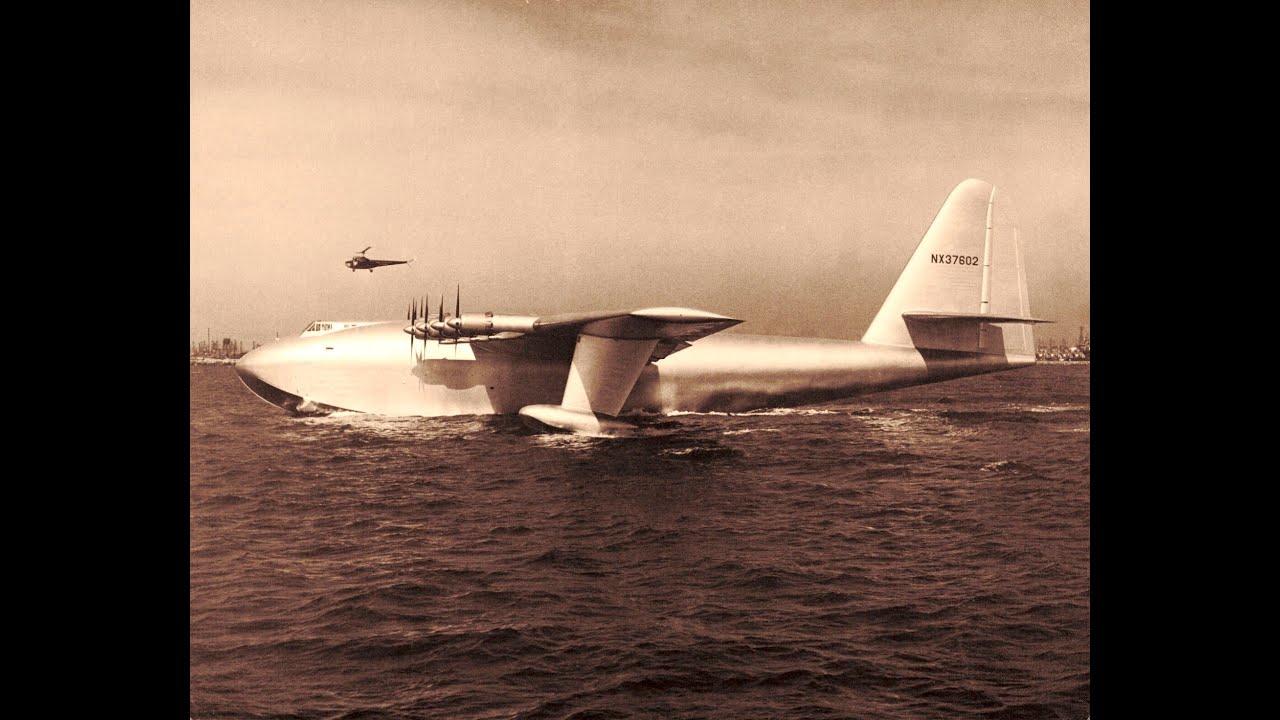
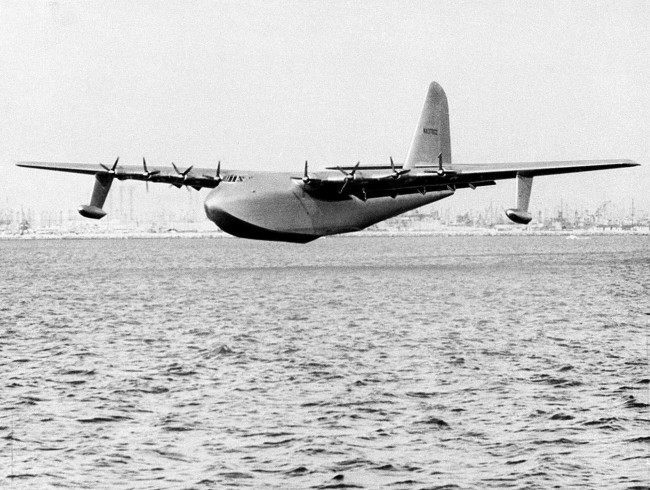
On November 2, what began as a test run turned into the Spruce Goose’s one and only flight. As the aircraft surged forward on its step in the water, Hughes— at the controls—pulled back on the yoke. The massive flying boat lifted off, climbing to 70 feet, then 135 feet, and covered approximately one mile at 115 mph over 26 seconds. It was a triumphant vindication, silencing doubters momentarily.
Hughes later described the moment: "She’s a fine ship. She flies like a bird." However, the flight revealed handling quirks; the immense size made it tricky to control, and it never flew again. Post-flight, it was towed back to its slipway, marking the end of its aerial career.
Post-Flight Fate and Senate Scrutiny
Following the flight, the H-4 faced government audits. The Senate War Investigating Committee grilled Hughes over the project’s costs and delays. In dramatic hearings, Hughes defended his vision passionately, using scale models to demonstrate feasibility. Though cleared of wrongdoing, funding dried up, and the aircraft was mothballed in a climate-controlled hangar in Long Beach.
For over three decades, the Spruce Goose remained on display, maintained at great expense. Hughes, ever protective, stipulated it never leave the harbor. After his death in 1976, the Hughes Corporation donated it to the Aero Club of Southern California. In 1980, it was moved by barge to Oregon for exhibition, then acquired by the Evergreen Aviation & Space Museum in McMinnville, where it resides today as a centerpiece exhibit.
Legacy and Enduring Myths
The Spruce Goose’s legacy transcends its single flight. It holds records as the largest flying boat, largest wooden aircraft, and largest propeller-driven plane. Its story inspired books, documentaries, and films, including cameos in movies like "The Aviator."
Common myths persist: Was it too heavy to fly? In truth, it was designed for overload capacity but flew lightly loaded. Another claims it was unairworthy; test flights proved otherwise. Modern engineers marvel at its aerodynamics, noting similarities to contemporary designs like the Icon A5 or even blended-wing bodies.
Today, the restored H-4 welcomes visitors who can walk its decks and cockpit, experiencing the scale firsthand. It symbolizes bold innovation amid bureaucracy, reminding us that sometimes the greatest feats come from defying conventional wisdom.
Why the Spruce Goose Still Captivates
In an era of jets and composites, the Spruce Goose stands as a testament to human ambition. Howard Hughes’ relentless pursuit—despite ridicule—paved the way for future mega-projects like the Airbus A380. Its tale underscores aviation’s evolution from wood and fabric to supersonic travel.
For enthusiasts, the aircraft prompts questions: What if it had entered service? Could it have reshaped post-war transport? While speculative, these "what ifs" fuel its legendary status. Visiting the museum offers a tangible connection to 1940s ingenuity, ensuring the Spruce Goose soars eternally in collective memory.