
The Best Mobile Apps for Learning a New Language
Why Mobile Apps Are Revolutionizing Language Learning
Feature Video
In today’s fast-paced world, learning a new language has become more accessible than ever, thanks to innovative mobile apps. Whether you’re preparing for travel, advancing your career, or simply satisfying a personal curiosity, the best mobile apps for learning a new language offer flexible, engaging, and effective ways to build fluency. These apps leverage gamification, AI-driven personalization, speech recognition, and interactive lessons to make studying fun and efficient. According to recent studies, consistent use of language learning apps can lead to significant improvements in vocabulary, grammar, and pronunciation within weeks. With millions of downloads and high user ratings on app stores, apps like Duolingo and Babbel dominate the market. This article explores the top contenders, their unique features, pricing, and tips to choose the right one for your goals.
Duolingo: The Gamified Leader in Language Learning
Duolingo tops the list of the best mobile apps for learning a new language, boasting over 500 million users worldwide. Available for free on iOS and Android, it supports nearly 40 languages, from Spanish and French to less common ones like Welsh and Navajo. The app’s owl mascot guides you through bite-sized lessons that feel like games, earning points (XP) for streaks and leaderboards.
Key features include adaptive learning paths that adjust to your progress, listening and speaking exercises powered by AI, and Duolingo Stories for contextual reading. The free version is robust, but Duolingo Super ($6.99/month) removes ads and unlocks unlimited hearts. Pros: Highly engaging, completely free core experience, daily reminders. Cons: Limited depth in grammar explanations. Ideal for beginners seeking motivation through fun. Users report gaining conversational basics in 15 minutes a day.
Babbel: Conversational Focus with Real-Life Scenarios
Babbel stands out among the best mobile apps for learning a new language by prioritizing practical conversations. Supporting 14 languages, it’s perfect for travelers and professionals. Lessons mimic real dialogues, like ordering food or job interviews, with native speaker audio and speech recognition for pronunciation feedback.
Priced at $13.95/month (or lifetime access for $299.99), Babbel offers offline mode, review sessions, and podcasts. Its structured courses progress from beginner to advanced. Pros: Focus on usable phrases, excellent for adults. Cons: Fewer languages than competitors, subscription-based. Babbel Live adds group classes for $200+/month. Reviews praise its quick results in everyday Spanish or German.
Rosetta Stone: Immersive Learning Without Translations
A pioneer since 1992, Rosetta Stone’s mobile app embodies immersion—the gold standard for the best mobile apps for learning a new language. It teaches 25 languages through images, audio, and context, avoiding English translations to build intuitive understanding. TruAccent technology provides instant pronunciation scoring.
Subscriptions start at $11.99/month, with lifetime options. Features include live tutoring, phrasebooks, and augmented reality games. Pros: Proven method used by governments, deep fluency building. Cons: Steep learning curve, pricey. Best for serious learners aiming for native-like proficiency in Italian or Arabic.
Memrise: Vocabulary Mastery with Memes and Videos
Memrise excels in vocabulary retention, making it one of the best mobile apps for learning a new language via spaced repetition and user-generated content. It covers 20+ languages with native speaker videos, mnemonics, and meme-style flashcards.
Free with Pro at $8.99/month, it includes grammar bots and offline access. Pros: Fun, community-driven, great for words and phrases. Cons: Weaker on grammar. Users love courses for Japanese kanji or Russian idioms.
Busuu: Social Learning with Native Speaker Feedback

Busuu combines lessons with community interaction, positioning it among the top mobile apps for learning a new language. Supporting 12 languages, it offers bite-sized lessons, grammar tips, and conversations with native speakers who correct your writing and speaking.
Premium plans from $9.99/month unlock offline lessons and ad-free experience. Pros: Personalized feedback, cultural insights. Cons: Smaller language selection. Excellent for building confidence in Portuguese or Turkish.
Drops: Visual Vocabulary Builder for Visual Learners

Drops is a minimalist app ideal for visual learners among the best mobile apps for learning a new language. It focuses on 2,500+ words across 45+ languages using beautiful illustrations, no typing—just drag-and-drop and audio.
Free for 5 minutes daily; Premium ($13/month) extends sessions. Pros: Stunning design, addictive gameplay. Cons: No grammar or sentences. Perfect for quick vocab boosts in Korean or Swahili.
Mondly: AR-Powered Conversations and Daily Lessons
Mondly uses augmented reality (AR) for virtual conversations, a cutting-edge feature in the best mobile apps for learning a new language. It supports 41 languages with chatbots, speech recognition, and daily quizzes.
Subscriptions at $9.99/month. Pros: Innovative AR, VR headset compatibility. Cons: Repetitive. Great for flirtatious French or business Mandarin.
HelloTalk: Language Exchange with Real People
For conversational practice, HelloTalk is unbeatable among mobile apps for learning a new language. Connect with 30M+ natives for text, voice, and video chats, with built-in translation and correction tools.
Free with VIP ($12.99/month). Pros: Authentic practice. Cons: Variable partner quality. Essential for fluency beyond apps.
How to Choose the Best Language Learning App for You
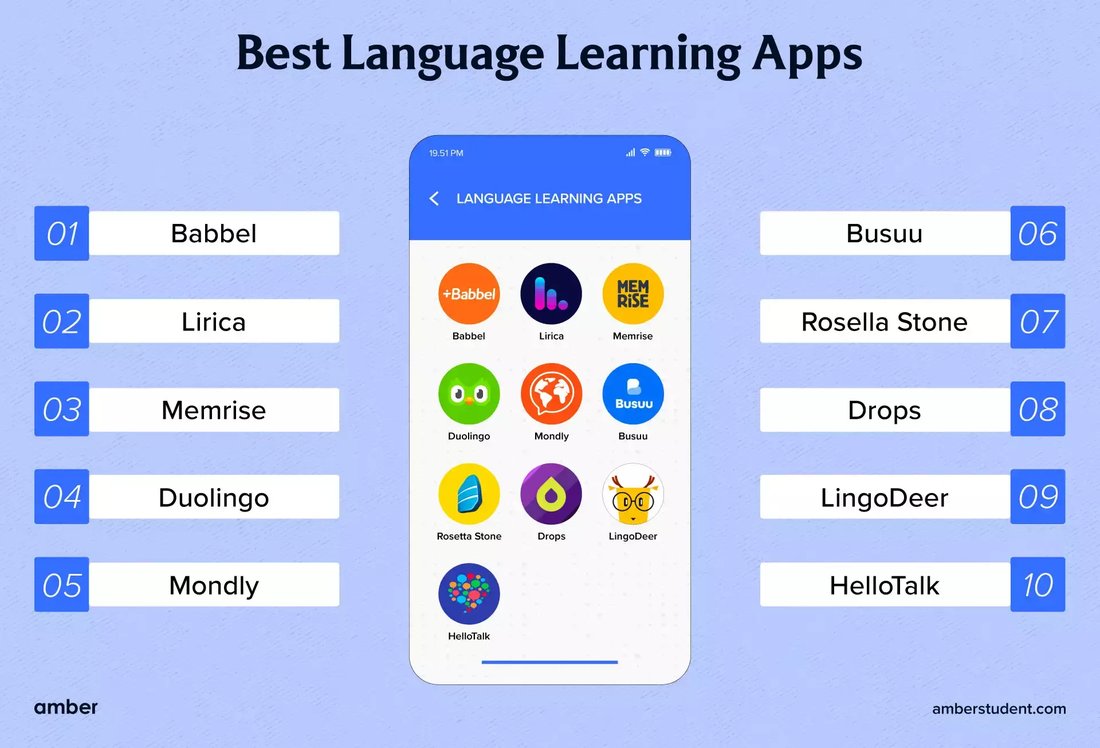
Selecting from the best mobile apps for learning a new language depends on your style: Gamified (Duolingo), structured (Babbel), immersive (Rosetta Stone), vocab-focused (Memrise/Drops), social (Busuu/HelloTalk). Consider languages offered, pricing (free vs. paid), offline access, and iOS/Android compatibility. Combine apps—use Duolingo for basics and HelloTalk for practice. Track progress with streaks and set goals. Studies show 20-30 minutes daily yields best results. Free trials help test fits.
For SEO optimization, search “best apps to learn Spanish” or “free language apps 2023” to find tailored options. Parental controls in Duolingo make it family-friendly.
Conclusion: Start Your Language Journey Today
The best mobile apps for learning a new language democratize education, fitting seamlessly into busy lives. Duolingo leads in popularity, while specialized apps like Rosetta Stone offer depth. Download a few, commit daily, and watch your skills soar. Whether mastering Mandarin for business or Italian for vacation, these tools pave the way to global communication. Ready to dive in? Your first lesson awaits!