
The Science of Habit Formation: How to Make Good Habits Stick
In today’s fast-paced world, mastering the art of habit formation can be a game-changer for personal and professional success. But what does science say about how habits are formed and how to make good habits stick? Habit formation isn’t just about willpower; it’s rooted in neuroscience, psychology, and behavioral science. This article dives deep into the science of habit formation, debunking myths and providing actionable strategies to help you build lasting good habits that transform your life.
Whether you’re aiming to exercise regularly, eat healthier, read more, or boost productivity, understanding the mechanisms behind habit formation is key. Research shows that habits account for about 40% of our daily behaviors, often operating on autopilot. By leveraging the science of habit formation, you can rewire your brain to prioritize positive routines over detrimental ones. Let’s explore the neurological foundations and proven techniques to make good habits stick.
The Neuroscience of Habit Formation
Feature Video
At the core of habit formation lies the brain’s basal ganglia, a region responsible for coordinating voluntary movements and ingrained behaviors. Neuroscientist Ann Graybiel’s studies at MIT revealed that habits form through a process called “chunking,” where the brain converts sequences of actions into automatic routines. Initially, performing a new behavior requires intense focus from the prefrontal cortex, the brain’s executive center. Over time, with repetition, this control shifts to the basal ganglia, freeing up mental resources for other tasks.
Dopamine plays a starring role in this process. Often dubbed the “reward chemical,” dopamine surges not just when you receive a reward but in anticipation of it. This anticipation drives the habit loop, making behaviors repeatable. A study published in the Journal of Neuroscience demonstrated that rats navigating a maze released dopamine upon predicting food rewards, solidifying their path. In humans, this translates to why checking social media feels compulsive— the ping of notifications triggers dopamine hits.
Understanding this neuroplasticity—the brain’s ability to reorganize itself—empowers you to make good habits stick. Repetition strengthens neural pathways, turning effortful actions into effortless ones. On average, it takes 66 days for a new behavior to become automatic, according to a UCL study led by Phillippa Lally, debunking the popular 21-day myth popularized by Maxwell Maltz in the 1960s.
The Habit Loop: Cue, Routine, Reward
Charles Duhigg’s bestselling book The Power of Habit popularized the habit loop model, based on research from MIT. This three-part cycle—cue, routine, reward—explains how habits operate. The cue is a trigger, like time of day or emotional state; the routine is the behavior; and the reward satisfies the craving.
For instance, stress (cue) might lead to snacking (routine) for comfort (reward). To make good habits stick, hack this loop. Identify cues for bad habits and replace routines with positive ones while keeping similar rewards. James Clear, in Atomic Habits, expands this into four laws: make it obvious (cue), attractive (craving), easy (response), and satisfying (reward).
Research from Duke University supports this. In habit-reversal training for nail-biting, participants substituted chewing gum for biting, maintaining the oral fixation reward. Applying this science, you can engineer environments where good habits thrive. Place running shoes by the door (obvious cue) or pair exercise with your favorite podcast (attractive reward).
Debunking Common Myths About Habit Formation

Many believe habits form overnight or require ironclad willpower. Science disagrees. The 21-day rule stems from Maltz’s observations of post-surgery patients, but Lally’s 2009 study of 96 participants found times ranging from 18 to 254 days, averaging 66. Complexity matters—simple habits like drinking water stick faster than gym routines.
Another myth: motivation is key. Behavioral economist Dan Ariely’s work shows motivation fluctuates, but systems endure. Focus on habit stacking—linking new habits to existing ones, like meditating after brushing teeth. A study in Health Psychology Review confirmed habit stacking increases adherence by 2-3 times.
Willpower depletion, or “ego fatigue,” is real per Roy Baumeister’s research, but habits bypass it by automating behaviors. Prioritize environment design over reliance on grit to make good habits stick long-term.
Proven Strategies to Build Lasting Good Habits
To harness the science of habit formation, start small. BJ Fogg’s Tiny Habits method advocates micro-behaviors, like flossing one tooth daily. A Stanford study showed participants scaling up naturally after starting tiny, achieving 85% success rates versus 30% for ambitious goals.
Implement the two-minute rule: scale habits to under two minutes. Want to read? Start with one page. This overcomes inertia, as Newton’s first law applies to behavior—objects (and actions) in motion stay in motion.
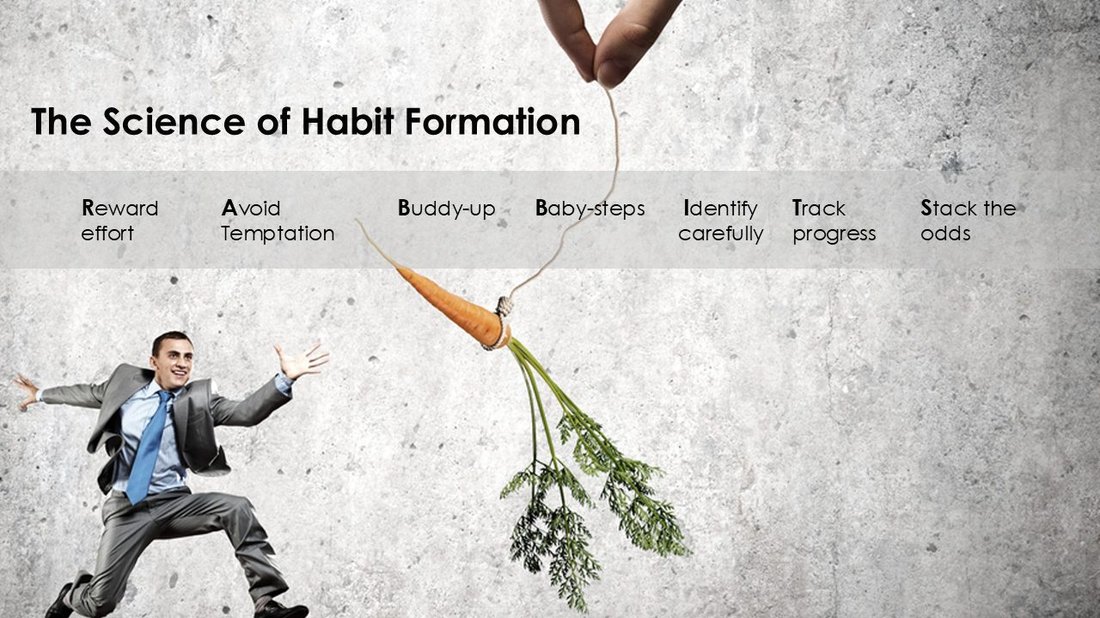
Track progress for satisfaction. Apps like Habitica gamify this, leveraging dopamine via streaks. A European Journal of Social Psychology study found tracking boosts completion by 42%. Use visual cues like chain calendars, as Jerry Seinfeld did for daily writing.
Environment shapes habits profoundly. A Cornell study revealed that 50% of eating behaviors stem from kitchen layout. Remove temptations—hide junk food, prep healthy snacks. Social proof works too; BJ Fogg notes joining groups multiplies success odds.
Nudge theory, from Richard Thaler, suggests defaults drive behavior. Auto-enroll in savings plans or gym classes. For good habits, pre-commit: schedule workouts like appointments.
Overcoming Obstacles in Habit Formation
Plateaus and relapses are normal. Wendy Wood’s research at USC indicates 43% of actions are habitual, but stress disrupts them. Build resilience with “if-then” plans: “If I miss a workout, then I’ll do 10 pushups.” Peter Gollwitzer’s implementation intentions increase success by 200-300%.
Accountability partners amplify results. A study in Annals of Behavioral Medicine showed social commitments double adherence. Apps like StickK use financial stakes—donate to disliked causes on failure.
Mindset matters. Carol Dweck’s growth mindset fosters persistence, viewing failures as learning. Reframe slips: one bad meal doesn’t ruin a diet; consistency compounds.
Real-World Examples and Case Studies
Consider British Cycling’s transformation under Dave Brailsford. Marginal gains—better bike seats, hand hygiene—led to Olympic dominance. This aggregation of tiny habits exemplifies science in action.
Corporate wellness programs using habit science report 25% productivity boosts. Google’s “Search Inside Yourself” mindfulness habit reduced burnout by 30%.
Conclusion: Make Good Habits Stick for Life
The science of habit formation reveals that good habits stick through deliberate design, not chance. By understanding the brain’s wiring, mastering the habit loop, and applying evidence-based strategies like tiny habits, tracking, and environment hacks, you can automate success.
Start today: pick one good habit, make it obvious, attractive, easy, and satisfying. Repetition rewires your brain— in 66 days, you’ll wonder how you ever lived without it. Embrace the science, and watch your life transform. For more on personal development, explore our resources on productivity and mindset mastery.
(Word count: 1217)