
The Science Behind Why We Dream: Unraveling the Mysteries of Our Nightly Adventures
Introduction to the Enigma of Dreams
Feature Video
Dreams have captivated humanity for millennia, serving as portals to the subconscious, sources of inspiration, and subjects of endless debate. From ancient civilizations interpreting them as divine messages to modern scientists probing their neurological roots, the question “Why do we dream?” remains one of the most intriguing puzzles in neuroscience and psychology. This article delves into the science behind why we dream, exploring the biological mechanisms, evolutionary purposes, and cognitive functions that make dreaming a universal human experience. Understanding the science of dreaming not only sheds light on sleep health but also enhances our grasp of memory, emotion, and creativity.
Every night, as we slip into slumber, our brains orchestrate vivid narratives—sometimes bizarre, often emotional—that unfold in the theater of the mind. Research shows adults dream for about two hours per night, with dreams occurring primarily during rapid eye movement (REM) sleep. But what drives this phenomenon? Is it random neural firing, emotional processing, or an evolutionary survival tool? Let’s unpack the evidence from sleep studies, brain imaging, and psychological theories to reveal why we dream.
The Sleep Cycle: Where Dreams Take Center Stage

To comprehend why we dream, we must first understand the architecture of sleep. Sleep isn’t a uniform state but cycles through four stages: three non-REM (NREM) phases and one REM phase, repeating every 90-110 minutes. NREM stages 1 and 2 are light sleep, transitioning to deep slow-wave sleep in stage 3, crucial for physical restoration. REM sleep, however, is the dream-rich phase, characterized by rapid eye movements, increased brain activity resembling wakefulness, and temporary muscle paralysis (atonia) to prevent acting out dreams.
Discovered in 1953 by Eugene Aserinsky and Nathaniel Kleitman at the University of Chicago, REM sleep occupies 20-25% of total sleep time in adults. EEG scans during REM show heightened activity in the visual, motor, and emotional centers of the brain, explaining the vivid, narrative quality of dreams. Studies using fMRI reveal that during REM, the prefrontal cortex—responsible for logic and self-awareness—quiets down, allowing uninhibited imagery to flourish. This deactivation might explain why dreams often defy logic, blending memories and fantasies seamlessly.
Why REM specifically? Deprivation experiments, like those conducted by William Dement in the 1950s, showed that blocking REM leads to rebound effects—more intense dreaming upon restoration—suggesting an essential function. Without REM, cognitive impairments emerge, hinting that dreaming serves critical roles beyond mere entertainment.
Leading Scientific Theories on Why We Dream

Several theories attempt to explain the purpose of dreams, each backed by varying degrees of empirical evidence. Sigmund Freud’s psychoanalytic theory posits dreams as wish fulfillment, guardians of sleep expressing repressed desires symbolically. While influential, modern neuroscience largely dismisses it due to lack of testable predictions.
The activation-synthesis theory, proposed by J. Allan Hobson and Robert McCarley in 1977, views dreams as the brain’s attempt to make sense of random signals from the brainstem during REM. Pons-generated pons-geniculo-occipital (PGO) waves stimulate visual and motor areas, and higher brain regions weave these into coherent stories. This bottom-up model emphasizes physiological triggers over psychological meaning, supported by PET scans showing chaotic activation patterns.
Contrastingly, the threat simulation theory by Antti Revonsuo argues dreams evolved to simulate threats, rehearsing survival responses. In ancestral environments, dreaming of predators or dangers improved real-world vigilance. Evidence includes surveys where 75% of dreams involve negative emotions or aggression, and lucid dreaming studies where practicing threat responses enhances performance.
Another compelling framework is the memory consolidation hypothesis. Dreams help process daily experiences, strengthening neural connections. Research from the 2000s, including Matthew Walker’s at UC Berkeley, demonstrates that REM sleep enhances emotional memory while weakening overactive amygdala responses, aiding regulation. Spaced repetition in dreams reinforces learning, explaining why students dream of exams.
The Neurobiology of Dreaming: Brain Chemistry Unveiled
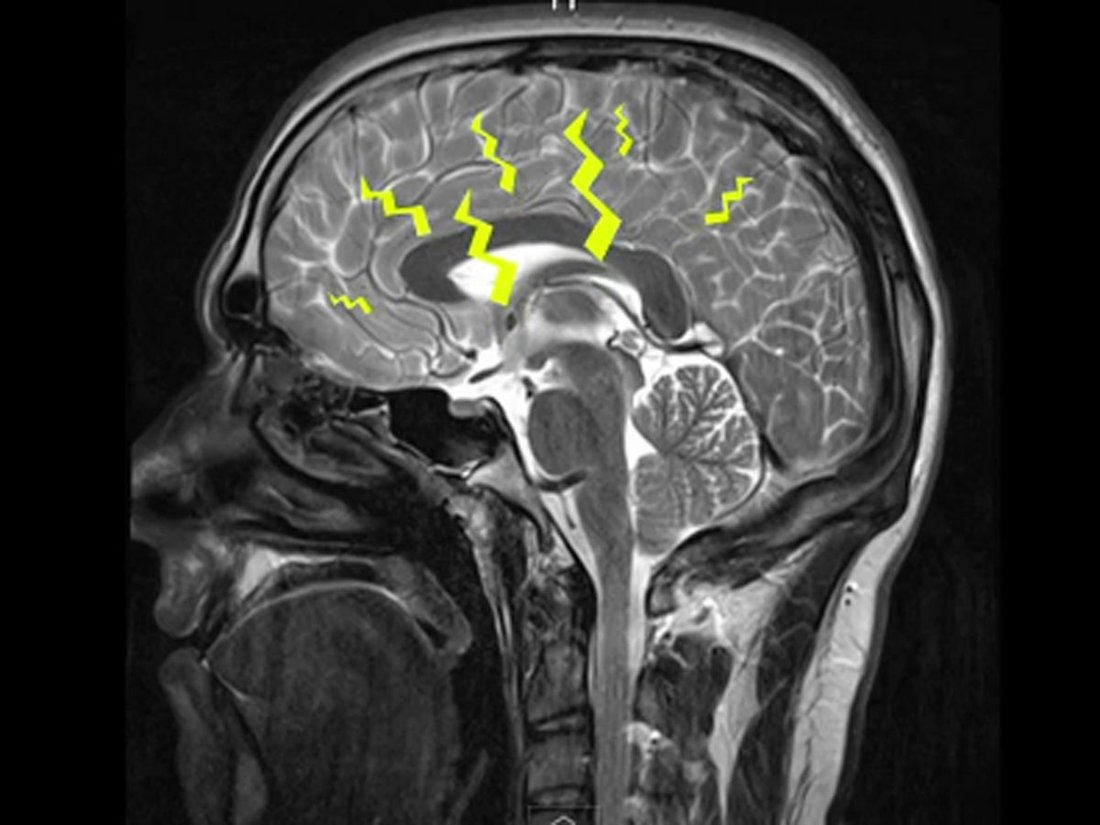
Dreaming’s science hinges on neurochemistry. During REM, acetylcholine surges in the brainstem, promoting vivid hallucinations akin to psychedelics. Meanwhile, serotonin and norepinephrine levels plummet, mimicking certain antidepressants’ side effects like dream intensification. The default mode network (DMN), active in mind-wandering, lights up, fostering autobiographical simulations.
Key brain regions include the amygdala for emotional intensity, hippocampus for memory integration, and temporal lobes for bizarre elements (linked to temporal lobe epilepsy’s dream-like seizures). A 2017 study in Nature Neuroscience used machine learning on fMRI data to predict dream content from brain patterns, achieving 60% accuracy for objects and actions—proof of dreaming’s tangible neural signature.
Neuroplasticity plays a role too. Dreams facilitate synaptic pruning, clearing irrelevant connections while fortifying important ones. This “overnight therapy” explains why sleep solves problems; chemist August Kekulé reportedly dreamed of the benzene ring’s structure in 1865.
The Functions of Dreams: Beyond Mystery to Utility

Empirical studies affirm dreams’ adaptive functions. A 2010 meta-analysis in Psychological Bulletin linked REM sleep to improved insight problem-solving. Participants solving puzzles after REM-rich sleep outperformed others, suggesting dreams incubate creativity by recombining ideas.
Emotionally, dreams desensitize us to stressors. Harvard’s Rosalind Cartwright found post-divorce patients with more REM-dream recall recovered faster, processing grief symbolically. Nightmares, though distressing, may serve as exposure therapy, with treatments like Imagery Rehearsal Therapy rewriting scripts to reduce frequency.
Evolutionarily, dreaming might optimize social cognition. Dreams often feature familiar people, practicing empathy and conflict resolution. A 2020 study in Philosophical Transactions posits dreams as “offline simulators” for social scenarios, vital in group-living primates.
Lucid Dreaming and the Future of Dream Research
Lucid dreaming—aware control within dreams—affects 55% of people occasionally. Stephen LaBerge’s eye-signal experiments confirmed it, showing prefrontal reactivation. Techniques like MILD (mnemonic induction) boost lucidity, with applications in PTSD therapy and skill acquisition (e.g., athletes rehearsing moves).
Emerging tech like targeted dream incubation (TDI) uses audio cues during REM to influence content, per Northwestern University’s 2021 study. Wearables tracking sleep could soon enable “dream engineering” for learning or healing.
Conclusion: Decoding Why We Dream

The science behind why we dream reveals a multifaceted process: part physiological housekeeping, part emotional gym, part evolutionary relic. No single theory fully explains it, but converging evidence—from activation-synthesis’ randomness to consolidation’s utility—paints dreams as essential for brain health. Prioritizing sleep hygiene maximizes dreaming’s benefits, warding off disorders like insomnia-linked depression.
As research advances with AI dream decoders and neurofeedback, we edge closer to harnessing dreams’ power. Whether threat rehearsals, memory fortifiers, or creative sparks, dreams underscore our brain’s ingenuity. Next time you wake from a vivid reverie, remember: it’s not just whimsy—it’s science at work, shaping who we are.
(Word count: 1,248)