
How to Overcome Jet Lag: A Science-Backed Guide
Jet lag is the unwelcome travel companion that disrupts your body clock after long-haul flights, leaving you fatigued, irritable, and out of sync with your destination’s time zone. Affecting millions of travelers annually, jet lag symptoms include insomnia, daytime sleepiness, digestive issues, and cognitive fog. But with science-backed strategies, you can minimize its impact and reclaim your trip. This comprehensive guide draws from circadian rhythm research, sleep science, and expert recommendations from organizations like the American Academy of Sleep Medicine to help you overcome jet lag effectively.
Understanding the mechanisms of jet lag empowers better prevention. Studies published in journals like Current Biology highlight how rapid time zone shifts desynchronize your internal clock—the suprachiasmatic nucleus (SCN) in the brain—from local solar time. Eastward travel (advancing your clock) is often harder than westward (delaying it), as humans adapt more easily to longer days. Melatonin suppression from cabin lights and dehydration exacerbate the issue. By aligning light exposure, sleep schedules, and nutrition pre- and post-flight, you can accelerate resynchronization by up to 50%, per NASA chronobiology research.
Understanding Jet Lag: The Science Behind the Disruption
Feature Video
Jet lag, clinically termed “circadian misalignment,” occurs when your body’s 24-hour rhythm clashes with the new environment. The circadian system regulates sleep-wake cycles via hormones like melatonin (peaks at night) and cortisol (peaks in morning). Crossing multiple time zones—typically three or more—shifts these peaks unnaturally. A landmark study in Science (2007) showed that each hour of time difference delays adaptation by about one day, though individual factors like age, chronotype (morning lark vs. night owl), and travel direction influence severity.
Key symptoms stem from this mismatch: Phase advance (eastbound) causes early awakenings and afternoon slumps; phase delay (westbound) leads to evening alertness and morning grogginess. Dehydration from low cabin humidity (10-20%) impairs cognition, while irregular meals disrupt the gut microbiome, linked to mood via the gut-brain axis. Research from the Journal of Physiology confirms that combining behavioral adjustments with timed light therapy realigns rhythms faster than rest alone.
Pre-Flight Preparation: Set Your Internal Clock Early

Start combating jet lag days before departure. Gradually shift your sleep schedule 1-2 hours daily toward your destination’s time zone. For a flight from New York to London (5-hour advance), go to bed and wake up earlier progressively. Apps like Timeshifter use algorithms based on your itinerary, chronotype, and flight details to provide personalized plans, validated by studies showing 2-3x faster recovery.
Optimize nutrition with strategic meal timing. Avoid heavy meals 12-24 hours pre-flight; opt for light, protein-rich foods to stabilize blood sugar. Hydrate aggressively—aim for 8-10 glasses of water daily—and limit caffeine/alcohol, which fragment sleep. A study in Aviation, Space, and Environmental Medicine found pre-hydration reduces headache incidence by 40%. Exercise mid-afternoon to boost circadian amplitude, enhancing adaptability.
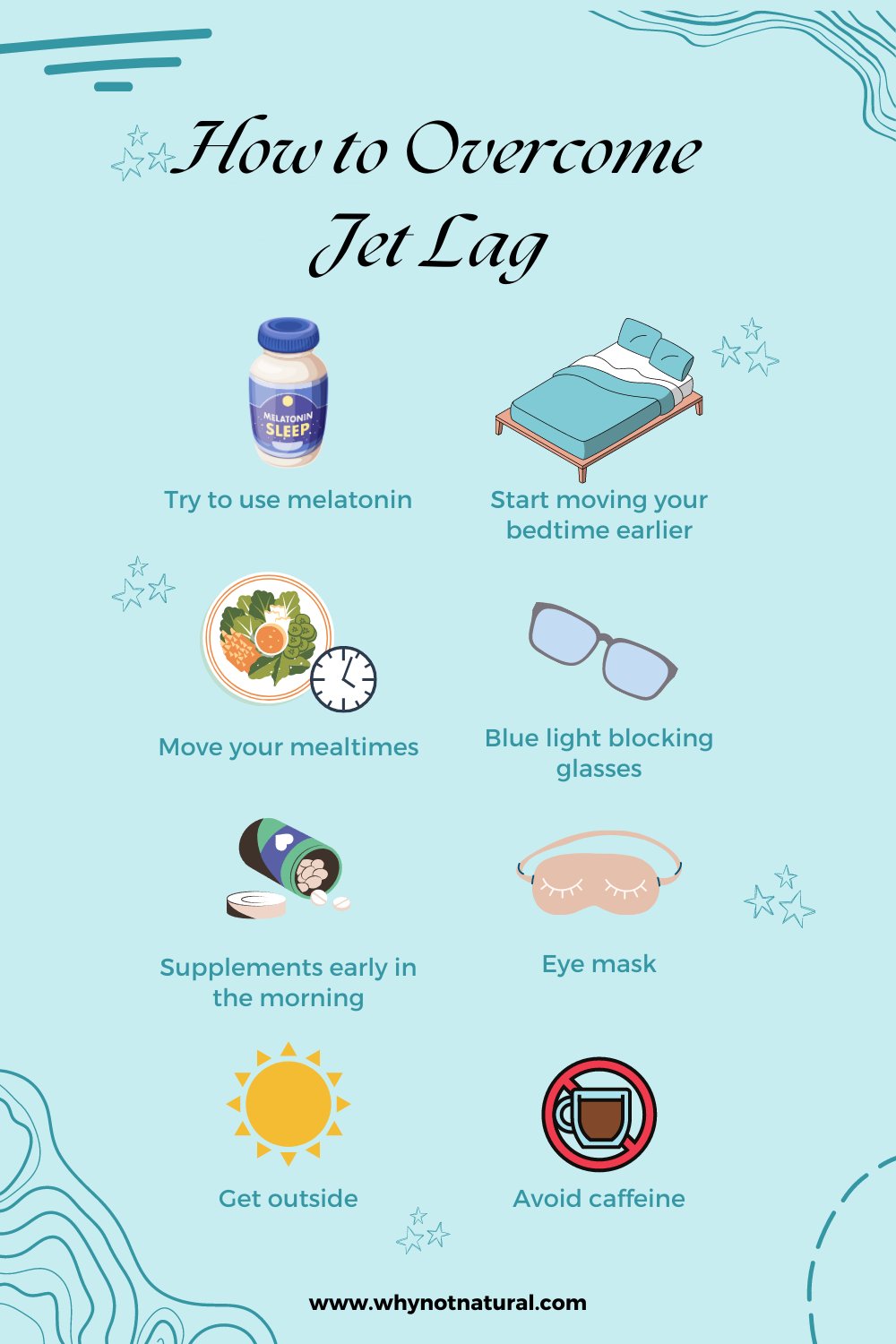
Light exposure is crucial. For eastward travel, seek morning bright light (or use a 10,000-lux light box for 30 minutes); for westward, evening light delays your clock. Blue-blocking glasses at night preserve melatonin, per Harvard Medical School research.
During the Flight: Strategies for Minimal Disruption

In-flight habits can make or break recovery. Set your watch to destination time upon boarding and align behaviors accordingly. For daytime arrivals, stay awake; for overnight, sleep strategically.
Prioritize hydration: Drink 8 oz water hourly, avoiding alcohol (diuretic, REM-suppressing) and caffeine (beyond mild morning use). Compression socks prevent deep vein thrombosis while improving circulation for better sleep. Move every 2 hours—simple stretches enhance melatonin production.
Sleep aids: Use eye masks, earplugs, and neck pillows. Melatonin (0.5-5mg) timed to destination bedtime advances the clock eastward, effective per a meta-analysis in PLOS ONE (showing 30-minute earlier sleep onset). Avoid sedatives like Ambien, which cause “traveler’s amnesia.” Choose seats with extra legroom or window for light control. Jet lag apps remind you when to eat/sleep, syncing with cabin conditions.
Upon Arrival: Rapid Resynchronization Techniques
Your first day sets the tone. Expose yourself to natural sunlight immediately—morning for eastbound, afternoon for westbound—to reset the SCN. A University of Colorado study demonstrated that 1-2 hours of outdoor light halves adaptation time. If indoors, use light therapy devices emitting 2,500-10,000 lux.
Stick to local meal and sleep times rigidly. Nap sparingly (20-30 minutes early afternoon max) to avoid deeper circadian debt. High-intensity exercise upon waking boosts alertness via endorphins and temperature rhythm shifts. Caffeine strategically: Consume upon “morning” arrival for cortisol synergy, tapering off post-noon.
Recovery accelerates with consistent routines. Track symptoms via journals or wearables like Oura Ring, which monitor HRV and predict jet lag severity. For severe cases, short-term melatonin (3mg nightly for 3 days) or low-dose chronotherapy (e.g., 1mg at local bedtime) proves efficacious in clinical trials.
Supplements and Natural Remedies Backed by Evidence
Beyond basics, science supports select aids. Melatonin tops the list: Endorsed by the Mayo Clinic, 0.5-5mg doses (lower for sensitivity) realign rhythms without grogginess. Tryptophan-rich foods (turkey, bananas) or supplements boost serotonin-to-melatonin conversion.
Magnesium (300-400mg glycinate form) aids muscle relaxation and GABA receptors for deeper sleep, per Nutrients journal. Adaptogens like ashwagandha reduce stress-induced cortisol spikes, with a 2019 study showing improved sleep quality post-travel. Avoid unproven remedies like cherry juice without robust RCTs; focus on hydration-supporting electrolytes (sodium, potassium).
Advanced Tips for Frequent Flyers and Special Cases
Frequent travelers benefit from “circadian banking”: Extra sleep pre-trip buffers deficits. Athletes or shift workers use chronotype-specific protocols. For kids, prioritize routine maintenance over meds; elderly may need lower melatonin doses due to sensitivity.
Tech integration: Wearables (Fitbit, Whoop) provide real-time circadian insights. Virtual reality apps simulate destination sunrises. Long-term, building sleep hygiene—consistent bedtimes, cool/dark rooms—fortifies resilience.
Common Myths Debunked
Myth: Alcohol helps sleep on planes. Reality: It suppresses REM, worsening next-day fatigue (FAA studies). Myth: Jet lag lasts a fixed day-per-hour. Reality: Varies by genetics (PER3 gene polymorphisms). Myth: No prevention possible. Reality: Proactive steps cut duration by 50-70%.
In conclusion, overcoming jet lag demands a multifaceted, evidence-based approach targeting light, sleep, nutrition, and movement. By preemptively adjusting your circadian rhythm, optimizing in-flight conditions, and resynchronizing swiftly upon arrival, you’ll spend less time recovering and more enjoying your destination. Consult a doctor for personalized advice, especially with sleep disorders. Safe travels—science has your back.
(Word count: 1,248)