
Desk Stretches: 7 Easy Exercises to Combat Sitting All Day
Prolonged sitting at a desk is a modern workplace reality for millions, leading to issues like back pain, poor posture, neck stiffness, and reduced circulation. But fear not—incorporating simple desk stretches into your routine can counteract these effects without leaving your chair. This article explores seven easy exercises designed specifically for office workers to combat the downsides of sitting all day. These desk stretches for back pain, neck relief, and overall mobility are quick, require no equipment, and can be done discreetly. Regular practice improves flexibility, boosts energy, and enhances productivity. Let’s dive into why these matter and how to perform them effectively.
Why Desk Stretches Are Crucial for Sedentary Workers
Feature Video
Sitting for eight or more hours daily shortens muscles, weakens the core, and compresses the spine, contributing to chronic conditions like sciatica and repetitive strain injuries. According to the World Health Organization, physical inactivity is a leading risk factor for non-communicable diseases. Desk stretches counteract this by promoting blood flow, releasing endorphins, and realigning the body. Studies from the Journal of Physical Therapy Science show that brief stretching breaks reduce musculoskeletal pain by up to 30%. Aim for 2-3 minutes every hour. These seven easy office stretches target key areas: neck, shoulders, back, hips, and legs.
1. Neck Side Tilt Stretch
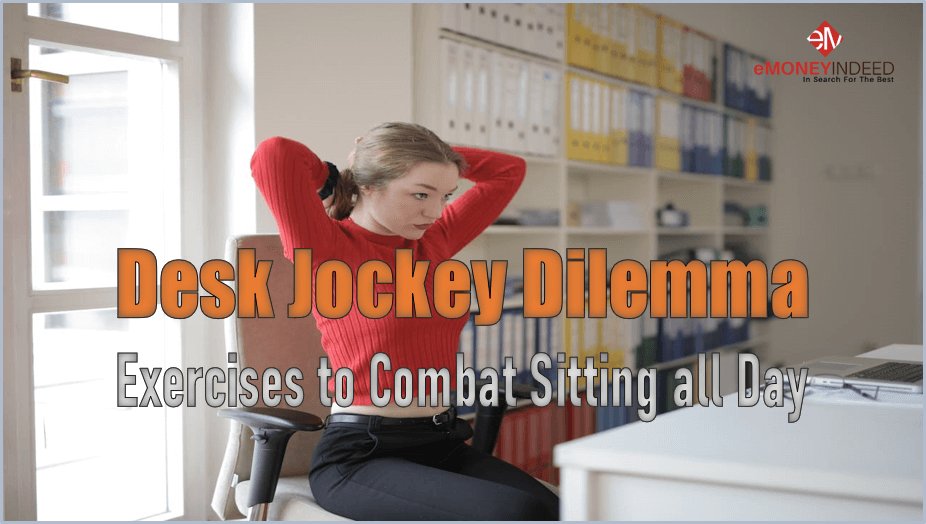
The neck bears the brunt of hunching over screens, causing tension headaches and stiffness. This foundational desk stretch for neck pain relieves it in seconds.
How to do it: Sit tall with feet flat. Gently tilt your head to the right, bringing your ear toward your shoulder without lifting the shoulder. Hold for 20-30 seconds, feeling the stretch along the left side of your neck. Switch sides. Repeat 2-3 times per side.
Benefits: Improves range of motion, reduces tension from poor posture, and prevents “tech neck.” For variation, add a gentle hand assist by placing your right hand on your head for deeper stretch—never pull forcefully. Incorporate this after long email sessions to reset your neck alignment.
2. Shoulder Rolls and Shrugs
Shoulders round forward during typing, leading to upper back knots. Shoulder rolls are a dynamic desk exercise to combat sitting that lubricates joints and releases trapezius tightness.
How to do it: Inhale and lift shoulders toward ears (shrug), then roll them back and down on exhale. Do 10 rolls forward, then 10 backward. Follow with 5-second shrugs, releasing fully between reps.
Benefits: Enhances posture, increases shoulder mobility, and counters desk hunch. A study in the Scandinavian Journal of Work, Environment & Health found such micro-breaks cut shoulder discomfort by 25%. Pair with deep breaths for stress relief—perfect for high-pressure deadlines.
3. Seated Forward Fold
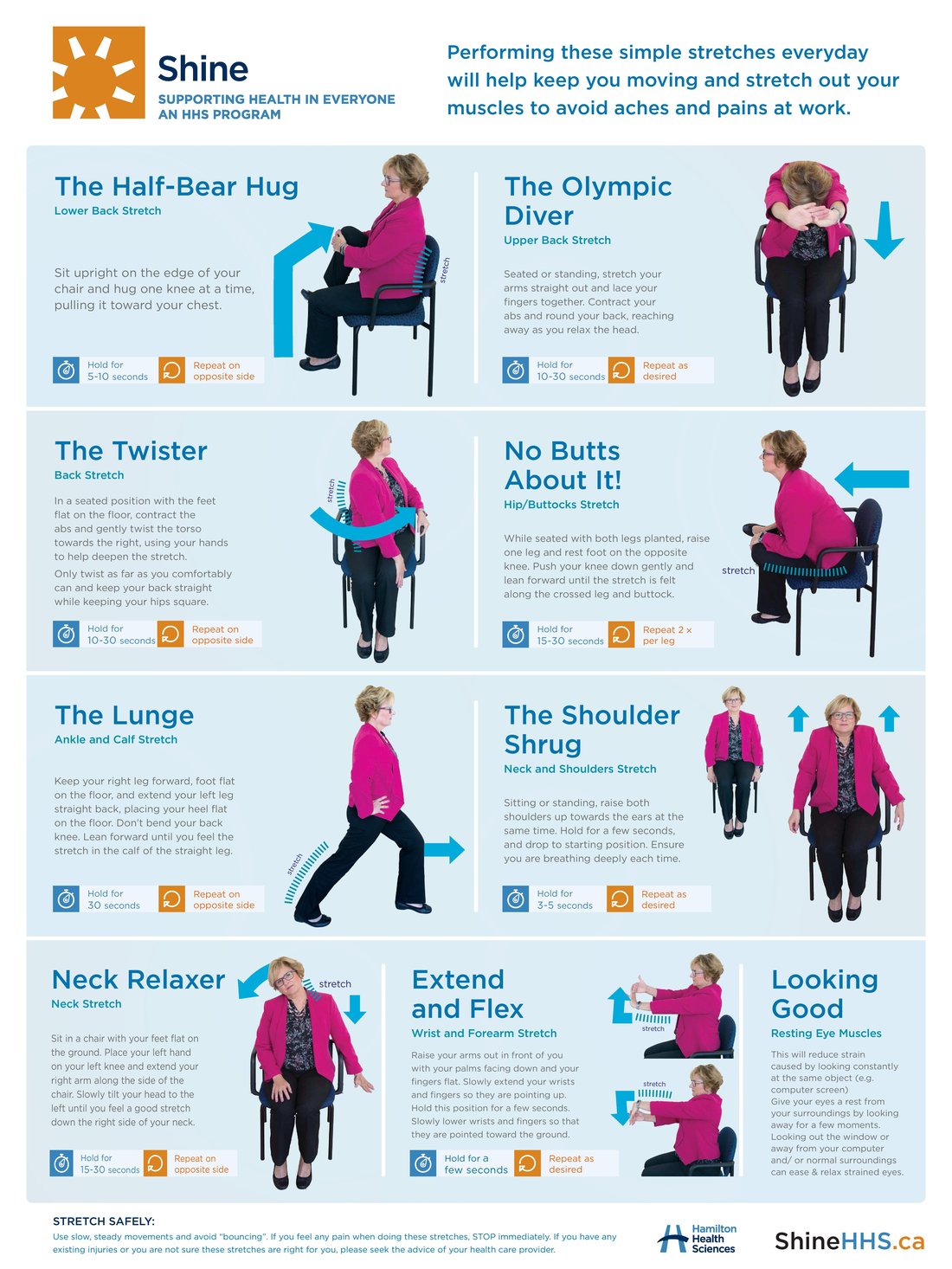
Hamstrings and lower back tighten from constant sitting, compressing spinal discs. This seated desk stretch elongates the posterior chain safely from your chair.
How to do it: Feet hip-width, knees bent slightly. Hinge at hips, reaching arms forward toward feet or shins. Keep back straight initially, then round gently. Hold 30 seconds, breathing deeply. Sit up slowly.
Benefits: Decompresses the spine, stretches hamstrings, and calms the nervous system. Ideal for lower back pain relief after meetings. Modify by using a desk edge for support if flexibility is limited. Regular use builds tolerance to prolonged sitting.
4. Chest Opener Stretch
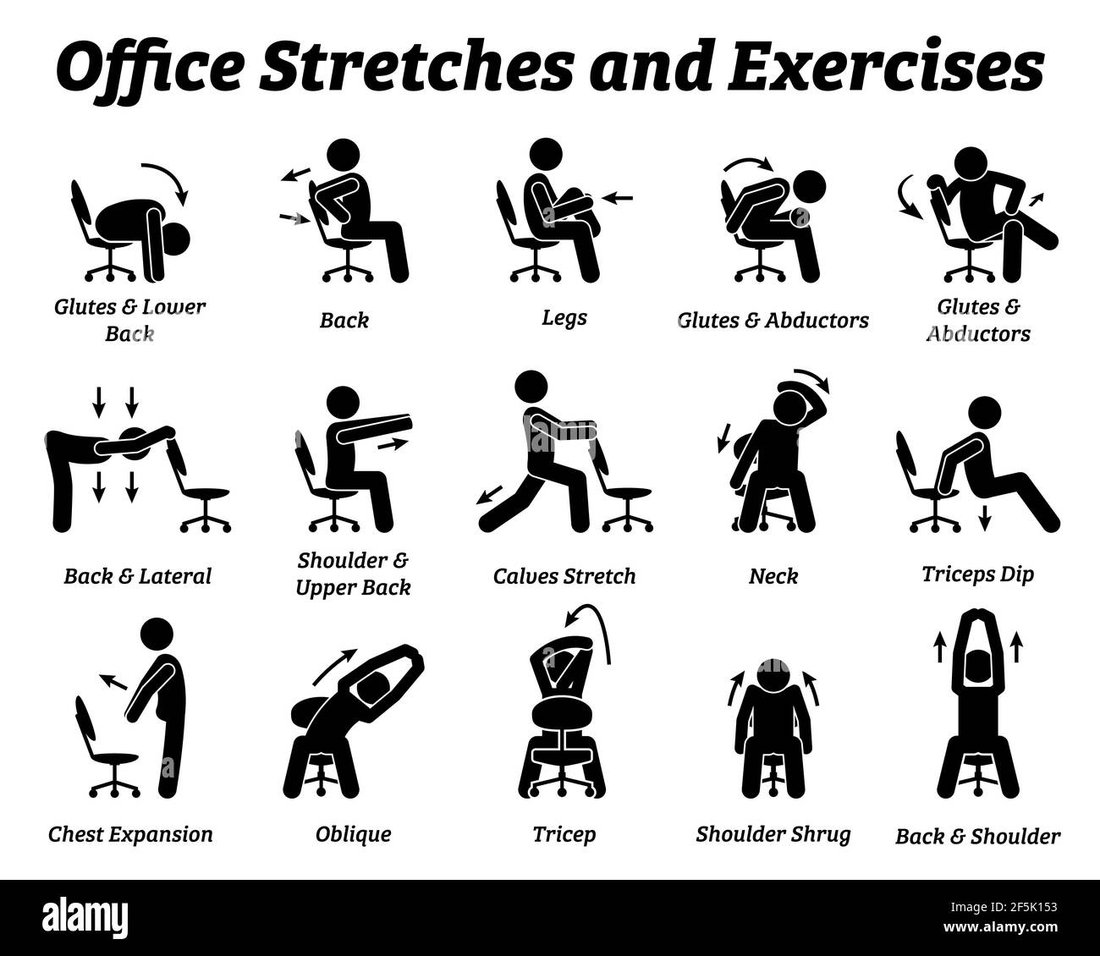
Slouching closes the chest, restricting breathing and straining the upper back. Open it up with this simple move to restore thoracic extension.
How to do it: Clasp hands behind your back, straighten arms, and lift slightly while squeezing shoulder blades together. Gaze upward gently. Hold 20-30 seconds, repeat 3 times.
Benefits: Counteracts forward head posture, improves lung capacity, and alleviates rounded shoulders. Research from Ergonomics journal links chest stretches to better respiratory function in office settings. Do this post-lunch slump for an energy boost.
5. Wrist and Forearm Stretch
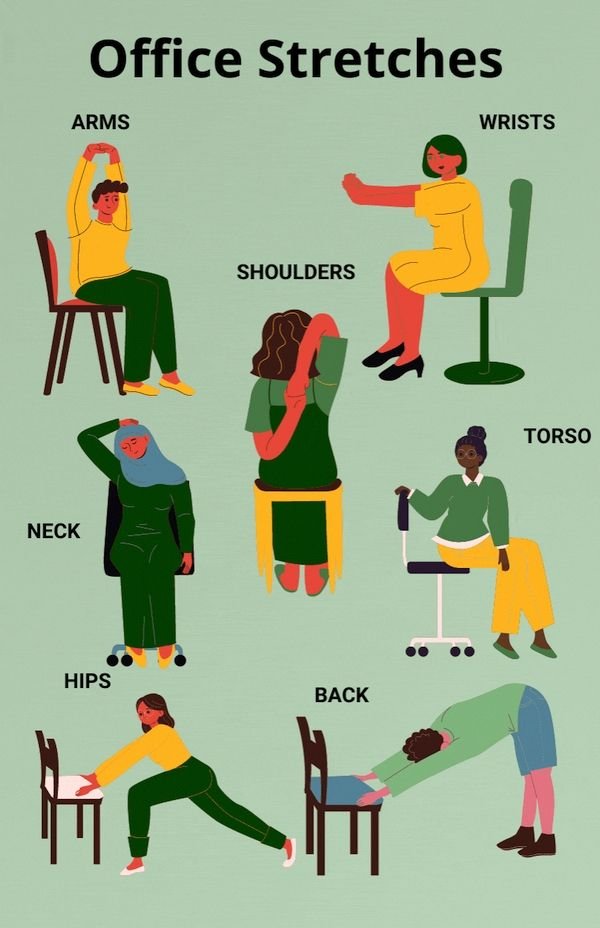
Typing and mousing strain wrists, risking carpal tunnel syndrome. This dual stretch keeps forearms supple and prevents RSI.
How to do it: Extend right arm forward, palm up. Use left hand to pull fingers back gently toward body (flexor stretch), hold 20 seconds. Flip palm down, pull fingers toward floor (extensor stretch), hold 20 seconds. Switch arms.
Benefits: Enhances grip strength, reduces inflammation, and promotes circulation to hands. The American Journal of Industrial Medicine reports stretching cuts wrist pain by 40% in desk jobs. Essential for writers and data entry pros—do hourly.
6. Seated Spinal Twist
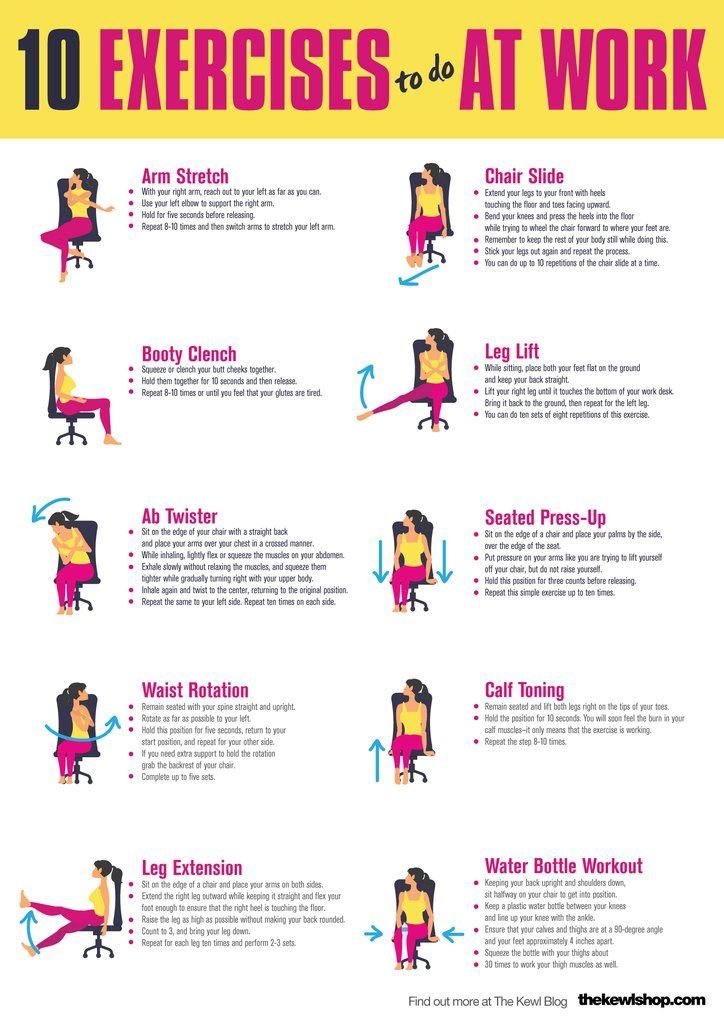
Desk life twists the spine unnaturally; this detoxifies organs and mobilizes the torso.
How to do it: Sit sideways in chair, right hand on left knee, left hand behind on chair back. Twist torso right, looking over shoulder. Hold 30 seconds, switch sides.
Benefits: Massages digestive tract, relieves mid-back tension, and improves spinal rotation. Yoga Journal studies confirm twists aid digestion, combating sedentary bloating. Great for afternoon pick-me-up.
7. Ankle Circles and Calf Stretch
Legs go numb from static positioning, impairing circulation and causing varicose veins. Revitalize lower limbs with this finisher.
How to do it: Lift right foot, rotate ankle 10 times clockwise, 10 counterclockwise. Then, extend leg, flex foot, and use hands or desk to pull toes toward shin for calf stretch (20 seconds). Alternate legs.
Benefits: Boosts venous return, strengthens ankles, and prevents plantar fasciitis. Circulation research shows ankle mobility exercises reduce swelling by 35%. Finish your routine here to stand energized.
Tips for Incorporating Desk Stretches into Your Day
To maximize these exercises to combat sitting all day, set phone reminders for hourly breaks. Combine with the 20-20-20 rule: every 20 minutes, look 20 feet away for 20 seconds. Track progress in a journal—note pain reduction after two weeks. Consult a doctor for chronic issues. Hydrate and stand periodically for synergy. Workplaces increasingly support “active sitting” via standing desks, but stretches bridge gaps.
Bonus: Create a sequence—neck, shoulders, forward fold, chest, wrists, twist, ankles—in under 10 minutes. Share with colleagues for group wellness challenges. These aren’t gym workouts; they’re sustainable habits yielding long-term gains.
Conclusion: Reclaim Your Body from the Desk
Sitting all day doesn’t have to mean suffering. These seven easy desk stretches empower you to stay limber, pain-free, and focused. Consistency is key—start today, and feel the transformation. Prioritize your health amid deadlines; your future self will thank you. For more office fitness tips, explore related wellness content.
(Word count: 1217)