
The ‘Time Blocking’ Method Explained: Your Guide to a Focused Day
In today’s fast-paced world, maintaining focus amid endless distractions is a challenge. Emails ping constantly, social media beckons, and unexpected tasks derail your plans. Enter the time blocking method, a powerful productivity technique that transforms chaos into structure. Popularized by productivity experts like Cal Newport and David Allen, time blocking involves scheduling your entire day into dedicated blocks of time for specific tasks. This guide explains the time blocking technique, its benefits, and how to implement it for a more focused day.
Whether you’re a busy professional, entrepreneur, student, or parent, mastering time blocking can boost efficiency, reduce stress, and help you achieve your goals. By allocating fixed time slots to activities, you eliminate decision fatigue and prioritize what matters most. Studies from the American Psychological Association show that structured routines enhance concentration and output. Ready to reclaim your day? Let’s dive into the details of this game-changing time blocking strategy.
What is Time Blocking?
Feature Video
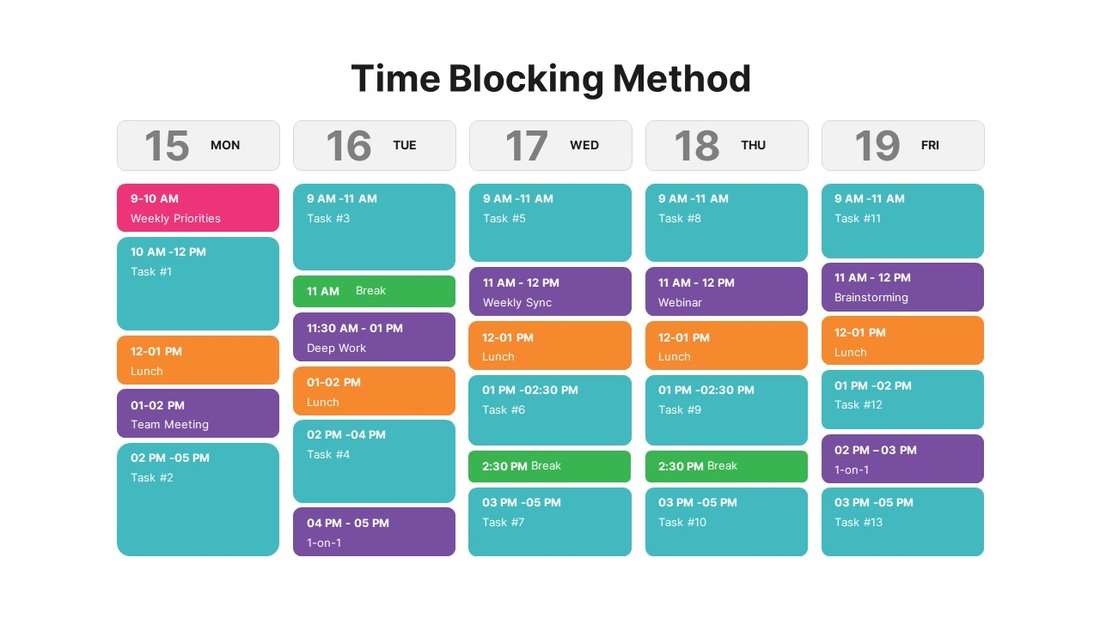
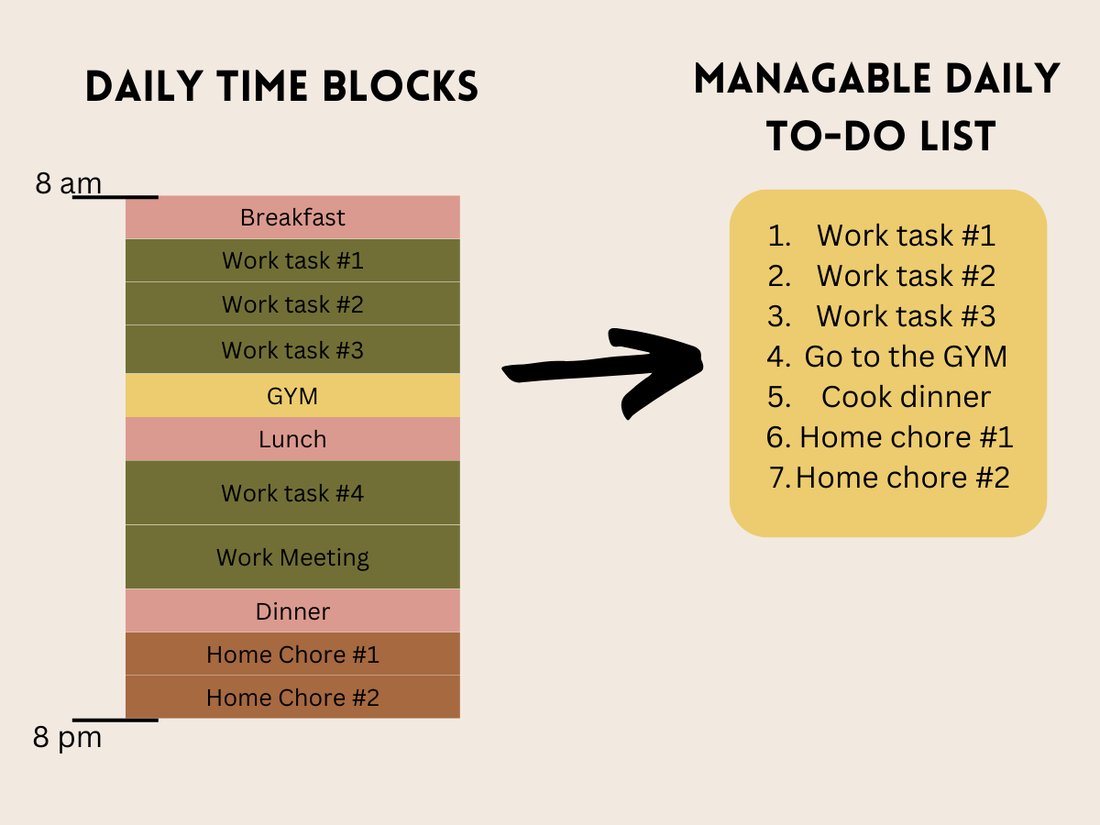
At its core, time blocking is a calendar-based system where you divide your day into blocks reserved for single tasks or activities. Unlike traditional to-do lists, which offer flexibility but often lead to multitasking, time blocking enforces strict boundaries. For example, instead of vaguely planning to “work on reports,” you might block 9:00 AM to 11:00 AM exclusively for that task.
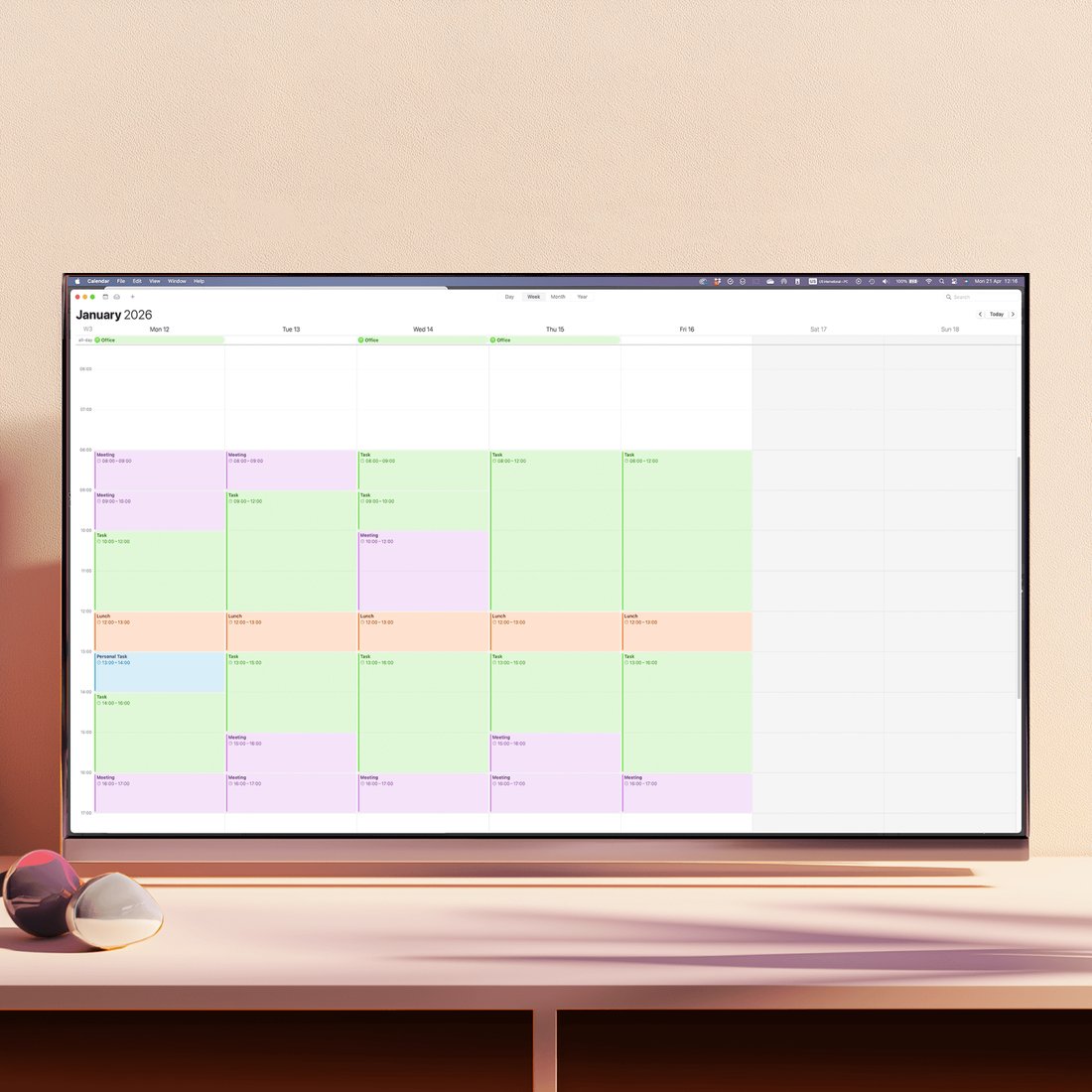
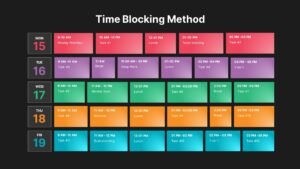
The concept draws from ancient practices like the monastic schedules of focused work periods but was modernized in the digital age. Cal Newport, in his book Deep Work, champions time blocking for enabling sustained concentration. It’s not rigid micromanagement; it’s intentional planning. You can use color-coding—blue for deep work, green for meetings, yellow for breaks—to visualize your day at a glance.
Time blocking variants include task batching (grouping similar tasks), day theming (dedicating days to themes like marketing or admin), and time boxing (setting hard stops). The key is realism: estimate durations accurately and build in buffers for transitions.
The Science Behind Time Blocking
Why does time blocking work? Neuroscience provides clues. The brain’s prefrontal cortex handles executive functions like focus, but it fatigues quickly—typically after 90 minutes of intense work, per ultradian rhythm research. Time blocks align with these natural cycles, incorporating breaks to recharge.
Psychologist Mihaly Csikszentmihalyi’s flow state theory supports this: deep immersion occurs when challenges match skills in uninterrupted slots. Multitasking, conversely, reduces IQ by up to 10 points, according to University of London studies. By blocking time, you minimize context-switching costs, which can waste 40% of productive time, per American Psychological Association data.
Moreover, time blocking combats Parkinson’s Law—work expands to fill available time—by imposing limits. It fosters the Zeigarnik effect in reverse: unfinished tasks linger mentally, but completed blocks provide closure and dopamine hits, motivating progression.
Benefits of the Time Blocking Method
Adopting time blocking yields transformative advantages. First, enhanced focus: Dedicated blocks create a “shutdown ritual,” signaling your brain to dive deep without interruptions. Professionals report 2-3x productivity gains.
Second, better work-life balance. By scheduling personal time—family dinners, exercise, hobbies—you protect non-work priorities. Elon Musk and Bill Gates swear by similar scheduling for balance amid demanding lives.
Third, stress reduction. A visualized calendar eliminates “monkey mind” worries about forgotten tasks. A RescueTime study found scheduled users experienced 20% less anxiety.
Fourth, scalability. It adapts to any lifestyle, from freelancers juggling gigs to executives in meetings. Track progress weekly to refine blocks, turning it into a habit loop via James Clear’s Atomic Habits principles.
Finally, it promotes long-term goal alignment. Weekly planning ensures high-impact tasks get prime slots, accelerating career and personal growth.
How to Implement Time Blocking: A Step-by-Step Guide
Getting started with time blocking for beginners is straightforward. Follow these steps for success.
Step 1: Audit Your Day. Track current activities for 3-5 days using apps like Toggl or RescueTime. Identify time-wasters like unchecked email (average 28% of workday).
Step 2: Define Priorities. List top goals using Eisenhower Matrix: urgent/important quadrants. Focus 80% of blocks on high-value tasks (Pareto Principle).
Step 3: Choose Your Tools. Digital calendars like Google Calendar, Outlook, or Notion shine with reminders and sharing. Analog fans prefer bullet journals. Apps like Reclaim.ai auto-schedule around habits.
Step 4: Plan the Night Before. Block your next day in 15-60 minute increments. Start with a 5-10 AM anchor block for peak energy (circadian rhythm peak). Include buffers (10-15% of day) and breaks (Pomodoro: 25/5).
Step 5: Protect Your Blocks. Communicate boundaries—use “Do Not Disturb” modes. During blocks, single-task ruthlessly.
Step 6: Review and Adjust. End-day review: What worked? Shift blocks based on energy levels (analytical morning, creative afternoon).
Time Blocking Examples for Different Lifestyles
For a freelancer: 8-10 AM client work, 10:30-12 PM emails/proposals, 1-3 PM deep creation, 4-5 PM admin, evenings family.
Office worker: 9-11 AM focused projects, 11-12 meetings, 1-3 PM collaborative tasks, 3-4 PM learning, post-5 unwind.
Student: 8-10 AM study block, 10:30-12 classes, 1-2 PM assignments, 3-4 PM exercise/group study, evenings review.
Parent/Entrepreneur: Theme days—Monday marketing, Tuesday product dev. Fixed family blocks ensure recharge.
Customize: Night owls shift to later starts; early risers front-load.
Best Tools and Apps for Time Blocking
Supercharge with tech. Google Calendar: Free, integrates with Gmail, color-coded events. Calendar.com: AI defenses against meetings.
Notion or Akiflow: All-in-one for tasks + calendar. Focus@Will: Music tailored for flow states during blocks.
Advanced: Clockwise optimizes team calendars; Sunsama daily planning rituals.
For mobile: Fantastical or Structured apps gamify blocking.
Common Time Blocking Mistakes and How to Avoid Them
Avoid pitfalls for sustainability. Mistake 1: Over-scheduling. Leave 20-30% flex time. Solution: Under-promise durations.
Mistake 2: Ignoring Energy Cycles. Match tasks to rhythms. Solution: Track with apps.
Mistake 3: No Buffers. Transitions eat time. Solution: 5-10 min gaps.
Mistake 4: Multitasking Creep. Solution: Phone in another room; accountability partner.
Mistake 5: Rigid Perfectionism. Life happens—reschedule gracefully. Weekly audits prevent burnout.
Real-Life Success Stories
Tim Ferriss blocks “creative mornings” for writing empires. Jack Dorsey themed Twitter days. Serhii Priadko, CEO, credits time blocking for 10x output. Beginners report 50% more tasks done in testimonials across Reddit’s r/productivity.
Conclusion: Start Time Blocking Today
The time blocking method isn’t a quick fix—it’s a mindset shift toward intentional living. Begin small: Block one day this week. Measure results, iterate, and watch focus soar. In a distracted era, time blocking is your superpower for a purposeful, productive life. Download a calendar app, map tomorrow, and experience the clarity. Your focused day awaits—what block will you create first?
(Word count: 1217)