
How to Ask for a Promotion (With a Script You Can Adapt and Use)
Asking for a promotion can feel daunting, but it’s a crucial step in advancing your career. Many professionals hesitate due to fear of rejection or uncertainty about how to approach the conversation. This comprehensive guide on how to ask for a promotion provides actionable steps, preparation tips, and a customizable script to help you confidently make your case. Whether you’re eyeing a managerial role, a senior position, or a well-deserved raise, mastering this skill can accelerate your professional growth. By the end, you’ll have the tools to turn your hard work into tangible rewards.
Understand Why You Deserve a Promotion
Feature Video
Before diving into logistics, reflect on your achievements. Promotions aren’t given; they’re earned through consistent value addition. Start by documenting your accomplishments over the past 6-12 months. Quantify your impact: Did you increase sales by 20%? Lead a team project that saved the company $50,000? Streamline processes to boost efficiency?
Research from Harvard Business Review shows that employees who proactively discuss their career goals are 20% more likely to receive promotions. Self-awareness is key. Assess your role’s responsibilities and compare them to the next level’s job description. Identify skill gaps and address them beforehand—take online courses, seek mentorship, or volunteer for stretch assignments. This preparation builds a compelling narrative: “I’ve outgrown my current role and am ready for more.”
Timing matters immensely. Avoid asking during company crises, right after a colleague’s layoff, or amid your own performance issues. Ideal windows include annual reviews, after major project successes, or when your boss has budget approval for hires. Schedule a dedicated meeting titled “Career Development Discussion” to signal intent without alarming anyone.
Prepare Your Promotion Pitch

Crafting a strong case requires strategy. Begin with a SWOT analysis of your position: Strengths (your wins), Weaknesses (areas to improve), Opportunities (company needs you can fill), Threats (internal competition). Tailor your pitch to your manager’s priorities—align your value with departmental goals, like revenue growth or innovation.
Gather endorsements. Ask colleagues or mentors for feedback letters highlighting your contributions. Update your resume and LinkedIn profile to reflect current achievements, even if not job-hunting. Practice your delivery: Rehearse in front of a mirror, record yourself, or role-play with a trusted friend. Aim for confidence without arrogance—use “we” language to show team orientation.
Anticipate objections. If your boss cites “no openings,” propose creating a new role or transitioning responsibilities. For skill concerns, outline your development plan. Prepare alternatives like a raise, more responsibilities, or a trial period in the higher role. Data from Glassdoor indicates that prepared candidates succeed 65% more often.
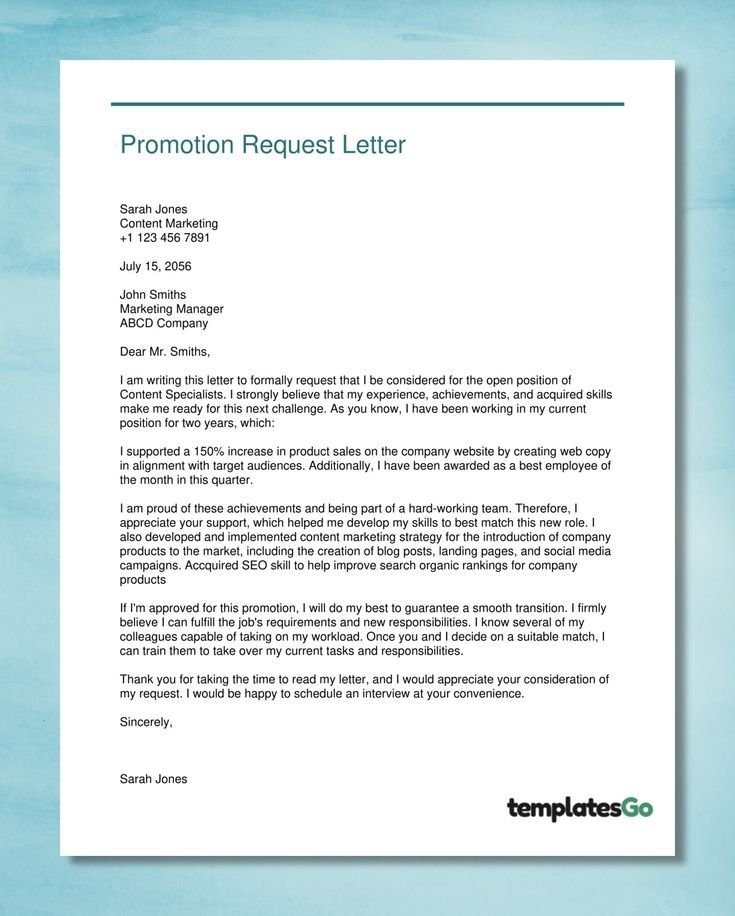
The Ultimate Promotion Request Script

Here’s a adaptable script for your one-on-one meeting. Customize it with specifics. Keep the conversation 15-20 minutes; follow up via email summarizing key points.
Opening (Build Rapport): “Thank you for meeting with me today. I’ve really enjoyed contributing to [team/department] over the past year and am excited about our upcoming goals.”
State Your Request Clearly: “I’d like to discuss my career progression. Based on my performance, I’m ready for a promotion to [specific role, e.g., Senior Marketing Manager].”
Present Evidence: “In the last quarter, I [achievement 1, e.g., ‘led the campaign that generated 30% more leads than target’]. Additionally, [achievement 2, e.g., ‘mentored two juniors, reducing onboarding time by 40%’]. These align with the responsibilities of the [target role], as outlined in the job description.”
Show Future Value: “In a promoted role, I can [future contribution, e.g., ‘expand our digital strategy to new markets, potentially increasing revenue by 25%’]. I’ve already started [proactive step, e.g., ‘researching tools like HubSpot for optimization’].”
Address Readiness: “To prepare, I’ve completed [certification/course] and received positive feedback from [colleague/manager].”
Handle Response:
- If positive: “I’m thrilled. What’s the next step and timeline?”
- If hesitant: “I understand concerns about [objection]. How can I demonstrate readiness in the next [3-6 months]?”
- If no: “Thank you for considering. Could we set goals for future eligibility?”
Close Strongly: “I appreciate your guidance. I’ll send a summary email with my key points and proposed next steps.”
This script is concise yet powerful, focusing on results over tenure. Adapt pronouns, metrics, and examples to your context for authenticity.
Body Language and Delivery Tips

Non-verbal cues matter. Maintain eye contact, sit upright, and smile genuinely. Dress one level above your usual attire to signal seriousness. Speak slowly, pausing after key points for absorption. Listen actively—nod, paraphrase their concerns: “It sounds like budget is a factor right now.”
Emotional intelligence is vital. Frame the ask as a partnership: “How can we position me for success?” Avoid ultimatums like “Promote me or I leave.” Gallup research reveals that managers promote based 70% on potential and fit, so emphasize growth mindset.
Common Mistakes to Avoid When Asking for a Promotion

Steer clear of pitfalls that derail requests. First, don’t apologize or undersell: Phrases like “I know it’s a long shot” undermine confidence. Second, avoid surprises—plant seeds in prior check-ins: “I’m aiming for [role]; feedback?”
Third, don’t compare to peers: “Jane got promoted; why not me?” Focus on your merits. Fourth, skip emotional pleas; stick to facts. Fifth, never demand without preparation—vague asks like “I want more money” fail. Finally, don’t ghost post-meeting; follow up promptly.
Women and underrepresented groups face extra biases. Lean In data shows women ask less often due to negotiation fears. Counter this with data-backed pitches and allies. Practice assertiveness training if needed.
What Happens Next: Following Up and Handling Outcomes
Post-meeting, email a thank-you recapping discussion and action items: “As discussed, I’ll complete [task] by [date].” Track progress weekly without nagging. If approved, negotiate salary using tools like Salary.com—aim 10-20% above current, citing market rates.
If denied, seek specifics: “What milestones for reconsideration?” Use it as fuel—many CEOs faced early rejections. Update your network; 85% of jobs fill via referrals. Consider internal transfers or external opportunities if growth stalls.
Rejection isn’t failure; it’s feedback. Regroup, upskill, and retry in 3-6 months. Persistence pays: Studies show top performers ask repeatedly.
Long-Term Career Strategy Beyond One Ask

A single request is part of broader strategy. Build a personal brand: Publish internal articles, speak at meetings, network cross-departmentally. Seek 360 feedback annually. Track industry trends—AI skills boost promotability now.
Mentorship accelerates paths. Find sponsors who advocate for you. Diversify skills; versatility trumps specialization today. Wellness matters—burnout hinders advocacy. Balance ambition with gratitude.
In conclusion, asking for a promotion is a skill blending preparation, timing, and communication. Use this guide and script to claim your due. With 70% of promotions going to vocal advocates (per LinkedIn), your voice is your superpower. Start preparing today—your future self will thank you.
(Word count: 1,248)